





Georgian Bowfront Console Table
A georgian bowfront console table brings curved elegance and rich timber tones to a hallway or reception room.
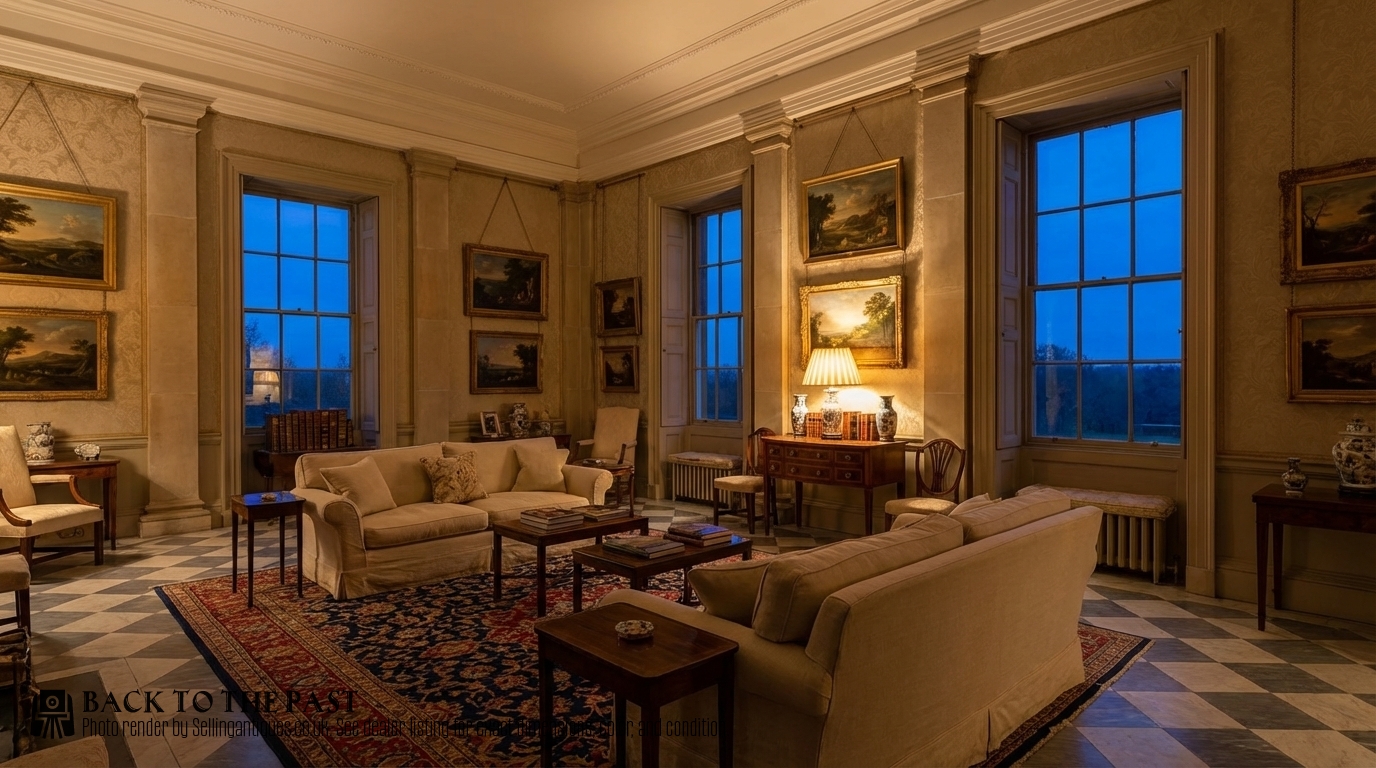
Georgian Bowfront Console Table
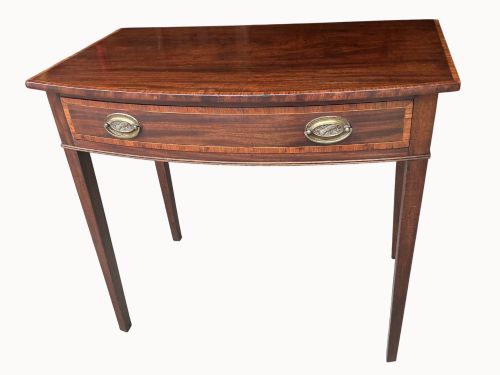
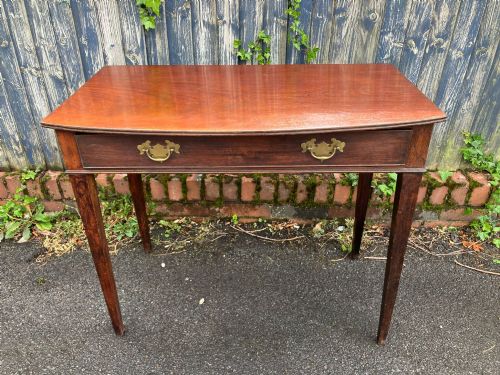
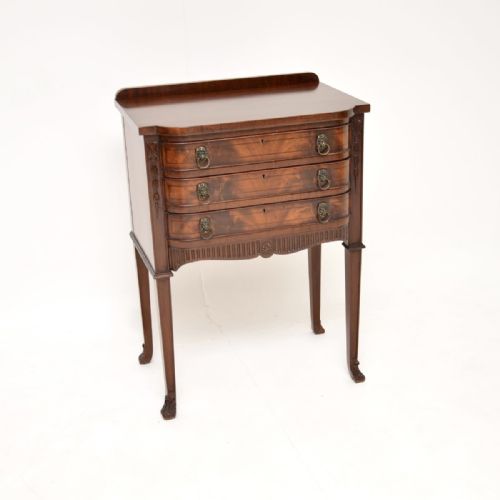
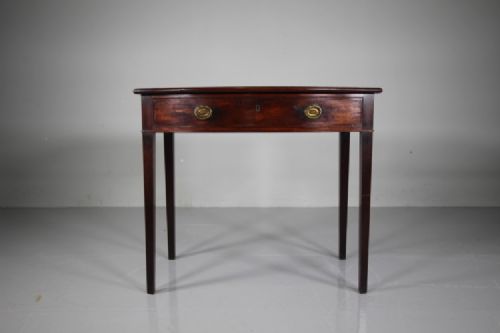
A georgian bowfront console table takes many forms across our listings, appearing primarily as side tables, sideboards, and servers with a distinctive convex curve to the front edge. These items span the Georgian period, the nineteenth century, and later revivals, offering practical surface space and storage in domestic interiors.
Buyers most frequently encounter mahogany examples featuring side drawers or small cupboards, often standing on tapered or turned legs. Pieces range from compact hall tables to larger serving pieces intended for formal dining rooms.
How they were made
Cabinet makers constructed these tables predominantly from solid and veneered mahogany, frequently incorporating secondary timbers such as oak for drawer linings. Artisans shaped the curved fronts using steam or specialised cutting techniques to achieve the smooth convex sweep characteristic of the design.
Decorative detailing relied on fine craftsmanship, utilising boxwood and satinwood inlay, stringing, and brass hardware such as drop handles and escutcheons. Painted finishes and leather inserts also appear on specific writing and lamp table variants.
Listings feature mahogany, satinwood, and pine, spanning the Georgian period, the nineteenth century, and twentieth-century revival styles.
What varies in quality
The standard of a georgian bowfront console table rests on the crispness of its timber veneers, the precision of any boxwood inlay, and the structural integrity of the curved frame. Superior examples display carefully matched grain patterns across the bowed drawer fronts and solid timber construction in the primary frame.
Refinement in leg turning, the subtlety of bracket feet, and the original quality of brass mounts elevate a piece above standard utility furniture. Lesser items show simpler joinery and heavier, less harmonious proportions.
The Georgian Bowfront Console Table Glossary
- Bowfront
- A convex curved cabinet front that swells outwards from the centre. This shape softens the corners of furniture placed in narrow hallways.
- Inlay
- A decorative technique where contrasting woods like boxwood or satinwood are set into recesses within the primary timber. It creates crisp linear borders and geometric patterns.
- Console table
- A table designed to stand against a wall, frequently supported by brackets or legs. These items served decorative and functional roles in formal reception spaces.
- Servingsurface
- A broad tabletop intended for presenting food or holding lamps and decorative objects. These surfaces form the primary utility of sideboards and servers.
Georgian Bowfront Console Table: Frequently Asked Questions
Where should I place a bowfront table?
These pieces suit entrance halls, narrow corridors, and dining rooms where floor space is limited. The curved front allows people to walk past more easily than they would past a rectangular table.
They also function effectively as writing desks or dressing tables when paired with a suitable chair.
How do I identify a Georgian piece?
Look for hand-cut dovetails in the drawer construction and timber linings made of oak rather than modern plywood. The overall proportions tend to be restrained and elegant.
Later revival pieces from the Edwardian era often copy these proportions but employ different internal secondary woods.
What is the difference between a side table and a console table?
Historically, console tables were often fixed to the wall with decorative brackets, whereas side tables stood independently on four or more legs. Over time, the terms have become largely interchangeable in descriptions.
Both types provide a flat surface and occasional drawer storage.
Are these tables suitable for everyday use?
Solid mahogany construction and sturdy joinery make these pieces robust enough for daily domestic life. Routine dusting and occasional wax polishing preserve the timber surface.
Care should be taken with liquids and direct heat to protect the antique polish.