

Georgian Bowed Credenza
A georgian bowed credenza brings curved timber fronts and deep storage to a room, offering both a functional surface and refined period presence.
Georgian Bowed Credenza
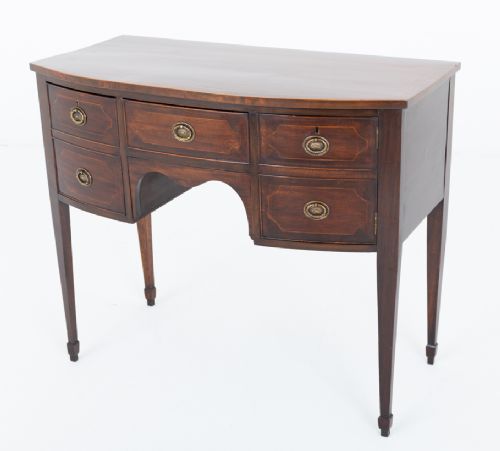
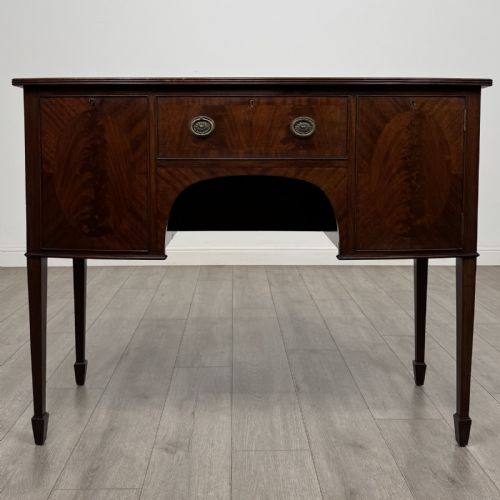
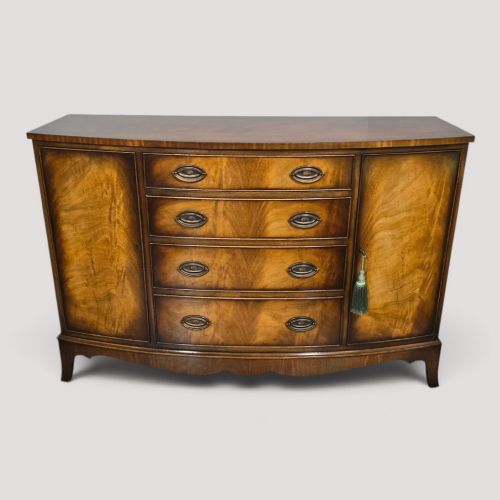
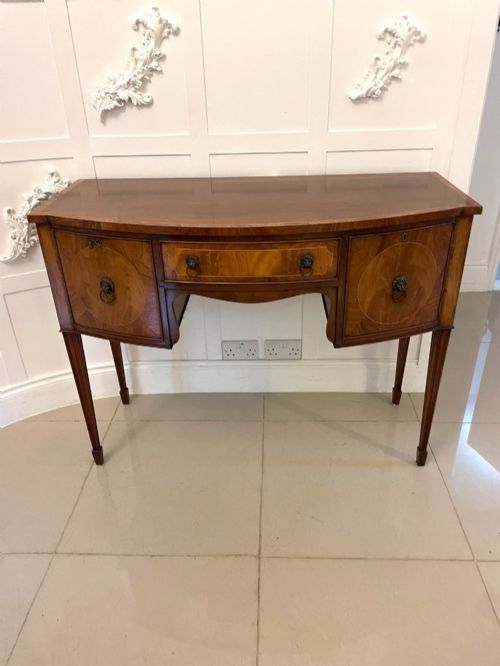
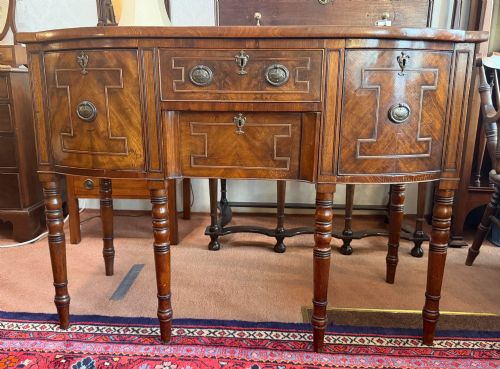
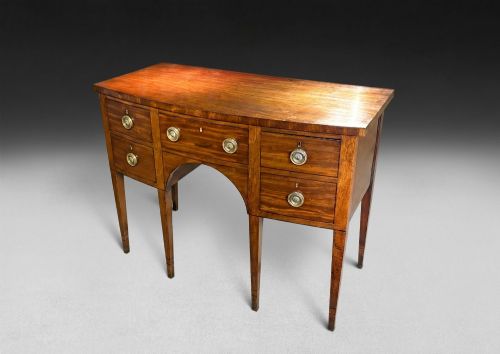
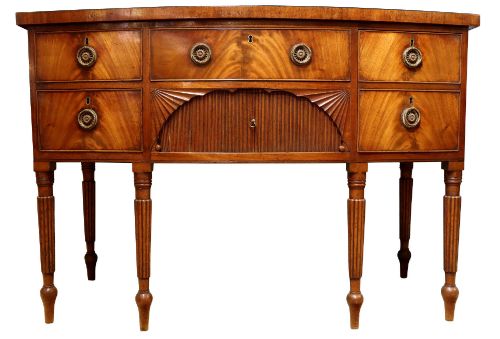
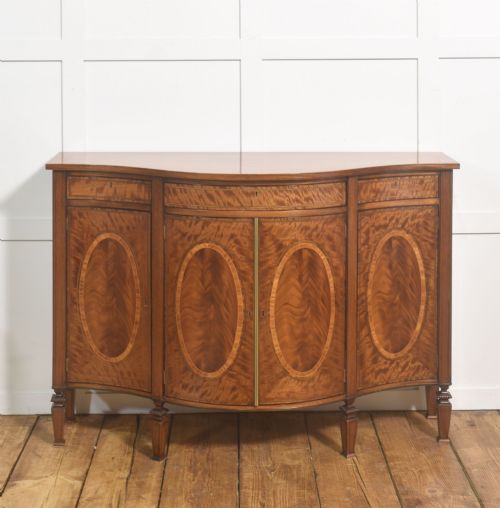
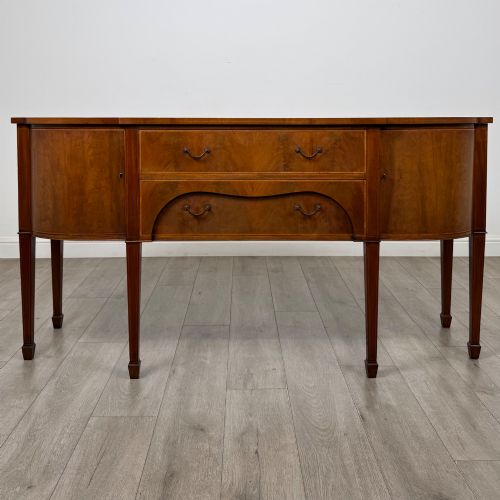
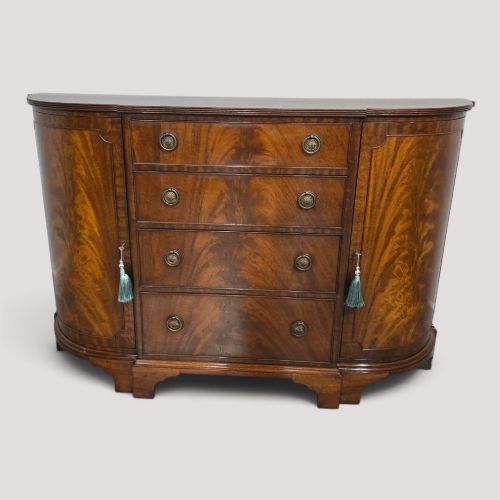
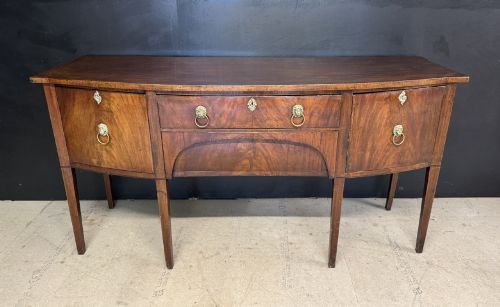
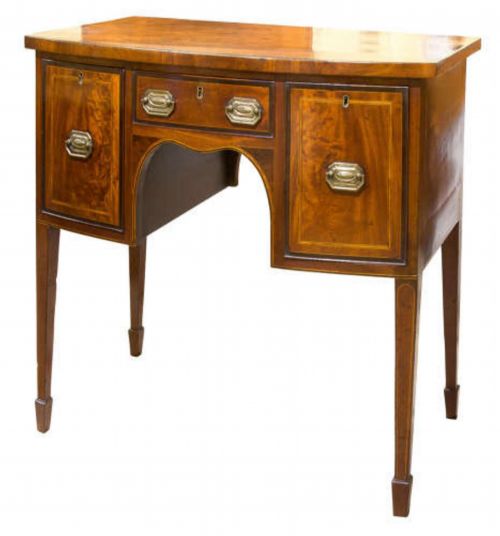
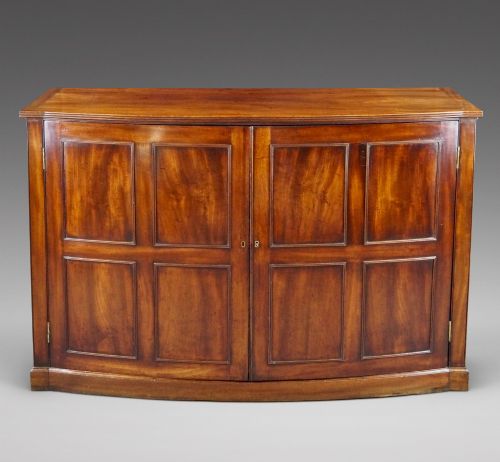
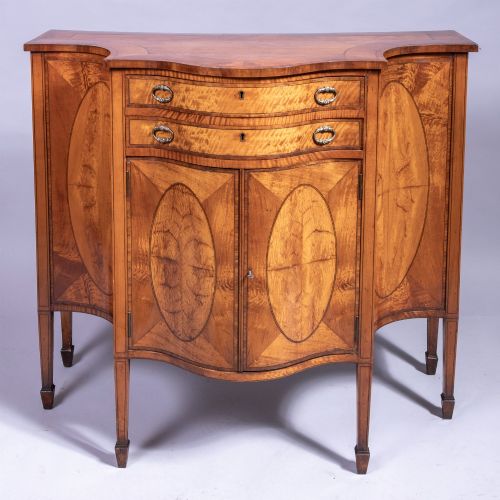
A georgian bowed credenza encompasses various forms of curved front furniture, primarily appearing on this page as sideboards, side cabinets, and storage cupboards. These pieces originate across the Georgian, Regency, and later revival periods, bringing distinct historic character to domestic interiors.
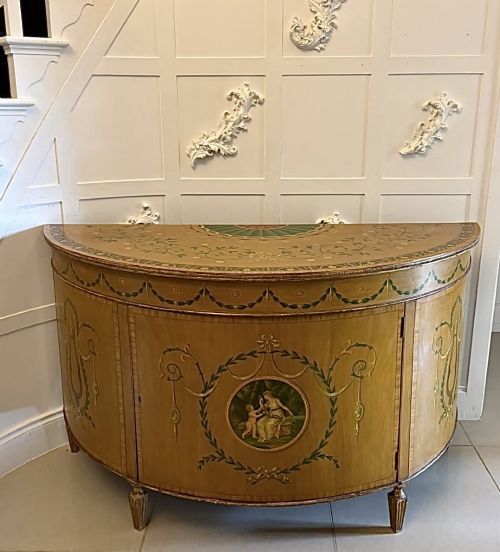
The version most commonly encountered is the mahogany bow-front sideboard dating from the eighteenth and nineteenth centuries. Alongside these, buyers will find related sideboards and cabinets utilising satinwood, oak, and detailed inlay work within the georgian bowed credenza category.
How they were made
Cabinet makers utilised solid timbers alongside veneers, frequently employing flame mahogany and figured mahogany to achieve striking surface grain patterns. Boxwood and satinwood stringing or marquetry inlay were then applied to borders and panels to create sharp visual contrast.
Secondary timbers such as oak lined the internal drawers, while brass hardware fitted handles and escutcheons. Joinery techniques accommodated the curved bow fronts through careful bending and shaping of the timber frames.
Georgian Bowed Credenza Retail Price Guide 2026
Typical asking prices for georgian bowed credenza among the pieces listed under this phrase on Sellingantiques today, from the lower quarter to the upper quarter. They describe what is for sale here now, not the wider market.
Listings span the Georgian, Regency, and Victorian periods, with later nineteenth and twentieth-century revival pieces also appearing alongside eighteenth-century originals.
What varies in quality
The standard of timber selection heavily dictates the overall quality, with finely figured flame mahogany and crisp boxwood stringing marking out superior examples. Poorer specimens rely on plain timber without the rich depth found in better examples.
Construction details such as oak drawer linings and precise joinery along the curved bow shape separate standard workshop output from exceptional cabinet work. The sharpness of inlay and the retention of original brass fittings further distinguish the range.
The Georgian Bowed Credenza Glossary
- Bow-front
- A convex curved front projecting outward from the centre. This shape defines the main profile of the pieces found in this category.
- Credenza
- A side cabinet or sideboard used for storage and serving. It provides surface space and interior compartments.
- Stringing
- A thin inlay of contrasting wood used for linear decoration. It outlines drawers and tabletops to add definition.
- Marquetry
- Elaborate veneer patterns forming pictures or ornamental designs. It decorates the surfaces of select cabinets.
- Flame mahogany
- Mahogany timber displaying a distinctive torch-like grain pattern. Cabinet makers prize this cut for highly decorative facades.
Georgian Bowed Credenza: Frequently Asked Questions
Where were these cabinets placed?
These pieces typically stood in dining rooms or grand halls to hold tableware, serving dishes, and linens. Their flat top surfaces also functioned as serving areas during meals.
Over time, owners adapted them for general storage or display purposes in living spaces while retaining their traditional placement against walls.
How do I spot revival pieces?
Revival pieces from the Sheraton Revival or Edwardian eras often feature brighter, lighter satinwood finishes and machine-sawn timber uniformity. They reflect later interpretations of eighteenth-century aesthetics.
Examining the internal drawer construction and timber ageing helps distinguish these later reproductions from authentic eighteenth-century originals.
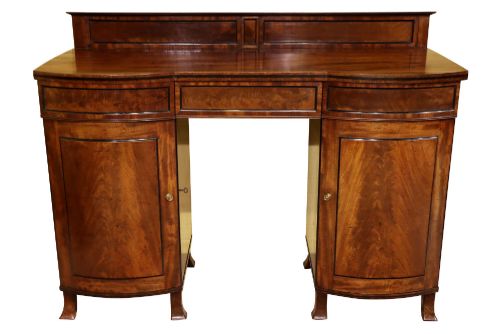
What is a stage-back sideboard?
A stage-back sideboard incorporates a raised tiered section at the rear of the main top surface. This feature provided additional display space for platters and silver.
Scottish workshops frequently produced these larger variants in flame mahogany during the Georgian period.
Are all these pieces mahogany?
Mahogany is the dominant timber seen across these listings, valued for its strength and rich red-brown hue. However, makers also incorporated satinwood, oak, and boxwood.
Secondary woods frequently appear in internal linings and structural frames beneath the primary decorative veneers.