



Georgian Blue Printed Pottery
Georgian blue printed pottery brings together deep cobalt pigments and crisp earthenware forms to decorate tables with lively pastoral and architectural scenes.
Georgian Blue Printed Pottery
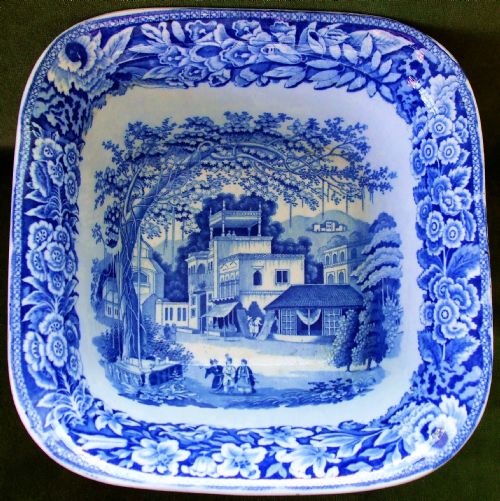
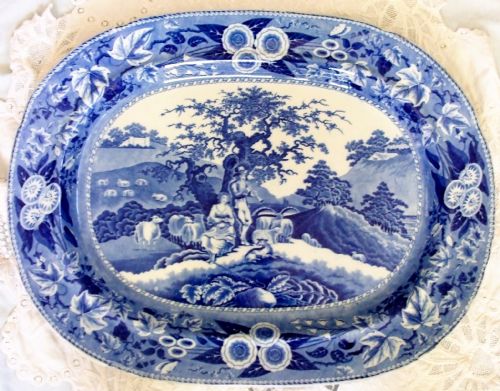
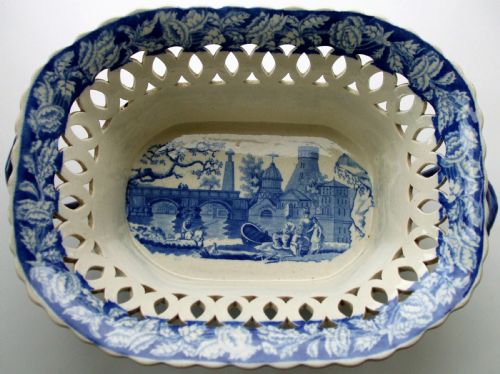
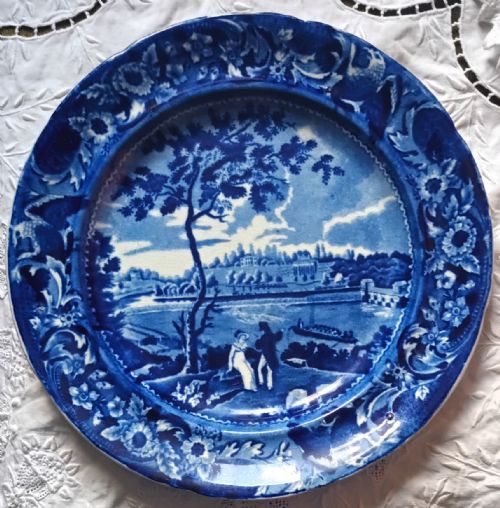
When you search for georgian blue printed pottery, you encounter earthenware and pearlware items spanning decorative plates, serving platters, jugs, and chestnut baskets. These pieces carry transfer-printed designs in cobalt pigment, depicting landscapes, classical ruins, and pattern scenes.
Makers and potteries from Staffordshire and beyond produced these wares using blue and white transfer printing techniques. Common forms include pierced baskets, bread stands, and large meat platters intended for formal dining.
Materials and production
Potters shaped earthenware and pearlware bodies, applying a clear lead glaze over the ceramic surface to achieve a glossy finish. Cobalt pigment provided the rich blue colour for the transfer-printed designs.
Craftsmen used copperplate engraving to transfer printed scenes onto the pottery before firing. The combination of cobalt glaze and ceramic body created durable tableware with sharp pictorial detail.
Georgian Blue Printed Pottery Retail Price Guide 2026
Typical asking prices for georgian blue printed pottery among the pieces listed under this phrase on Sellingantiques today, from the lower quarter to the upper quarter. They describe what is for sale here now, not the wider market.
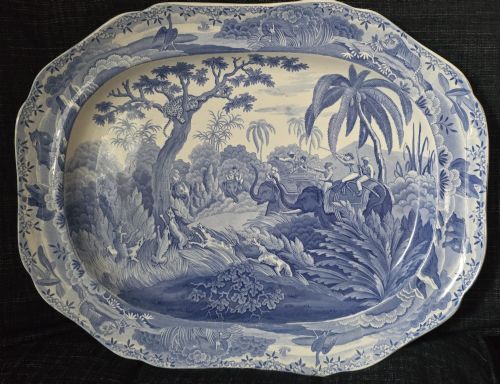
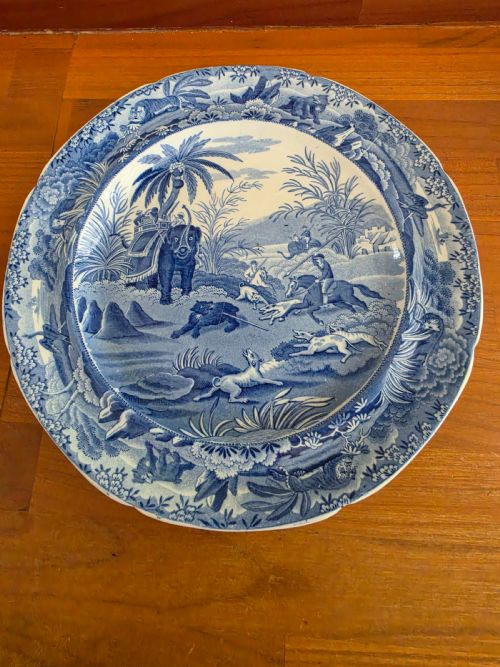
Among the pastoral scenes and classical ruins, a lone bear meets its end on a plate, while elephants parade across tureens.
Evaluating the range
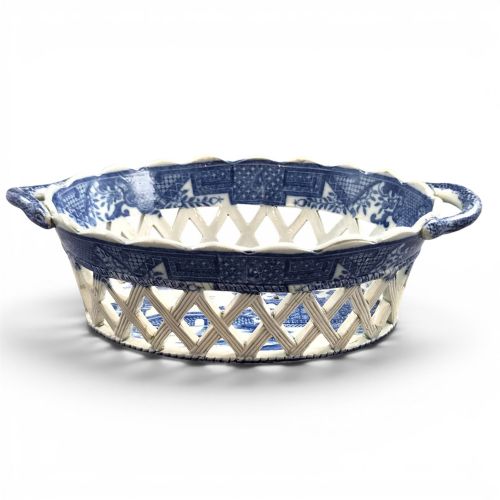
Quality rests on the crispness of the cobalt transfer print and the complexity of the ceramic form, such as reticulated baskets or moulded handles. Finer examples show sharp outlines in scenes like the Long Bridge or classical ruins without blurring in the glaze.
The sophistication of the moulded body and the depth of the blue pigment separate standard utilitarian plates from ambitious serving platters and tureens.
Spode·J. and R. Clews·J. and R. Riley·Stubbs·Thomas Lakin·Brameld and Co·Mason·John Rogers and Son
The Georgian Blue Printed Pottery Glossary
- Pearlware
- A refined earthenware body featuring a subtle bluish glaze that sits in crevices, developed to rival porcelain. It provides a pale ground for blue printed designs.
- Transfer printing
- A mechanical method of applying engraved designs to ceramics using paper and copperplates. This technique allowed intricate pictorial scenes to be replicated across tableware.
- Reticulated
- Pierced or openwork decoration incorporated into ceramic forms like chestnut baskets and fruit trays. It requires skilled cutting of the clay before firing.
- Footbath
- A large vessel used for washing feet, adapted in ceramics as a substantial decorative and utilitarian piece. These items showcase expansive blue printed landscapes.
- Tureen
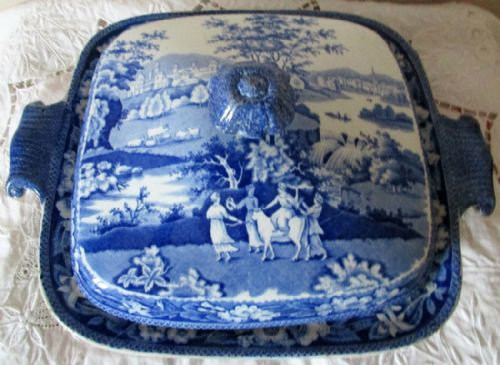
- A deep covered serving dish designed for soups or vegetables, often supplied with a matching base or stand. They feature prominent handles and transfer-printed motifs.
Georgian Blue Printed Pottery: Frequently Asked Questions
How do I date these pieces?
Dating relies on the ceramic body type, such as pearlware versus later earthenware, alongside stylistic cues from the Regency and Georgian periods. Maker marks and recorded pattern names help narrow the decade of production.
Changes in glaze composition and the depth of the cobalt pigment also assist in placing items within the broader nineteenth-century timeline.
Were these items used daily?
Many serving platters, plates, and jugs saw active service on dining tables for meat, vegetables, and liquids. Robust earthenware construction ensured they withstood regular handling during meals.
More delicate pierced baskets and child's plates likely served decorative or occasional purposes rather than heavy kitchen work.
What is pearlware?
Pearlware is a refined form of earthenware introduced in the late eighteenth century, whiter than creamware due to a small amount of cobalt in the glaze. This bluish tint pooled in recesses, enhancing the contrast of blue printed decoration.
It forms the substrate for many early nineteenth-century plates and small trays.
How should I display them?
Plates and platters suit wall hanging or plate racks where their transfer-printed scenes remain fully visible. Larger pieces like footbaths and jugs work well on open shelving or sideboards.
Keeping them away from direct, harsh sunlight preserves the clarity of the earthenware and glaze.