

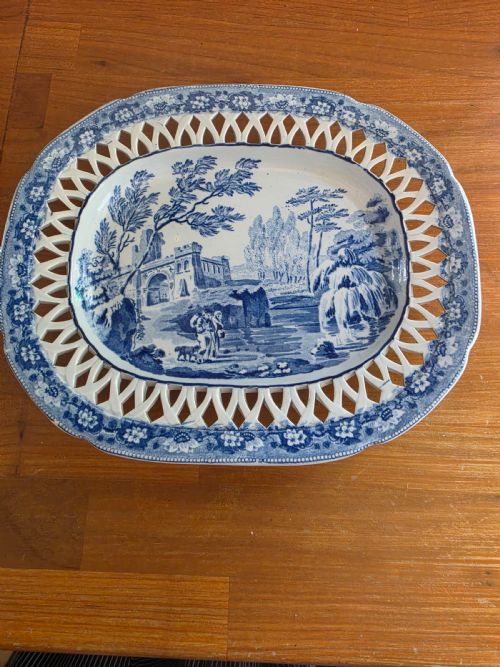


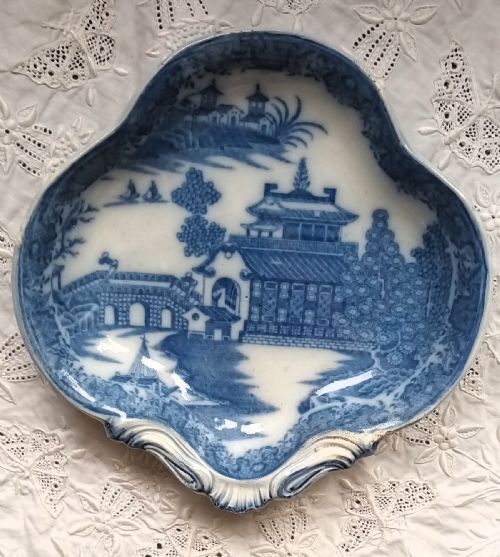


Blue White Pearlware Tray
A blue white pearlware tray brings crisp earthenware geometry and cobalt scenes to a table, offering durable British utility.
Blue White Pearlware Tray
A blue white pearlware tray encompasses serving dishes, platters, and spoon trays produced across the Georgian, Regency, and early Victorian eras. These ceramic items display distinct transfer-printed motifs in cobalt pigment against the characteristic bluish tint of pearlware glaze.
Buyers encounter forms ranging from large rectangular platters with reservoirs to pierced serving dishes and small spoon trays. The evidence shows domestic serving ware designed for display and practical table use in British households.
The periods represented stretch from the late eighteenth century into the nineteenth century, capturing shifts in ceramic body preparation and transfer printing technique. Each piece reflects the standard forms utilised in contemporary dining.
How they were made
Potters shaped these objects from earthenware bodies, applying a specialised lead glaze that settled with a faint blue pooling in recesses to create the pearlware tone. Artisans then transferred intricate cobalt pigment designs onto the ceramic surface before a final kiln firing.
Makers utilised copperplate transfer printing to apply detailed patterns such as Chinoiserie scenes, classical ruins, and topographical landscapes like the Bridge of Lucano. Certain vessels incorporated structural elements like pierced borders or fretted rims formed while the clay remained soft.
Blue White Pearlware Tray Retail Price Guide 2026
Typical asking prices for blue white pearlware tray among the pieces listed under this phrase on Sellingantiques today, from the lower quarter to the upper quarter. They describe what is for sale here now, not the wider market.
An elephant pattern platter brings unexpected exotic fauna right to the nineteenth-century dinner table.
What varies in quality
Quality rests upon the crispness of the cobalt transfer print and the stability of the pearlware glaze across the ceramic body. Finer examples display sharp definition in complex patterns without smudging or pooling of the pigment.
The sophistication of the form itself dictates the tier of the piece, distinguishing standard serving platters from elaborately pierced bread stands or trefoil dishes. Early examples reveal the careful hand manipulation required for complex moulded rims and integrated drainage reservoirs.
Davenport·Spode·Thomas Lakin·Don Pottery·John Rogers and Son
The Blue White Pearlware Tray Glossary
- Pearlware
- A refined earthenware developed to imitate Chinese porcelain, featuring a clear glaze with a subtle bluish tint caused by the addition of small amounts of cobalt.
- Transfer printing
- A decoration technique where an engraved copper plate transfers a design onto tissue paper, which is then pressed onto the unfired ceramic body.
- Cobalt pigment
- A mineral oxide utilised by ceramicists to achieve a deep blue colour that withstands high kiln temperatures without fading.
- Lead glaze
- A glossy coating applied to earthenware surfaces to provide waterproofing and a smooth sheen before the final firing.
- Fretted rim
- An openwork pattern pierced through the edge of a ceramic platter or tray during the forming stage.
Blue White Pearlware Tray: Frequently Asked Questions
How were these trays used?
These ceramic pieces served functional roles on the dining table for presenting meats, breads, and sauces during formal meals. Platters often included reservoirs to catch juices, while smaller trays held spoons.
They also functioned as decorative display items in dining rooms when not actively utilised for serving food.
How do I date a piece?
Dating relies on identifying stylistic markers from the Georgian, Regency, and early Victorian periods alongside the evolution of the pearlware body and glaze. Earlier examples often feature hand-painted or early transfer-printed Chinoiserie motifs.
Later Victorian pieces display heavier forms and different structural elements, such as integrated carving wells.
What patterns are common?
Common patterns include Chinoiserie scenes, classical ruins, and topographical landscapes transferred in deep cobalt pigment onto the white ceramic surface. Specialised motifs like the Bridge of Lucano or buffalo designs appear frequently.
Geometric and pierced borders often frame these central pictorial scenes on platters and serving dishes.