





Blue Printed Earthenware Tray
A blue printed earthenware tray brings rich transfer-printed scenes to the table, offering durable ceramic utility paired with striking blue and white decoration.
Blue Printed Earthenware Tray
When you search for a blue printed earthenware tray, you encounter an array of serving platters, meat plates, and decorative dishes originating from the Georgian and Victorian eras. These items served functional roles in period dining, carrying large joints of meat or holding smaller items like spoons.
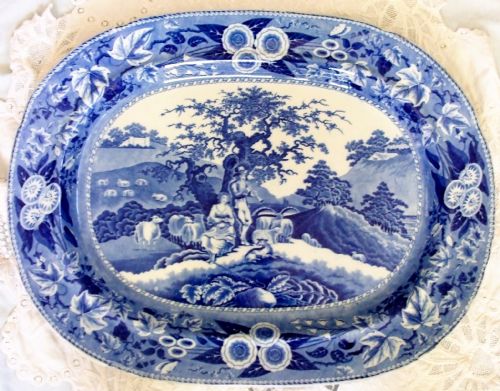
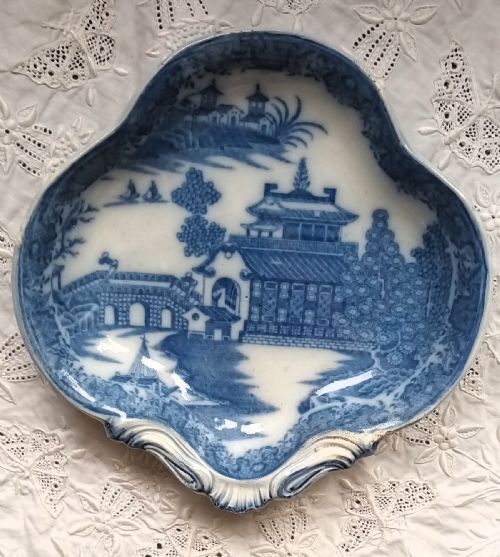
The pieces on this page span from pearlware spoons trays to large transfer-printed platters decorated with classical ruins, pastoral scenes like the Piping Shepherd, and Chinoiserie motifs. Most items you meet here date from the foundational decades of the nineteenth century and the late Georgian period.
Forms vary from standard rectangular meat plates and bread stands to trefoil dishes and specialised custard sets. Makers such as Spode, Copeland and Garrett, Don Pottery, and Thomas Lakin produced these enduring examples of early ceramic manufacturing.
Materials and methods
Potters shaped these items from earthenware and pearlware bodies, applying finely ground cobalt pigment to create the distinct blue transfer-printed designs. Skilled engravers etched intricate pictorial landscapes onto copper plates, which transferred the ink onto tissue paper before application to the biscuit fired ceramic.
A glossy lead glaze was applied over the transferred pattern before a final high-temperature kiln firing fixed the cobalt blue permanently into the surface. This glazing technique provided a durable, wipe-clean finish suited to heavy domestic use in the dining room.
Blue Printed Earthenware Tray Retail Price Guide 2026
Typical asking prices for blue printed earthenware tray among the pieces listed under this phrase on Sellingantiques today, from the lower quarter to the upper quarter. They describe what is for sale here now, not the wider market.
Listings feature earthenware and pearlware ceramics decorated with cobalt pigment under lead glaze, originating primarily from the Georgian and Victorian periods.
Assessing quality
Quality in a blue printed earthenware tray rests on the crispness of the transfer print and the clarity of the cobalt pigment against the white or pearl-tinted body. Sharp lines in complex patterns like classical ruins or Chinoiserie scenes indicate skilled copperplate engraving and careful application.
The sophistication of the ceramic body and the smoothness of the lead glaze also distinguish finer examples. Potters who achieved an even, unblemished glaze and balanced weight produced tableware that retained its decorative appeal through generations of service.
Spode·Copeland and Garrett·Thomas Lakin·Don Pottery
The Blue Printed Earthenware Tray Glossary
- Earthenware
- A porous ceramic body fired at lower temperatures, requiring a glaze to achieve waterproof functionality for tableware.
- Pearlware
- A refined form of earthenware featuring a slight bluish tint in the transparent lead glaze, popular during the late eighteenth and early nineteenth centuries.
- Transfer printing
- A mechanical decoration technique where an engraved copper plate transfers a printed design onto ceramic ware via tissue paper.
- Cobalt pigment
- A metallic oxide used to achieve deep, stable blue colourations under high kiln temperatures.
- Lead glaze
- A glossy coating containing lead oxide applied to ceramics to seal the porous clay body and enhance surface sheen.
Blue Printed Earthenware Tray: Frequently Asked Questions
What is a blue printed earthenware tray used for?
These trays served primarily as meat platters, serving dishes, and bread stands during formal and everyday nineteenth-century dining. Their sturdy earthenware bodies made them practical for carrying heavy food items to the table.
Today, collectors use them as decorative wall pieces, centrepieces, or functional serving platters for modern dining. They combine historical utility with striking visual patterns that suit traditional and contemporary interiors.
How do I date a blue printed earthenware tray?
Dating relies on stylistic markers, ceramic bodies such as pearlware, and identifiable maker marks or pattern names recorded on the underside. Pieces from the Georgian period often feature early Chinoiserie or classical ruins patterns.
Later Victorian examples tend towards heavier bodies and alternative transfer styles. Comparing the border designs and blue tones against documented factory patterns helps narrow the decade of production.
Are these trays dishwasher safe?
These antique ceramics require gentle hand washing in warm water with mild detergent to preserve the historic glaze and iron-stabilised pigments. Modern dishwashers expose fragile earthenware bodies to harsh detergents and thermal shock.
Protecting the surface prevents crazing in the lead glaze and keeps the blue transfer print intact. Proper care ensures the ceramic survives for future generations.