
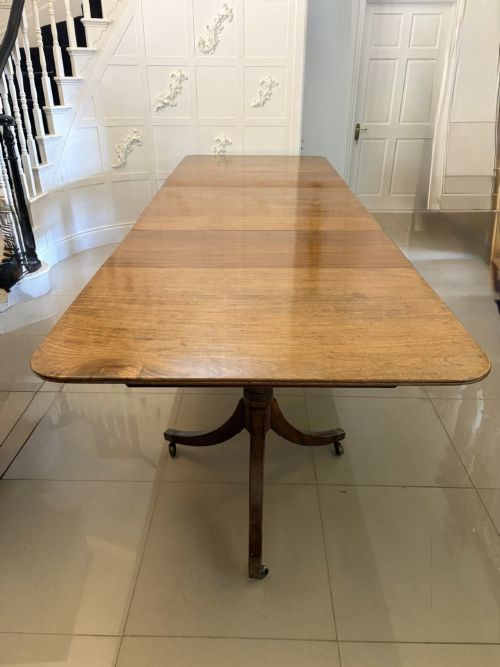

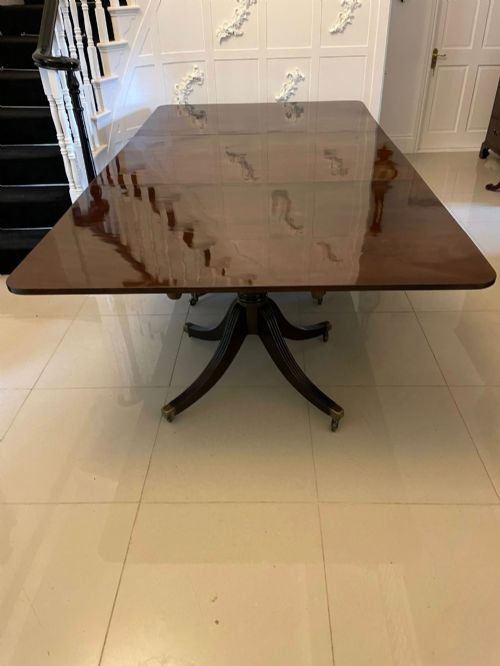
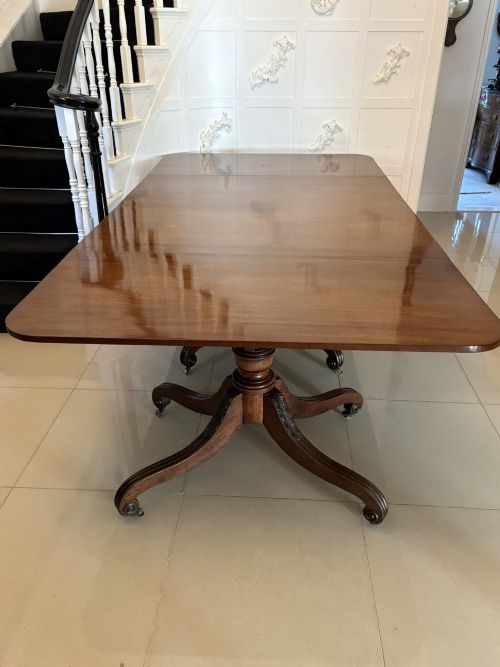
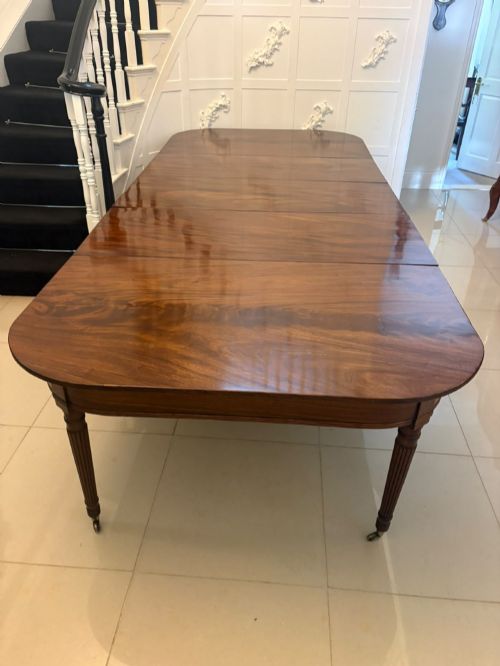
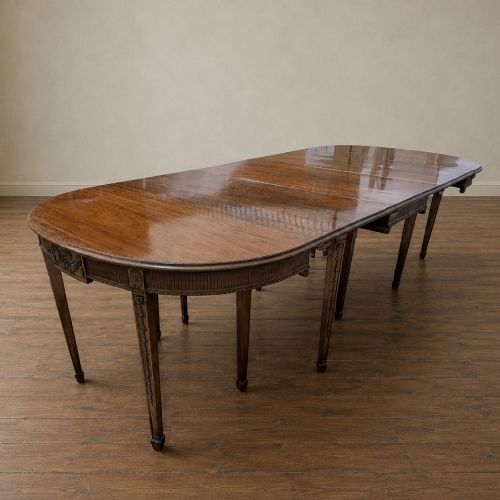
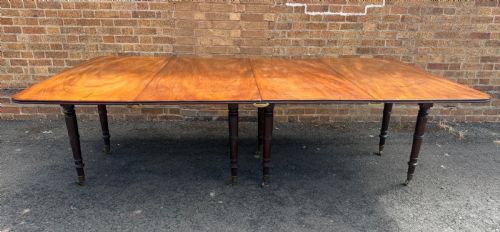


Georgian Banquet Table
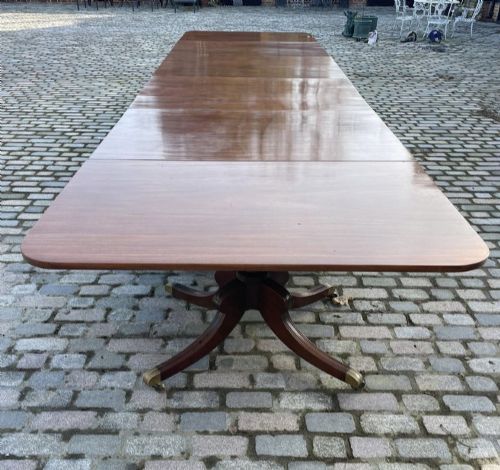
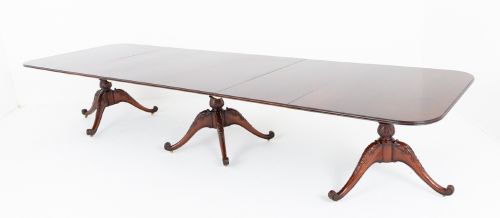
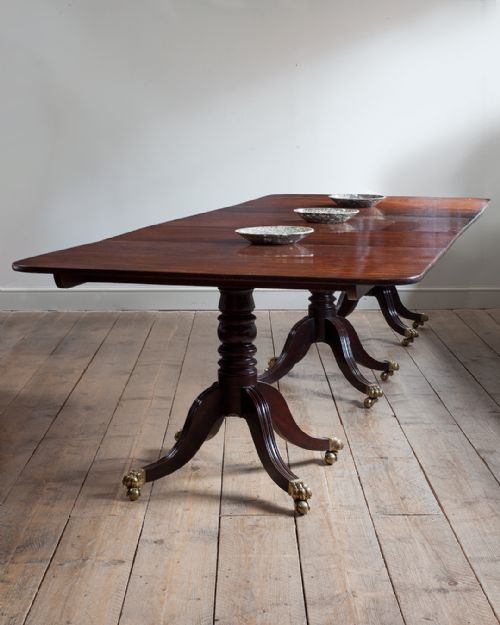
A georgian banquet table provides grand dining space through multi-pedestal bases and substantial timber.
Georgian Banquet Table
When searching for a georgian banquet table, buyers encounter large extending dining formats designed to accommodate sizeable gatherings. These impressive pieces commonly emerge from the Georgian, Regency, and George III periods, though later Edwardian interpretations also appear.
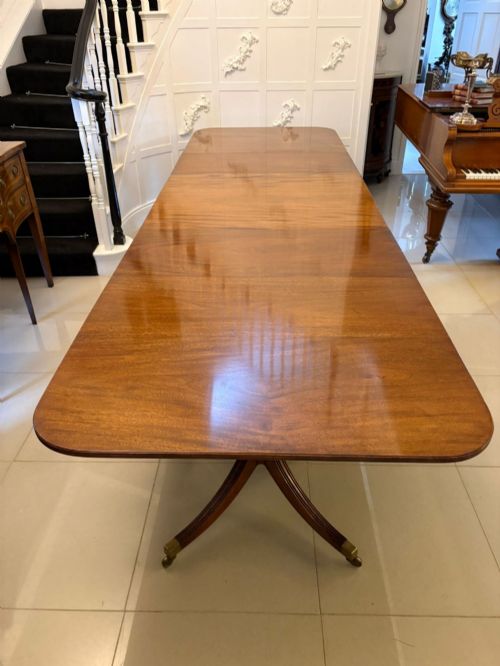
The most typical examples on this page are multi-pillar mahogany extending dining tables resting on heavy pedestals. These designs often seat anywhere from ten up to twenty-eight diners using multiple leaves.
How they were made
Makers constructed these substantial tables primarily using solid mahogany and figured mahogany, occasionally incorporating Cuban mahogany and walnut. Fine cabinet work included satinwood inlay and brass elements to accent the polished timber surfaces.
Extending mechanisms relied on sturdy pillars and pedestals to support the long weight of the top boards. Master workshops utilised specialised timber selection to produce striking grain patterns like plum pudding and flame figures across the expansive leaves.
Formats range from twin pedestal formats up to massive twenty-eight seater tables with six pillars.
What varies in quality
The sophistication of the timber figure and the complexity of the pedestal carving set superior examples apart from standard work. Tables attributed to notable makers display refined proportions and superior cabinetmaking throughout the underframe.
The presence of original leaves and smooth patent extending actions influence the desirability of a piece. Finer examples balance substantial seating capacity with restrained design and elegant reeded legs.
Gillows·Waring and Gillow·Robert Adam
The Georgian Banquet Table Glossary
- Pedestal
- A central support column resting on splayed legs, often fitted with brass castors. These pillars allow multiple sections to support long extending dining surfaces.
- D-End
- A table end shaped in the form of a semicircle resembling the letter D. These sections detach or fold to serve as side tables when the extension leaves are removed.
- Extending table
- A dining table designed with a mechanism or loose leaves to increase its overall length. This allows hosts to adapt the surface area for large banquets.
- Figured mahogany
- Timber cut to reveal distinctive decorative grain patterns such as flame or plum pudding. Cabinetmakers reserved these prized veneers for prominent table tops.
- Reeded legs
- Legs carved with parallel convex mouldings running vertically along the wood. This classical decorative detail frequently appears on Regency dining tables.
Georgian Banquet Table: Frequently Asked Questions
How do I seat twenty people?
Look for three-pillar or four-pillar extending tables equipped with multiple insertable leaves. These long formats distribute weight evenly across pedestals while providing ample legroom.
Verify the extended dimensions against your dining room space to ensure comfortable clearance around the perimeter.
How do pedestals work?
Pedestals consist of a central vertical column anchored by radiating legs that typically terminate in brass castors. This construction provides robust support for heavy timber tops without crowding diners' legs.
Multiple pedestals are linked together beneath extending tables to maintain stability across varying lengths.
Are D-ends detachable?
D-ends form the semicircular terminal sections of a banquet table and often separate to function as independent console tables. When hosting large dinners, these ends rejoin the central leaves to form one continuous surface.
This versatile arrangement allowed period households to reconfigure their dining rooms when not entertaining.