
Georgian Armoire Cupboard
When you search for georgian armoire cupboard, you enter a world of timber storage furniture built for domestic order.
Georgian Armoire Cupboard
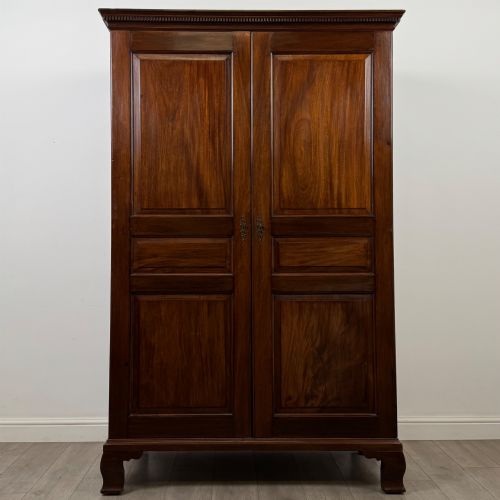
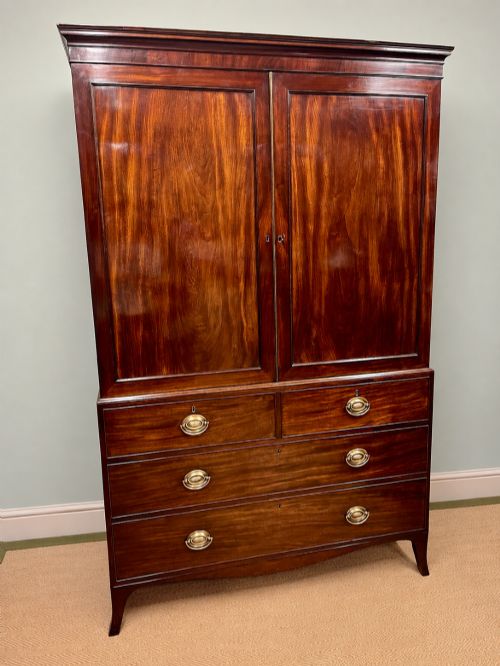
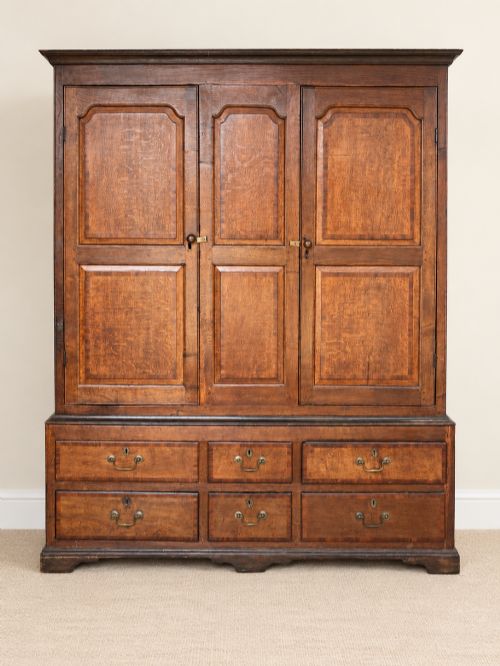
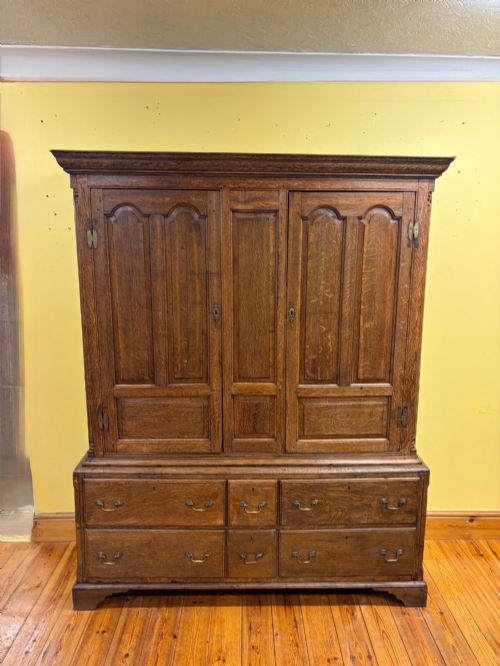
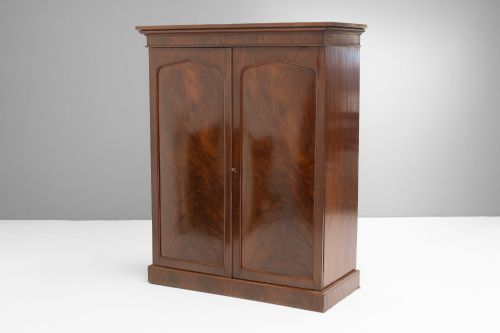
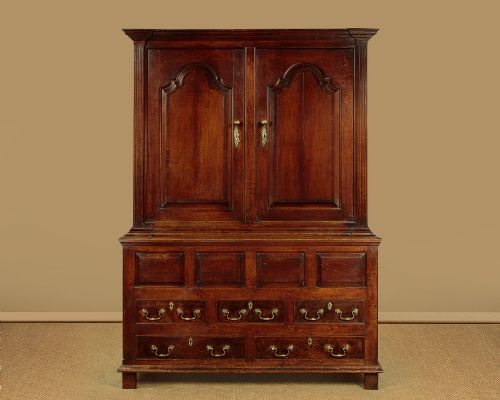
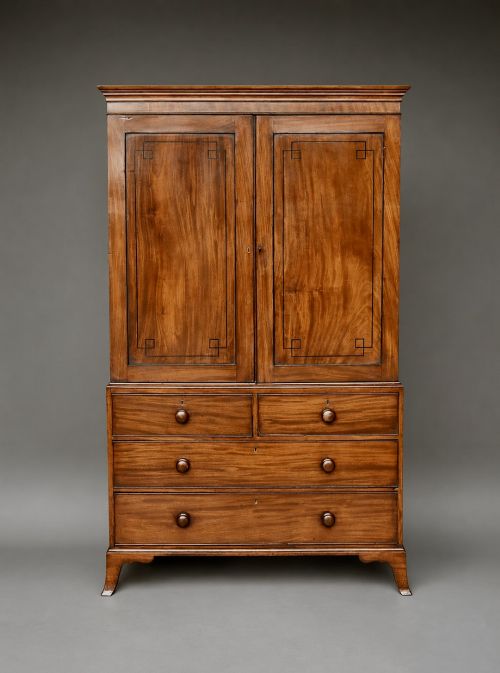
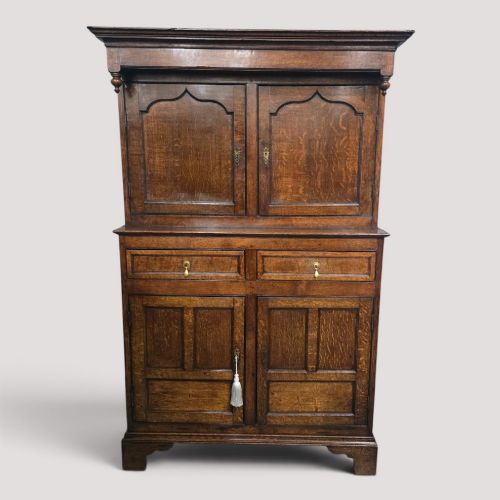
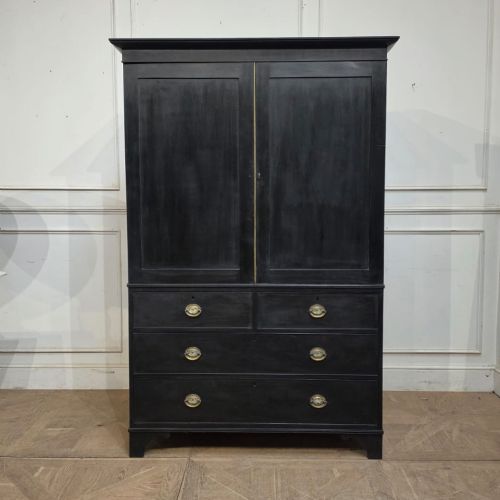
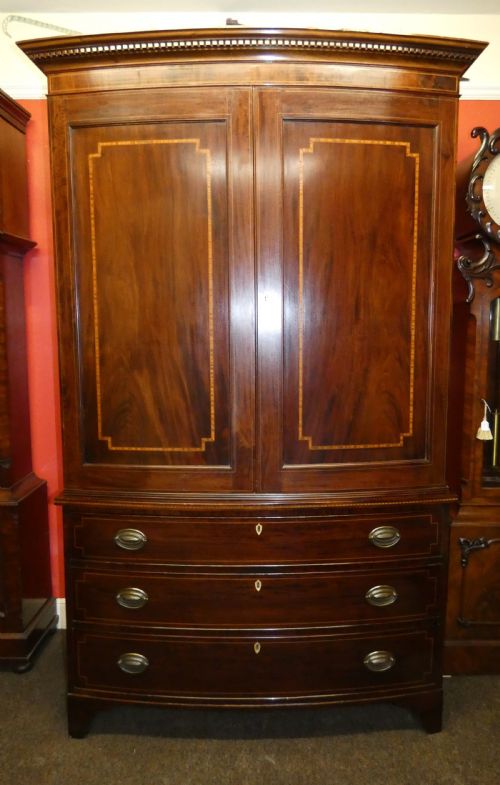
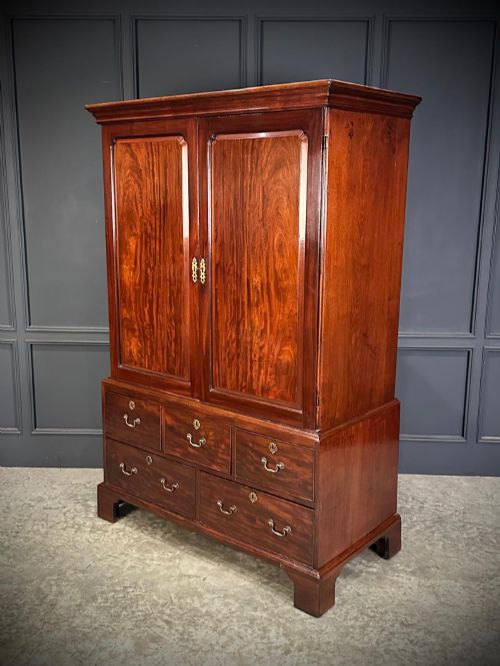
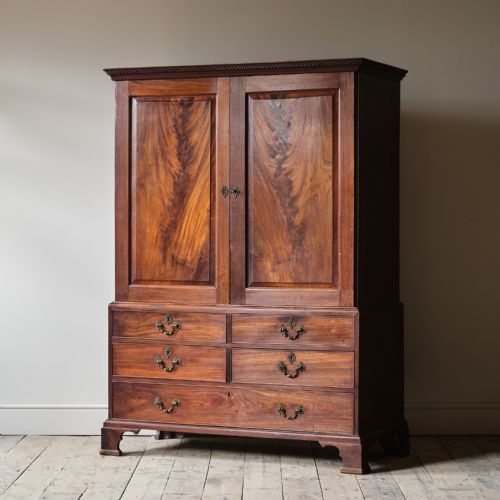
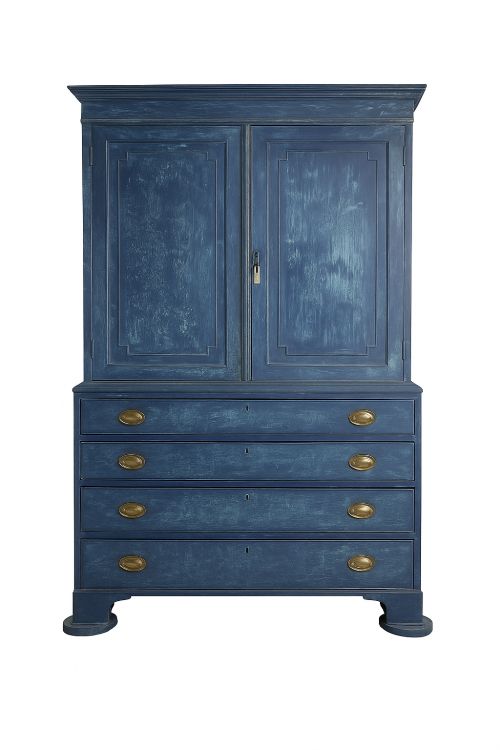
A georgian armoire cupboard encompasses large timber storage furniture intended for linen, clothing and household provisions, reflecting the domestic requirements of past centuries. Buyers encountering this category will find various forms including linen presses, gentlemen's wardrobes, housekeepers' cupboards and compactum wardrobes. The inventory spans pieces produced during the Georgian era, the Regency period and the nineteenth century, reflecting regional practices across England, Ireland, Wales and Europe.
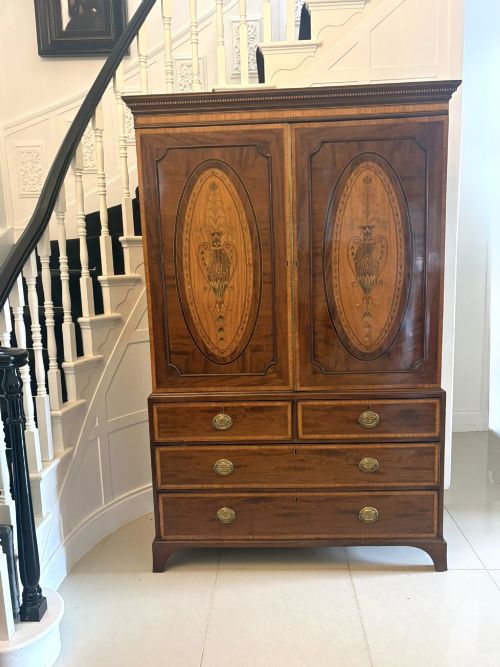
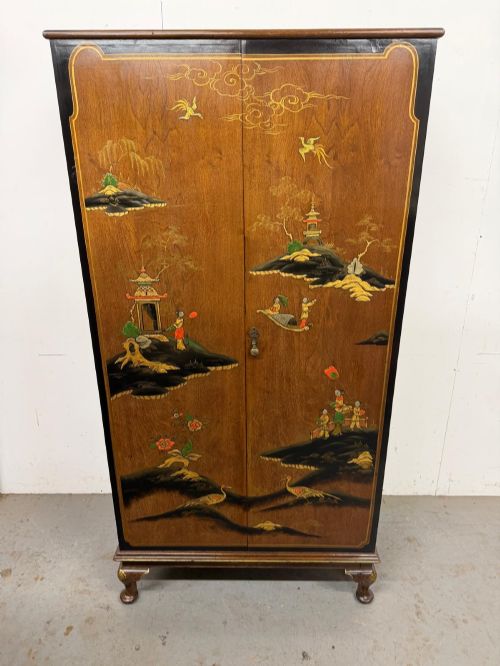
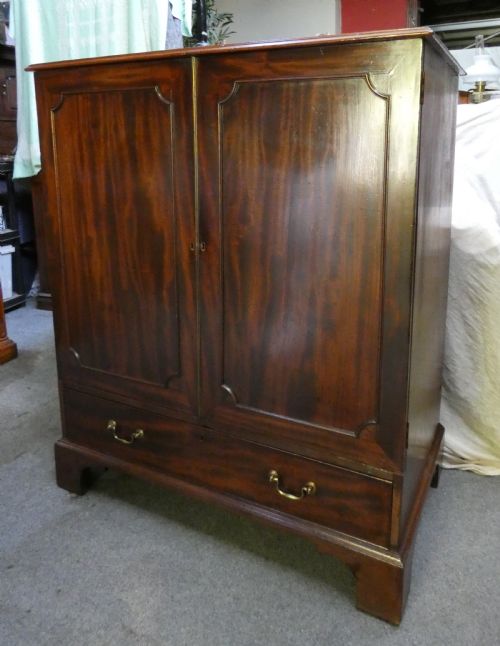
The dominant material representation in this selection relies heavily on oak and mahogany, often enhanced with satinwood inlay or flame mahogany veneer. Vernacular examples utilise pine and walnut, sometimes finished with paint or chinoiserie lacquer. Forms range from towering breakfront linen presses featuring multiple internal drawers to low cottage wardrobes and corner cabinets.
How they were made
Cabinet makers constructed these large storage pieces using solid hardwoods like oak and mahogany, frequently applying flame mahogany veneer to primary surfaces for visual depth. Secondary timbers such as pine provided structural framing for internal compartments and drawer linings. Joinery techniques included dovetailed drawer construction and panelled door assembly, designed to accommodate the natural expansion and contraction of timber over time.
Surface ornament relied on contrasting woods, such as satinwood inlay, along with blind fretwork cornices and applied mouldings. Painted finishes, including blue pigments and elaborate chinoiserie lacquer with outdoor scenes, offered an alternative aesthetic to polished timber. Brass hardware, ranging from escutcheons to pull handles, secured doors and drawers while adding metallic contrast to the dark wood.
The listings show a prevalence of mahogany and oak construction, spanning formal Georgian press cupboards to rustic pine country furniture.
What varies in quality
The standard of a piece depends heavily on the selection of timber and the precision of its grain matching, particularly where flame mahogany veneer or marquetry is utilised. Superior examples display thoughtful proportions, crisp carving on cornices such as blind fretwork, and intact original brass hardware. Regional vernacular pieces in oak or pine rely on robust structural joinery and honest surface patination rather than elaborate decorative veneers.
Internal configuration also distinguishes finer items, with upper linen press sections retaining their original sliding trays above functional drawer arrangements. The integration of doors and drawers reveals the maker's skill, where smooth operation and tight joints indicate careful workshop production. Alterations to interior fittings or replacement cornices alter the integrity of the piece.
The Georgian Armoire Cupboard Glossary
- Linen press
- A tall storage cabinet featuring upper doors enclosing sliding shelves for linens, positioned above a base of lower drawers. This form evolved to keep household textiles flat and protected.
- Gentleman's wardrobe
- A specialised clothes cupboard designed for male attire, typically combining hanging space with shallow drawers for waistcoats and cravats. These units often feature panelled doors concealing internal partitions.
- Flame mahogany veneer
- A thin slice of mahogany timber cut from the fork of the tree where branches meet, creating a distinctive rippled flame pattern. Cabinet makers applied this over a secondary wood base for decorative effect.
- Blind fretwork
- Carved ornamentation applied to a flat surface in an openwork geometric or interlaced pattern without piercing through to the background. This technique decorated cornices and friezes on high-status Georgian furniture.
- Compactum
- A multi-functional wardrobe designed to maximise storage efficiency by incorporating hanging compartments, linen slides and drawers within a single carcass. The form became popular in the later periods represented.
Georgian Armoire Cupboard: Frequently Asked Questions
What is a linen press?
A linen press is a tall storage cabinet designed specifically to hold household textiles and clothing. The upper section typically encloses sliding trays, while the base contains a set of graduated drawers.
Historically, these pieces stood in bedrooms or housekeepers' rooms to keep linens organised and flat before the widespread use of fitted closets.
How do I date a Georgian cupboard?
Dating relies on observing timber choices, construction methods and stylistic markers such as bracket feet or cornice details. Earlier pieces often utilise solid oak with hand-cut dovetails, while later nineteenth-century examples frequently employ mahogany veneer and machine-sawn components.
Secondary woods inside drawers and backboards also provide clues regarding regional origin and period production techniques.
Where were these cupboards used?
These large storage pieces served primarily in bedrooms, dressing rooms and hallways of substantial homes. Housekeepers' cupboards specifically functioned in domestic working quarters to store provisions, linens and household accounts.
Their robust construction allowed them to handle heavy loads of domestic supplies before moving into modern living spaces as decorative focal points.
Can these wardrobes be dismantled?
Many large Georgian and nineteenth-century wardrobes and presses were constructed as knockdown pieces to facilitate transport through narrow doorways and stairwells. These units disassemble into a cornice, base, and side panels held together by wooden pins or internal bolts.
Checking the construction reveals whether a particular piece was built for easy dismantling or permanent assembly.