



Georgian Architect Table
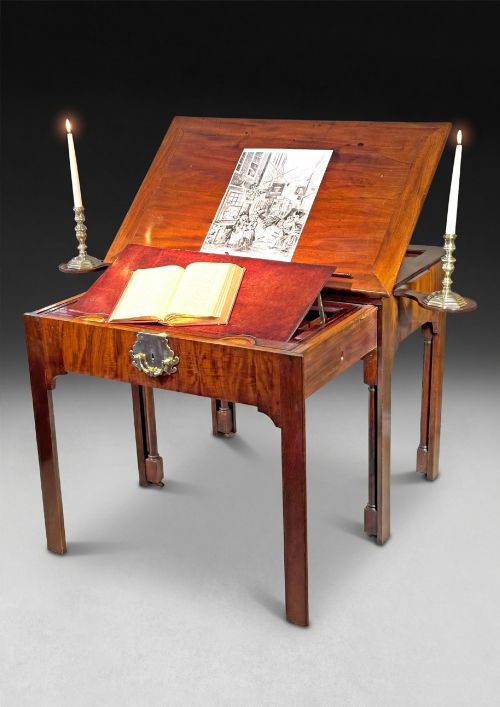
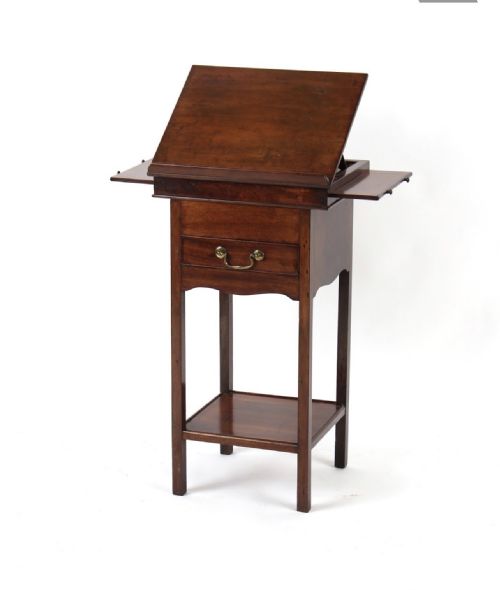
A georgian architect table is a specialist piece of furniture designed for drawing and drafting, offering adjustable surfaces that serious collectors prize.
Georgian Architect Table
When you search for a georgian architect table, you encounter practical furniture designed for drafting, planning, and reading within the home or office. The listings on this page span the eighteenth century, the Regency period, and the early nineteenth century, showcasing forms like writing tables, reading tables, and occasional desks.
The selection includes variations such as estate rent tables, library desks, and metamorphic pieces equipped with plan drawers. Originating from English workshops, these items combine utilitarian function with cabinet-making traditions of the Georgian era.
Materials and Construction
Makers utilised solid mahogany and Cuban mahogany, often selecting timber with rich figuring to give the furniture a striking visual depth. Secondary timbers and structural elements incorporate boxwood for stringing and brass for hardware such as hinges and locks.
Working surfaces frequently integrate inset leather or baize writing panels, providing a suitable texture for drawing and writing. Mechanical ingenuity defines the construction, utilising wooden ratchets, folding brackets, and internal drawer configurations to alter the height and angle of the top.
Georgian Architect Table Retail Price Guide 2026
Typical asking prices for georgian architect table among the pieces listed under this phrase on Sellingantiques today, from the lower quarter to the upper quarter. They describe what is for sale here now, not the wider market.
Listings for this phrase include examples spanning the eighteenth century, the Regency era, and the nineteenth century, utilising mahogany, rosewood, and brass.
Distinguishing Quality
The standard of a georgian architect table rests upon the sophistication of its internal mechanisms and the precision of its adjustable ratchets. Pieces that retain smooth, working mechanical actions for the rising desk top demonstrate superior workshop execution.
Gillows·Bramah
The Georgian Architect Table Glossary
- Architect table
- A specialised desk featuring a rising centre section supported by a ratchet mechanism for drawing and reading. This form allows plans and maps to be viewed at an inclined angle.
- Metamorphic
- Furniture designed to transform from one form or height into another through clever mechanical innovation. These pieces often conceal extra surfaces or reading stands within their primary structure.
- Rent table
- A large circular or octagonal table fitted with numerous drawers around the perimeter, historically used for collecting estate rents. Each drawer typically bears an inlaid alphabetical letter for sorting documents.
- Baize
- A coarse woolen fabric resembling felt, frequently used to line the writing surfaces of desks and gaming tables. It provides a soft, durable layer for writing and protects paper from damage.
- Plan drawer
- A wide, shallow drawer built specifically for storing large architectural drawings, maps, and folios flat. These drawers are characteristic of cartographic and drafting furniture from the period.
Georgian Architect Table: Frequently Asked Questions
How do the adjustable mechanisms work?
The mechanical tops operate using wooden ratchets or folding struts housed beneath the lifting surface. Users lift the panel to the desired height, and the internal bracket locks into place to hold the angle steady.
Many examples also incorporate pull-out slides or side ledges to support writing instruments and inkwells while the main board is tilted.
Where were these tables used?
These tables found a place in country house libraries, estate offices, and urban architectural studios where large documents required specialised furniture. They served professionals who needed both a flat surface for writing and an inclined plane for drawing.
Today, collectors place them in studies and living spaces as statement writing desks that retain their original mechanical utility.
How do I identify a Regency period piece?
Regency pieces often display bolder wood grains, such as rosewood or figured mahogany, alongside classical brass mounts and restrained decorative details. The forms tend to reflect an evolution toward heavier architectural proportions compared to earlier eighteenth-century designs.
Examining the construction of the drawers, internal ratchets, and secondary timbers helps establish the date and regional origin of the piece.