

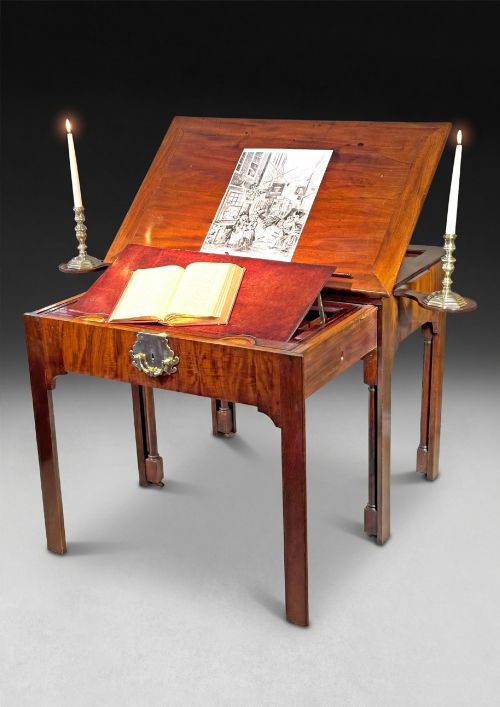


Brown Mahogany Drafting Desk
These brown mahogany drafting desk pieces offer a sturdy surface for drawing and writing, built from rich timber to serve practical workrooms.
Brown Mahogany Drafting Desk
A brown mahogany drafting desk provides a dedicated workspace for artists, architects, and cartographers who require a stable surface for large papers and plans. These items appear primarily from the Georgian, Regency, and Victorian periods, showing both English and French origins.
The selection on this page centres on tables and desks designed for reading and writing, often featuring adjustable tops or specialised compartments. Visitors will encounter forms ranging from simple reading tables to metamorphic riser desks and large folio tables.
How they were made
Cabinet makers constructed these brown mahogany drafting desk examples using solid mahogany, frequently incorporating brass hardware for adjustable mechanisms and hinges. Inlaid details in boxwood and satinwood add decorative contrast to the primary timber.
Surfaces often feature inset leather or baize writing panels, providing a durable texture for drawing and drafting. Joinery reflects the traditional standards of eighteenth and nineteenth-century workshops, ensuring structural stability for daily work.
Brown Mahogany Drafting Desk Retail Price Guide 2026
Typical asking prices for brown mahogany drafting desk among the pieces listed under this phrase on Sellingantiques today, from the lower quarter to the upper quarter. They describe what is for sale here now, not the wider market.
Cartographers needed stable folio tables to stop maps from rolling away while plotting new worlds by candlelight.
What varies in quality
Quality in a brown mahogany drafting desk rests upon the selection of timber figures, such as highly figured mahogany, and the precision of mechanical actions for lifting or tilting tops. Finer examples display meticulous attention to secondary timbers and subtle inlay work like boxwood and satinwood.
Workshop origin also influences distinction, as pieces bearing attribution to known makers command greater interest among collectors. The integration of original brass fittings and intact leather or baize surfaces preserves the integrity of the piece.
Edwards and Roberts·Gillows
The Brown Mahogany Drafting Desk Glossary
- Mahogany
- A durable tropical hardwood prized for its rich reddish-brown colour and fine grain. It served as the primary material for high-grade furniture throughout the eighteenth and nineteenth centuries.
- Metamorphic
- Describing furniture designed to transform from one form into another, such as a table converting into a desk. These clever mechanisms suit multi-purpose rooms.
- Baize
- A coarse woolen material resembling felt, traditionally used to cover gaming tables and writing surfaces. It provides a soft, non-slip texture for paperwork.
- Satinwood
- A luminous yellowish timber utilised for stringing and decorative inlay work. It creates sharp contrast against darker woods like mahogany.
Brown Mahogany Drafting Desk: Frequently Asked Questions
What is a brown mahogany drafting desk used for?
These tables provide a sloping or adjustable surface specifically designed for drawing, reading large folios, and drafting architectural plans. The sturdy construction supports heavy books and detailed paperwork.
Historically, professionals relied on these pieces in studios and libraries for precise cartography and writing tasks. Today, they serve equally well as functional statement desks in home studies.
How do I identify a Georgian drafting desk?
Georgian pieces typically display robust proportions, classic lines, and conservative use of decorative carving or subtle inlay. The timber often shows a deep, aged patina developed over centuries.
Examining the construction methods underneath reveals hand-cut dovetails and traditional joinery typical of the eighteenth century. Hardware like brass pulls further indicates the period of manufacture.
What makes a metamorphic desk different?
A metamorphic desk incorporates hidden hinges, ratchets, or pulleys that allow the top surface to rise, tilt, or expand. This engineering enabled historical users to switch between standing and sitting or reading and writing.
These clever mechanical elements require careful handling to preserve their original function. They represent the ingenuity of period cabinet makers solving spatial needs.
How should I care for mahogany furniture?
Keep mahogany pieces away from direct sunlight and extreme temperature fluctuations to prevent the timber from drying out or warping. Regular dusting with a soft cloth maintains the natural lustre of the finish.
Avoid placing damp items directly onto the wood or leather inserts to protect the original surface. Professional maintenance preserves the historic polish and structural soundness.