



Mechanical Library Desk
A mechanical library desk brings together period craftsmanship and ingenious engineering, offering moving surfaces and hidden compartments for the serious study.
Mechanical Library Desk
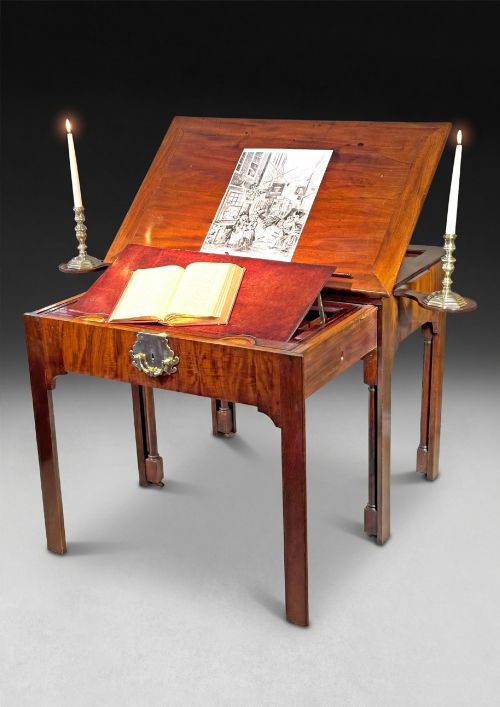
When you search for a mechanical library desk, you encounter pieces designed to transform and adapt to the needs of the reader or writer. The forms seen in these listings span the eighteenth and nineteenth centuries, taking shape as architect's tables, screen writing tables, and metamorphic library tables.
You are most likely to meet mahogany examples from the Georgian and Regency periods, often featuring clever ratchets and folding sections. These pieces were built to serve multiple functions in a scholarly room, shifting from a flat writing surface to a sloping reading stand with ease.
How they were made
The makers of these desks relied on dense timbers like mahogany and satinwood, often enhanced with brass hardware to operate the internal mechanisms. Joints and pivoting frames required precise carpentry so that moving parts functioned smoothly over decades of daily use.
Inlaid details and leather writing surfaces added both refinement and practicality to the working area. The integration of steel and brass components allowed for ratchets, hinges, and sliding panels that concealed storage without compromising the clean lines of the furniture.
Mechanical Library Desk Retail Price Guide 2026
Typical asking prices for mechanical library desk among the pieces listed under this phrase on Sellingantiques today, from the lower quarter to the upper quarter. They describe what is for sale here now, not the wider market.
What varies in quality
The distinction between ordinary and exceptional work lies in the smoothness of the mechanism and the integrity of the timber. Top-tier pieces demonstrate seamless movement in their ratchets and sliding trays, showing no binding or slackness in the joints.
Grading in quality also depends on the depth of figure in the mahogany or satinwood and the precision of any inlay. A superior desk maintains its structural balance whether the writing slope is raised flat or angled for drafting.
The Mechanical Library Desk Glossary
- Architect's table
- A specialised writing desk featuring an adjustable top that can be raised on a ratchet for drawing or reading. These often include pull-out candle slides and compartments for instruments.
- Metamorphic furniture
- Pieces designed to transform from one form of furniture into another, such as a table turning into a desk or steps. This engineering was especially popular during the eighteenth and nineteenth centuries.
- Satinwood
- A durable hardwood with a lustrous, golden sheen used extensively for fine cabinet-making and decorative veneers. It provides a striking contrast when paired with darker mahogany.
- Fusee
- A conical pulley used in clockwork mechanisms to maintain even force as the mainspring unwinds. This ensures consistent timekeeping across the duration of the wind.
Mechanical Library Desk: Frequently Asked Questions
How do mechanical desks work?
These desks utilise internal wooden ratchets, brass hinges, and sliding supports to alter the height and angle of the writing surface. Hidden compartments often release through secret catches or counterweighted panels.
Such ingenuity allowed writers and architects to switch between standing and sitting positions or adjust their working angle without disturbing their papers.
What periods do these desks date from?
The pieces seen here primarily date from the eighteenth and nineteenth centuries, encompassing Georgian, Regency, and early Victorian eras. Cabinet-makers during these times pushed the boundaries of functional furniture design.
Earlier examples often display restrained Georgian proportions in solid mahogany, while later nineteenth-century pieces incorporate more complex industrial hardware.
Are these desks suitable for daily use?
Yes, provided the moving mechanisms are handled with care and kept clean from dust and debris. The sturdy construction of period timber makes them robust enough for regular writing and study.
Many owners use the adjustable slopes for reading or laptop work, enjoying the same practical benefits that scholars valued centuries ago.