


George IV Rosewood Furniture
George iv rosewood furniture brings rich dark grain and bold neoclassical forms into a room, offering both practical surface space and striking period presence.
George IV Rosewood Furniture
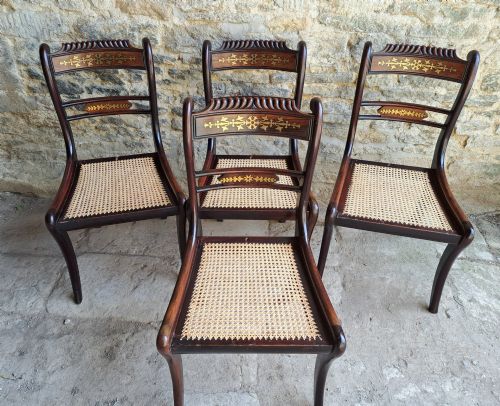
George iv rosewood furniture encompasses a diverse selection of timber pieces produced during the early nineteenth century and the wider regency and georgian eras. You encounter practical occasional items alongside substantial side cabinets, libraries tables, and matching dining chairs.
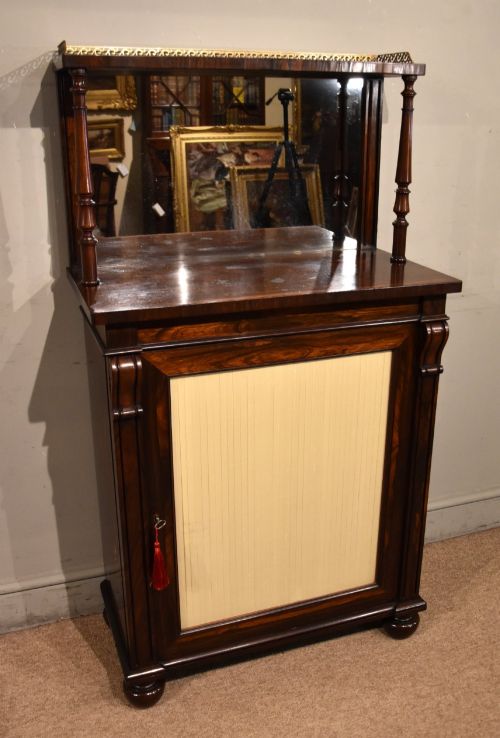
The objects appearing on this page range from chiffoniers and bookcases to tiered whatnots, music canterburys, and jardiniere stands. Most examples emphasise dark, highly figured timber complemented by brass inlay, marble tops, or carved details.
How they were made
Cabinet makers utilised dense imported rosewood, often selecting highly figured veneers or solid stock for tables and cabinets. Secondary timbers like goncalo alves and birdseye maple appear alongside brass stringing and ormolu mounts.
Workshops employed turning, carving, and precise joinery to construct pedestal bases, folding card tables, and multi-tiered shelving units. Marble inserts, mirror glass, and cane panels added texture and refinement to specific forms.
Listings feature multiple rosewood library tables, music canterburys, and chiffoniers spanning the georgian and regency periods.
What varies in quality
Quality rests primarily in the choice and matching of timber veneers, where rich figuring elevates a standard cabinet or table. The crispness of carved wooden details and the precision of brass inlay further distinguish superior workshop production.
Structural integrity and the retention of original components, such as marble tops or handles, separate well-preserved library tables and chiffoniers from heavily altered examples.
Gillows of Lancaster·Thomas King
The George IV Rosewood Furniture Glossary
- Chiffonier
- A low sideboard cabinet typically fitted with shelves or enclosed by doors below. It often includes a mirrored superstructure or a raised gallery.
- Canterbury
- A small stand with divisions designed for holding sheet music, folios, or books. Many incorporate a carrying handle and low castor feet.
- Goncalo Alves
- A dense, highly figured exotic hardwood resembling rosewood in weight and grain pattern. Cabinet makers used it for contrasting accents and cabinet construction.
- Whatnot
- A piece of freestanding furniture featuring multiple open tiers for displaying ornaments or books. Examples vary from three to four distinct levels.
- Jardiniere stand
- A tall pedestal or table designed specifically to hold a plant container or flower bowl. Carved rosewood and inset marble tops frequently characterise these pieces.
George IV Rosewood Furniture: Frequently Asked Questions
What defines george iv furniture?
George iv furniture spans the period from the early nineteenth century into the eighteen-thirties, bridging late regency and early victorian tastes. It relies heavily on dark tropical hardwoods and classical architectural proportions.
Makers of this era favoured substantial pedestals, scrolling supports, and restrained classical carving over the lighter satinwood styles of the previous century.
How do I care for rosewood?
Rosewood requires stable indoor humidity and protection from direct sunlight to prevent the rich timber from fading or drying out. Gentle dusting with a dry cloth is sufficient for daily maintenance.
Avoid silicone-based polishes and excessive moisture, using occasional traditional wax feeds only when the timber appears dry or dull.
Where were these pieces used?
Library tables, chiffoniers, and canterburys were designed for principal reception rooms, parlours, and private studies of grand townhouses and country residences. Card tables and occasional stands filled drawing rooms for evening entertainment.
Dining chairs and side cabinets anchored formal dining spaces, providing both utility and a display of household status through expensive imported timber.
Are marble tops original?
Inset marble tops on occasional tables and stands were specified by makers to provide durable, heat-resistant surfaces for lamps and decorative items. They were bedded directly into the wooden framework during initial construction.
Checking the underside reveals the original rebates and securing blocks that confirm the marble has not been adapted at a later date.