




George III Sofa
A george iii sofa brings architectural line and generous proportion to a room, offering enduring craftsmanship from the late eighteenth century.
George III Sofa
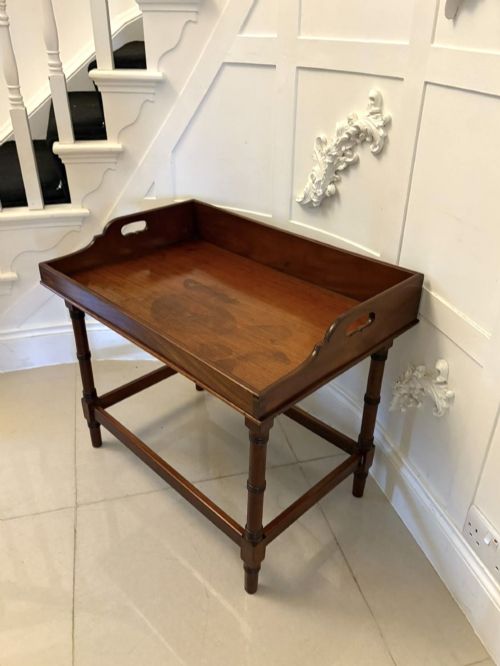
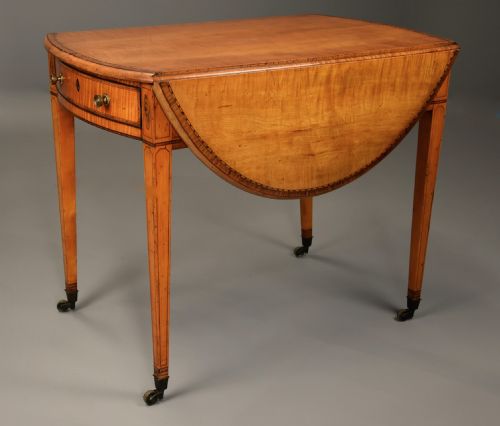
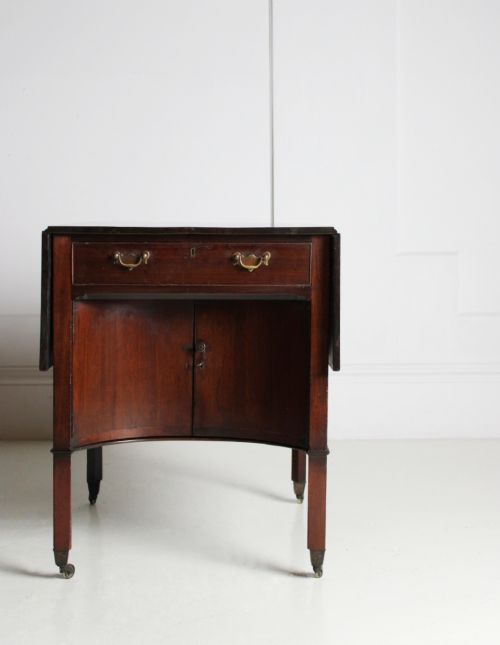
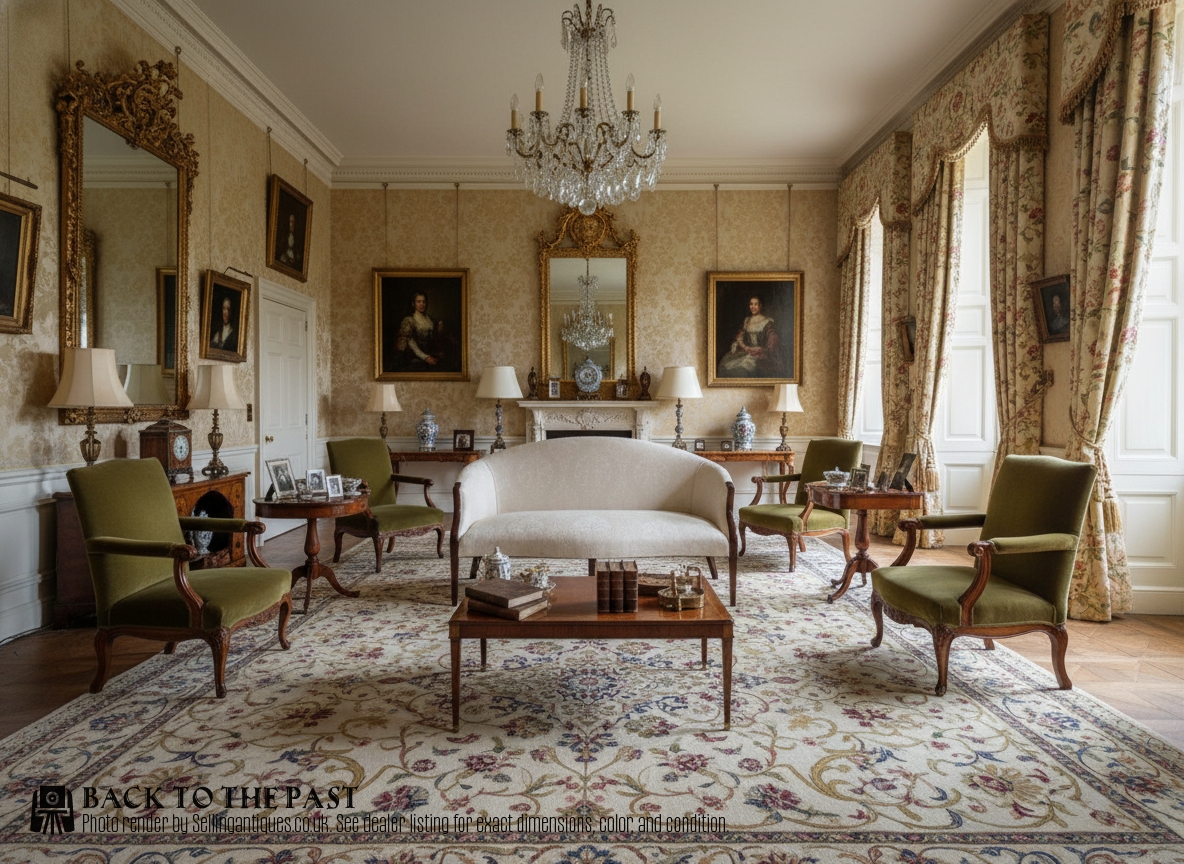
When you search for a george iii sofa, you encounter substantial upholstered seating alongside graceful Pembroke and sofa tables that share the same period vocabulary. The most common survivals on this page are mahogany frames featuring serpentine fronts, camel backs, and Hepplewhite or Chippendale influences.
Makers of this era balanced structural stability with refined carving, producing pieces intended for formal reception rooms. Alongside genuine eighteenth-century examples, you also find later revival interpretations from the nineteenth and twentieth centuries that replicate these classic proportions.
The category encompasses both large scale settees upholstered in damask or silk and freestanding centre tables designed with drop leaves. Each variation reflects the evolving domestic habits of the Georgian period, from games tables to cushioned benches.
How they were made
Cabinet makers utilised dense timbers such as mahogany, rosewood, and satinwood, often accentuating surfaces with contrasting stringing and banding. Figured veneers and solid frame constructions provide the foundational strength that allows these forms to survive centuries of use.
Upholstered items rely on traditional stuffing methods contained by textiles like damask, baize, and silk, while accent details incorporate brass hardware and inlaid sycamore. Joinery techniques from the period prioritised tight frame assembly, visible in the stability of stretcher bases and drop-leaf mechanisms.
What varies in quality
The distinction between ordinary and exceptional pieces lies in the crispness of the carved detail and the choice of timber figure. Superior examples display carefully matched veneers, balanced proportions, and undisturbed patination built up over generations.
Lesser items may show heavy restoration, replacement hardware, or simplified woodwork that lacks the sharp definition seen in top-tier workshops. The integrity of the original frame structure and the quality of secondary timbers underneath ultimately dictate the standing of any given piece.
The George III Sofa Glossary
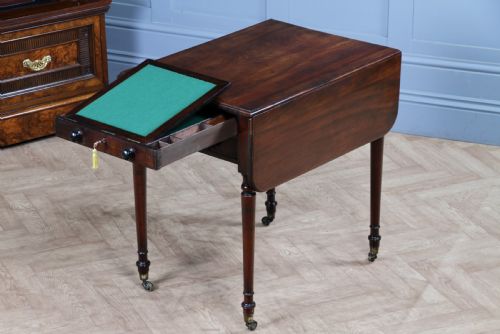
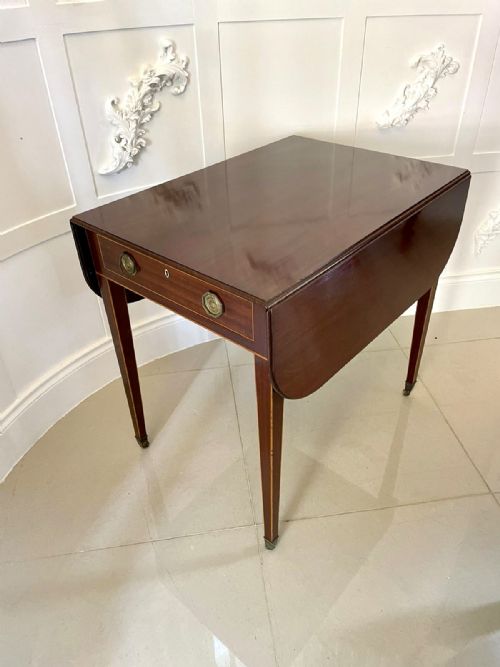
- Pembroke table
- A small rectangular table featuring two hinged drop leaves on opposing sides. It typically includes one or more drawers and rests on slender legs.
- Camel back
- A curved, undulating sofa backrest profile that rises in a gentle arch resembling a camel's hump. This contour defined many formal upholstered seats of the Georgian era.
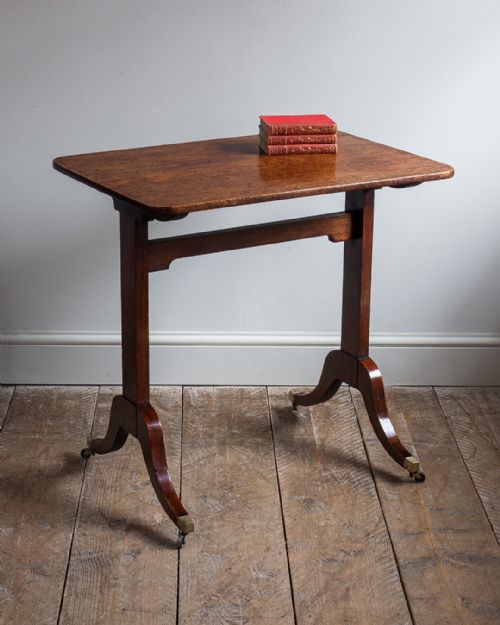
- Sofa table
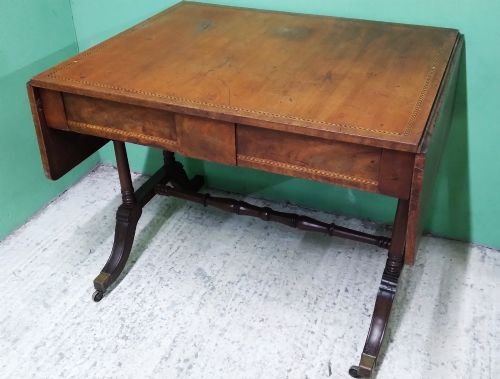
- A freestanding library or centre table designed with drop leaves on the short ends. It originated during the late eighteenth century to sit conveniently in front of a sofa.
- Serpentine front
- A furniture edge shaped with a central convex curve flanked by two concave curves. This fluid line appears frequently on the aprons of tables and the seat rails of settees.
- Stringing
- A narrow inlay of contrasting wood used to outline panels, drawer fronts, and table tops. It adds subtle linear definition without overwhelming the primary timber grain.
George III Sofa: Frequently Asked Questions
How do I identify a true period piece?
Examine the timber species, construction methods inside the drawers, and the natural wear patterns on the feet and handles. Eighteenth-century furniture exhibits hand-cut joints and secondary woods appropriate to the region of manufacture.
Compare the proportions and carving style against documented examples from the Georgian era. Subtle inconsistencies often point towards later nineteenth-century revival work rather than original eighteenth-century production.
Where should I place a sofa table?
Despite the name, these versatile tables work effectively behind a freestanding sofa, against a hallway wall, or as a compact writing desk. Their drop leaves allow them to adapt to different spatial requirements in a room.
Keep them away from direct heat sources and strong sunlight to protect the polished mahogany or satinwood surfaces. Regular polishing with traditional wax helps maintain the depth of the patina.
What distinguishes Hepplewhite style furniture?
Hepplewhite designs are characterised by lighter proportions, elegant tapered legs, and subtle shield or camel-back shapes on seating. The aesthetic moves away from heavy bulk towards refined grace.
Inlays and painted motifs frequently replace deep carved relief on these pieces. This style represents the refined neoclassical taste prevalent towards the end of the eighteenth century.
Can I use an antique settee daily?
Most antique frames remain structurally sound, but the internal webbing and upholstery stuffing may require professional renewal to support regular seating. Assess the strength of the joints before committing a piece to heavy daily use.
Opt for supportive conservation rather than total reconstruction whenever possible to preserve the historical integrity. Selecting durable historical-style textiles ensures the piece withstands modern living while maintaining its appearance.