

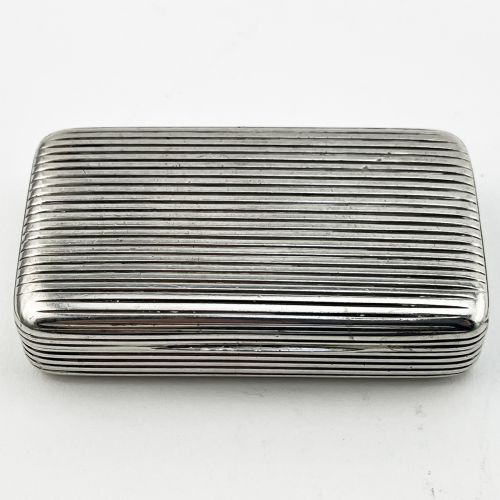
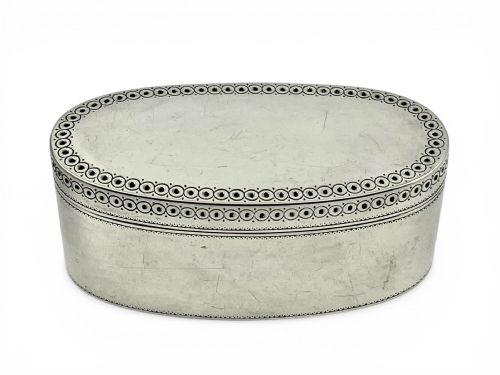


George III Silver Snuff Box
A george iii silver snuff box is a pocket-sized Georgian container forged for powdered tobacco, prized for intricate metalwork and personal heraldry.
George III Silver Snuff Box
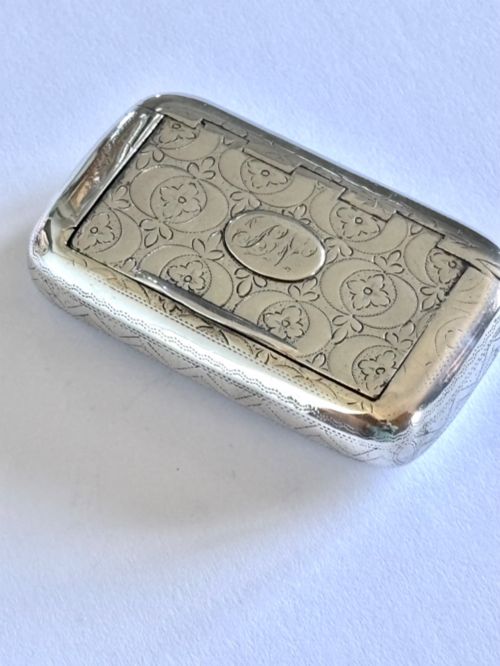
A george iii silver snuff box is a small pocket container made during the Georgian era to hold dry tobacco. Collectors encounter these pieces in various regional forms, including pocket boxes, satchel styles, and curved designs shaped to fit a waistcoat.
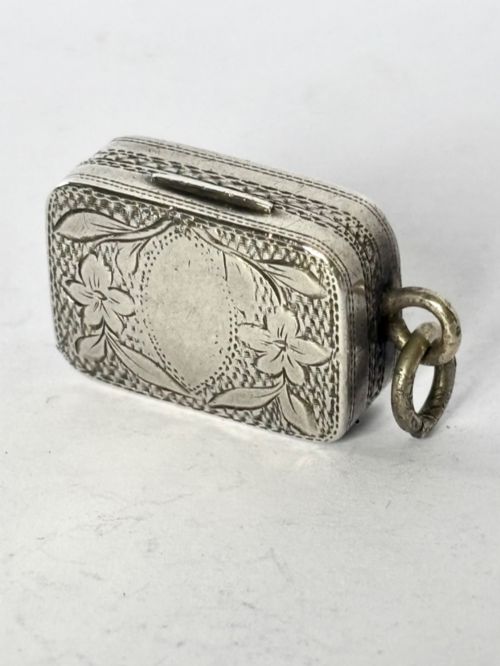
The objects span standard snuff containers alongside combination pill boxes, patch boxes, and vinaigrettes fitted with internal pierced grilles. Scottish provincial examples also appear alongside London and Birmingham makes, often incorporating organic materials like cowrie shell and agate.
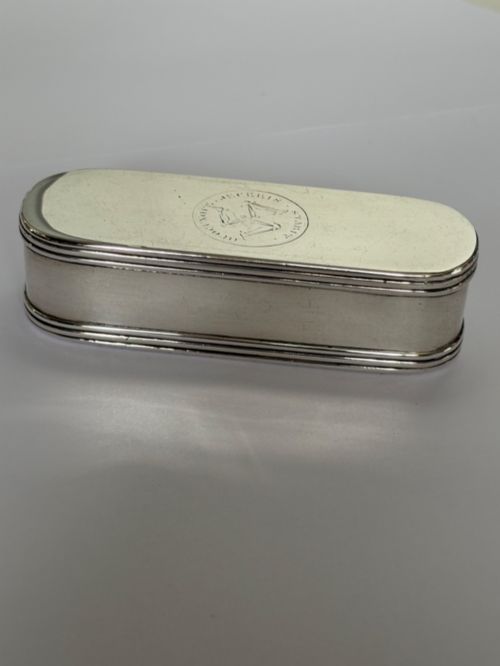
The forms range from simple rectangular boxes to more elaborate configurations featuring crests, cameos, and cast figurative scenes. These pieces reflect the personal social habits of the late eighteenth and early nineteenth centuries.
Judging Quality
Quality rests in the crispness of the chased or cast decoration and the weight of the silver used in the body. Pieces with heavy cast top scenes or detailed engraved crests display higher levels of artisan labour than plain utilitarian boxes.
The integrity of the hinge action and the tightness of the lid closure distinguish superior examples. Furthermore, the presence of legible maker marks and complete hallmarks adds considerable definition to an individual piece.
George III Silver Snuff Box Retail Price Guide 2026
Typical asking prices for george iii silver snuff box among the pieces listed under this phrase on Sellingantiques today, from the lower quarter to the upper quarter. They describe what is for sale here now, not the wider market.
Some pocket containers are shaped like snails and satchels to amuse polite company.
SAMUEL PEMBERTON·THOMAS JOHNSON·CORNELIUS BLAND·MATTHEW LINWOOD·JOSEPH WILLMORE·JOHN THROPP·THOMAS WILLMORE·PHIPPS AND ROBINSON·ROBERT KEAY·ALEXANDER J STRACHAN·JOHN SHAW·WILLIAM PUGH
The George III Silver Snuff Box Glossary
- Silver-gilt
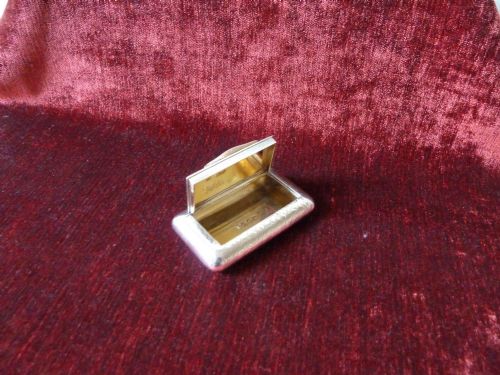
- Silver that has been coated with a thin layer of gold on its surface. This technique provides a rich yellow finish while maintaining a solid silver structure underneath.
- Vinaigrette
- A small hinged box containing a sponge soaked in aromatic vinegar behind a pierced metal grille. These containers were carried to mask unpleasant odours.
- Hallmark
- An official stamp applied to precious metals indicating the standard of purity, the assay office, and the year of manufacture. These marks provide the primary documentation for dating an antique.
- Provincial
- Describing items manufactured outside of the major official assay towns like London. Scottish and regional English towns produced distinct local variations.
- Chasing
- A metalworking technique where patterns are hammered into the front surface of the metal from the outside to push the design into relief.
George III Silver Snuff Box: Frequently Asked Questions
What is a george iii silver snuff box used for?
These pieces were made to hold small quantities of powdered tobacco for personal consumption during the Georgian period. Owners carried them in pockets or waistcoats for quick access throughout the day.
Over time, many of these containers adapted to hold small pills or patches instead of tobacco. Today, collectors primarily preserve them as examples of miniature silver smithing.
Why do some boxes feature shell or stone?
Makers frequently incorporated natural materials like cowrie shell and agate to add texture and colour variation to the lid. These organic elements provided a decorative contrast to the polished sterling silver bodies.
Cowrie shell boxes often feature rounded, natural forms that fit comfortably in the hand. Agate inserts introduced polished geological patterns into the top of the design.
How can I date a piece accurately?
Dating relies upon the stamped hallmarks found on the interior surfaces of the metal body. These marks record the assay office, the specific date letter for the year, and the maker's mark.
Matching the stamped letter against official assay records reveals the exact year the item passed through the office. Maker marks further narrow down the workshop responsible for the construction.