


George III Oval Back
George iii oval back chairs and tables bring neoclassical elegance to a room through refined woodwork and delicate framing.
George III Oval Back
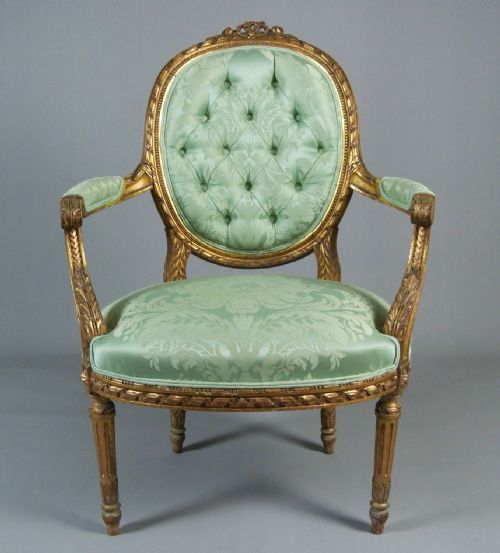
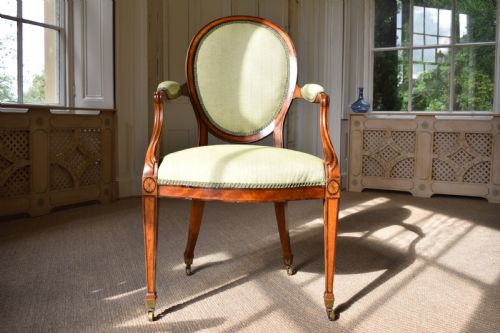
When you search for george iii oval back, you encounter seating and tables defined by curved wooden frames and classical proportions. The material evidence on this page centres primarily on armchairs, dining chairs, and settees from the eighteenth century, alongside later revival pieces.
The most frequent forms met here are mahogany and giltwood armchairs bearing the characteristic curved backrest associated with the period. Makers of the time utilised light satinwood and painted finishes to achieve the refined neoclassical aesthetic demanded by fashionable interiors.
How they were made
Carpenters and joiners shaped solid timbers such as mahogany and satinwood to form the curved structural supports of these chairs and tables. Skilled hands carved intricate neoclassical motifs directly into the wooden frames, occasionally applying parcel gilt to highlight specific details.
Upholstery completed the seating, with textiles like damask secured over padded foundations within the open frames. Tables incorporated veneered surfaces and turned legs, demonstrating precision in both cabinetwork and decorative arts.
Some eighteenth-century chairs hide secret pencil marks left by joiners beneath the seat rails.
What varies in quality
The standard of a george iii oval back piece rests upon the depth and crispness of the wood carving rather than the mere presence of decoration. Superior examples display fluid lines in the frame and precise joinery that conceals structural joints.
Material selection divides the ordinary from the exceptional, particularly in the grain of the mahogany or the smoothness of the painted and gilt surfaces. Original upholstery schemes and untouched timber patination elevate the standing of surviving items.
Thomas Chippendale·John Linnell
The George III Oval Back Glossary
- Oval back
- A curved, loop-shaped backrest characteristic of neoclassical seating designs introduced in the eighteenth century. This form softens the rigid angles common in earlier chair construction.
- Giltwood
- Wood coated with a thin layer of gold leaf or gold paint for decorative effect. It appears frequently on formal salon armchairs from the period.
- Satinwood
- A durable hardwood with a natural golden sheen, utilised extensively for fine cabinetmaking and decorative veneers during the late eighteenth century. It takes a high polish.
- Parcel gilt
- A finishing technique where only specific carved details or raised portions of an object are gilded while the remaining surface shows painted wood or natural grain.
- Neoclassical
- A style spanning the mid-to-late eighteenth century that drew inspiration from the classical art and architecture of ancient Greece and Rome, favouring symmetry and restrained ornament.
George III Oval Back: Frequently Asked Questions
Are these chairs comfortable for daily use?
Most surviving george iii oval back armchairs were designed for formal reception rooms rather than lounging. Their upright proportions and rigid wooden frames prioritise neoclassical elegance over deep cushioning.
Modern buyers often place them in studies or bedrooms where their sculptural forms can be appreciated without heavy daily wear.
How do I identify a revival piece?
Late nineteenth-century revival pieces often display machine-tooled elements and standardised timber finishes that differ from eighteenth-century hand-carved surfaces. The patination on the wood tends to be more uniform.
Examining the underside of the frame and the construction methods helps determine whether a chair dates to the original period or the later revival.
What is the difference between mahogany and satinwood?
Mahogany is a dark, heavy tropical hardwood prized for its strength and rich reddish-brown tone. It forms the structural core of many dining chairs and armchairs on this page.
Satinwood offers a lighter, golden-yellow appearance and was selected for decorative emphasis, often featuring in painted furniture and polished tabletops.
Can I mix different styles around a table?
Matching a set of george iii chairs requires attention to wood grain, carving depth, and frame shape. Matched pairs appear frequently, allowing flexibility in arrangement.
Introducing pieces from the hepplewhite or sheraton traditions alongside neoclassical chairs creates a balanced dining environment grounded in eighteenth-century design.