



Mahogany Oval Back Chairs
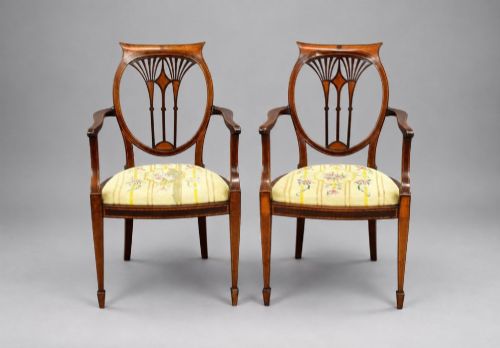
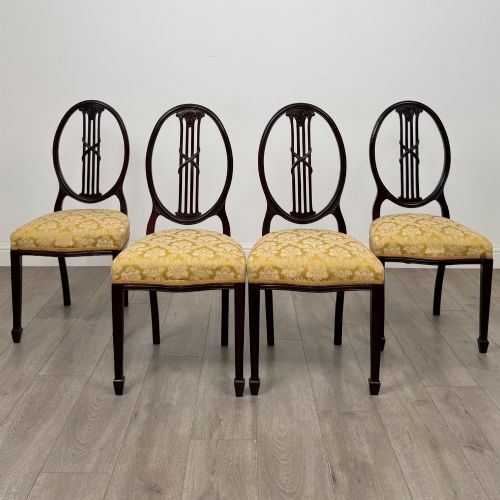
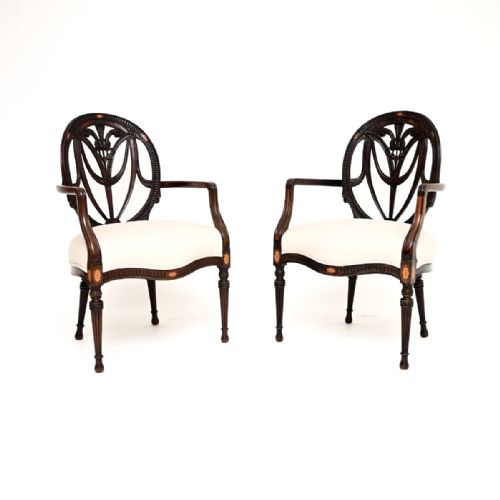
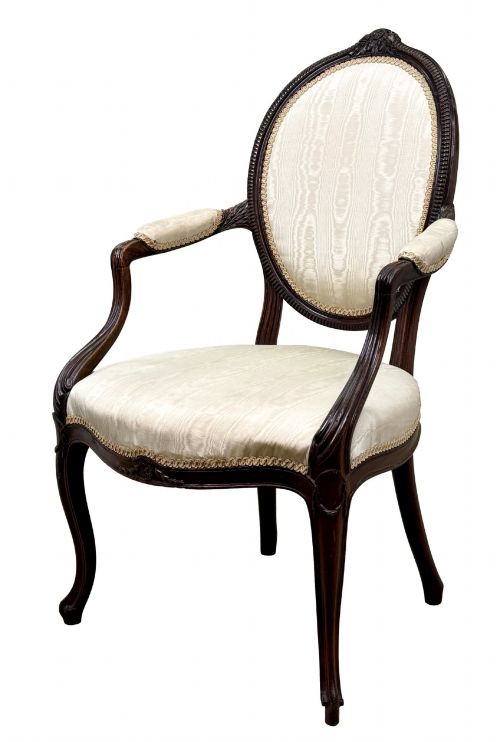
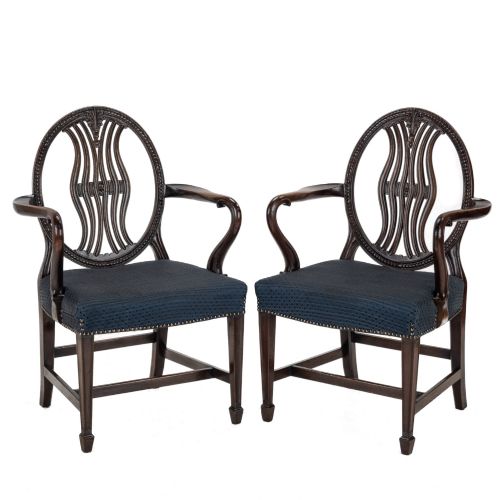
Mahogany oval back chairs combine slender timber frames with curved crest rails, bringing classical proportion and refined seating to a room.
Mahogany Oval Back Chairs
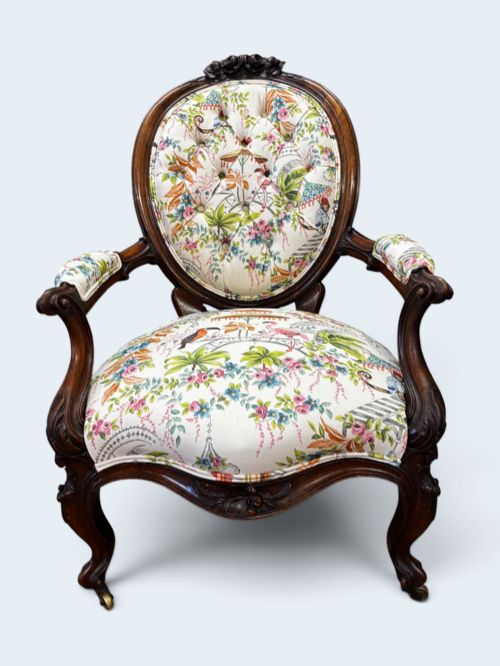
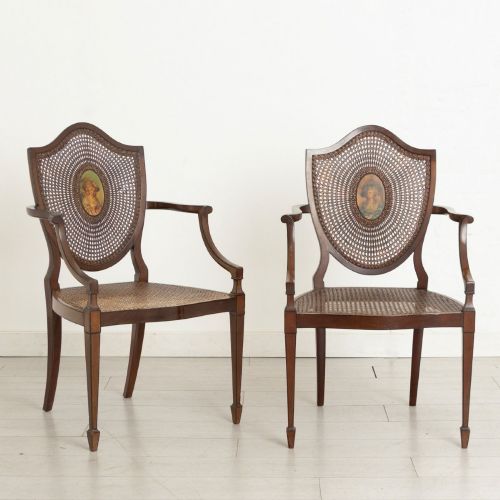
The selections span multiple periods, with examples originating from the Georgian and Regency eras alongside later revivals from the Victorian, Edwardian, and twentieth-century periods. The oval back form frequently appears in Hepplewhite style and Sheraton revival designs, reflecting classical eighteenth-century influences.
How they were made
Cabinet makers utilised solid mahogany for the structural frames, shaping the characteristic curved oval backs through steam bending or precise joinery. Surfaces often incorporate detailed carving or delicate inlay work using contrasting timbers like satinwood.
Seating portions utilise traditional upholstery methods, featuring drop-in pads or upholstered foundations finished in materials such as fabric, damask, wool work, or cane.
Some library armchairs double as masters chairs, offering an imposing seat height designed to keep the reader firmly anchored.
What varies in quality
The standard of carving and the crispness of inlaid details distinguish finer examples from simpler production, reflecting the skill of the original workshop. Timber selection also matters, as deeply grained mahogany with rich natural colour holds visual presence better than plain stock.
Structural integrity and the retention of original framing elements dictate the standing of a piece. Examples that preserve their period upholstery substrate or cane work without extensive reconstruction carry greater authenticity.
John Linnell
The Mahogany Oval Back Chairs Glossary
- Hepplewhite style
- A light, elegant furniture design associated with the cabinet maker George Hepplewhite, featuring shield or oval backs and tapered legs. It experienced strong revivals during the nineteenth and twentieth centuries.
- Sheraton revival
- A late nineteenth-century movement emulating the refined rectilinear and classical forms popularised by Thomas Sheraton. These pieces frequently incorporate satinwood inlay and delicate proportions.
- Carver armchair
- An armchair designed to match a set of dining chairs, typically featuring open arms attached to the sides of the seat. They were historically placed at the head of a dining table.
- Caning
- Woven rattan material used to form light, flexible panels for chair backs or seats. Split cane provides a breathable and decorative surface seen on specific revival models.
Mahogany Oval Back Chairs: Frequently Asked Questions
How do I date a mahogany oval back chair?
Dating relies on examining construction techniques, timber patination, and stylistic markers that align with specific eras like the Georgian period or later Victorian and Edwardian revivals.
Later revival pieces from the late nineteenth and twentieth centuries often display machine-tooled elements or differing secondary woods compared to their eighteenth-century predecessors.
Are these chairs suitable for daily dining use?
Many of these chairs function well for regular seating provided the frame joints remain solid and stable. Dining chairs and carvers are built to handle standard seating loads.
Delicate salon chairs or pieces with split cane backs require more careful handling to preserve their antique frames and woven components.
What is the difference between Hepplewhite and Sheraton oval chairs?
Hepplewhite designs typically emphasise curved, sweeping lines with shield or oval backs and slender tapered legs. Sheraton styles favour more rectilinear geometries paired with classical ornamentation.
Both styles frequently utilise mahogany and intricate inlay work, leading to crossover characteristics in later revival periods.
How should I care for mahogany and fabric upholstery?
Maintain the timber by dusting regularly with a soft cloth and applying appropriate wax polish sparingly to nourish the mahogany grain. Avoid placing chairs in direct sunlight to prevent timber fading.
Upholstery care depends on the textile used, requiring professional cleaning for delicate damask or wool work seats to preserve the fabric.