



George III Kettle
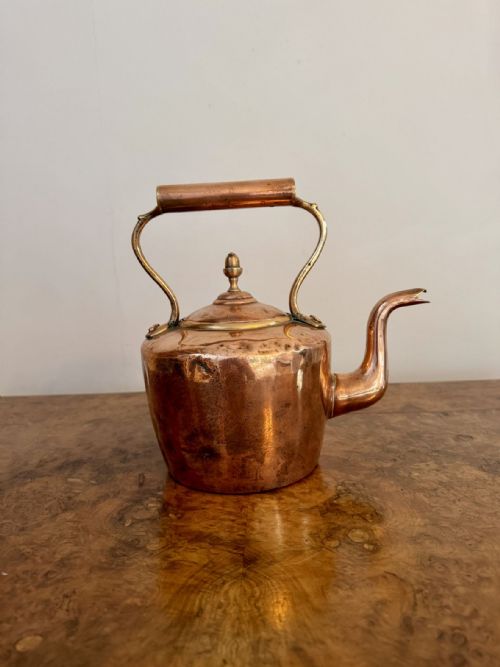
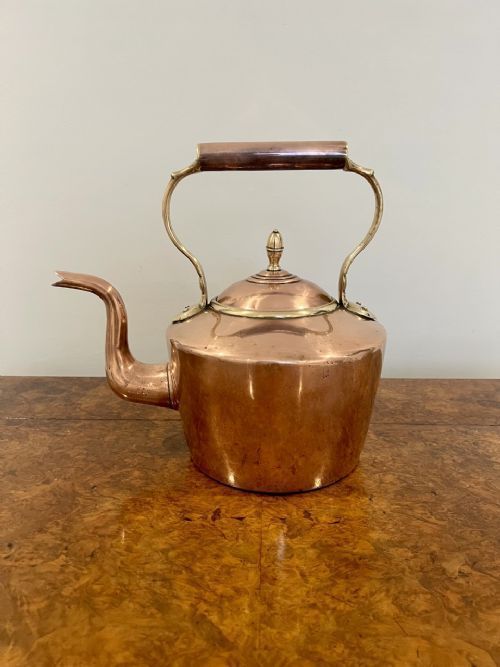
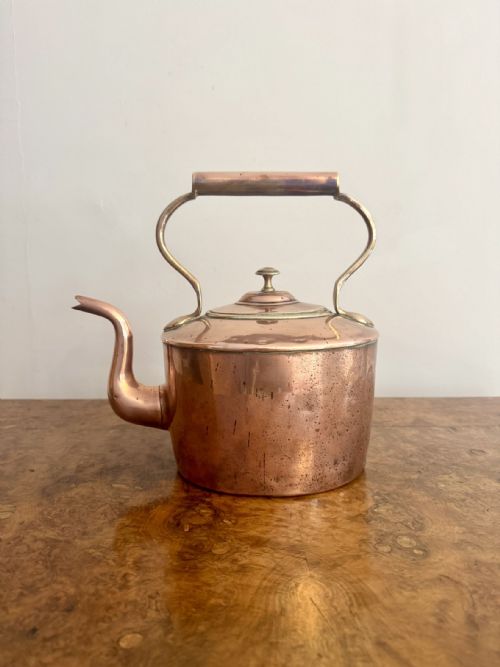
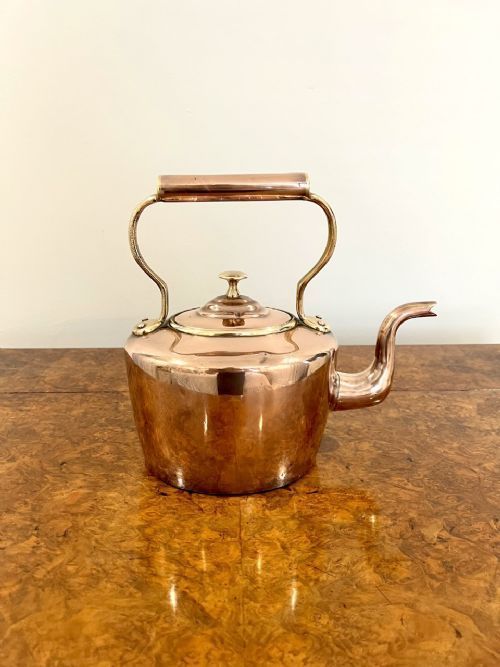
These george iii kettle pieces span copper hearthware and timber stands built to hold hot water during the Georgian period.

George III Kettle
When you search for a george iii kettle, you encounter two distinct forms: heavy copper vessels designed for heating water and timber stands built to support them.
The copper vessels range from small domestic pots to large oval kettles and hanging water urns, whilst the stands comprise mahogany, walnut, and satinwood tripod or square tables.
Most examples on this page date from around eighteen hundred and the eighteenth century, reflecting the domestic habits of the period.
How they were made
The metal items utilise heavy gauge copper and brass, often polished to a bright finish, whilst the stands employ dense hardwoods such as mahogany, walnut, and satinwood.
Joinery on the stands includes tripod bases, dish tops, and piecrust edges, demonstrating traditional cabinetmaking techniques of the georgian era.
Some copper kettles are so large they require two hands just to pour a polite cup of tea.
What varies in quality
The distinction between standard items and superior examples lies in the weight of the copper and the crispness of the timber carving on the stands.
Subtle details such as original brass fittings on the kettles and well-figured mahogany grain on the tables elevate certain pieces above ordinary utility items.
Henry Kettle
The George III Kettle Glossary
- Kettle stand
- A small occasional table designed specifically to hold a hot water vessel near the hearth or tea table.
- Piecrust top
- A carved raised timber edge shaped in undulating curves, found on quality mahogany stands.
- Tripod base
- A three-legged support structure commonly utilised on eighteenth-century occasional tables for stability on uneven floors.
- Footman
- A metal hearth stand placed before the fire to support pots and kettles.
George III Kettle: Frequently Asked Questions
What was a kettle stand used for?
These small timber tables held heavy copper water vessels close to the hearth or tea gathering during the georgian era.
They kept hot water elevated off the floor and within reach during social occasions.
How do copper kettles differ in shape?
Some vessels are round and compact for everyday domestic use, while others feature large oval proportions or hanging mechanisms.
Each form corresponded to the capacity required by the household.
Which woods appear on these stands?
Cabinetmakers utilised dense timbers including mahogany, walnut, and satinwood to construct sturdy tripod and square-topped tables.
These materials provided the necessary strength to support heavy metalware.
How do I identify a georgian piece?
Look for construction traits such as tripod dish tops, piecrust edges, and heavy gauge copper fastened with traditional methods.
Dates cluster around the eighteenth century and eighteen hundred.