





George III Inlaid Chest
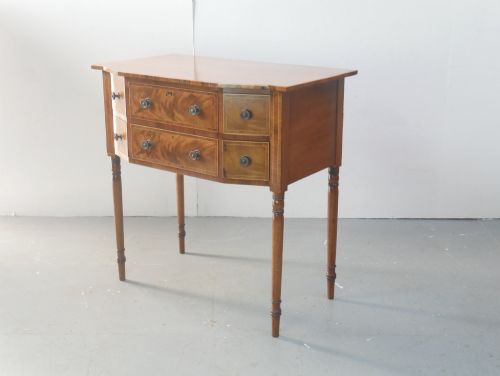
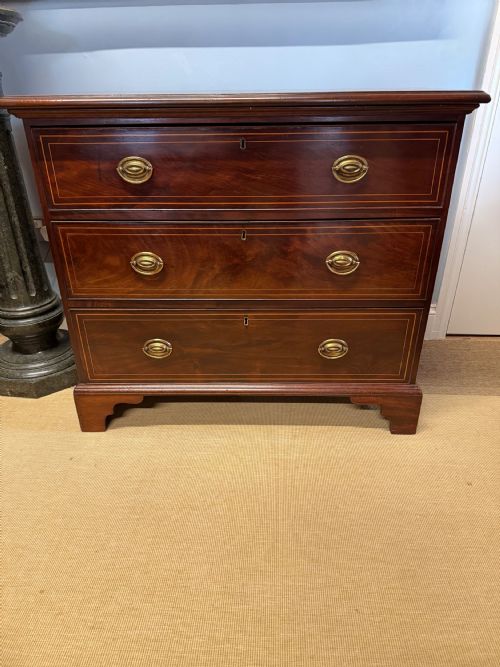
When you search for george iii inlaid chest, you encounter sophisticated case pieces defined by figured timbers and contrasting boxwood or satinwood stringing.
George III Inlaid Chest
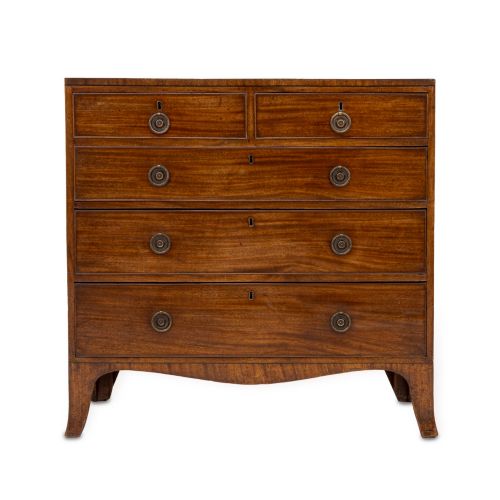
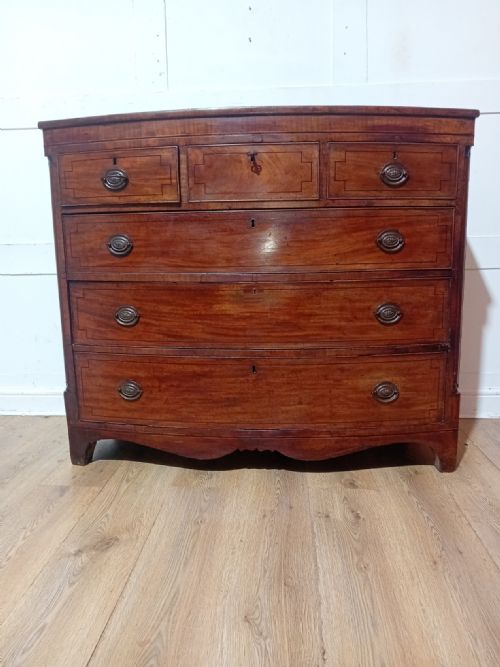
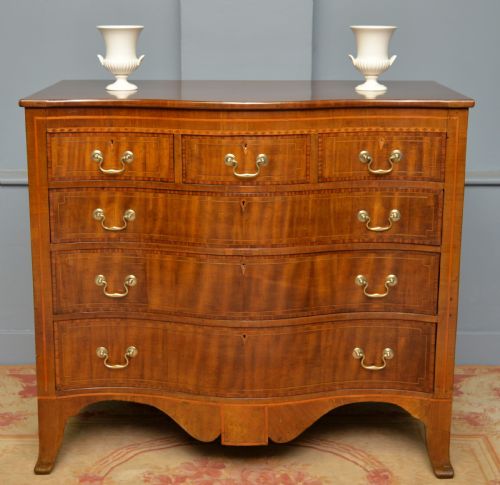
A george iii inlaid chest brings together formal proportion and meticulous decorative detail from the Georgian period. Buyers looking at this page find primarily mahogany pieces featuring bow-front, serpentine, or straight-front profiles.
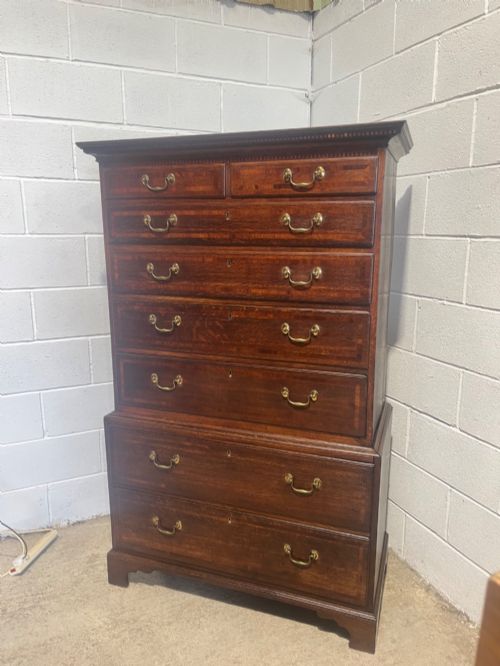
The selection extends from compact bachelors chests and tallboys to grand chests on chest and secretaire variants. Workshops of the period utilised contrasting woods to frame drawer fronts and top surfaces, creating a refined architectural aesthetic.
While many examples date directly to the late eighteenth century, later nineteenth-century interpretations in the George III style also appear. These pieces served primarily for refined domestic storage in principal bedchambers and dressing rooms.
Materials and Construction
Cabinet makers relied predominantly on dense primary timbers such as mahogany, walnut, and occasional yew wood, supported by oak drawer linings. Selected veneers like flame mahogany or burr walnut provided striking surface movement across the primary facades.
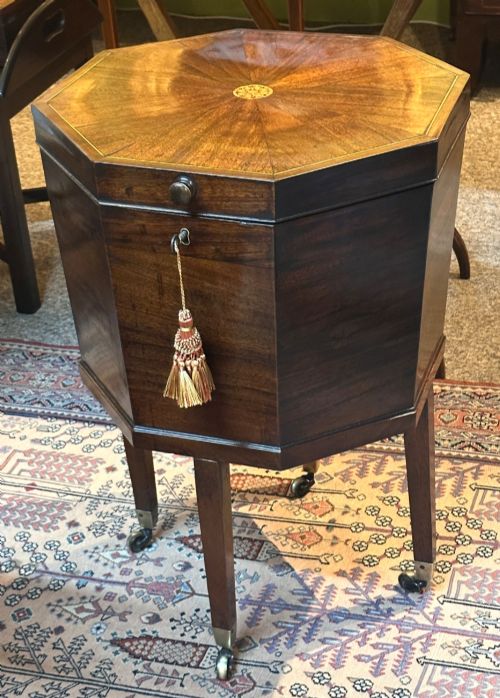
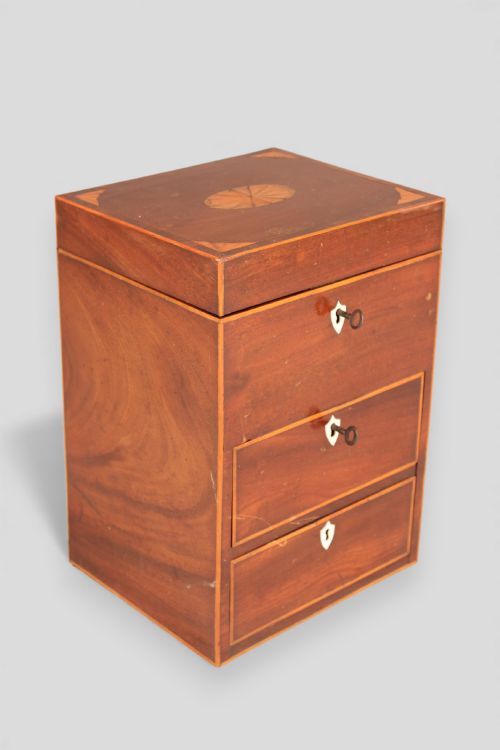
Decorative detailing depended on precision cutting of contrasting light woods, incorporating boxwood inlay, satinwood banding, and marquetry. Brass handles, escutcheons, and occasional brass stringing complemented the timber tones, secured with hand-cut dovetail joints.
Listings feature mahogany, satinwood, boxwood, and walnut materials across Georgian, Regency, and Edwardian periods.
Markers of Distinction
The hierarchy of quality rests primarily on the choice of timber and the precision of the cabinet work. Exceptional pieces display highly figured flame mahogany or figured satinwood matched symmetrically across multiple drawers.
Refinement shows in the crispness of the inlaid stringing and the integration of secondary woods. Structural integrity, original brass hardware, and untouched patination distinguish the finest examples from standard domestic production.
The George III Inlaid Chest Glossary
- Bow-front
- A cabinet front that curves outward in a convex shape. This profile gained immense popularity during the late eighteenth century for chests of drawers.
- Serpentine
- A furniture front characterised by a central convex curve flanked by two concave sweeps. It represents a challenging form requiring supreme woodworking skill.
- Stringing
- Thin lines of contrasting wood inlaid into grooves on a furniture surface. This technique creates delicate geometric borders around drawer perimeters.
- Tallboy
- A tall chest of drawers made in two stacked sections, often combining a chest of drawers base with an upper chest or wardrobe. They maximise vertical storage space.
- Secretaire
- A desk disguised as a chest of drawers featuring a drop-front top drawer fitted with writing surfaces and small compartments. It combines domestic storage with a writing station.
George III Inlaid Chest: Frequently Asked Questions
What defines a George III chest?
A George III chest is defined by formal proportions, high-quality timber selection, and restrained classical ornamentation typical of the mid-to-late eighteenth century.
These pieces rely on architectural balance rather than heavy carving, utilising figured mahogany and precise inlay work to create visual depth.
How do I style these in a modern home?
These chests integrate well into contemporary interiors by serving as focal anchor points in hallways, living rooms, or bedrooms.
Their warm timber tones and refined proportions contrast effectively against neutral walls while providing practical surface and drawer space.
Are all these chests from the eighteenth century?
While many date to the Georgian period, the selection includes later nineteenth-century pieces constructed in the George III style.
Maker craftsmanship and timber characteristics help determine whether a piece originates from the primary period or a later revival era.
What is a caddy top?
A caddy top refers to a raised, moulded tabletop edge that mirrors the profile associated with tea caddies of the period.
This distinct moulding adds a subtle layer of sculptural definition to the uppermost surface of the chest.