



George III Corner Stand
These george iii corner stand pieces turn awkward room angles into useful display and storage space with understated architectural clarity.
George III Corner Stand
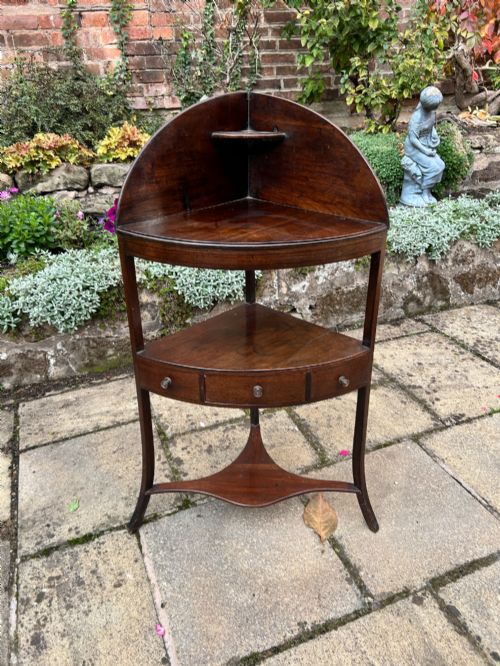
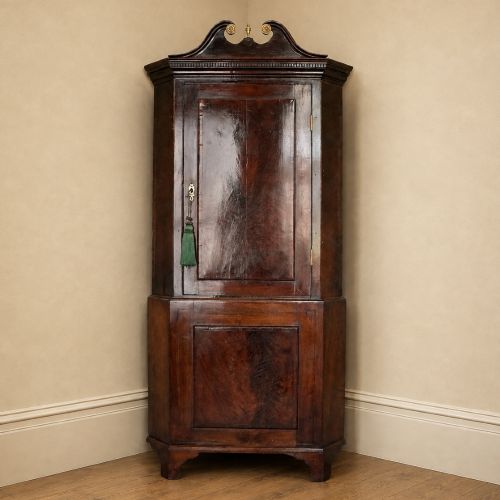
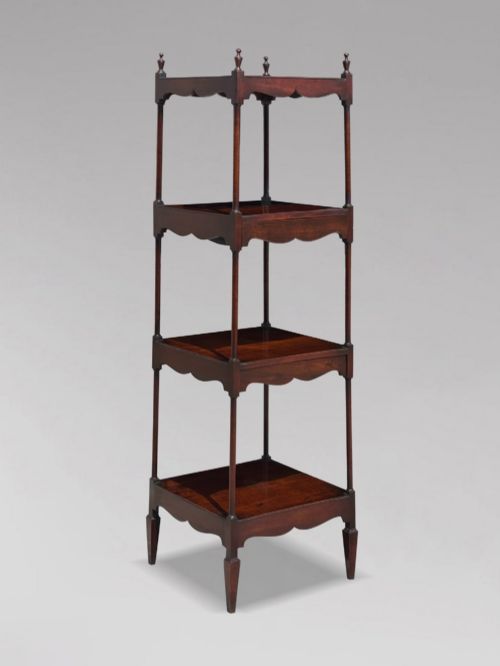
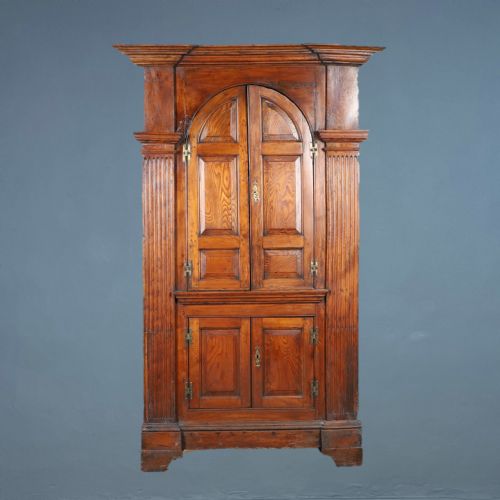
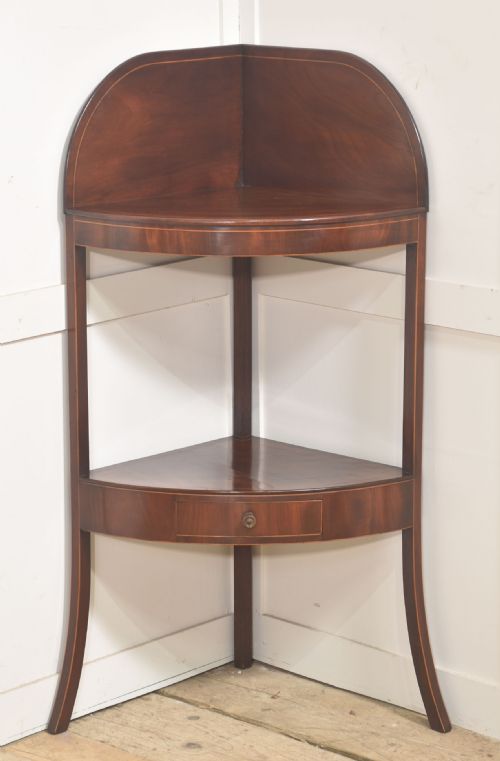
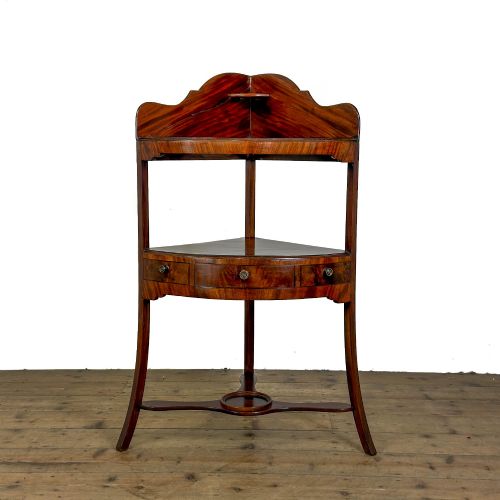
A george iii corner stand typically takes the form of a functional washstand, an architectural standing cupboard, or a tiered display piece designed to fit neatly into the corner of a room. The listings reveal that mahogany washstands and floor-standing corner cabinets dominate the selection, offering practical solutions for period interiors.
Buyers also encounter occasional examples featuring glass, brass hardware, or boxwood inlay, alongside provincial variants fashioned from elm or oak. These pieces span the eighteenth century and into the nineteenth, reflecting the shift from utilitarian washing furniture to decorative domestic cabinetry.
Materials and construction
Makers relied primarily on solid and veneered mahogany, frequently complemented by secondary timbers such as oak and elm for interior structures and drawer linings. Cabinetmakers applied boxwood inlay to articulate cornices, door panels, and friezes on finer examples.
Construction methods include dovetailed drawer boxes, pegged tenon joints, and brass hinges or handles. Specialised washstands incorporate shaped splashbacks and apertures designed to hold ceramic basins.
George III Corner Stand Retail Price Guide 2026
Typical asking prices for george iii corner stand among the pieces listed under this phrase on Sellingantiques today, from the lower quarter to the upper quarter. They describe what is for sale here now, not the wider market.
The archive records multiple forms ranging from compact shaving stands to large double-door architectural cupboards.
Distinctions in quality
The refinement of the timber selection and the crispness of the joinery set superior examples apart from standard provincial output. Finely figured mahogany grain, delicate stringing, and well-proportioned swan neck pediments indicate skilled workshop production.
Proportion and structural integrity define the higher tier of these pieces. Original brass fittings, intact tiered shelves, and unaltered plinths command greater appreciation than heavily restored or structurally altered variants.
Gillows
The George III Corner Stand Glossary
- Washstand
- A specialised item of furniture designed to hold a basin, jug, and shaving equipment. These units often feature tiered surfaces and cut-out tops specifically tailored for ceramic bowls.
- Corner Cupboard
- A cabinet built with a triangular plan to fit precisely into the corner of a room. They appear as hanging wall units or as floor-standing cupboards with single or double doors.
- Boxwood Inlay
- A decorative technique involving contrasting light wood inserted into recesses cut into a darker primary timber. It creates sharp geometric borders and linear patterns.
- Tier Stand
- An open piece of furniture composed of multiple open shelves supported by columns or uprights. These structures were utilised for displaying ceramics, books, or small decorative objects.
- Swan Neck Pediment
- A broken scroll pediment topping a cabinet cornice, curving outward and upward like a swan's neck. It frequently terminates in a carved floral patera or wooden turn.
George III Corner Stand: Frequently Asked Questions
What is a george iii corner stand?
A george iii corner stand is a piece of eighteenth or early nineteenth-century furniture shaped specifically to occupy the junction of two walls. They serve various functions, acting as washstands, enclosed cupboards, or open display shelving.
These items make efficient use of compact spaces while providing enclosed storage or surface display areas. Their triangular footprint allows them to integrate smoothly into period room schemes without obstructing walkways.
How were corner washstands used?
Period washstands provided a dedicated station for morning hygiene before plumbed bathrooms became common in residential homes. The upper tier held a ceramic basin and water pitcher, while lower shelves accommodated soap and shaving gear.
Many surviving examples retain circular cut-outs in the top tier designed to stabilize basins securely. Cupboard sections below often concealed chamber pots or extra linen.
Are these cabinets floor standing or wall hanging?
The inventory includes both floor-standing cupboards and hanging wall units designed to be mounted securely. Floor-standing variants rest directly on bracket feet or shaped plinths, often rising to a distinct cornice or pediment.
Wall-hanging versions attach directly to wall studs using internal brackets or hanging loops. They offer elevated storage when floor space is restricted.
What woods were used in these pieces?
Mahogany is the predominant timber found across these listings, favored for its rich dark grain and durability. Cabinetmakers also utilised oak, elm, and painted finishes for provincial or regional pieces.
Inlay work frequently incorporates boxwood lines or contrasting veneers to accent drawer fronts and door panels. Secondary woods like pine or oak are standard for hidden structural elements and drawer linings.