
George III Bureau
A george iii bureau brings fine cabinet-making and functional writing space into a room.
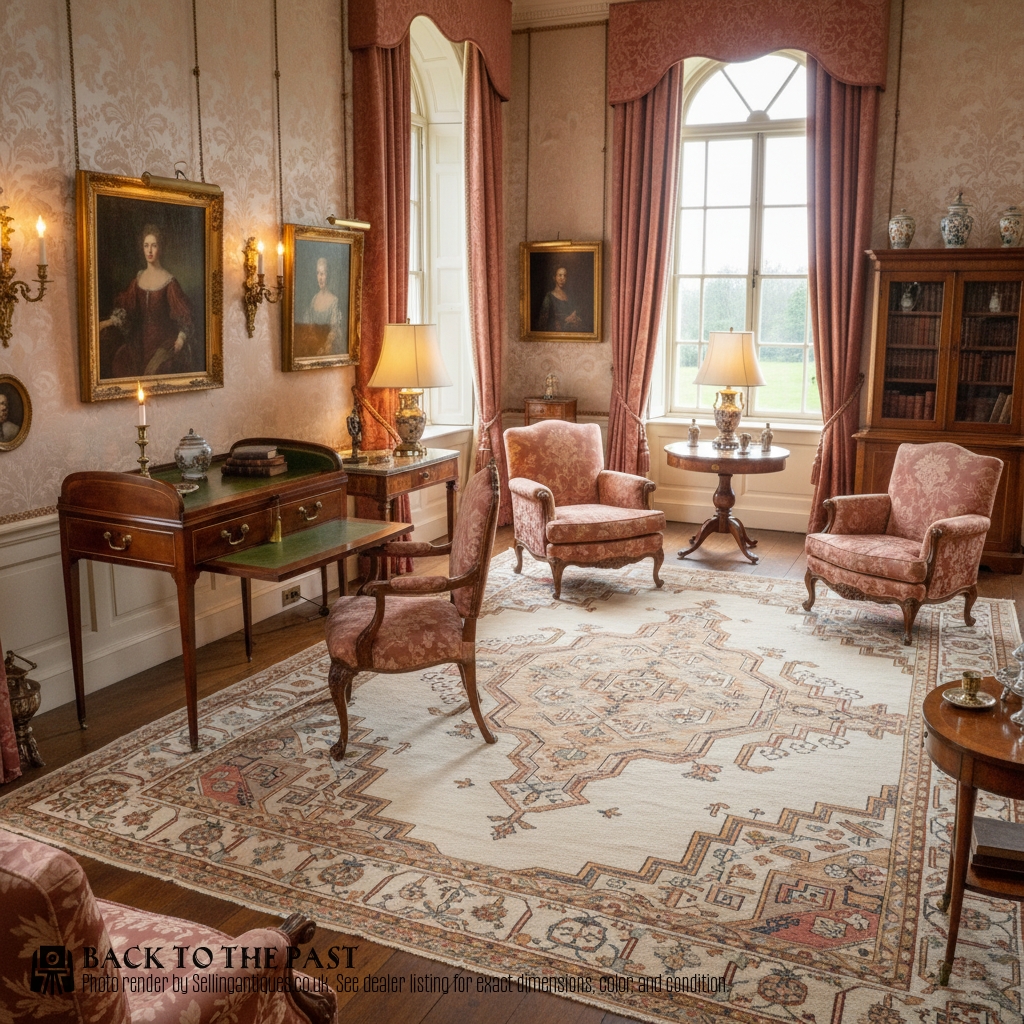
George III Bureau
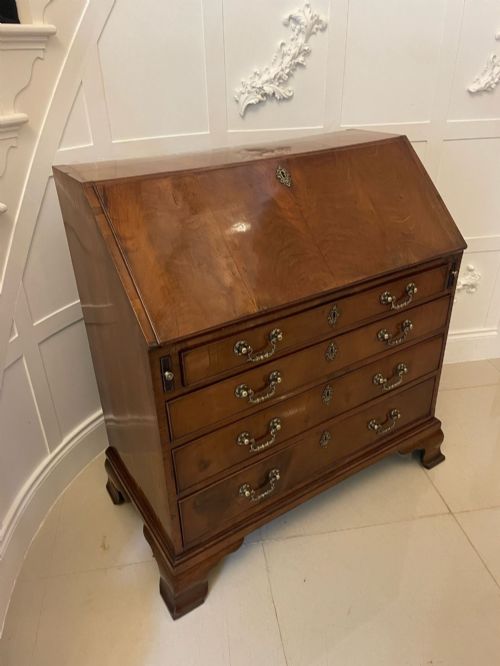
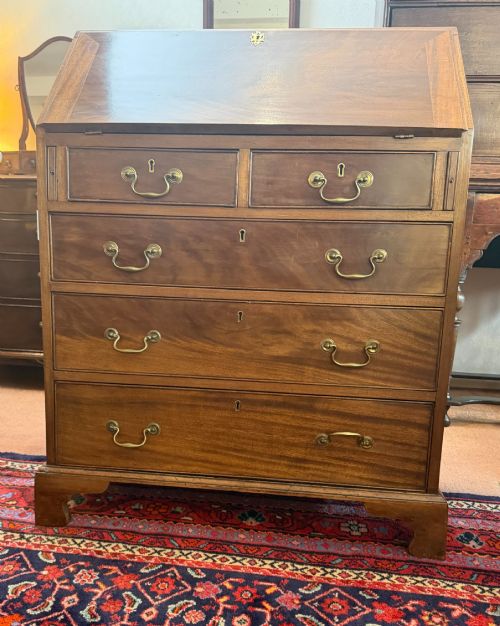
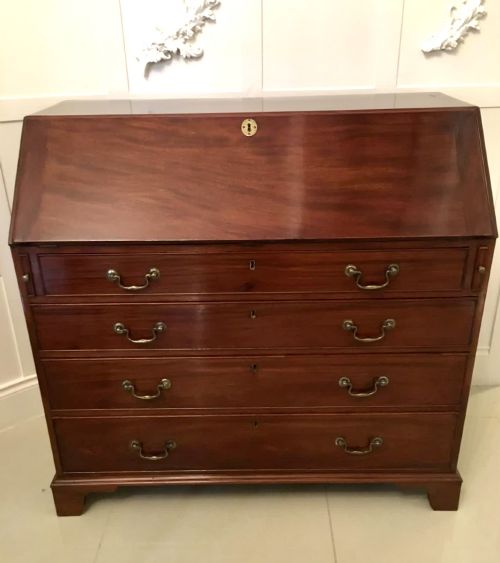
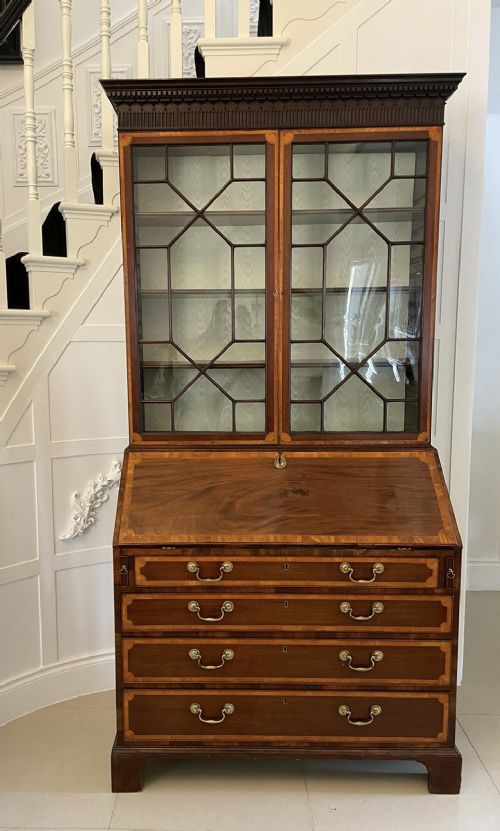
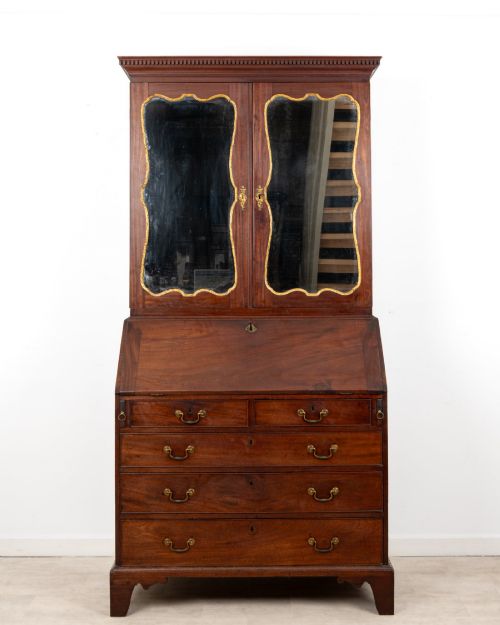
A george iii bureau is a writing desk featuring a sloping fall front that opens to reveal a fitted interior of small drawers and pigeonholes, sitting above several full-width storage drawers.
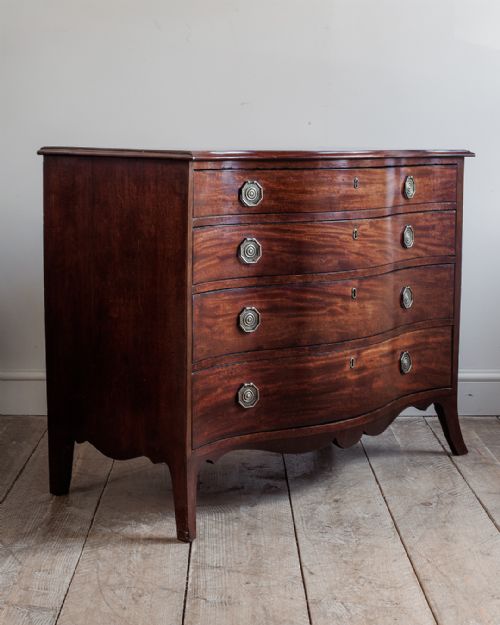
The version most commonly met on this page is constructed from mahogany, often displaying figured grain and subtle inlay, though oak and walnut examples also appear.
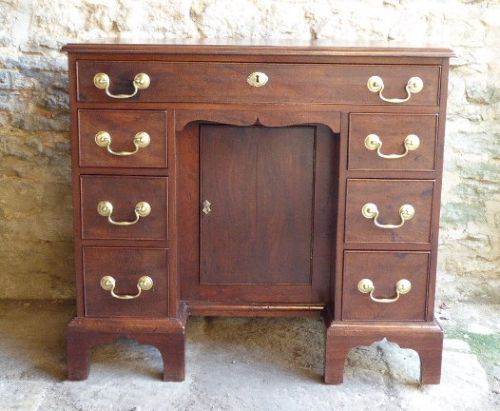
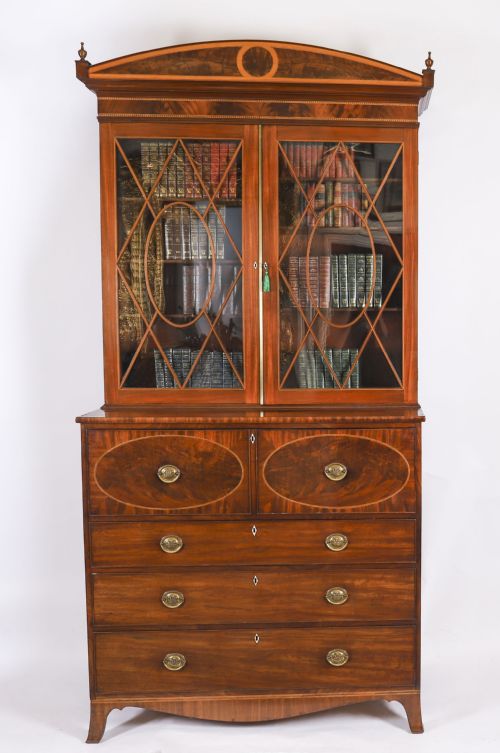
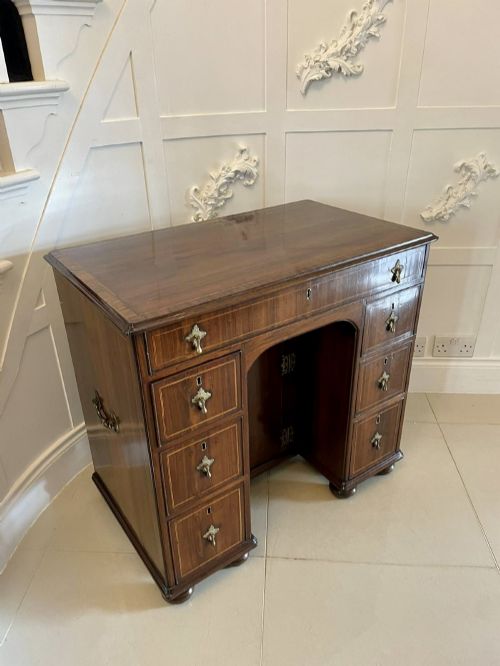
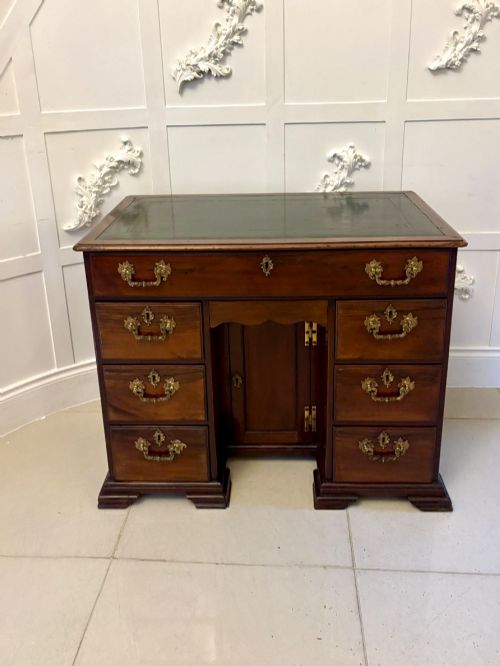
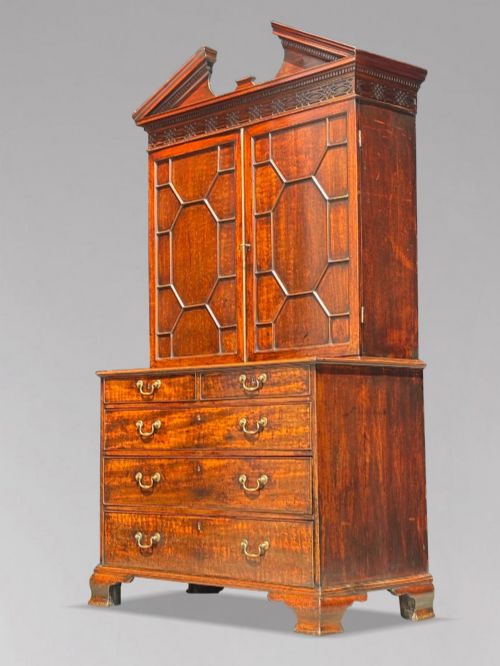
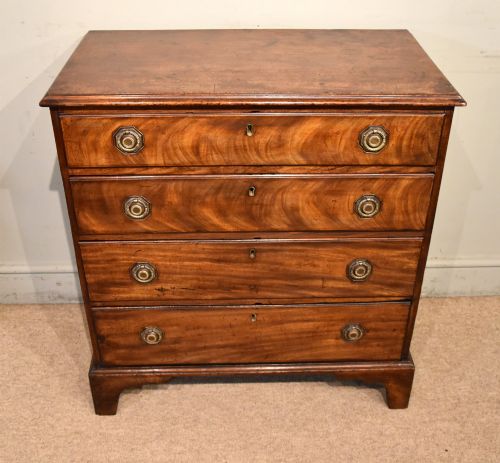
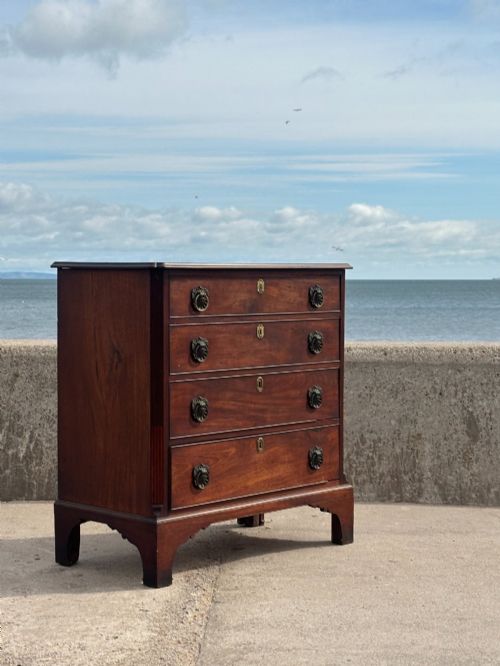
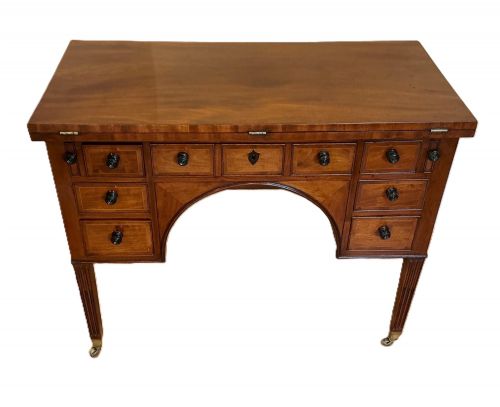
Alongside standard fall-front desks, the selection includes larger bureau bookcases with glazed upper cabinets, compact kneehole desks, and refined writing cabinets.
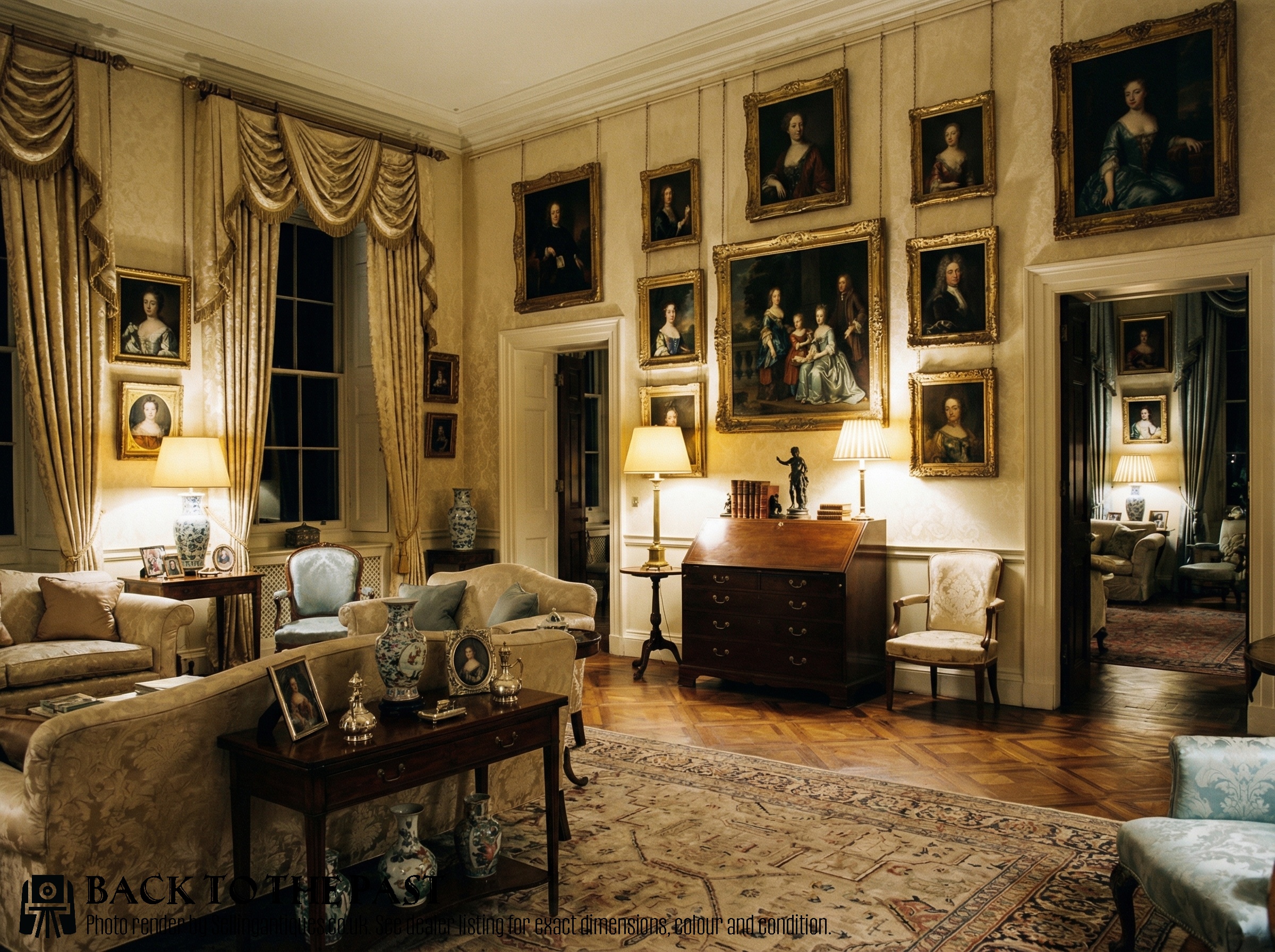
How they were made
Cabinet-makers relied heavily on mahogany as a primary timber, frequently selecting flame, curl, or fiddleback veneers to accentuate the polished surfaces.
Satinwood and various fruitwoods provided contrasting stringing and geometric inlay, while brass hardware such as swan-neck handles and escutcheons secured the drawers.
Internal components utilised secondary timbers like oak for drawer linings, constructed with hand-cut dovetails that indicate traditional period joinery.
George III Bureau Retail Price Guide 2026
Typical asking prices for george iii bureau among the pieces listed under this phrase on Sellingantiques today, from the lower quarter to the upper quarter. They describe what is for sale here now, not the wider market.
Listings combine standard mahogany fall-front writing desks with taller bureau bookcases, kneehole desks, and compact satinwood writing cabinets.
What varies in quality
The distinction between standard examples and top-tier pieces rests on the choice of timber veneer, where dramatic grain patterns and precise crossbanding elevate the visual presence.
Interior configuration plays a significant role, with superior models incorporating secret compartments, stepped pigeonholes, and finely carved prospect doors rather than plain partitions.
Proportion and scale also define the hierarchy, as diminutive or miniature bureau forms demand greater skill from the maker to execute cleanly.
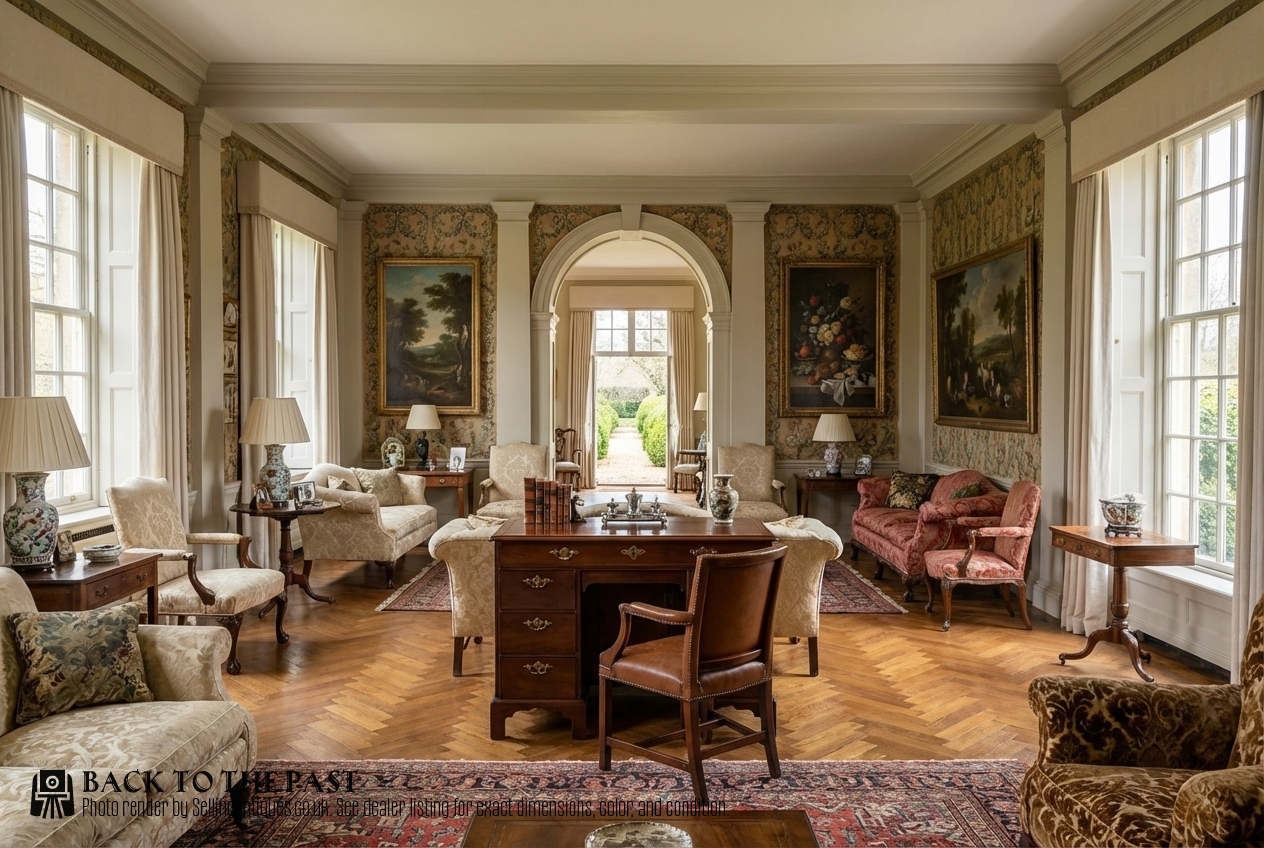
Thomas Chippendale·Gillows·Muirhead & Moffat
The George III Bureau Glossary
- Bureau
- A writing desk with a sloping hinged lid that drops down to form a writing surface. It typically encloses a series of small compartments and drawers.
- Fall front
- The hinged flap on a desk or cabinet that pulls down to provide a horizontal surface for writing. When closed, it conceals the inner stationery compartments.
- Flame mahogany
- A veneer cut from the fork of a mahogany tree where the branches meet the trunk. This technique produces a distinctive flickering, flame-like grain pattern.
- Secretaire bookcase
- A tall piece of furniture combining a upper glazed bookcase with a lower section containing a pull-out writing drawer or drop-front desk.
- Kneehole desk
- A compact desk featuring a central recess for the user's legs, flanked by pedestals of small drawers on each side.
George III Bureau: Frequently Asked Questions
What is a george iii bureau used for?
These pieces served historically as private writing cabinets and storage chests for correspondence and household documents. The drop-down flap provided a stable surface for letter writing while keeping private papers concealed.
In a modern setting, they function effectively as compact home workstations. The interior pigeonholes keep stationery organised, and the lower drawers offer practical everyday storage.
How do I care for a mahogany finish?
Mahogany surfaces respond best to occasional applications of traditional beeswax rather than modern liquid polishes. Regular dusting with a soft, dry cloth prevents surface abrasion.
Keep the timber away from direct heat sources and strong sunlight to prevent the wood from drying out or the polished finish from fading unevenly.
Are these desks suitable for small rooms?
Many examples found here were built with modest proportions, making them well-suited for tighter spaces where a full-sized desk would overwhelm the room. The vertical storage of the drawers maximises floor efficiency.
Because the writing flap folds away when not in use, the footprint shrinks considerably during daily living.
How can I tell a georgian piece from later copies?
Examine the construction methods inside the drawer boxes and along the back panels. Hand-cut dovetailing and the use of secondary timbers like oak are strong indicators of period manufacture.
Check the timber patination and wear patterns around the handles and fall-front hinge points. Genuine age shows a soft, mellow lustre that modern replicas struggle to replicate.