



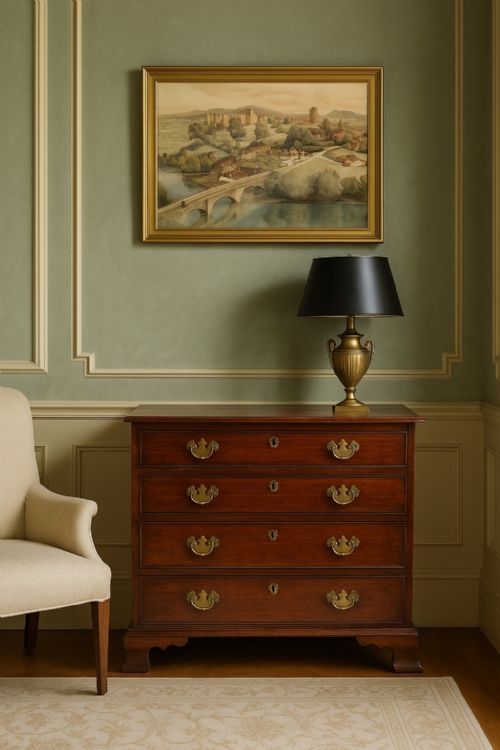


George II Mahogany Cabinet
A george ii mahogany cabinet brings together dense timbers and structural restraint, offering storage built to endure centuries of daily use.
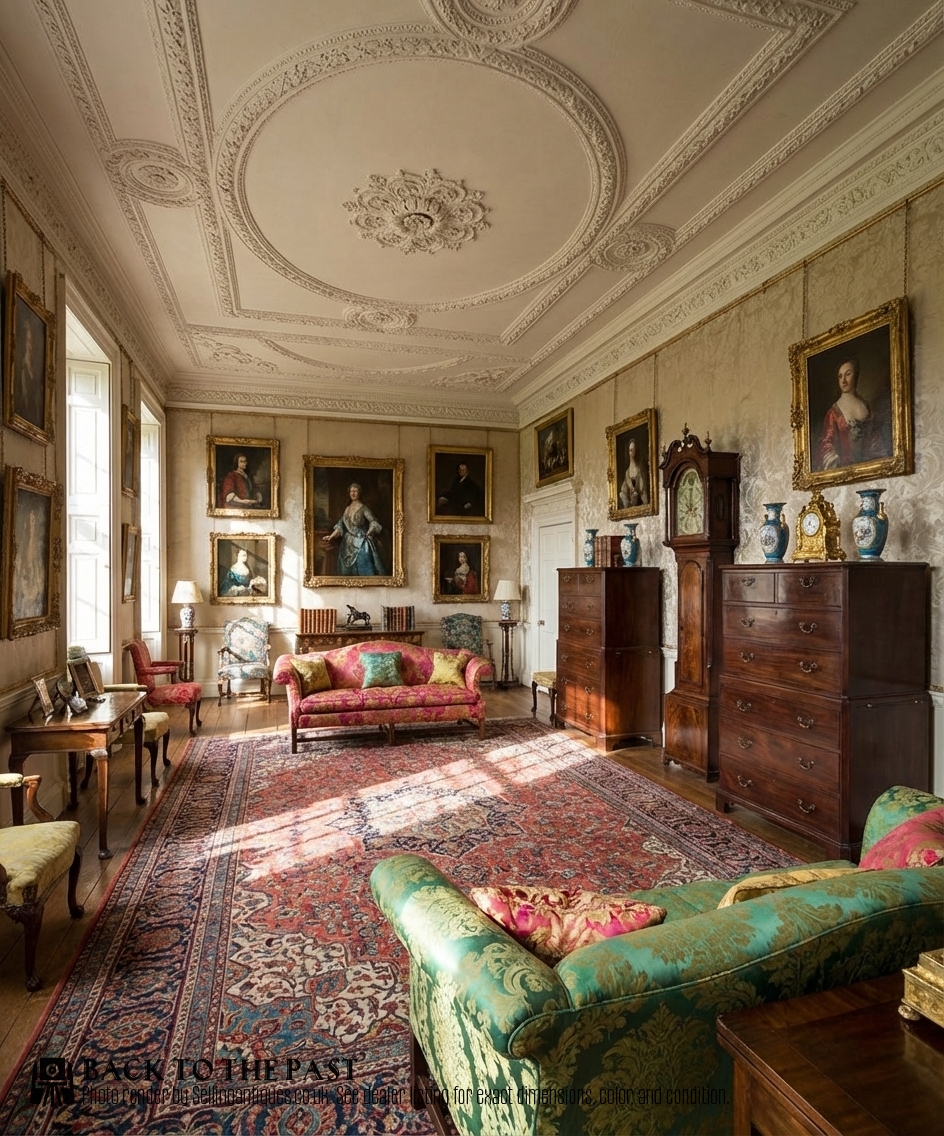
George II Mahogany Cabinet
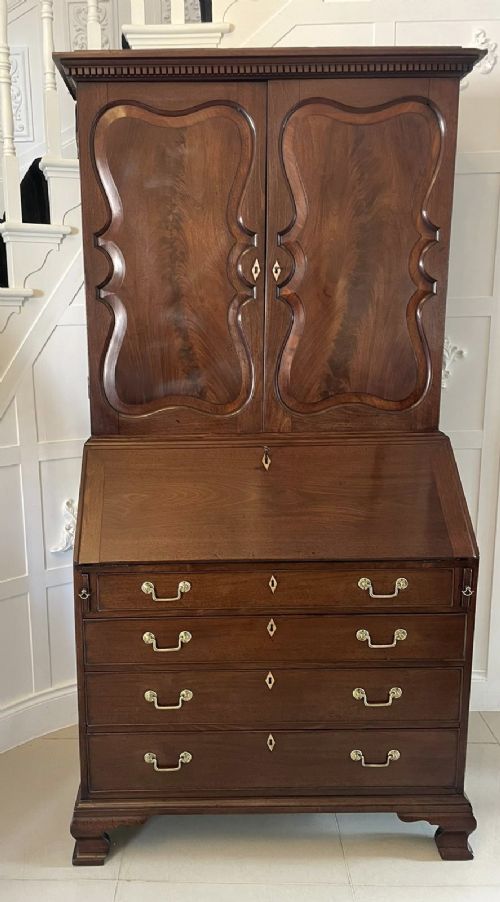
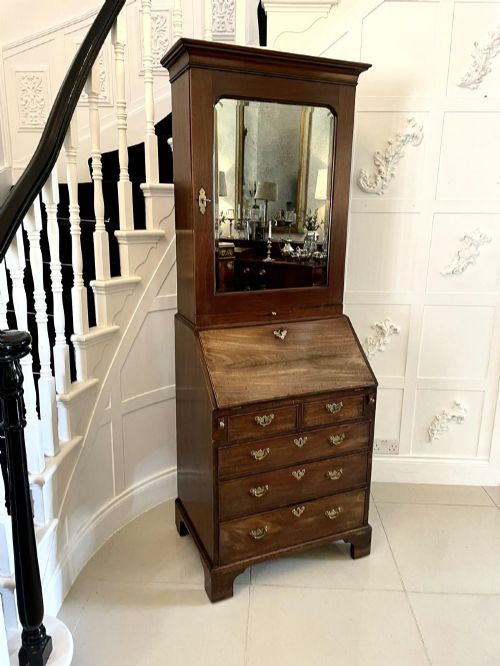
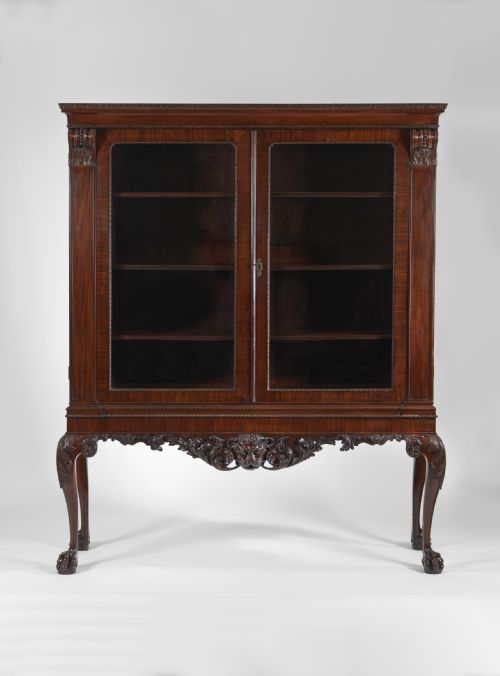
A george ii mahogany cabinet encompasses bureau bookcases, secretaire cabinets, display cabinets, wall cabinets, press cupboards, and chests on chests originating in the eighteenth century. These pieces serve domestic storage needs through fitted drawers, pigeonholes, and shelved upper sections behind glazed or panelled doors.
Bureau bookcases and secretaire cabinets dominate the forms, combining a writing surface with extensive compartmentalised storage above and below. Wall cabinets and corner variants offer more compact storage solutions intended for smaller rooms.
Makers utilise architectural proportions influenced by contemporary classicism, establishing symmetry and formal presence across bureau bookcases, chests, and display pieces. The execution reflects cabinet-making traditions of the seventeen-hundreds, particularly the decades surrounding mid-century.
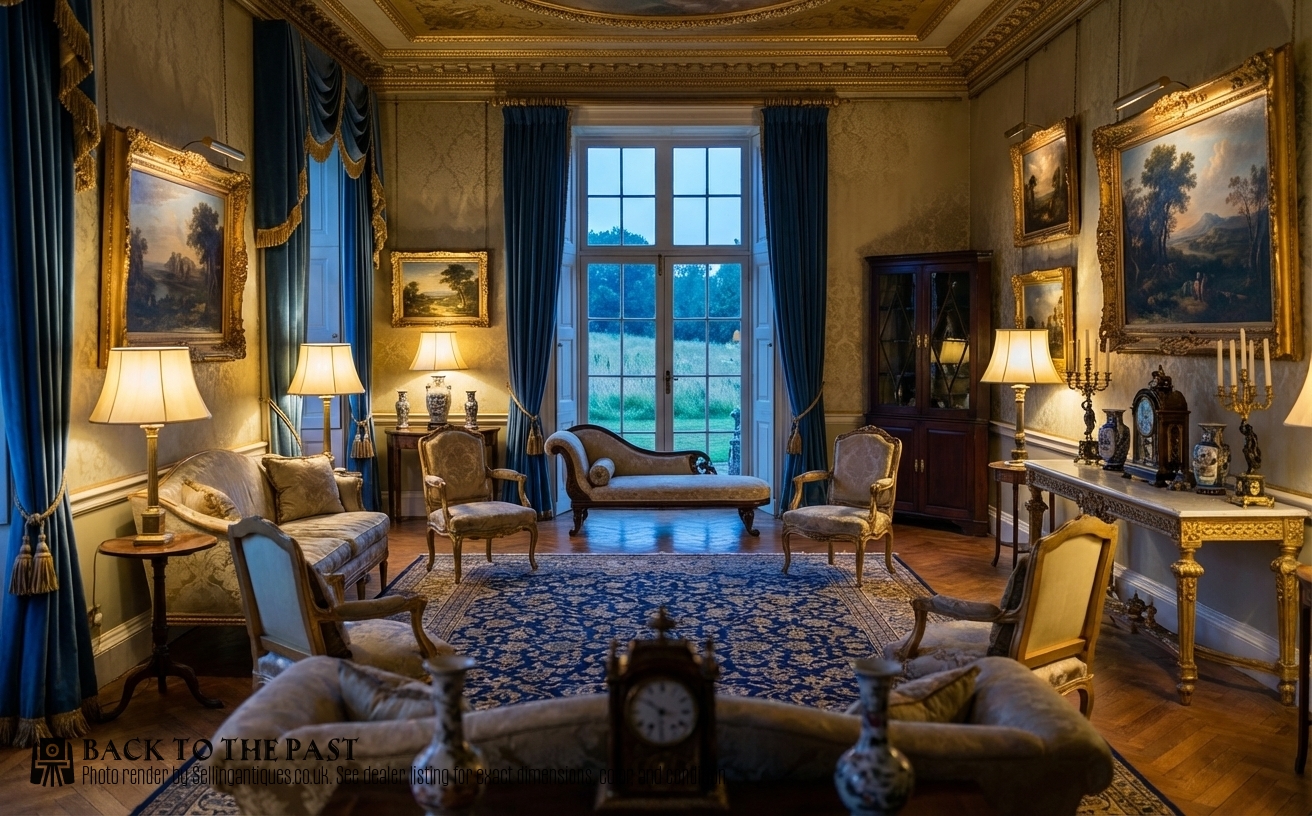
Materials and Construction
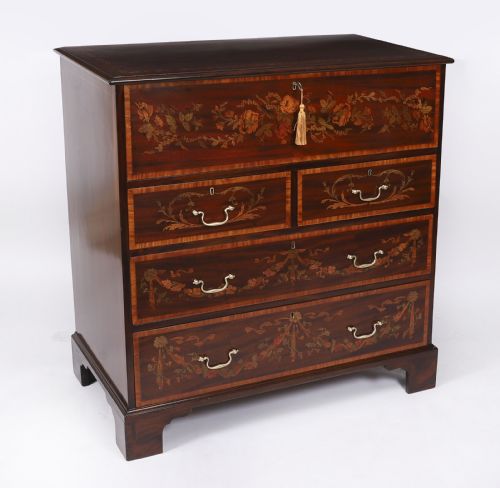
Cabinet-makers construct the primary carcase using dense mahogany, occasionally referred to in period records as red walnut, supported by secondary timbers such as oak for drawer linings and internal divisions. Marquetry inlay, brass handles, and glazed panels punctuate the dark timber surfaces.
Joinery techniques include hand-cut dovetails for drawer construction and pegged mortise and tenon joints for structural frames. Carved details such as ogee feet, cornices, and applied mouldings emerge directly from the solid timber rather than separate applied compo.
George II Mahogany Cabinet Retail Price Guide 2026
Typical asking prices for george ii mahogany cabinet among the pieces listed under this phrase on Sellingantiques today, from the lower quarter to the upper quarter. They describe what is for sale here now, not the wider market.
Secret compartments hidden behind pigeonhole dividers reward the curious owner with miniature drawers meant for private keepsakes.
Judging Quality
Quality rests upon the selection of timber figures and the crispness of carved mouldings, where superior examples exhibit closely grained mahogany with natural depth. The integrity of internal fittings, original brass hardware, and secondary oak timbers further distinguishes finer workshop output from standard commercial production.
Proportion and structural harmony separate accomplished commissions from utilitarian equivalents, visible in the balance of cornices, base mouldings, and door panel arrangements. The precision of dovetailing and the retention of original feet or brackets indicate the skill level invested by the maker.
Francis Brodie·Giles Grendey·Robert Gillows II·William Kent
The George II Mahogany Cabinet Glossary
- Bureau bookcase
- A dual-purpose piece combining a sloping writing flap enclosing drawers and pigeonholes with a shelved bookcase cabinet above.
- Secretaire cabinet
- A freestanding or chest-form item featuring a fitted writing drawer with a drop-front panel concealing internal compartments.
- Ogee feet
- An S-curve moulding profile forming shaped bracket feet at the base corners of chests and cabinets.
- Chest on chest
- A tall storage unit comprising a lower chest of drawers surmounted by a slightly narrower upper section of drawers.
- Red walnut
- An eighteenth-century term applied locally to dense cuts of mahogany displaying rich reddish-brown colouration.
George II Mahogany Cabinet: Frequently Asked Questions
How do I identify a bureau bookcase?
A bureau bookcase combines a fall-front writing desk with an enclosed upper shelving section for books or display. The lower section typically houses multiple graduated drawers.
Interior compartments feature small drawers and pigeonholes arranged around a central locked cupboard door, designed for correspondence and ledger storage.
What timber was used?
Primary surfaces utilise solid mahogany, prized for its strength, deep colour, and suitability for carving. Secondary woods such as oak appear in drawer linings and internal framing.
Marquetry inlay and brass hardware supplement the timber construction, while glass panes feature in display cabinet and bookcase doors.
Where should I place a display cabinet?
Display cabinets require stable interior environments away from direct sunlight and rapid temperature fluctuations to protect aged timber and glass. Wall-mounted or corner variants suit smaller floor spaces while preserving structural clearance.
Allowance should be made for door clearance and the weight of the timber when selecting wall fixings for hanging cabinets.