
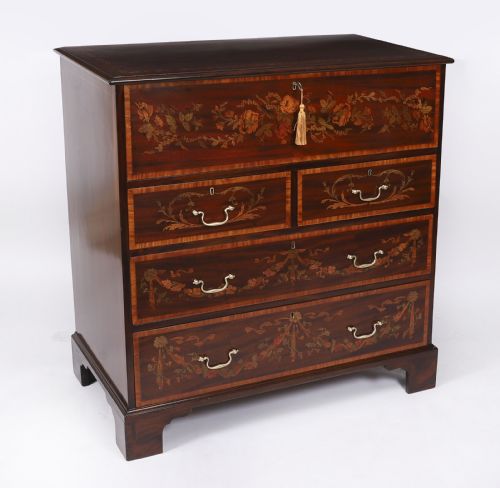


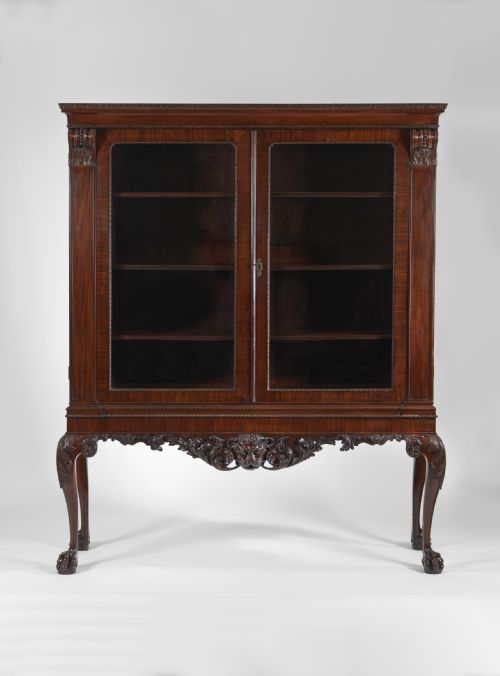


George II Cabinet
When you search for a george ii cabinet, you enter a field of mid-eighteenth-century storage pieces defined by architectural proportion and dense timbers.
George II Cabinet
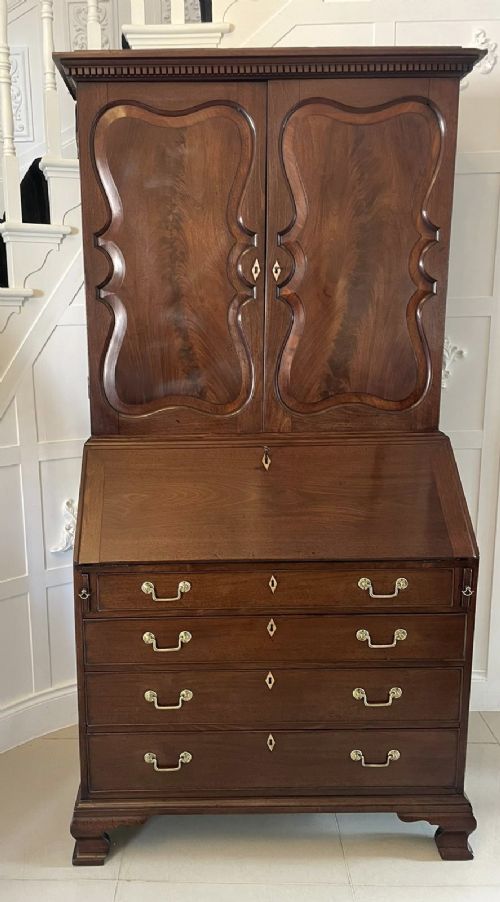
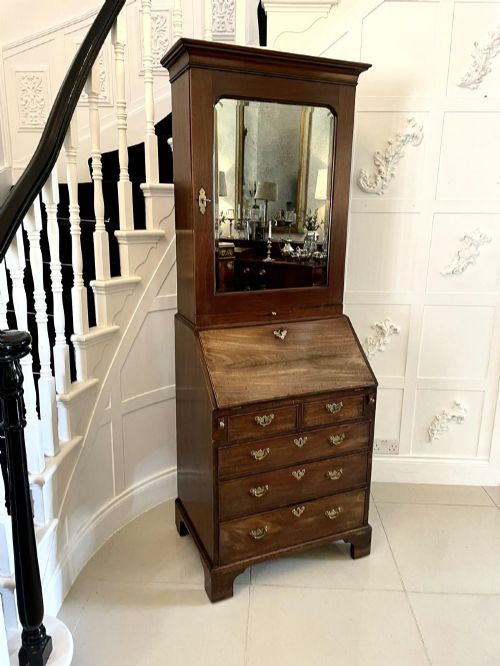
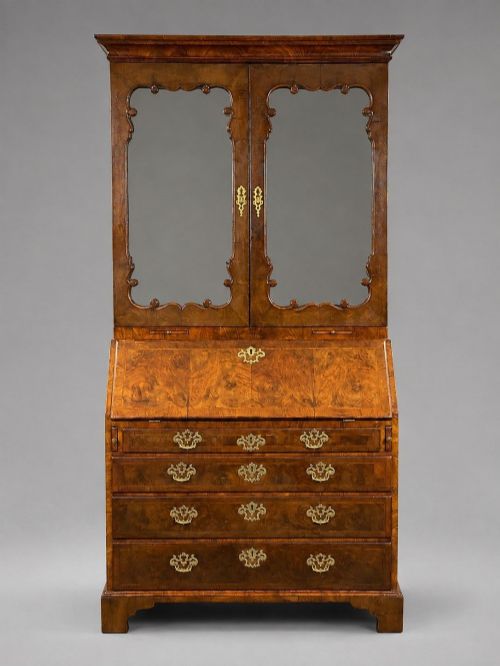
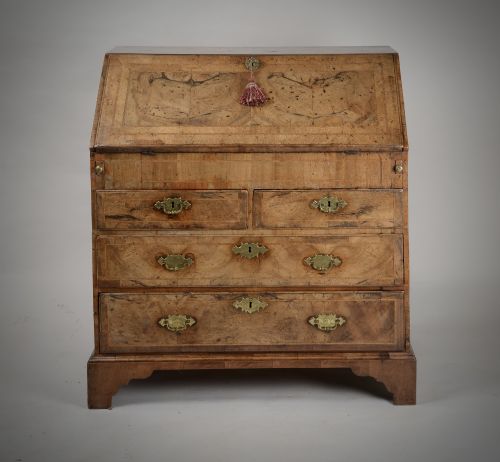
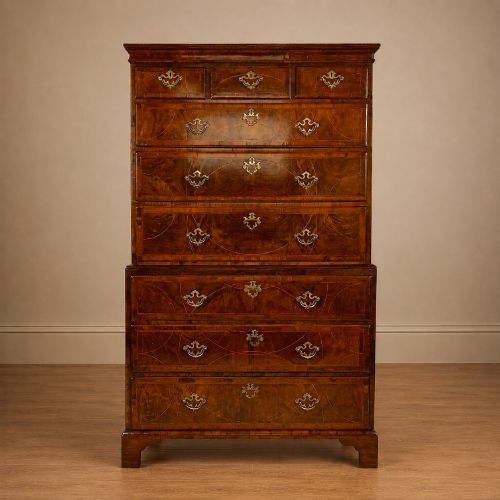
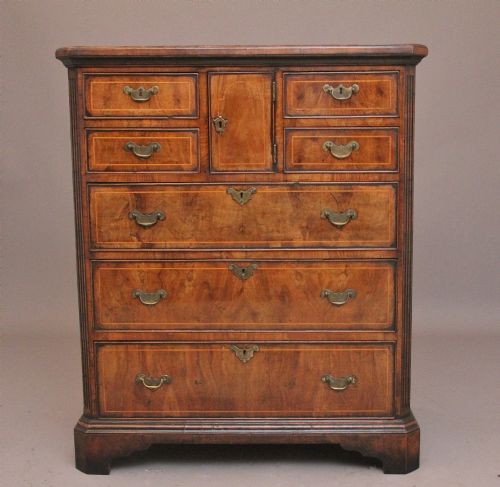
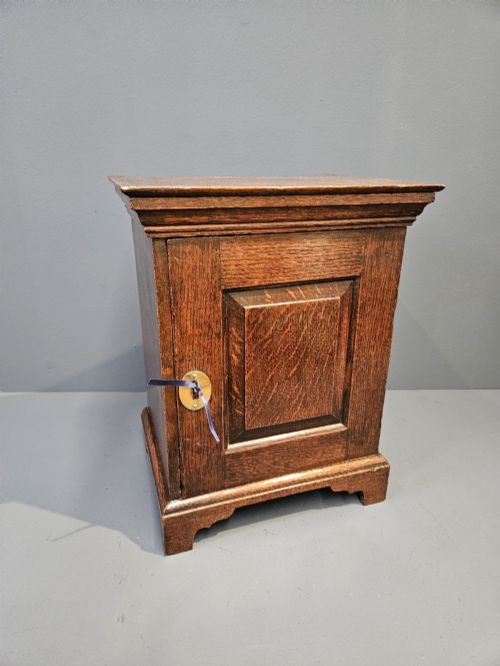
A george ii cabinet spans a variety of ambitious domestic forms, most frequently encountered here as bureau bookcases, tall chests on chest, corner units, and compact knee-hole desks. These pieces originate primarily from the eighteenth century, supplemented by occasional nineteenth-century revivals.
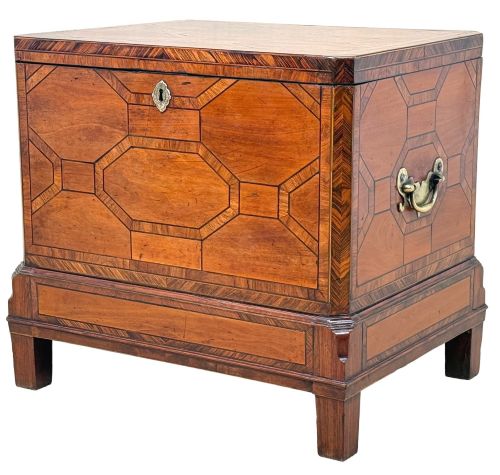
Makers and cabinet-makers of the period constructed storage for specific domestic needs, ranging from gentleman's library cabinets and spice cupboards to cellarettes and miniature tallboys. Walnut, oak, and mahogany dominate the offerings, often elevated with figured veneers or intricate banding.
How they were made
Joiners relied on native oak for internal carcases and drawer linings, pairing these sturdy foundations with costly face timbers such as figured mahogany, burr walnut, and red walnut. Artisans employed feather banding, line inlay, and cross-banding to frame drawer fronts and panel doors.
Carved ornament appears directly on solid mahogany mouldings, featuring motifs like scrollwork and blind fretwork associated with high workshop standards. Cabinet doors utilise panel construction and fine glazing bars to house glass plates securely.
Listings feature eighteenth-century oak, mahogany, and walnut forms including bureau bookcases, corner cabinets, and chests on chest.
What varies in quality
The choice of timber underpins the hierarchy of surviving examples, with densely figured burr walnut and richly coloured red walnut commanding greater visual presence than plain oak or secondary woods. Grain matching across drawer tiers demonstrates the deliberate intent of the maker.
Proportion and scale dictate the success of the form, distinguishing diminutive or small-proportion chests from standard room furniture. Crispness in carved mouldings and the retention of original hardware further separate workshop output.
Francis Brodie·William Kent
The George II Cabinet Glossary
- Bureau bookcase
- A dual-purpose piece combining a sloping writing flap enclosing pigeonholes and small drawers with upper shelving enclosed by doors. These forms dominate the larger storage furniture of the period.
- Chest on chest
- A tall storage unit comprising a lower chest of drawers supporting a slightly smaller upper chest, also known as a tall-boy. Walnut and mahogany examples frequently display fine bracket feet or ogee feet.
- Corner cabinet
- A storage unit built specifically to fit into the angle of a room, produced in wall-hanging and floor-standing variants. Oak and mahogany versions often feature shaped panel doors.
- Feather banding
- An ornamental inlay technique utilising contrasting veneers cut diagonally and arranged to resemble the barbs of a feather. This detail borders drawer fronts on walnut pieces.
- Lowboy
- A small side table featuring one or more tiers of drawers, standing on slender cabriole or tapered legs. Walnut lowboys often incorporate decorative cross-banding.
George II Cabinet: Frequently Asked Questions
What is a bureau bookcase?
A bureau bookcase combines a fitted desk workspace with an enclosed upper shelving unit. It served as a primary administrative and storage hub in eighteenth-century rooms.
Lower sections typically feature a fall-front flap covering pigeonholes, while upper doors protect books or papers from dust.
How do I identify walnut furniture?
Walnut furniture from this period displays rich brown tones with distinctive dark grain patterns and swirling figure marks. Artisans often selected burr walnut for drawer fronts to highlight the complex grain.
Secondary timbers inside the drawers usually consist of oak or pine, depending on regional workshop practices.
Where were corner cabinets used?
Corner cabinets were designed to utilise awkward angles in dining rooms or parlours. Wall-hanging versions saved floor space, while floor-standing variants provided heavier storage.
They typically housed glassware, ceramics, or household provisions behind solid or glazed doors.
What is red walnut?
Red walnut refers to a distinct colour and variety of American or European walnut prized by eighteenth-century cabinet-makers. It exhibits a warm reddish-brown hue that deepens with age.
Pieces designated as red walnut often feature prominently figured grain across large flat surfaces like chest fronts.