

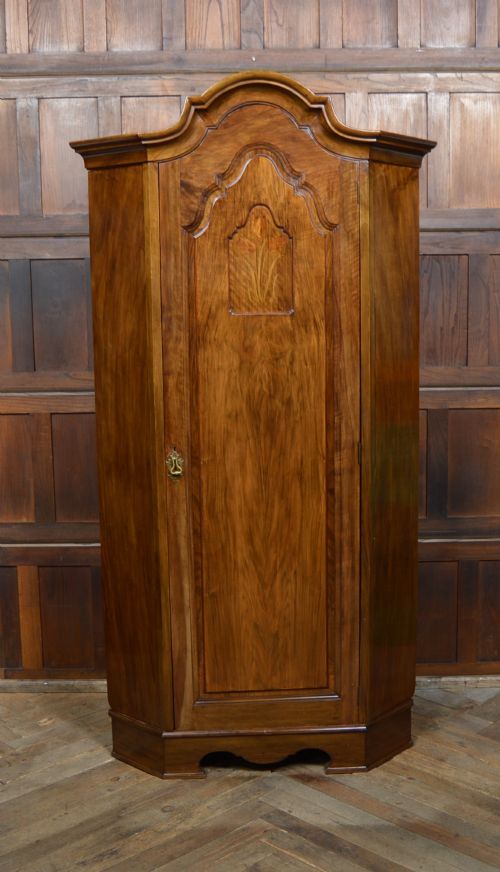
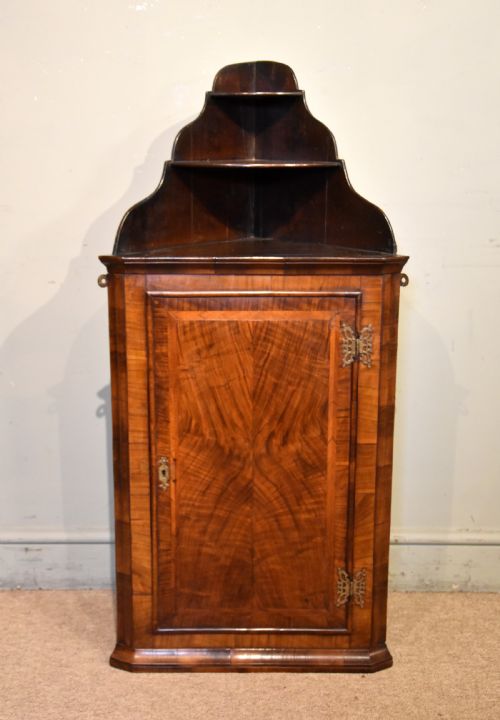
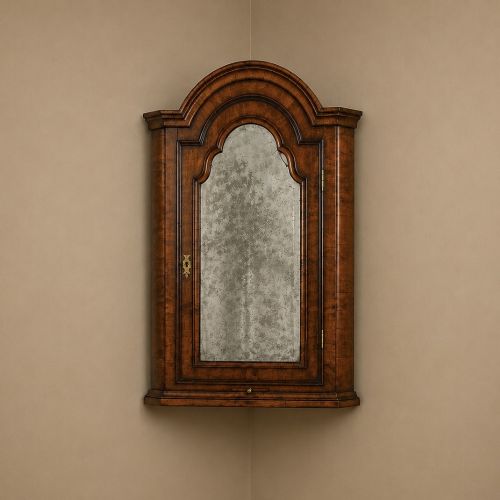


Walnut Hanging Corner Cupboard
These walnut hanging corner cupboard pieces turn an awkward room angle into a focal point using figured timbers.
Walnut Hanging Corner Cupboard
A walnut hanging corner cupboard mounts directly to wall intersections to utilise dead space in domestic interiors. You will regularly encounter 18th Century and Victorian examples fashioned for domestic storage.
The evidence shows forms ranging from Queen Anne and Georgian period pieces to Victorian and 1920 iterations. These compact cabinets typically feature single doors designed to house precious glassware or tableware.
Makers utilised various regional interpretations, including Continental Baroque designs and bow front profiles. Each walnut hanging corner cupboard displays the specific architectural preferences of its respective era.
How they were made
Cabinet makers selected walnut, burr walnut, and red walnut veneers applied to secondary timbers such as oak or elm. Surfaces frequently incorporated marquetry and intricate inlay wood to create decorative geometric patterns.
Hardware additions included brass escutcheons and hinges, whilst select pieces integrated glass panels or candle slides. Continental Baroque and Queen Anne workshops applied these materials to achieve robust yet refined corner furniture.
Walnut Hanging Corner Cupboard Retail Price Guide 2026
Typical asking prices for walnut hanging corner cupboard among the pieces listed under this phrase on Sellingantiques today, from the lower quarter to the upper quarter. They describe what is for sale here now, not the wider market.
Listings feature walnut hanging corner cupboard examples spanning the 18th Century, Regency, Victorian era, and 1920.
What varies in quality
The selection of timber grain largely dictates the visual appeal of each cabinet, with burr walnut and marquetry commanding particular attention. Figure choice on the primary door panel demonstrates the skill of the original workshop.
Survival of original elements such as glass, brass hardware, and candle slides separates standard production from superior examples. Period execution of joints and proportions defines the integrity of surviving pieces.
The Walnut Hanging Corner Cupboard Glossary
- Burr walnut
- A highly figured timber harvested from tree growths, prized for its swirling grain patterns. It creates a decorative surface on cabinet doors.
- Marquetry
- The art of applying small pieces of veneer to form decorative patterns and pictures. Craftsmen used various woods to achieve tonal contrast.
- Candle slide
- A pull-out wooden shelf positioned beneath the door to hold a candle for illumination. These components survive on select early pieces.
- Bow front
- A convex curved cabinet front that projects outward from the corner. This shape softens the angular geometry of a room.
- Ormolu
- Gilded bronze ornamentation applied to furniture for decorative effect. It appears on select Continental pieces in the evidence.
Walnut Hanging Corner Cupboard: Frequently Asked Questions
How do I hang a corner cupboard safely?
These cabinets attach directly to wall studs using robust internal fixing points designed to bear the weight of the timber and its contents. Ensure the wall structure can support the load before mounting.
Professional installation is recommended for heavier pieces, particularly those constructed from dense hardwoods like red walnut. Secure both top and bottom fixings to prevent movement.
What did people store inside these cupboards?
Historically, households utilised these corner cabinets to store precious porcelain, glassware, tea wares, and table silver. Their elevated position kept valuable items safe from floor-level damp and dust.
Selected 18th Century examples incorporated interior shelves shaped to display specific ceramic vessels. They served both a practical storage function and a decorative display purpose.
Are these cupboards suitable for modern rooms?
These corner units fit effectively into modern interiors by making use of unused wall junctions. They provide compact storage without encroaching on floor space.
Their varied timber tones, from plain walnut to burr and red walnut, complement both traditional and contemporary wall colours. They work particularly well in dining rooms and hallways.