
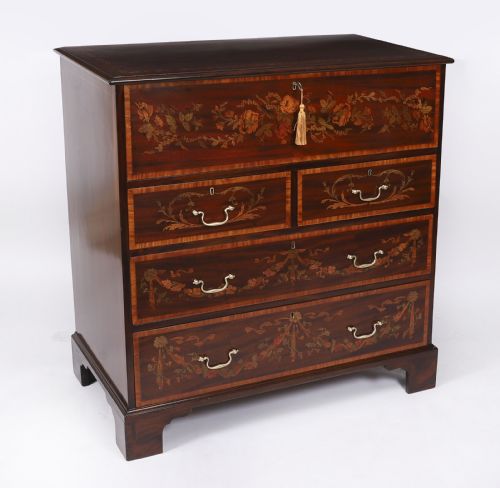


George II Cabinet Desk
A george ii cabinet desk brings mid-eighteenth-century craftsmanship into a room, offering clever concealed compartments and serious architectural presence.
George II Cabinet Desk
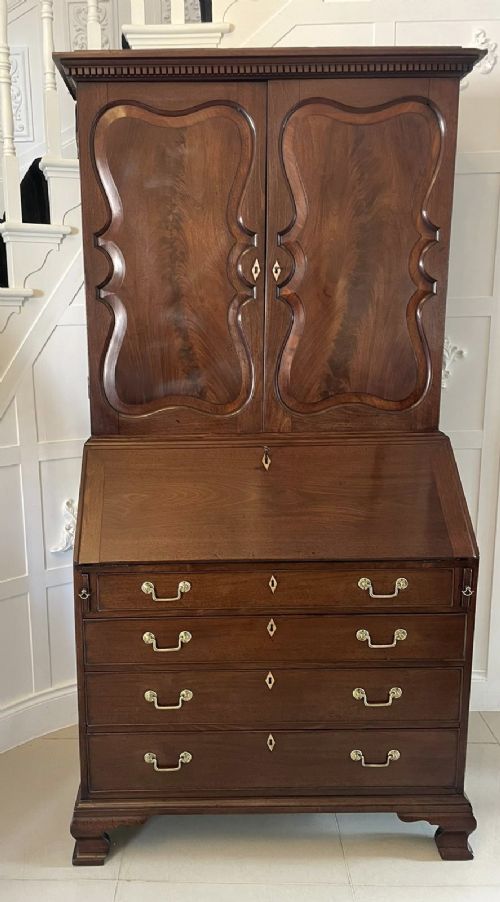
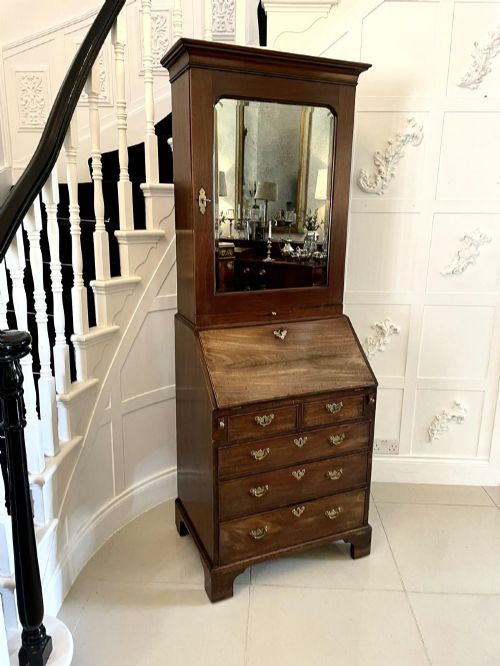
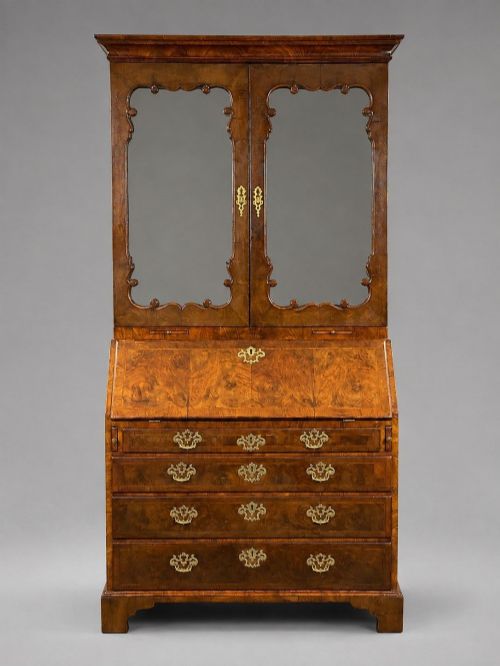
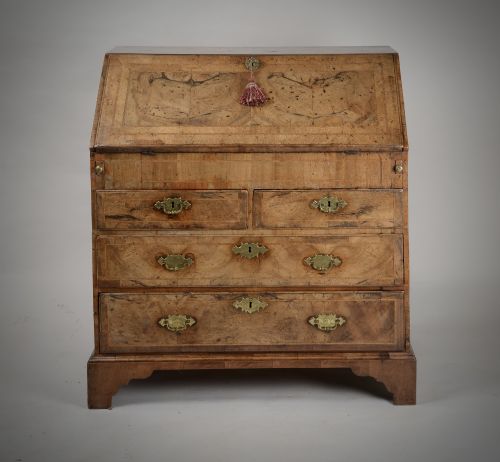
A george ii cabinet desk encompasses tall bureau bookcases, fall-front bureaux, and secretaire cabinets originating mainly from the eighteenth century. Bureau bookcases dominate the selections, combining a fitted writing slope with enclosed upper shelving.
Makers of this era produced versatile pieces designed for domestic administration and correspondence, frequently utilising diminutive proportions or library formats. Walnut and mahogany predominate, often enhanced by bureau bookcases and knee-hole desks.
The aesthetic bridges earlier baroque influences and the refined classical restraint of the Georgian period. Proportions remain robust, yet detail work demonstrates cabinet-making ambition.
Judging quality in a george ii cabinet desk
Figure and grain matching dictate visual success, particularly on burr walnut and figured mahogany surfaces where book-matching creates symmetrical patterns across large drawer fronts. Timber selection separates utilitarian pieces from ambitious commission work.
Internal complexity of the bureau compartment reveals the maker's skill through intricate pigeonholes, secret drawers, and sliding wells. Original brasses and uncompromised timber patination retain the historical weight of the piece.
Several pieces conceal hidden document wells beneath sliding interior compartments for private correspondence.
Giles Grendey·Robert Gillows II
The George II Cabinet Desk Glossary
- Bureau bookcase
- A writing cabinet featuring a sloping desk flap above lower drawers, surmounted by a glazed or panelled shelved cupboard. This dual-purpose form defines much of the mid-eighteenth-century output.
- Burr walnut
- A prized timber harvested from walnut tree growths, displaying swirling, knotty grain patterns. Cabinet-makers used it as a decorative veneer on prominent exterior surfaces.
- Feather banding
- A delicate decorative inlay formed by cutting veneers diagonally and arranging them in a herringbone pattern around drawer edges. It frames the primary wood panels.
- Lowboy
- A small side table with one or more rows of drawers, standing on relatively tall legs. These function as compact writing or dressing surfaces.
- Secretaire cabinet
- A piece containing a dedicated pull-out or drop-front writing drawer concealing a fitted interior. It offers writing facilities without the steep slope of a standard bureau.
George II Cabinet Desk: Frequently Asked Questions
What is a george ii cabinet desk?
A george ii cabinet desk is an eighteenth-century writing furniture form, primarily comprising bureau bookcases, fall-front bureaux, and secretaire cabinets. These pieces combine enclosed upper shelving or storage with a drop-front writing surface.
They reflect the architectural and cabinet-making standards of the Georgian era, frequently utilising walnut, mahogany, and oak.
How were these desks used?
Owners utilised them for managing correspondence, household accounts, and personal reading materials within private libraries or parlours. The upper bookcase sections housed book collections, while the internal pigeonholes and drawers organised letters and documents.
The fall-front slope provided a dedicated writing ledge that could be closed quickly to conceal unfinished paperwork.
How do walnut and mahogany pieces differ?
Walnut pieces generally date toward the earlier part of the eighteenth century, often displaying rich burr figuring and feather banding. Mahogany gained dominance later in the period, offering dense red-brown tones and robust structural capabilities.
Both timbers received distinct finishing techniques to enhance their natural grain patterns and colour depth.
How do I live with a george ii cabinet desk?
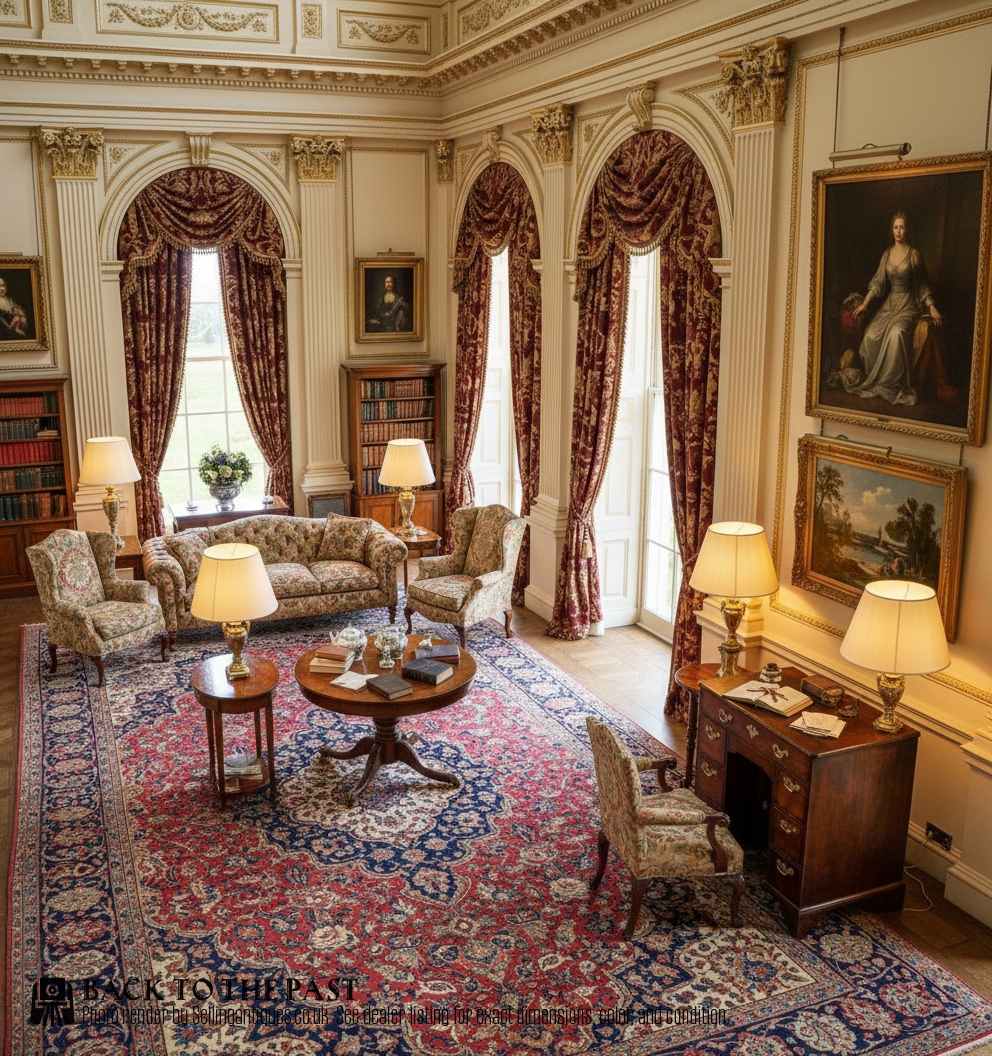
Integrating one into a modern interior requires careful placement away from direct sunlight and heat sources to protect historic veneers. Their substantial height and fitted interiors make them practical focal points for studies or living rooms.
Regular polishing with appropriate wax maintains the historic patination of the timber without building up surface residue.