
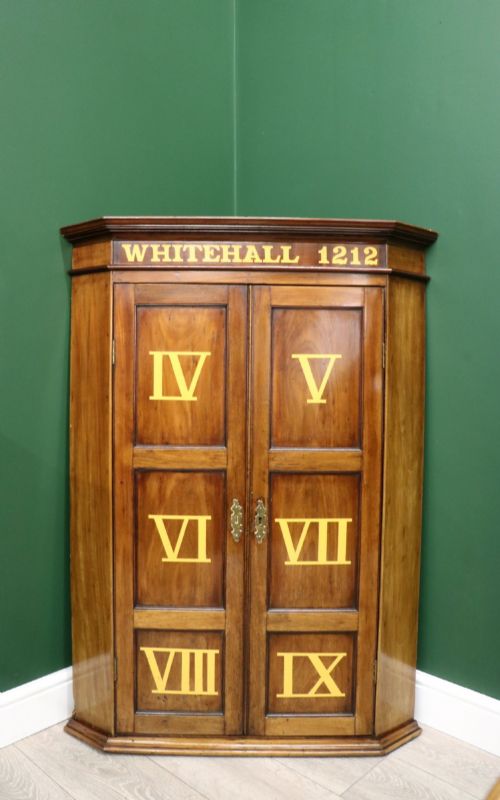


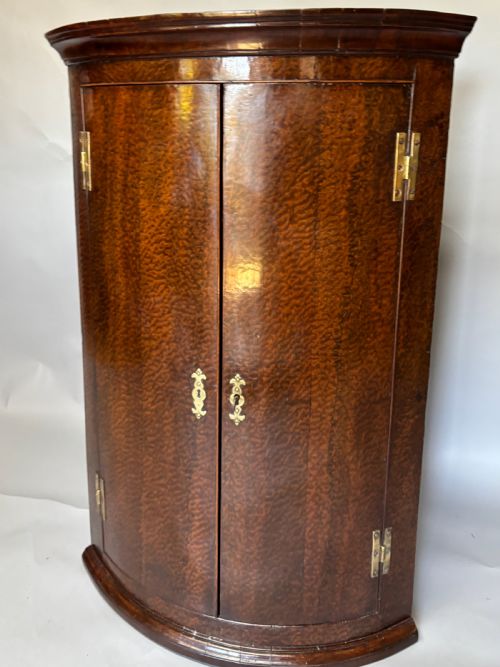


George I Corner Cupboard
A george i corner cupboard brings architectural proportion to an awkward angle, turning unutilised space into disciplined storage.
George I Corner Cupboard
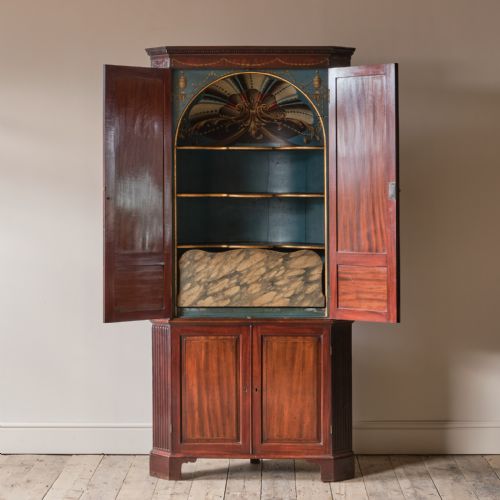
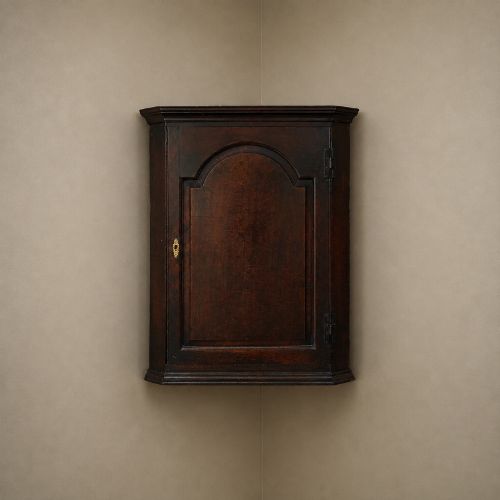
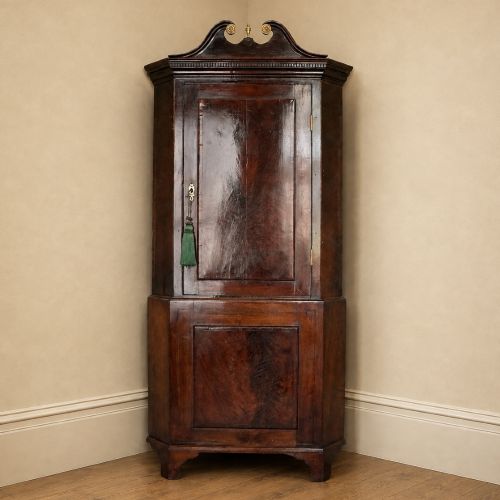
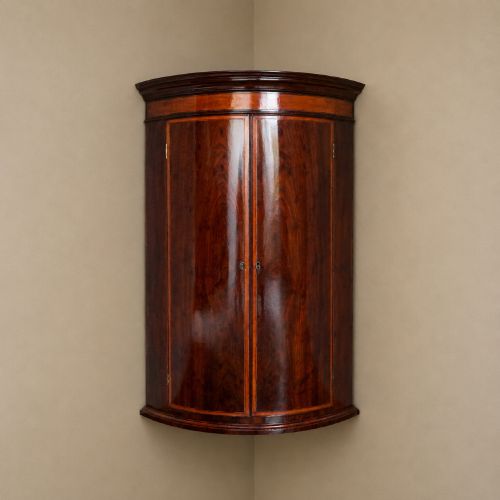
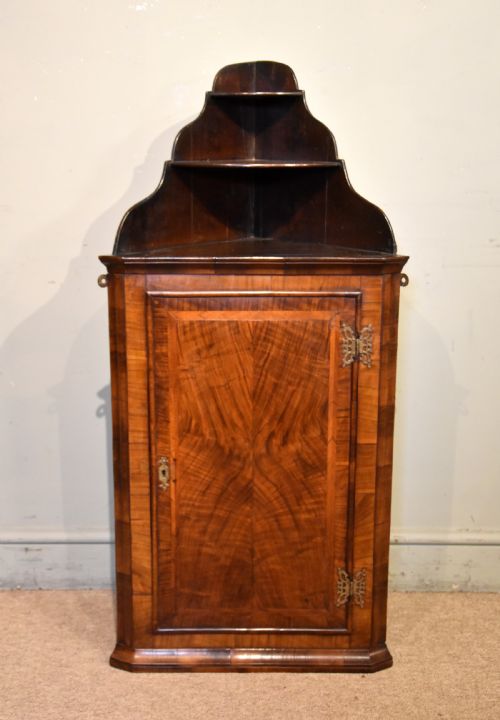
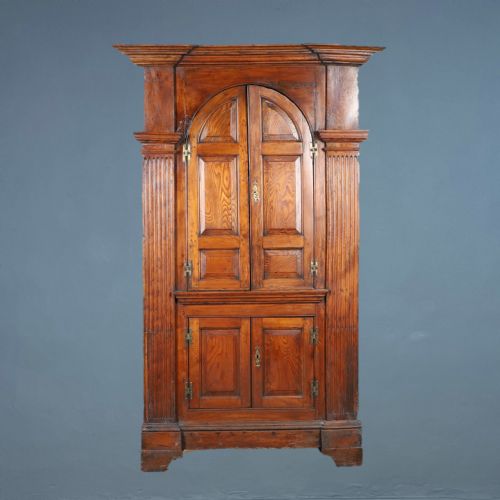
When you search for a george i corner cupboard, you encounter pieces designed to fit snugly into the junction of two walls, making practical use of domestic space. The selection spans wall-hanging formats with single doors and substantial standing cabinets that rise from floor to cornice.
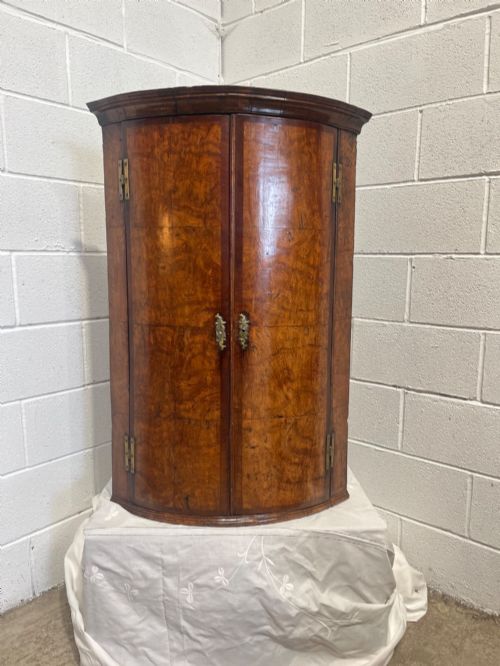
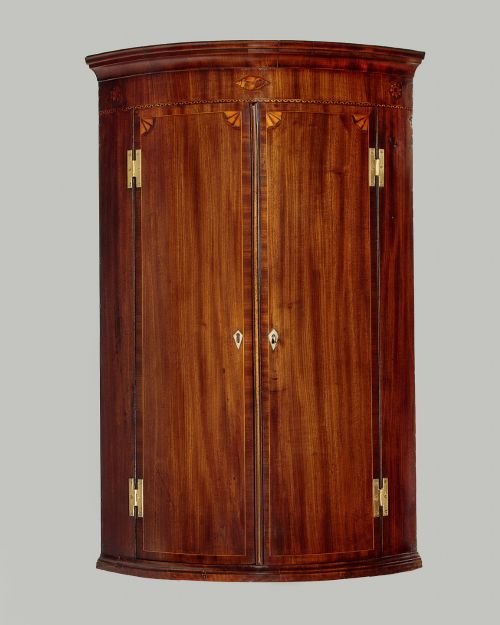
While true early pieces appear in walnut and burr oak alongside later walnut revivals from the nineteenth century, the broader selection draws heavily from the subsequent Georgian decades in mahogany and oak. These storage units manifest both as straightforward corner cupboards and refined bow front or glazed display variants.
Quality and Proportion
The distinction between standard utility cupboards and superior pieces rests on the choice of timber figure, the crispness of inlaid detail, and the harmony of the architectural mouldings. Grain selection on bow front doors and the depth of walnut or mahogany patination elevate certain cabinets above plain country iterations.
Original brass hardware, sound door alignment, and intact glazing bars contribute substantially to integrity. More ambitious standing examples incorporate elaborate cornices and fielded panel doors that demonstrate advanced cabinetmaking competence.
Listings feature mahogany, oak, walnut, satinwood, and elm construction across wall-hanging and floor-standing cabinet formats.
Gillows Lancaster
The George I Corner Cupboard Glossary
- Bow front
- A convex curved cabinet front that projects outward from the corner walls. This curved profile requires specialised joinery and offers softer lines than a flat-fronted cupboard.
- Crossbanding
- A decorative border technique where thin strips of veneer are laid perpendicular to the grain of the central panel. This frames the door or drawer front with a contrasting wood grain.
- Fielded panel
- A wooden panel with bevelled edges that fit into a grooved frame, allowing the wood to expand and contract safely with humidity changes. It adds depth and shadow to cabinet doors.
- Glazing bar
- A slender wooden strip that holds individual panes of glass within a cabinet door. Complex geometric patterns in these bars indicate higher status and skilled craftsmanship.
- Wall hanging
- A cupboard designed to be secured directly to wall studs via internal brackets rather than resting on the floor. These space-saving units frequently feature shaped bottoms.
George I Corner Cupboard: Frequently Asked Questions
Are these cupboards wall hanging or standing?
The selection includes both wall-mounted models designed to save floor space and substantial floor-standing cabinets. Hanging versions often feature shaped lower brackets, whilst standing variants run from floor to cornice.
Choosing between them depends on the vertical scale of your room and whether you require freestanding furniture capacity.
What woods were commonly used?
Oak and mahogany dominate the material record, accompanied by walnut, elm, pine, and occasional burr oak or satinwood veneers. Secondary woods like pine appear on interior carcases.
Cabinetmakers selected these timbers for structural strength and decorative grain potential.
How do I spot a revival piece?
Revival pieces emerge in nineteenth-century styles referencing earlier periods, utilising machine-cut elements and different internal construction signatures. Timber patination and secondary wood analysis help distinguish them from eighteenth-century originals.
Examining hinge types and interior board widths clarifies the true manufacturing period.
Did these cabinets have glazed doors?
Many examples feature glazed upper doors with timber glazing bars, designed for displaying ceramics and glassware. Solid panel doors served to conceal utilitarian storage instead.
Glazed variants often incorporate adjustable shelving and painted interiors.