




George I Chest on Stand
A george i chest on stand brings early eighteenth-century proportion and fitted drawer space directly into a room.
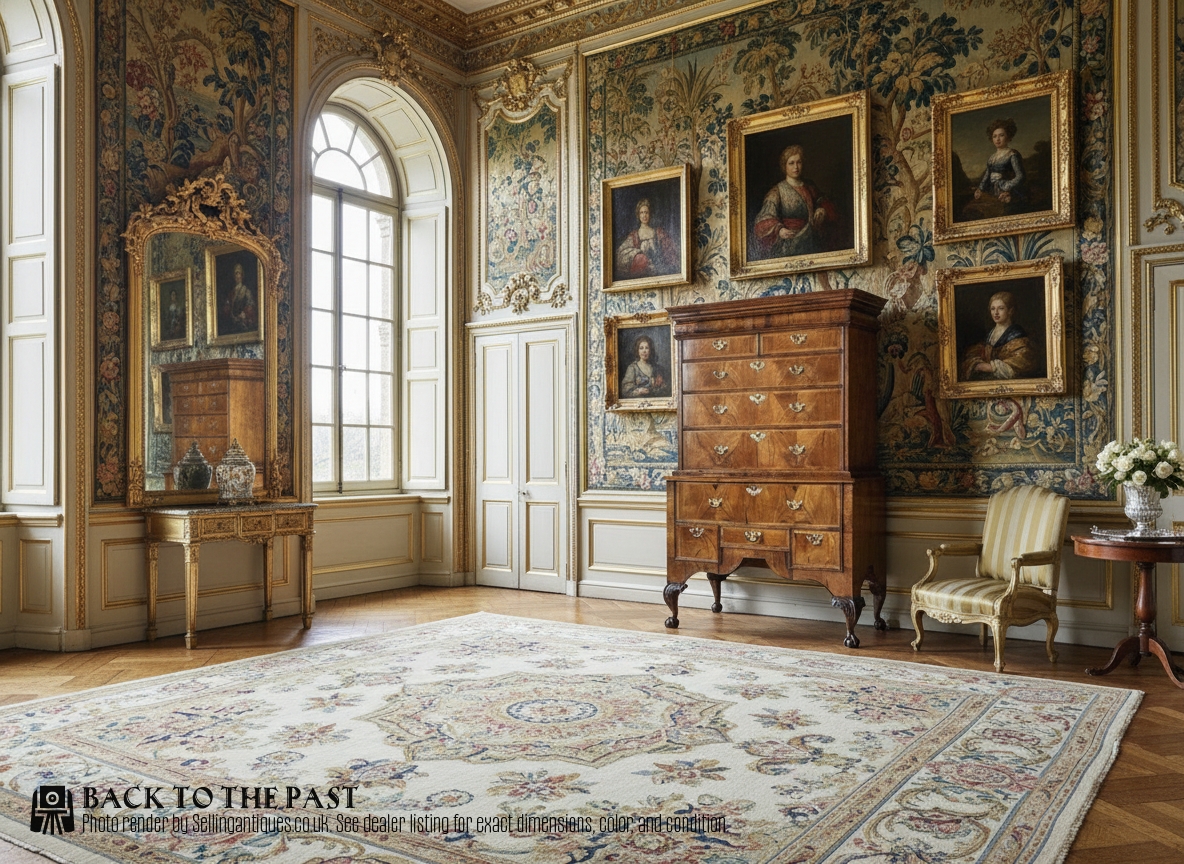
George I Chest on Stand
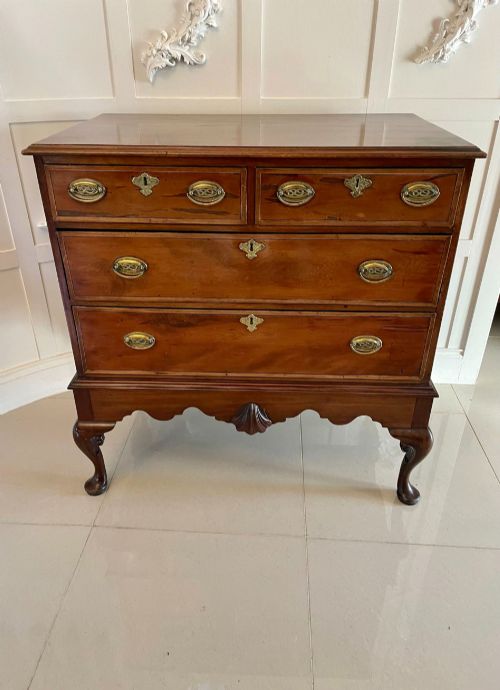
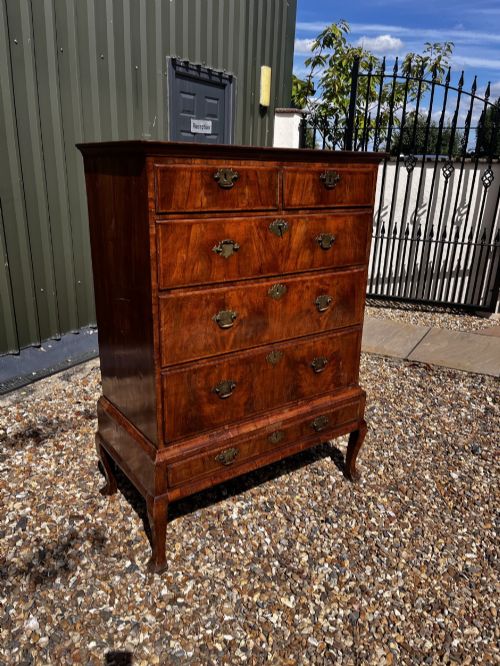
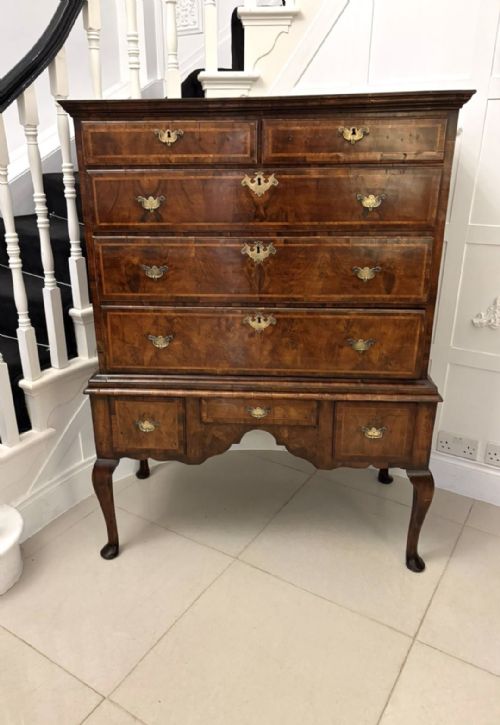
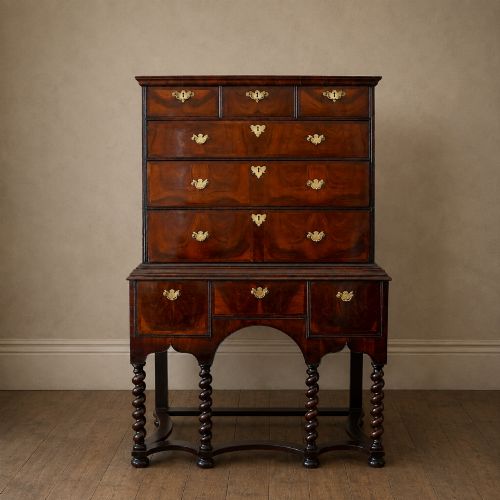
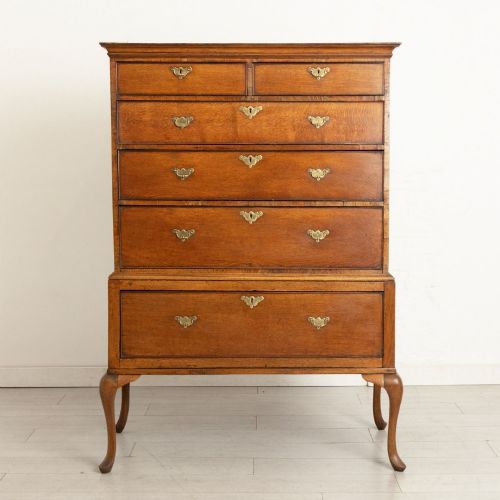
A george i chest on stand pairs a two-part drawer section with an elevated lower framework, typically supported on cabriole legs.
The form appears most frequently in walnut, oak, and mahogany from the eighteenth century, alongside later revivals.
Makers designed these pieces to hold valuables or linens, combining upper drawer banks with a supportive stand base.
How They Were Made
Craftsmen built these cabinets using solid timbers and decorative veneers such as burr walnut, oyster cut pieces, and figured mahogany applied to deal or oak carcases.
Joinery techniques included dovetailing for the drawer construction and mortise and tenon joints for the lower frame and legs.
Cabinetmakers finished surfaces with wax or polish, incorporating brass drop handles, key escutcheons, and occasional boxwood stringing.
Some miniature stands served as apprentice masterpieces, built small to prove a joiner's skill before joining the guild.
What Varies in Quality
The grade of timber selection distinguishes standard examples from superior pieces, with matched grain patterns and figured veneers showing greater ambition.
Proportion and the execution of leg shaping, particularly the transition of cabriole curves into pad or claw-and-ball feet, dictate visual balance.
Originality of the brass hardware, drawer linings, and surface patination heavily influence the standing of an individual survivor.
The George I Chest on Stand Glossary
- Cabriole leg
- A furniture leg that curves outward at the knee and tapers inward toward the foot, mimicking animal limbs. This form appeared widely on stands during the early eighteenth century.
- Oyster veneering
- The practice of slicing small branches crosswise to produce circular or oval wooden discs with concentric growth rings. Craftsmen laid these patterns across drawer fronts for decorative effect.
- Crossbanding
- A narrow strip of veneer applied across the grain direction around the perimeter of a drawer or top. It frames the central panels of figured timber.
- Escutcheon
- A protective plate surrounding a keyhole, usually made of brass. It prevents the key from damaging the surrounding wood during daily use.
- Carcase
- The main structural body or frame of a piece of furniture before drawers, doors, and surface veneers are applied. It provides the core strength for the entire chest.
George I Chest on Stand: Frequently Asked Questions
What is a george i chest on stand?
A george i chest on stand is an elevated storage unit featuring a chest of drawers mounted on an open frame with legs. These pieces date primarily to the early eighteenth century and use walnut or oak.
The design lifts storage off the floor, offering deep drawer capacity within a compact footprint. Walnut and burr veneers characterise the period style.
How do you distinguish original stands from later additions?
Inspect the integration of the timber grain, construction joints, and block fixings between the upper chest and the lower stand. Matching wear patterns across both sections provide key evidence.
Altered pieces often show mismatched wood species or disturbed blocking beneath the chest base. Original construction maintains uniform ageing across the complete frame.
Where should you place a chest on stand in a home?
These cabinets suit hallways, living rooms, or bedrooms where their vertical height and decorative drawer fronts can be viewed without crowding. Their narrow profile requires minimal floor space.
Keep them away from direct sunlight and heat sources to protect historic wood veneers and polished surfaces from drying out.
How do walnut and mahogany versions differ?
Walnut examples typically date to the early eighteenth century under the reigns of Queen Anne and George I, featuring figured veneers and crossbanding. Mahogany versions generally emerge later in the century with denser, darker timber.
Walnut pieces often display cabriole legs, while later mahogany variants incorporate straighter leg forms or bracket feet associated with George III styling.