






Geometric Woven Rug Art
When you look for geometric woven rug art, you seek tribal textiles and flatweaves built with traditional wool and natural dyes.
Geometric Woven Rug Art
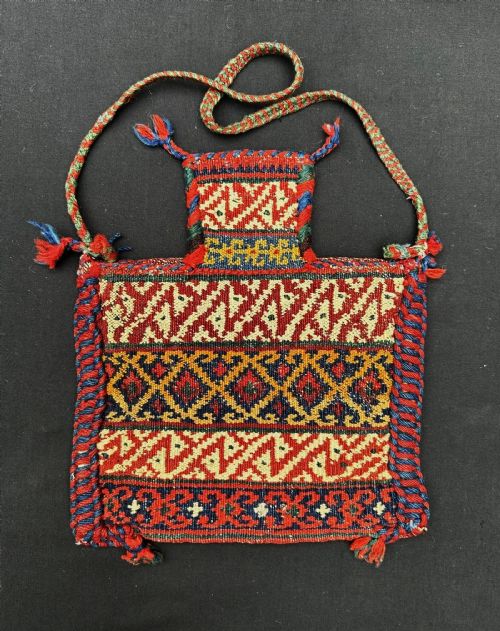
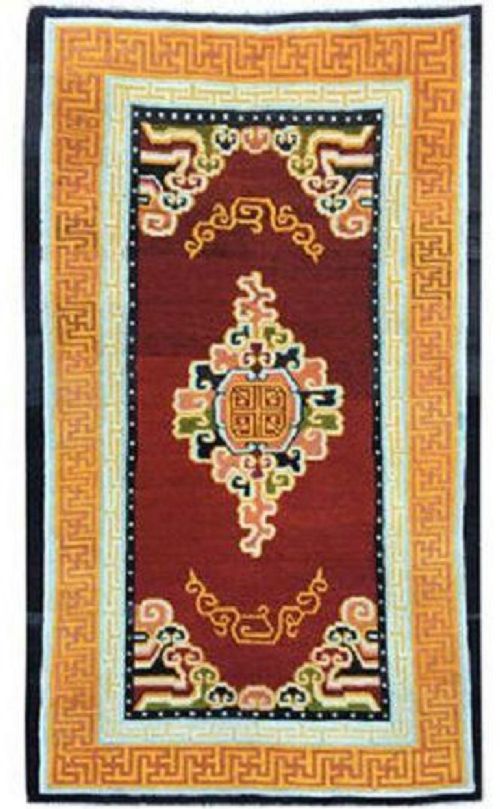
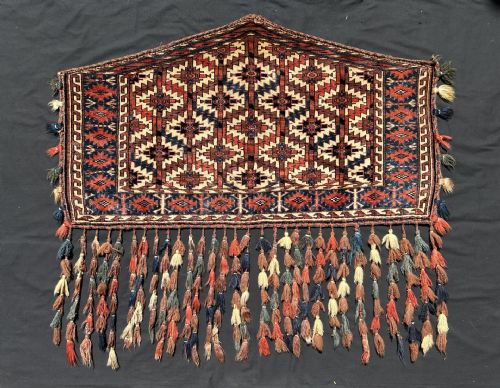
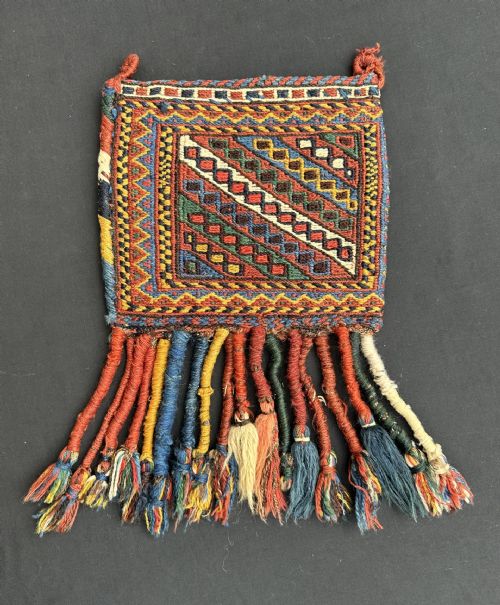
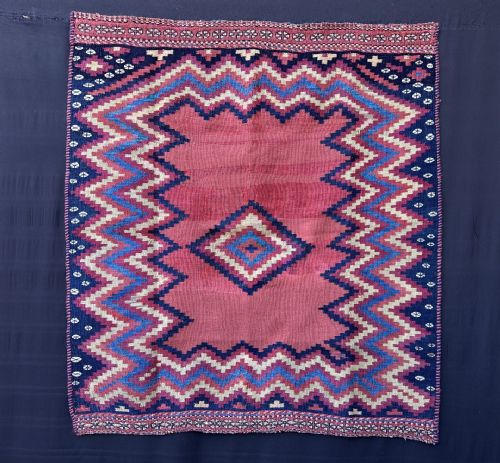
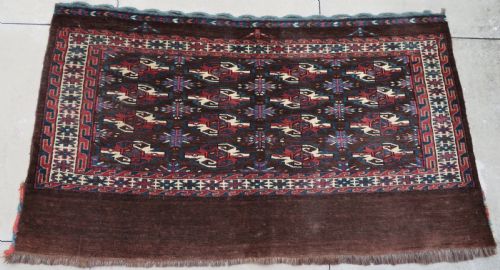
Geometric woven rug art encompasses tribal textiles, flatweave rugs, wall hangings, and functional storage pieces such as saddle bags and salt bags. These items originate from Persian, Central Asian, Caucasian, and Balkan traditions, spanning the late nineteenth and early twentieth centuries.
The most common forms on this page include nomadic bags, floor rugs, and decorative wall hangings created by tribal makers across Persia, Turkmenistan, Uzbekistan, and the Caucasus. Each piece demonstrates traditional patterns handed down through regional weaving groups.
Makers utilised practical forms like asmalyks, dizlyks, torbas, and sofreh bread cloths, which now function primarily as textile art for interiors. Their robust construction and striking layouts suit display on walls or floors.
Materials and Construction
Weavers relied on wool and cotton foundations, frequently employing hand-spun wool for its durable texture and tactile depth. Natural dyes provided the deep reds, blues, and earth tones characteristic of these regional works.
Techniques such as soumak work and flatweave kilim construction created crisp, geometric motifs without a pile. These precise methods allowed makers to achieve sharp angles and complex repeated symbols.
Nomads wove tiny salt bags to keep table salt secure on horseback, proving that good design travels light across the steppes.
Quality Variations
Quality rests upon the crispness of the geometric drawing and the complexity of the design layout, such as star in octagon patterns or multi-gul arrangements. Superior examples display balanced symmetry and confident execution across the field.
The choice and preservation of natural dyes dictate the visual strength of a piece, with rich, saturated palettes marking out the superior end of the range. Furthermore, the fineness of the hand-spun wool and the tightness of the weave contribute significantly to longevity and structural integrity.
The Geometric Woven Rug Art Glossary
- Soumak
- A flatweave technique involving wrapping weft threads over the warp to produce a textured surface resembling embroidery. This method creates durable bags and hangings with distinct geometric clarity.
- Torba
- A small, wide storage bag traditionally used in nomadic tents for household possessions. These pieces often feature prominent tribal guls and make effective wall art.
- Kilim
- A tapestry-woven carpet or flatweave lacking a pile. Such textiles rely entirely on the interlacing of warp and weft threads to form sharp geometric patterns.
- Gul
- A medallion or repeating floral-octagonal motif used extensively in Turkmen and Central Asian tribal weaving. Each design often signifies a specific tribal lineage or group.
- Sofreh
- A flatweave cloth traditionally used for kneading or serving bread within nomadic households. They exhibit striking minimalist or geometric arrangements suited to modern display.
Geometric Woven Rug Art: Frequently Asked Questions
How were these tribal bags used?
Nomadic groups utilised items like salt bags, saddle bags, and storage pouches to transport and store possessions during seasonal migrations. Their sturdy flatweave construction protected contents from daily wear.
Today, collectors repurpose these functional containers as compact wall art or decorative accents in modern homes.
How do I care for a flatweave textile?
Protect wool flatweaves from prolonged direct sunlight to preserve the stability of natural dyes over time. Gentle vacuuming without a rotating brush helps remove dust without stressing the weave.
Professional textile cleaners experienced in antique rugs should handle any washing or major conservation requirements.
How do I identify different tribal styles?
Regional styles reveal themselves through distinct colour palettes, specific medallion forms like guls, and structural techniques such as soumak work. Turkmen pieces often feature octagonal motifs, while Caucasian items display bold folk art geometries.
Comparing border designs and wool preparations helps clarify whether a piece originates from Afshar, Yomut, or Caucasian workshops.