


Geometric Wool Area Carpet
A geometric wool area carpet brings structured tribal motifs and rich regional character onto the floor through centuries-old village weaving traditions.
Geometric Wool Area Carpet
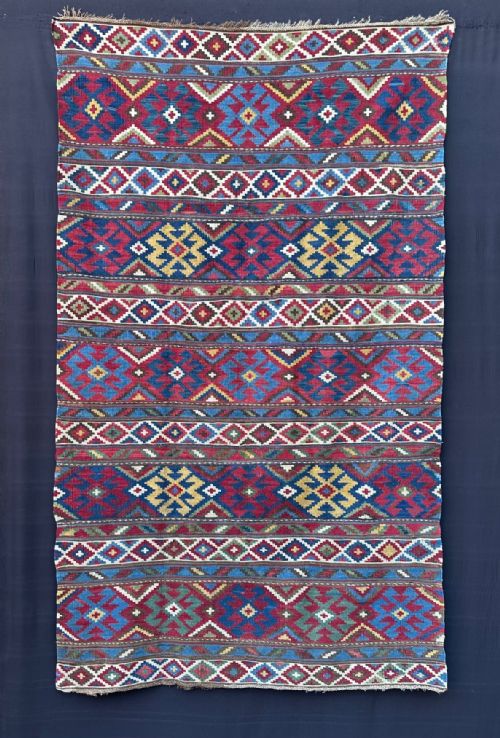
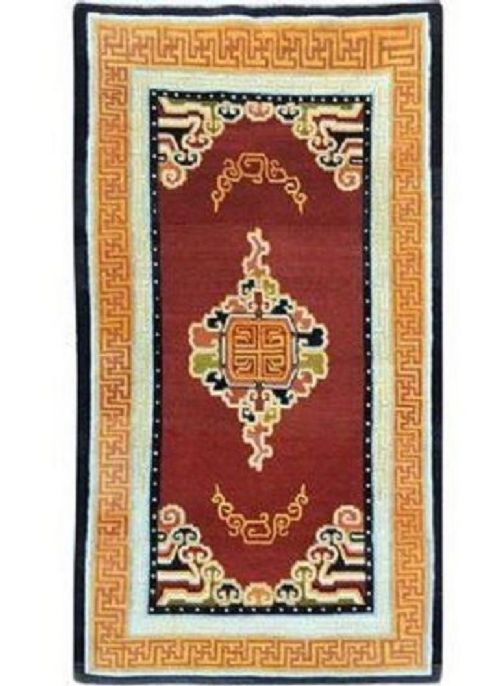
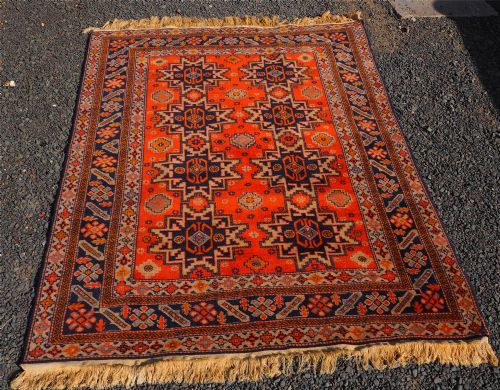
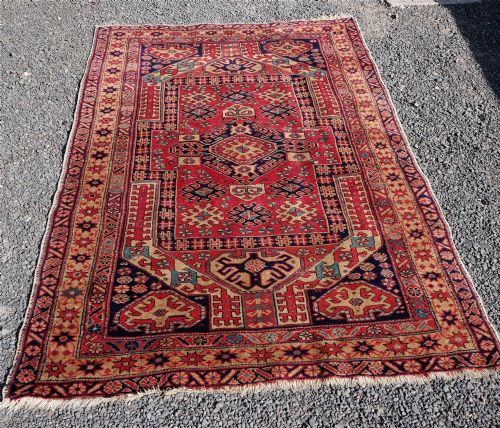
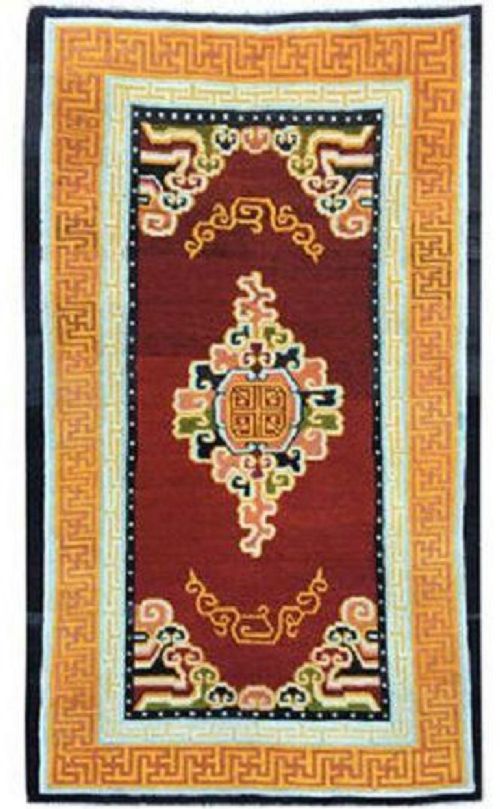
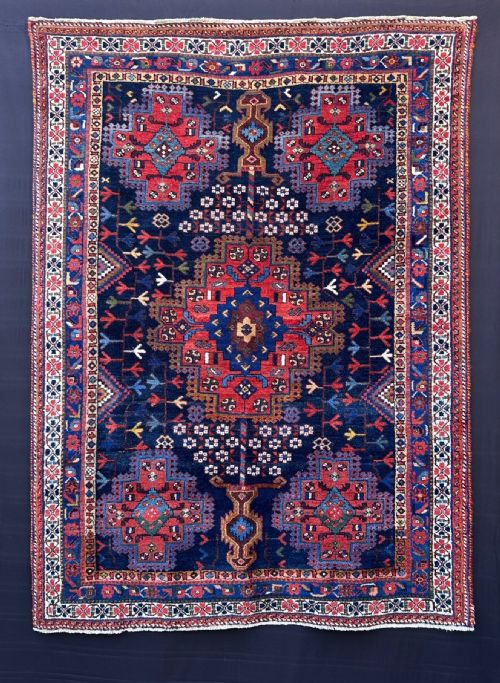
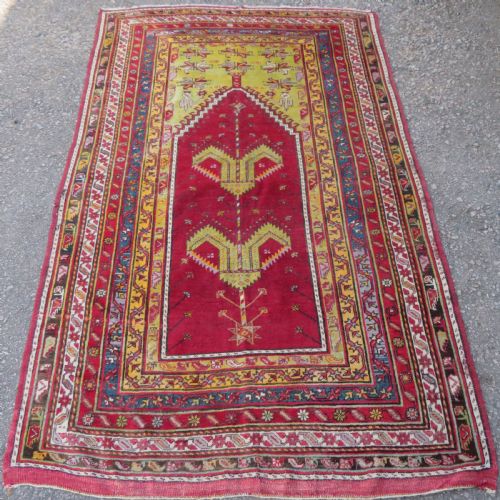
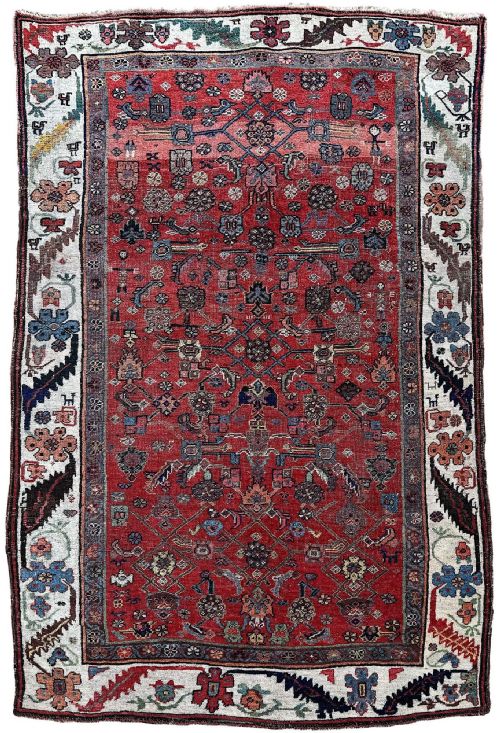
A geometric wool area carpet gathers tribal and village floor coverings originating from nineteenth and early twentieth-century regions including the Caucasus, Persia, Turkey, and Central Asia. Buyers encounter traditional Persian Heriz pieces alongside Caucasian Kazak, Shirvan, and Karabagh examples characterised by repeated angular medallions and lattice motifs.
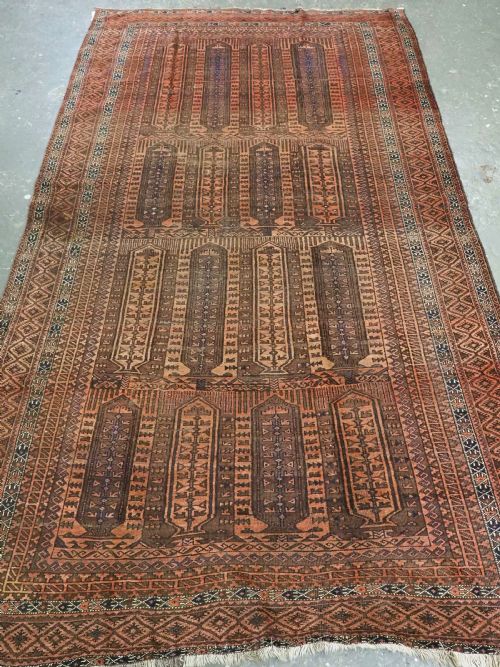
The selections span small prayer rugs and large village carpets, with formats varying from square formats to long corridor runners. Tribal workshops in these areas relied on distinct regional layouts passed down through generations rather than drawn blueprints.
Most pieces date from the late nineteenth century up to the 1930s, reflecting the output of nomadic and settled village weavers using durable wool foundations.
Materials and construction methods
Weavers constructed these carpets using hand-spun wool for both the pile and the foundation threads, occasionally incorporating camel hair or cotton for structural integrity in specific regional styles. Natural dyes provided the palette, yielding deep madder reds, indigos, and soft earth tones that mellow gradually over decades of exposure.
Knots were tied by hand onto vertical looms, creating dense pile surfaces capable of withstanding heavy daily use in village dwellings and nomadic tents. The resulting textiles display characteristic irregularities in line and proportion that stem entirely from manual execution without mechanical aids.
Several nomadic weavers clearly misjudged their rug's final dimensions, resulting in wonderfully lopsided carpets with delightfully stubborn personalities.
Distinctions in craftsmanship
Quality rests upon the tightness of the knotting, the stability of the wool foundation, and the depth achieved through natural dyeing agents. Superior examples maintain crisp delineation in their angular motifs and balanced proportions across the field.
Greater care in wool selection and spinning produces a resilient pile that resists crushing, while uniform tension on the loom ensures the carpet lies flat without distortion.
The Geometric Wool Area Carpet Glossary
- Medallion
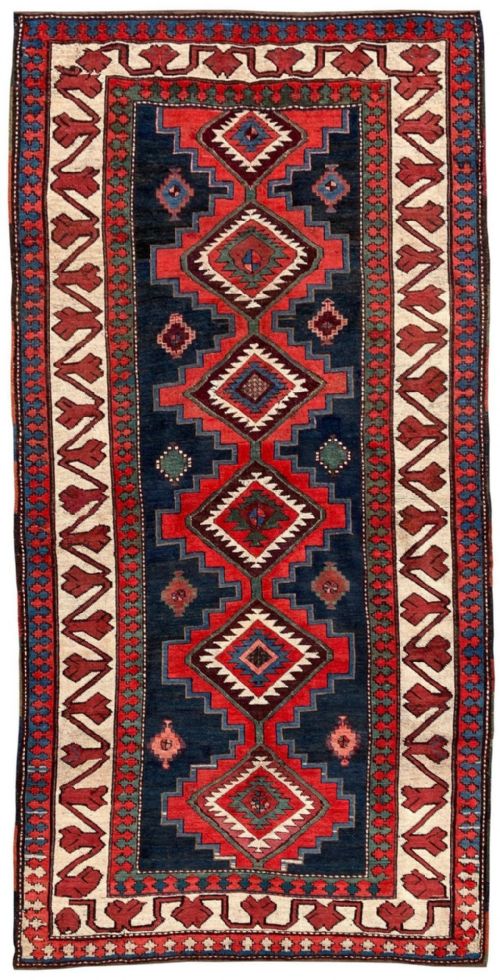
- A central ornamental motif placed in the middle of the carpet field. It usually takes a symmetrical geometric or lobed shape.
- Guls
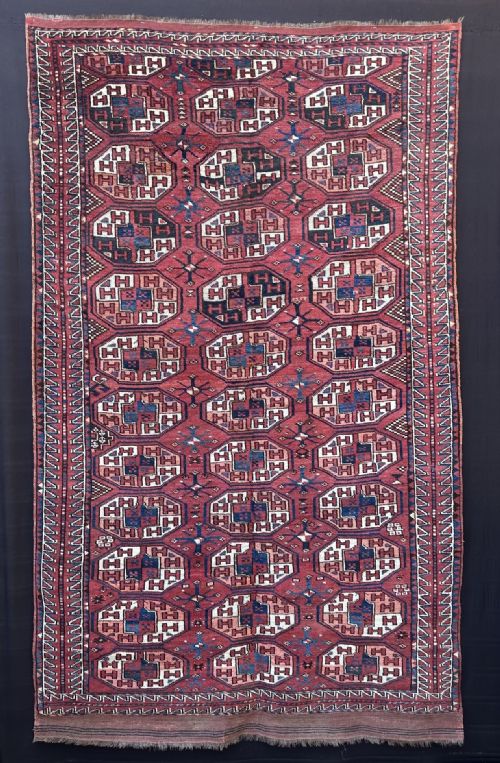
- Repeated octagonal or geometric stamp-like motifs used extensively in Turkmen and Baluch weaving traditions. Each tribal group favoured specific variations of these primary design elements.
- Prayer rug
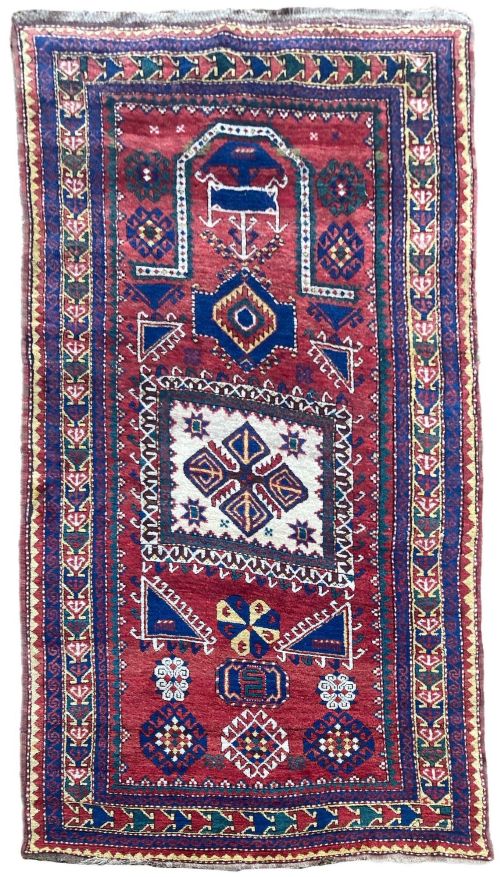
- A small format textile featuring a mihrab or arched niche design at one end. Weavers originally designed these rugs to mark a clean space for daily prayers.
- Warp
- The vertical foundation threads stretched tightly on the loom before knotting begins. Weavers tie the wool pile directly around these structural strands.
Geometric Wool Area Carpet: Frequently Asked Questions
How do I clean a wool carpet?
Regular gentle vacuuming without a rotating brush roll removes surface grit from the wool pile safely.
Professional specialist cleaning remains necessary for deeper washing to protect the natural dyes and historical foundation fibres.
Where were these carpets made?
Village weavers and nomadic tribes produced these textiles across the Caucasus, Persia, Anatolia, and Turkmenistan. Each region developed distinct palettes and geometric vocabularies tied to local materials.
Production centres ranged from small desert encampments to established town workshops sharing traditional village patterns.
How do I date an old carpet?
Analysis of the wool quality, dye composition, and structural weave density points toward specific manufacturing decades. Natural dye variations and regional construction quirks help narrow down the period.
Comparing structural motifs against documented tribal archives confirms the likely age and origin.
Can I use these in high traffic areas?
Hand-spun wool provides natural resilience and lanolin content that resists dirt and wear effectively in busy rooms. Placing a suitable underlay underneath helps cushion the foundation and prevents slipping.
Frequent foot traffic actually benefits durable nomadic weaves by keeping the wool fibres settled and dense.