


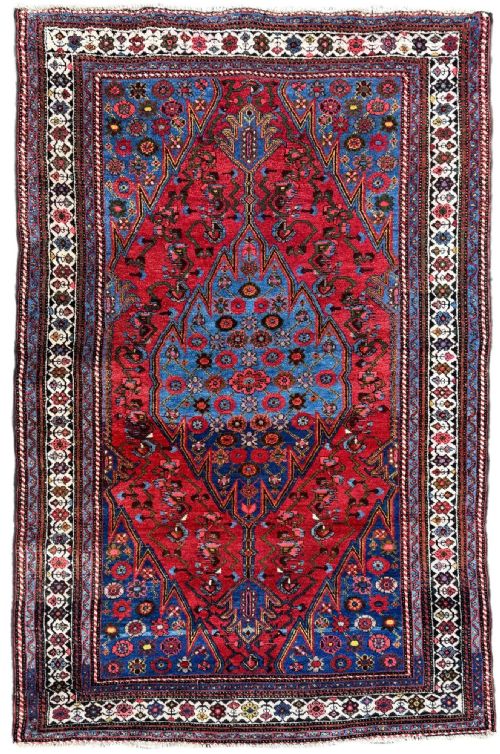
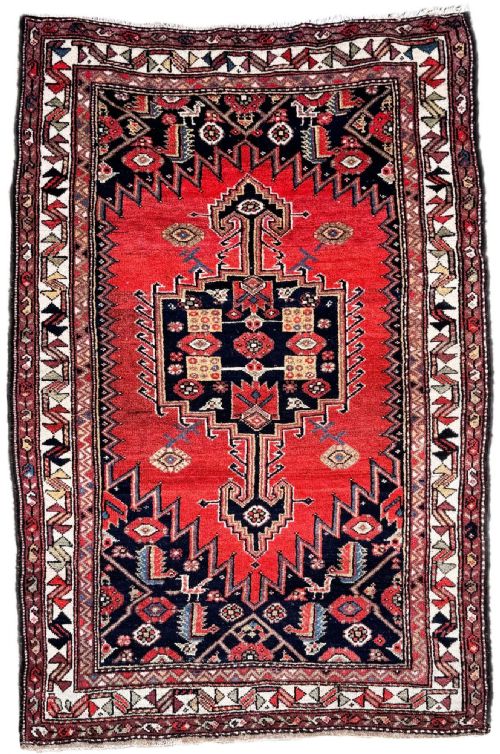
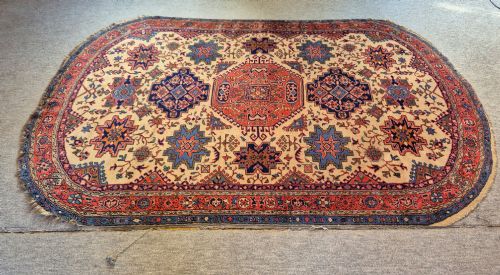
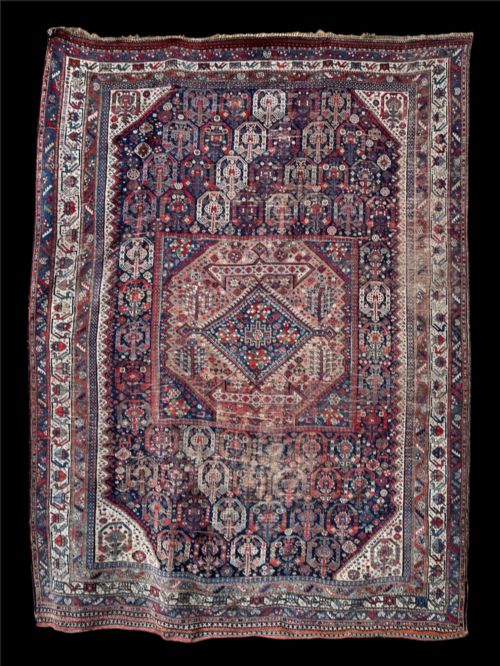

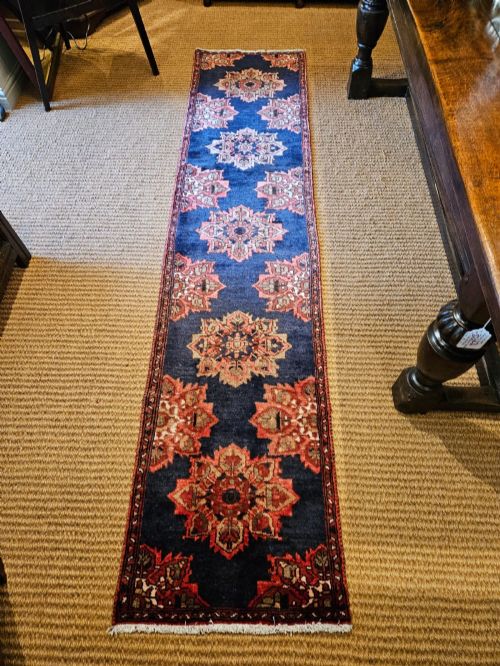
Geometric Medallion Persian Carpet
These geometric medallion persian carpet pieces anchor a room with tribal motifs and sturdy wool.
Geometric Medallion Persian Carpet
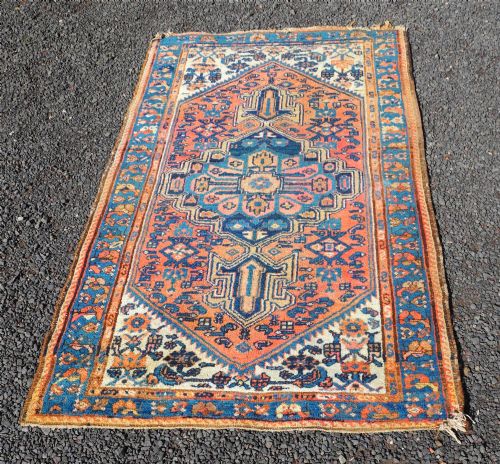
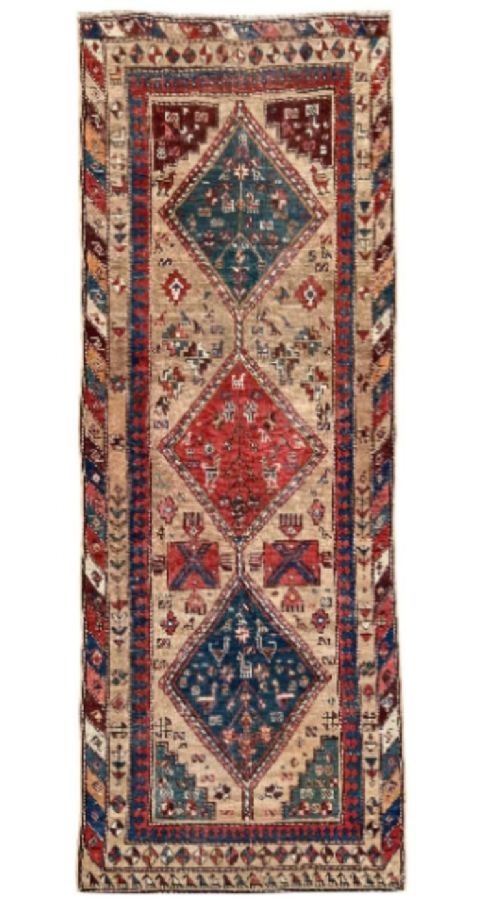
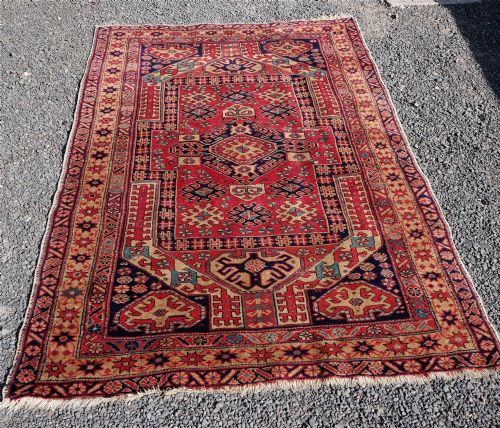
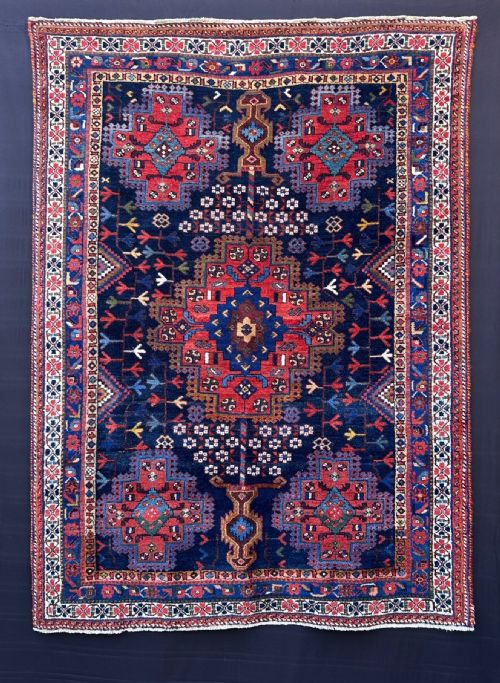
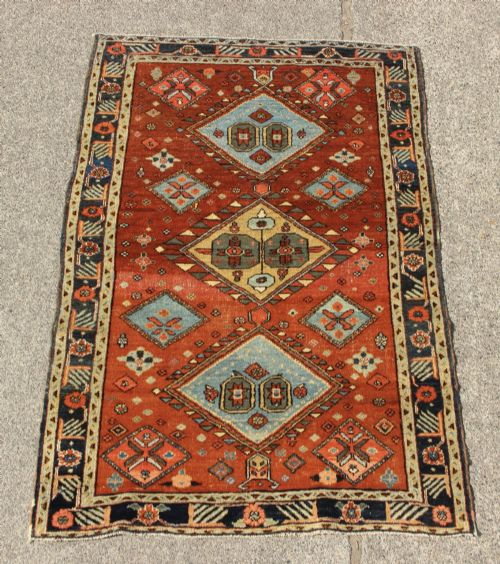
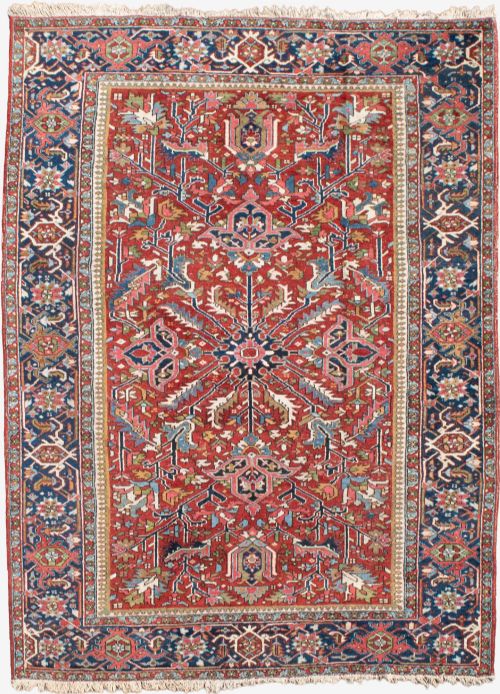
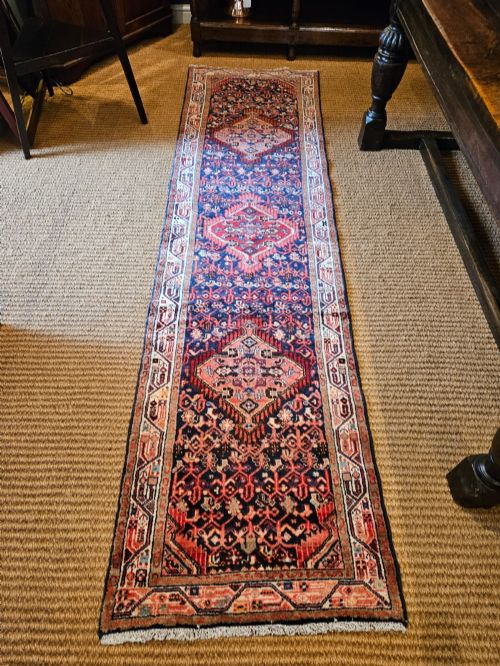
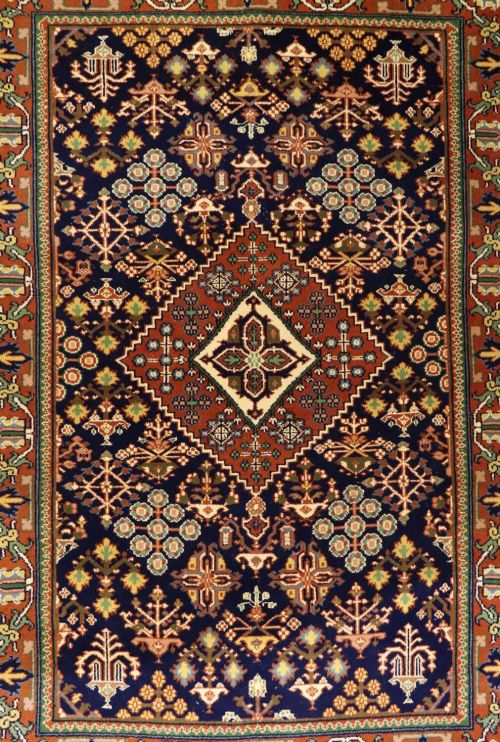
When you search for a geometric medallion persian carpet, you examine floor coverings woven across towns and tribal regions of Persia and Anatolia. The selection spans the nineteenth century through the mid twentieth century, including Heriz, Hamadan, Khamseh, and Afshar pieces.
You meet room-size carpets, runners, and smaller area rugs bearing central motifs balanced by field patterns. Heriz and Khamseh examples appear frequently alongside village Hamadan and tribal Afshar weaves.
The aesthetic relies on repeated angular forms, stepped polygons, and hooked medallions rather than curves. These designs stem from tribal traditions handed down through generations of village weavers.
How they were made
These floor coverings are hand-knotted using wool pile on cotton foundations, providing a dense and durable structure built for daily use. Natural yarns absorb dyes unevenly over decades, creating subtle shifts in tone across the surface.
Weavers employ upright looms and traditional knotting techniques to secure the pile firmly against warp and weft threads. Edges are overcast by hand to prevent fraying while maintaining the natural irregularities of village production.
Nomadic weavers occasionally embedded stray goat hairs and tiny spinning knots into the wool pile as a silent signature of their remote looms.
What varies in quality
Knot density and wool quality dictate how crisply the geometric medallion persian carpet holds its linear motifs over decades of foot traffic. Tighter knotting on sturdy cotton foundations allows intricate medallion outlines to remain sharp.
Dye saturation and the harmony of secondary colours separate standard village work from exceptional regional examples. Depth of tone in the wool determines how the central medallion interacts with the surrounding field.
The Geometric Medallion Persian Carpet Glossary
- Medallion
- A large central ornamental design placed in the middle of the carpet field. It anchors the symmetrical layout typical of village and tribal weaving.
- Warp
- The vertical foundation threads stretched lengthwise on the loom before knotting begins. Cotton supplies strength and stability to these parallel strands.
- Weft
- The horizontal threads passed across the warp strands between rows of knots to bind the structure. They alternate to compress the pile tightly.
- Pile
- The cut wool surface forming the upper layer of the carpet. Its thickness dictates how the textile feels underfoot and how the pattern wears.
- Hand-knotted
- A construction method where individual yarn lengths are tied manually to the foundation warp threads. This intensive process creates durable rugs lacking mechanical uniformity.
Geometric Medallion Persian Carpet: Frequently Asked Questions
How do I clean a vintage carpet?
Surface dust is removed regularly using a gentle suction vacuum without a beating brush. Professional specialist cleaning handles deeper maintenance to preserve wool pile and foundation integrity.
Water exposure should remain minimal to protect natural dyes. Quick blotting handles accidental spills before moisture sets into the cotton warp.
Where were these rugs woven?
Weaving centres span specific towns and tribal confederations across Persia and neighbouring Anatolia. Heriz, Hamadan, and Khamseh represent distinct regional aesthetic traditions.
Nomadic groups and settled village workshops each utilised local wool sources and dye palettes. These geographic origins define the character of the central medallions.
Can I place rugs in heavy traffic areas?
Dense wool pile and sturdy cotton foundations provide natural resilience against everyday foot traffic. Hallways and living spaces accommodate these floor coverings successfully.
Underlays prevent slipping and reduce friction between the foundation and the floorboards. Proper cushioning extends the functional lifespan of nineteenth and twentieth century textiles.
How do I identify a tribal rug?
Tribal pieces display asymmetrical quirks, saturated colours, and geometric motifs drawn from memory rather than strict paper cartoons. Village and nomadic weavers incorporated local symbols directly onto the loom.
Palettes often feature deep indigos, madder reds, and ivory grounds. Irregularities in border geometry point toward traditional hand production methods.