





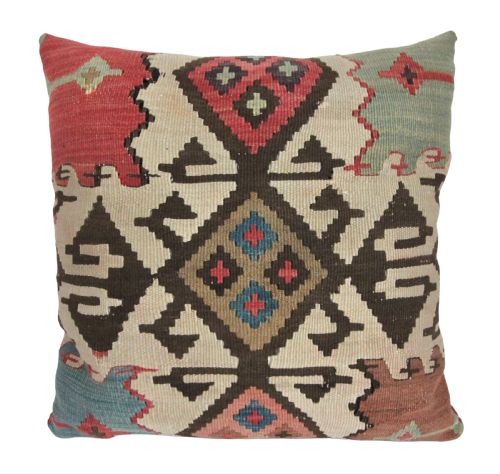


Geometric Kilim Pillow
These geometric kilim pillow pieces are woven wool and cotton home accents that bring rich tribal texture and pattern to an interior.

Geometric Kilim Pillow
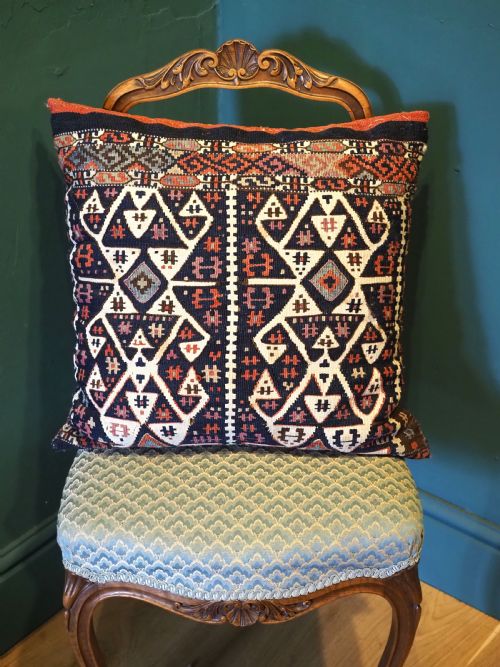
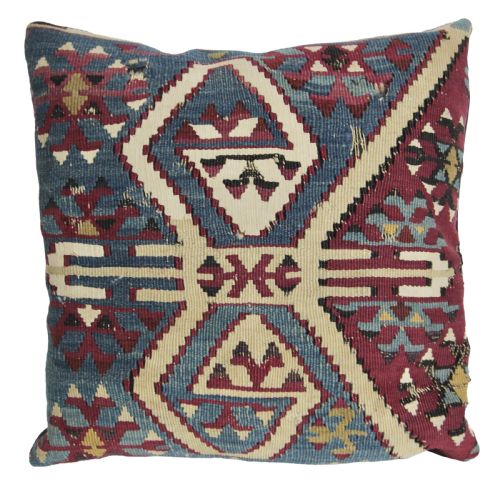
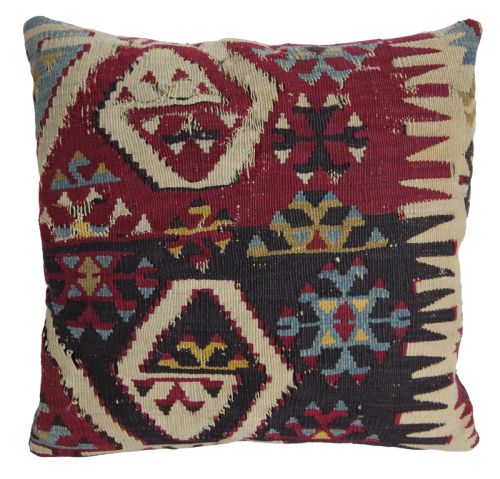
A geometric kilim pillow brings authentic tribal and nomadic artistry into a contemporary interior space. When you search for a geometric kilim pillow, you encounter soft furnishings fashioned from historic woven textiles.
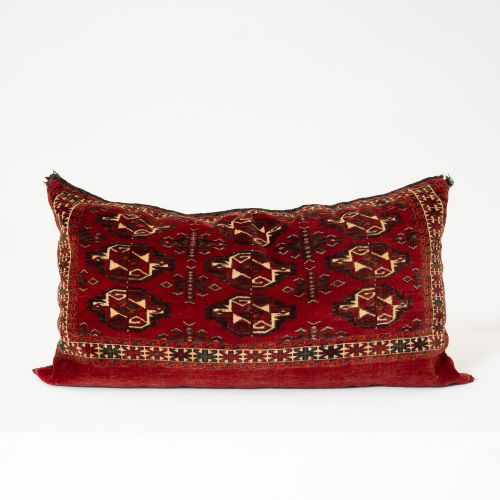
The selections available here primarily consist of antique kilim cushions and bag face cushions. These items originate from periods spanning the nineteenth century through the early twentieth century.
Most examples derive from Anatolian tribal and Turkmen tribal traditions. Makers utilised fragments of saddle bags and traditional flatweaves to create these cushions and throw pillows.
How They Were Made
These textiles rely on hand-spun wool and cotton materials woven on traditional upright or horizontal looms. Artisans employed flatweaving techniques without a pile to create crisp, geometric motifs.
Woven bag faces and saddle bag fragments provided the durable front panels for these cushions. The structural integrity of the weave reflects traditional nomadic craftsmanship from Anatolian and Turkmen regions.
Nomadic weavers packed their worldly belongings in these very bags before they found a second life as scatter cushions on modern sofas.
What Varies in Quality
Quality rests upon the tightness of the weave and the clarity of the geometric patterns. Pieces featuring hand-spun wool display superior texture and depth compared to standard commercial wool.
The preservation of the original tribal motifs and the integrity of the flatweave define the higher tiers of the range. Finer examples retain the distinct character of their nineteenth-century bag face origins.
The Geometric Kilim Pillow Glossary
- Kilim
- A flatwoven carpet or rug produced by tightly interweaving warp and weft strands. This technique creates a smooth surface without any pile.
- Bag Face
- The decorative front panel of a nomadic storage sack or saddle bag. These panels often feature dense geometric patterns suitable for repurposing into cushions.
- Chuval
- A large storage bag made by Turkmen tribes. Fragments from these pieces are frequently fashioned into decorative cushions.
- Anatolian
- Pertaining to the historic region of Anatolia in Turkey. This designation covers traditional tribal weaving styles from the area.
- Flatweave
- A textile technique where no knots are tied. The pattern emerges entirely from the interlacing of warp and weft threads.
Geometric Kilim Pillow: Frequently Asked Questions
What is a kilim cushion?
A kilim cushion is a soft furnishing made by repurposing traditional flatwoven textiles into pillow covers. These pieces often incorporate sections of historic tribal rugs or storage bags.
They introduce tactile wool and cotton textures alongside traditional geometric patterns into modern living spaces.
How old are these cushions?
The pieces available span from the mid-nineteenth century through the early twentieth century. Dates commonly reference the period of the original woven textile.
Items range from eighteen-fifties examples to early twentieth-century Turkmen chuval cushions and bag faces.
Where do these pieces originate?
The origins trace back to Anatolian and Turkmen tribal weaving traditions. Nomadic makers produced these flatweaves for functional household use.
Subsequent reworking transforms these historic fragments into decorative cushions and throw pillows.
Are these cushions made from old rugs?
Many cushions are constructed from authentic antique flatweaves, including saddle bags and bag faces. Artisans cut and repurpose these woven textiles to form pillow covers.
This method preserves historic wool and cotton craftsmanship in a functional format.
How do I care for a wool cushion?
Wool and cotton textiles require gentle maintenance to preserve their historic fibres. Professional cleaning is generally recommended for antique woven items.
Keeping them away from direct sunlight protects the natural dyes used in the flatweave.