

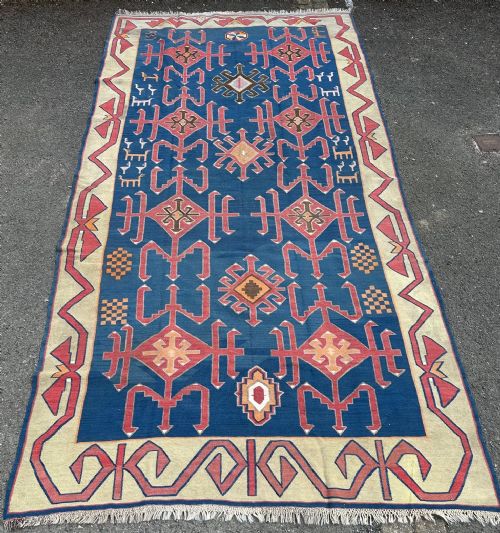


Geometric Flat Weave Rug
A geometric flat weave rug brings crisp, rectilinear tribal motifs and centuries of nomadic weaving skill straight to your floor.
Geometric Flat Weave Rug
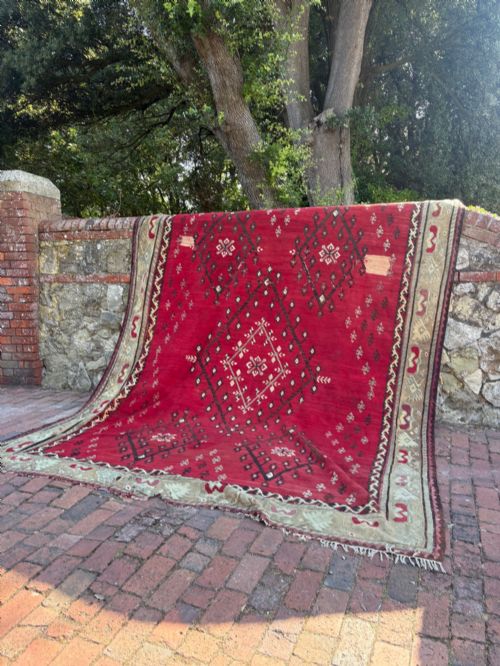
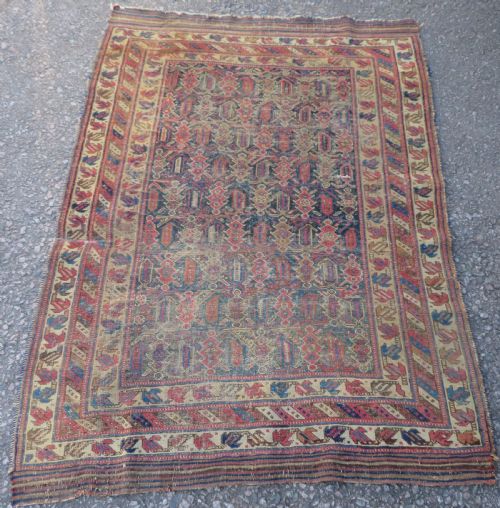
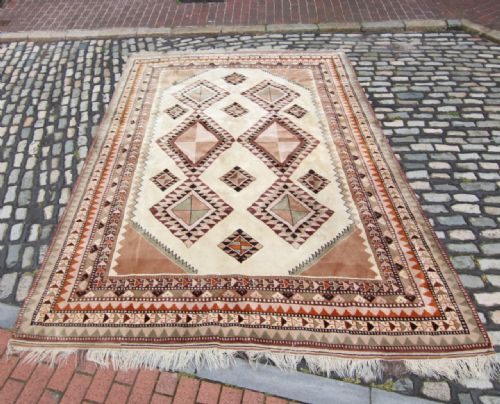
A geometric flat weave rug is a textile created without a knotted pile, resulting in a thin, tapestry-like fabric suited for both floors and walls. Buyers searching for a geometric flat weave rug will encounter Anatolian, Caucasian, Persian, and Central Asian tribal pieces that date from the mid-nineteenth century through to the interwar period.
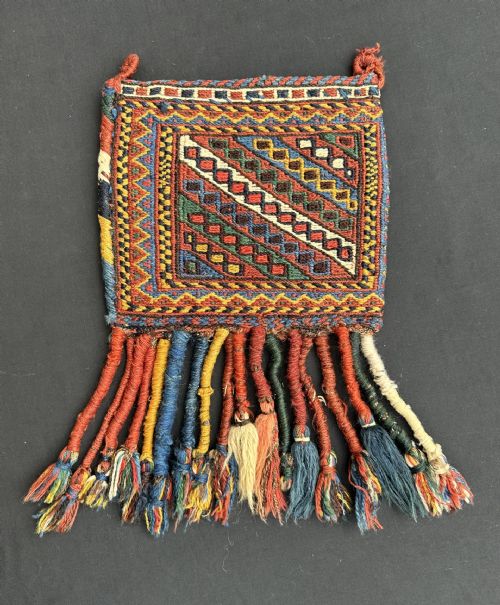
Many survivors of this category were originally functional household objects, including storage bags, salt bags, and saddlebags, which have since been repurposed for modern interiors. These utility pieces carry authentic signs of nomad life, such as being woven in two separate parts and joined together down the centre.
How they were made
Weavers constructed these textiles primarily using hand-spun wool and cotton, relying on slit-tapery techniques where weft threads turn back at the colour boundary to form sharp, clean geometric motifs. Natural dyes provided the deep palette, which often mellowed gracefully over decades of exposure and use.
Certain pieces incorporate Soumak weaving, a wrapping technique that creates a textured, raised surface over the foundation threads for added durability and pattern definition. These methods required considerable dexterity, as the weavers worked entirely from memory and traditional tribal patterns passed down through generations.
The selection includes formats ranging from room-sized carpets and runners to salt bags, saddlebag faces, and decorative cushions.
What varies in quality
Quality in these textiles depends on the precision of the weave, the crispness of the geometric design, and the integrity of the structural foundations. Tightly packed wefts and balanced proportions distinguish the finer village and tribal productions from more utilitarian household items.
The brilliance and variety of the natural dyes also determine the standing of a piece, alongside the preservation of the original borders and flat-woven ends. Pirot and Caucasian examples often demonstrate exceptional technical control, whereas nomadic bag faces showcase spontaneity and raw creative energy.
The Geometric Flat Weave Rug Glossary
- Kilim
- A flat-woven carpet or rug made without a pile by tightly interweaving warp and weft strands. This method produces a lightweight textile that is reversible and flat.
- Soumak
- A brocading technique where weft threads are wrapped around the warp threads before being beaten down. It adds structural weight and a characteristic ribbed texture to the surface.
- Mafrash
- A large, rectangular storage bag or chest panel traditionally used by nomads for bedding and household goods. They are frequently found today as flat-woven panels or reconstructed cushions.
- Warp
- The stationary vertical threads stretched across a loom that serve as the foundation for the weaving. The weft threads are passed horizontally through these structural lines.
- Weft
- The horizontal threads that are passed back and forth across the warp to build the pattern and fabric. In flat weaves, these coloured threads completely hide the warp.
Geometric Flat Weave Rug: Frequently Asked Questions
How do I clean a flat weave rug?
Regular gentle vacuuming without a rotating brush helps keep dust from settling into the wool fibres. Professional cleaning tailored to antique textiles is recommended for deeper maintenance.
Water and harsh chemical detergents should be avoided to protect the historic natural dyes. Spot cleaning requires mild soap and careful blotting from the outer edge inward.
Are these rugs suitable for heavy traffic?
Their dense wool construction makes them surprisingly durable for daily household use despite lacking a traditional pile. Placing a quality underlay beneath the textile prevents slipping and cushions the fibres against hard floors.
Runners and large carpets handle hallway and living room foot traffic well. Smaller bag faces and cushions are better suited for lighter use or decorative display.
Why are some rugs woven in two parts?
Nomadic looms were often restricted in width by portability and the practical limits of tent living. Weavers solved this by creating two narrow strips which were subsequently stitched together to form a full-sized rug.
This structural feature is a hallmark of authentic tribal production rather than a modern repair. It demonstrates the resourcefulness of makers working within traditional nomadic constraints.
How can I tell tribal regions apart?
Design geometry, colour combinations, and specific weaving structures offer strong clues to a piece's geographical origin. Caucasian rugs often feature sharp, angular medallions with primary blues and reds, while Anatolian and Persian tribal pieces utilise softer madder dyes and varied border arrangements.
Technical markers like Soumak wrapping or specific slit-weave spacing point toward particular groups such as the Shahsavan or Yomut. Comparing motif libraries helps narrow down the specific heritage of each textile.