






Geometric Bag Face
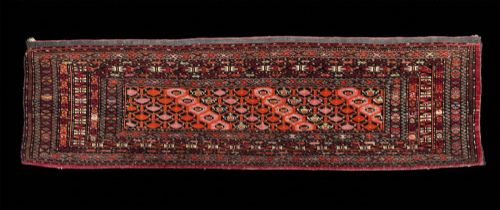
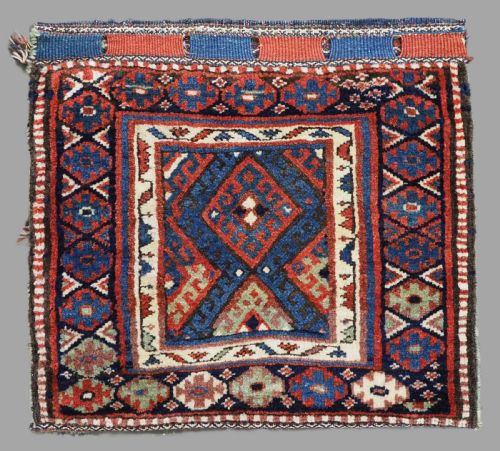
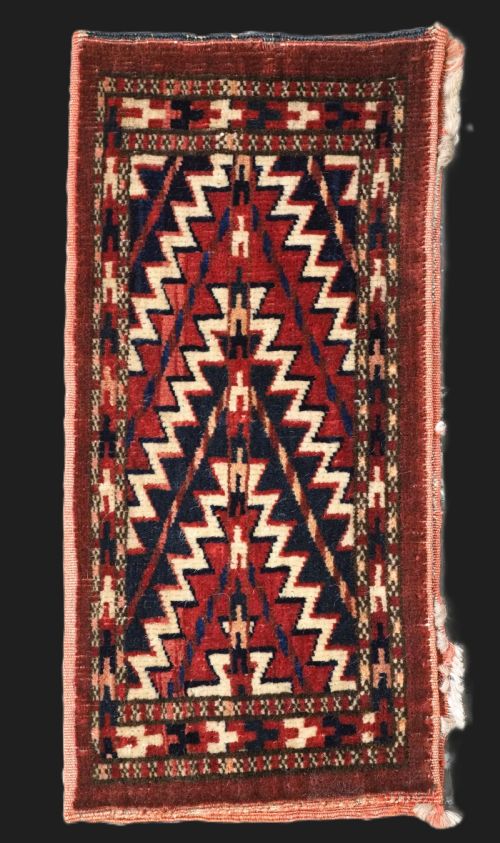
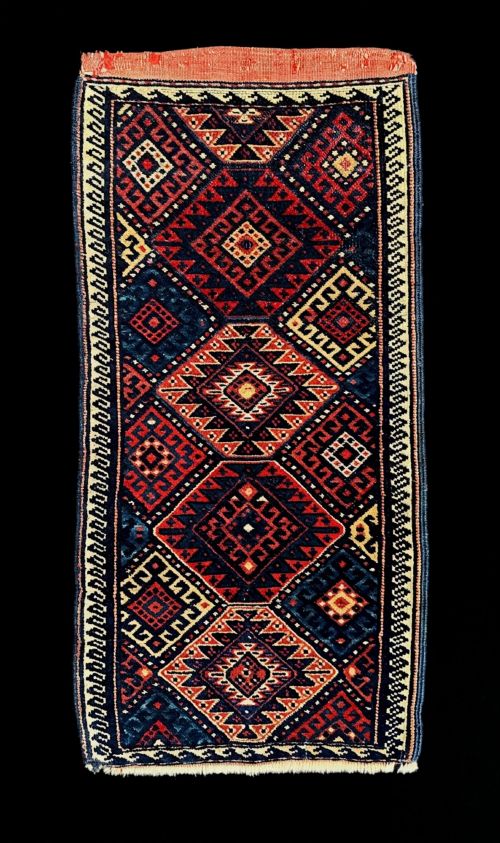
These pieces known as geometric bag face examples are woven tribal textiles from the nineteenth and early twentieth centuries, prized for their bold nomadic designs and durable structures.
Geometric Bag Face
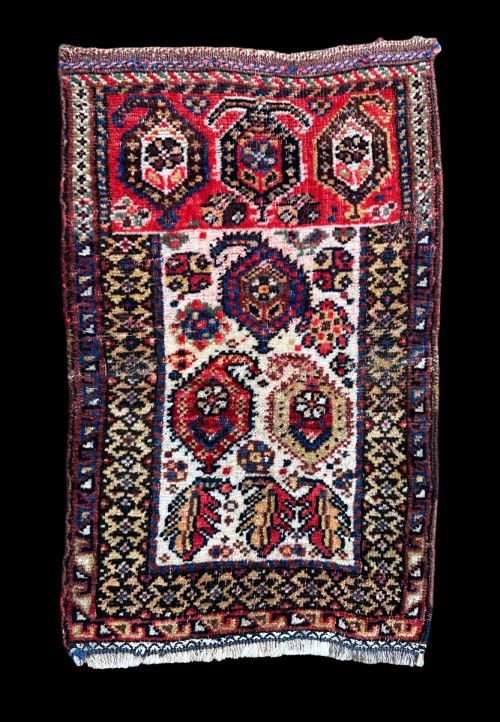
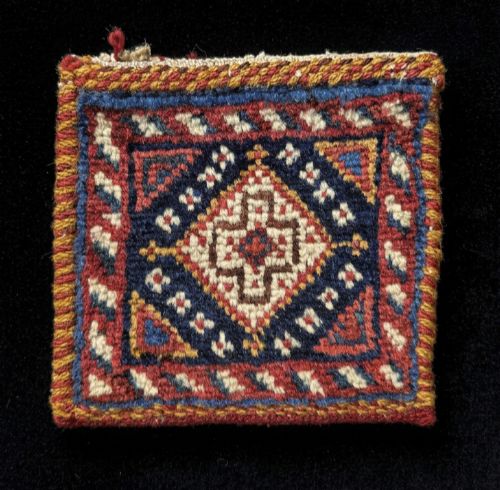
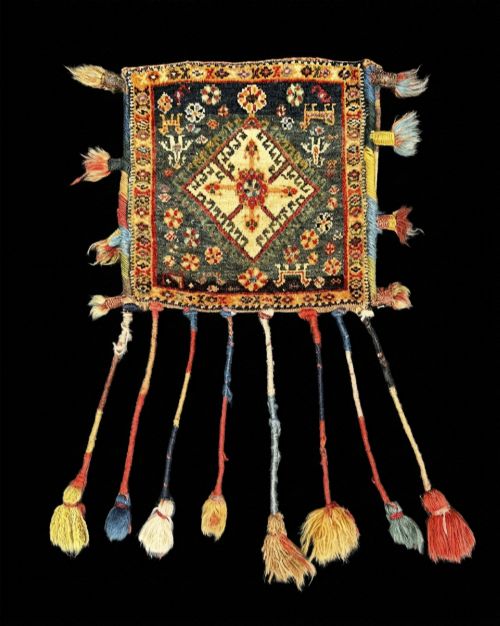
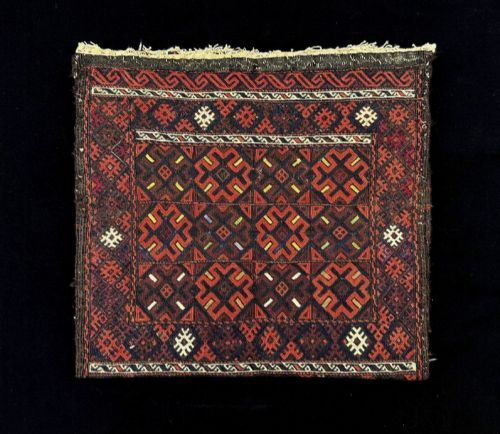
A geometric bag face is the front panel of a utilitarian nomadic container, such as a saddlebag, storage pouch, or pillow bag, created by tribal weavers across Persia, the Caucasus, and Central Asia. These fragments survive because makers constructed them with dense pile or flatweave techniques designed to withstand heavy daily use.
The pieces appearing on this page stem predominantly from nineteenth-century and early twentieth-century nomadic groups including the Qashqa'i, Shahsavan, Yomut, Tekke, and Kurdish tribes. Buyers most frequently encounter front panels detached from their original backs, often repurposed later as decorative cushions or wall hangings.
Makers composed these textile faces with distinct tribal motifs, ranging from repeating guls and curled leaf patterns to central medallions and intricate geometric borders. Each format reflects the specific regional heritage and weaving vocabulary of the community that produced it.
What varies in quality
Quality in a geometric bag face rests upon the precision of the knotting or weaving, the clarity of the design proportions, and the depth of the natural colour palette. Finer examples display high knot density and sharply articulated geometric motifs that reveal the weaver's total command over the medium.
The condition of the wool, the stability of the original structure, and the vibrancy of the un-faded natural dyes distinguish superior survivals from standard domestic pieces. Greater artistic expression in the layout of tribal guls or medallions separates exceptional village and nomad work from routine production.
Geometric Bag Face Retail Price Guide 2026
Typical asking prices for geometric bag face among the pieces listed under this phrase on Sellingantiques today, from the lower quarter to the upper quarter. They describe what is for sale here now, not the wider market.
Nomadic weavers frequently incorporated small accidental asymmetry into repeating geometric borders to ward off the evil eye.
The Geometric Bag Face Glossary
- Bag face
- The decorative front panel of a nomadic storage sack or saddlebag, usually preserved as an independent textile after the plain weave back deteriorated.
- Gul
- A repeating medallion or octagonal gabled motif characteristic of Turkmen and other Central Asian tribal weaving traditions.
- Soumac
- A flatweave technique utilising wrapping wefts over vertical warps to create a durable, textured surface without a pile.
- Torba
- A small horizontal storage bag traditionally used inside a nomadic tent for personal possessions or utensils.
- Chuval
- A large tent-storage bag made by Turkmen tribes, frequently encountered today as a surviving decorative face panel.
- Khorjin
- The Persian term for a double-sided saddlebag designed for transport on horses, donkeys, or camels during nomadic migrations.
Geometric Bag Face: Frequently Asked Questions
What is a geometric bag face?
It is the decorative front portion of a traditional nomadic storage sack, preserved after the plain backing wore away or was removed.
These panels showcase the distinct tribal patterns and weaving techniques of nineteenth-century pastoral communities.
How were these bags used?
Nomadic groups utilised them for storing household goods, grains, clothing, and personal items inside tents or during migrations on pack animals.
Many double-sided saddlebags draped across livestock to carry necessities along trade and migration routes.
How should I live with one?
These textiles adapt well as small wall hangings, table mats, or fitted cushion covers that introduce texture and historic pattern into an interior.
Keep them away from direct sunlight and heavy foot traffic to preserve the natural wool pile and dye colours.
How do I tell tribal groups apart?
Distinctions emerge through specific structural traits, colour combinations, and signature motifs like Turkmen guls or Shahsavan soumac work.
Regional palettes and border designs point directly to the specific province or confederation where the weaver lived.