



Gentleman Concealed Blade Cane
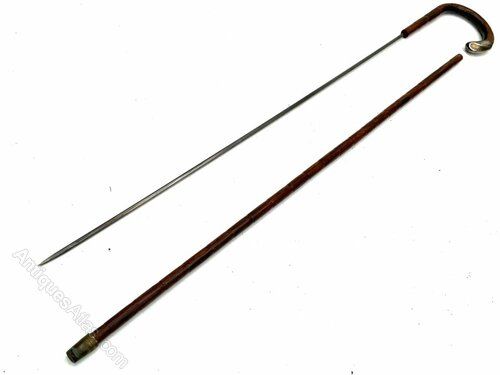
A gentleman concealed blade cane is a discreet walking support housing a hidden steel weapon, offering both everyday utility and surreptitious self-defence.
Gentleman Concealed Blade Cane
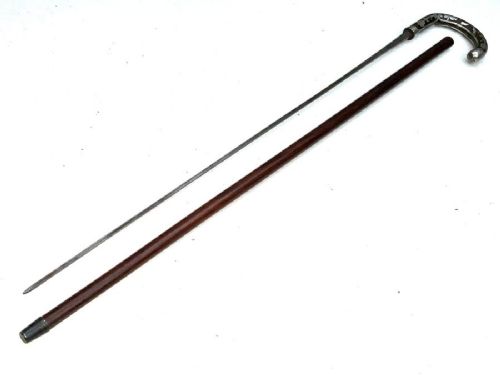
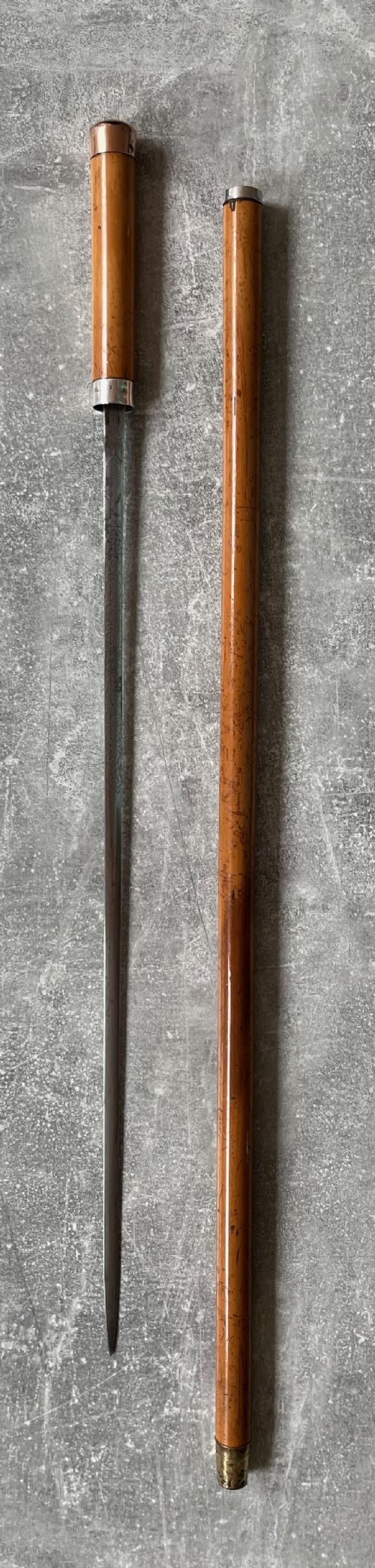
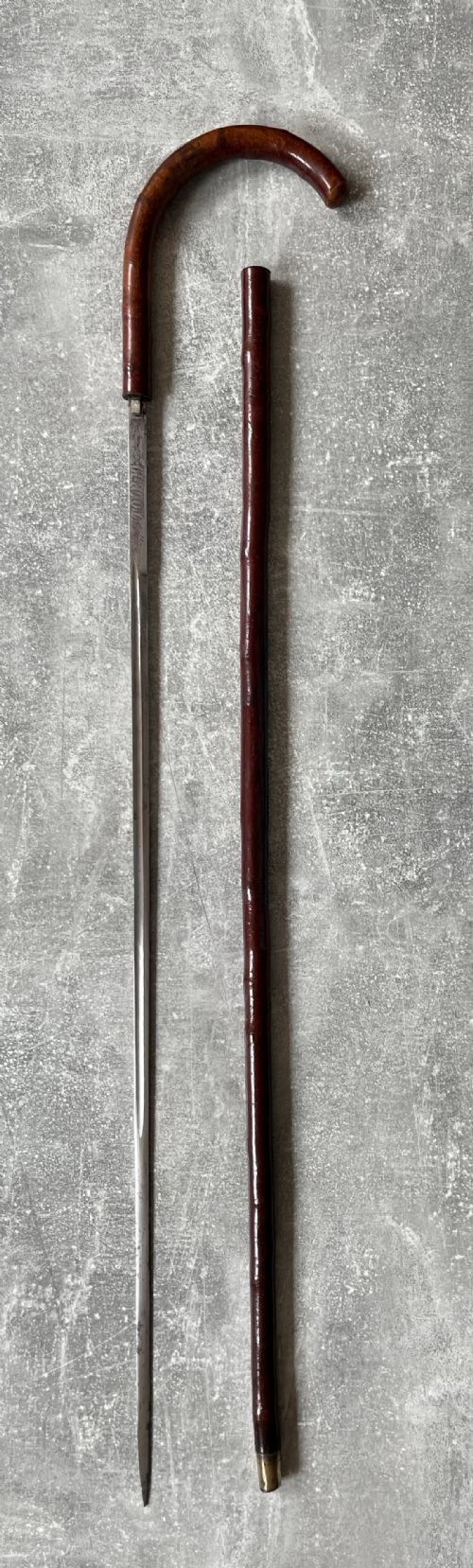
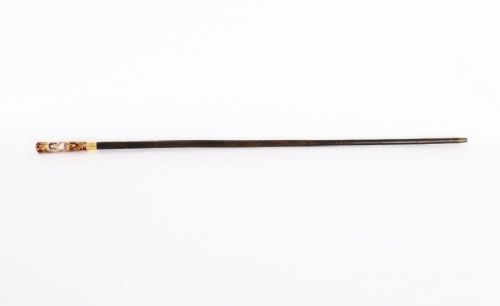
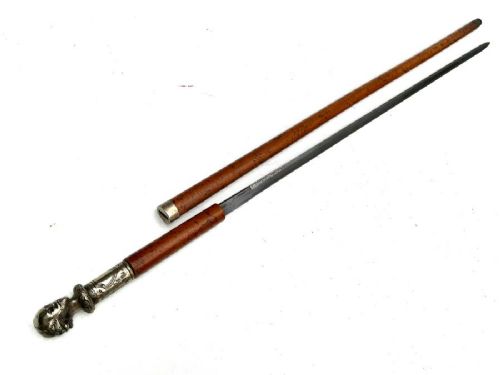
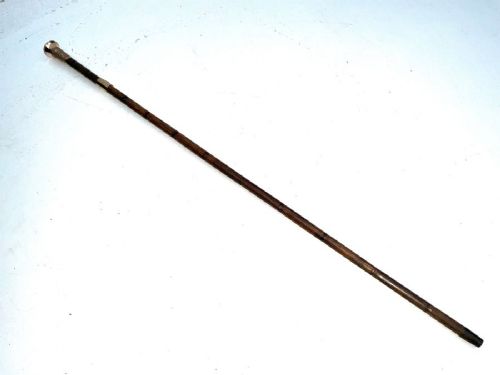
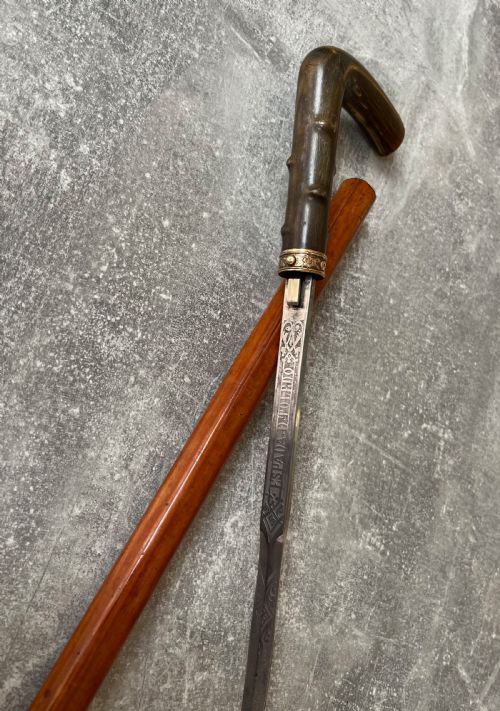
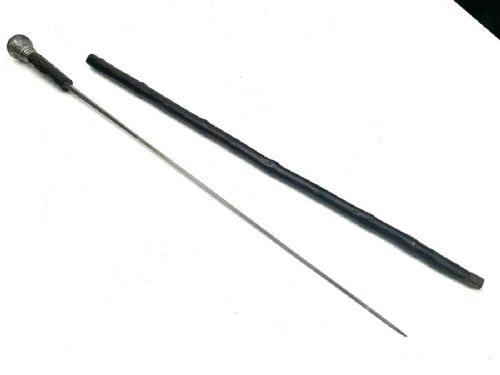
A gentleman concealed blade cane combines the appearance of a standard walking stick with a concealed steel weapon hidden inside the shaft. You will find these pieces spanning the late nineteenth and early twentieth centuries, encompassing Victorian and Edwardian examples.
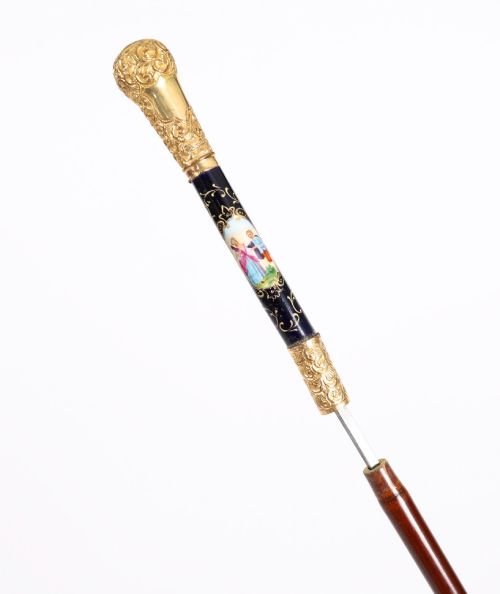
The assortment includes Malacca, cherrywood, partridge wood, holly wood, and rosewood shafts paired with diverse handles ranging from porcelain and horn to antler and silver. Many items incorporate button releases to secure the blade safely within its wooden housing.
Origin points stretch from British workshops to French centres and Imperial German military circles. Specific pieces display Masonic motifs, silver collars, or gold and silver mounts alongside etched Toledo steel blades.
Materials and construction methods
Canes employ sturdy natural timbers like Malacca, rosewood, partridge wood, and cherrywood, often reinforced with brass, silver, or gold plate collars. Handles utilise horn, antler, porcelain, and carved wood secured to the main shaft.
Blades are forged from steel, including specialised Toledo steel, and some examples are etched. Release mechanisms depend on buttons or simple friction fits to secure the hidden blade within the wooden housing.
Distinctions in craftsmanship
Quality rests in the seamless closure between the handle and the wooden shaft, ensuring the join remains virtually invisible during normal use. Superior examples integrate precious metal mounts, detailed porcelain handles, or etched steel blades.
The engineering of the internal spring or button release mechanism dictates how smoothly the blade deploys and locks. Denser hardwoods and robust horn or silver mounts elevate the overall durability of the piece.
BRIGG·Wilkinson
The Gentleman Concealed Blade Cane Glossary
- Toledo blade
- A steel blade originating from Toledo, renowned for flexibility and strength. These blades often feature decorative etching.
- Malacca
- A type of rattan cane featuring characteristic rings or nodes along the shaft, prized for resilience.
- Collar
- A metal band, often made of silver or brass, fitted around the shaft just below the handle to reinforce the join.
- Button release
- A mechanical catch operated by pressing a small stud to unlock the concealed blade from the wooden scabbard.
Gentleman Concealed Blade Cane: Frequently Asked Questions
How do you release the concealed blade?
Most pieces utilise a small button release mechanism built into the collar or upper shaft to unlock the blade from its wooden housing.
Pressing this button allows the steel blade to slide out smoothly while keeping it secure during normal walking use.
How do you distinguish Victorian from Edwardian pieces?
Victorian examples date from the nineteenth century and frequently display heavier ornamentation, including Sevres porcelain or detailed silver collars.
Edwardian and later pieces from the early twentieth century often lean towards simpler military or civilian utility styles.
Were these canes used for self-defence?
Gentlemen utilised these sticks for daily walking support while retaining a concealed steel blade for personal protection.
The discreet design allowed the wearer to carry a weapon without drawing immediate attention in urban or rural settings.