



Gallery Back Writing Desk
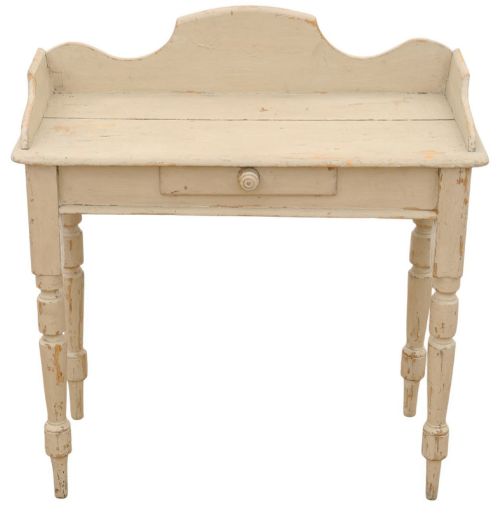
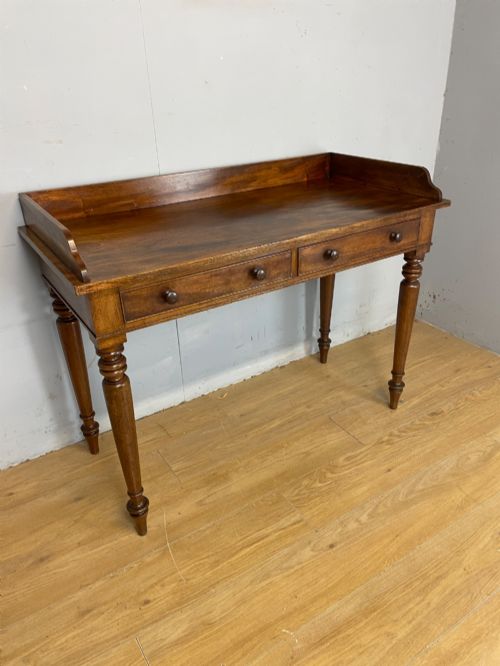
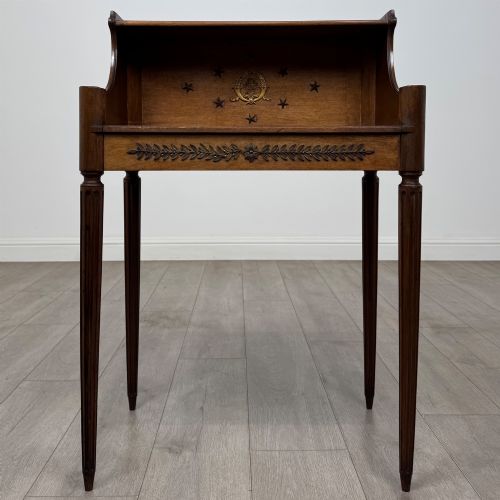
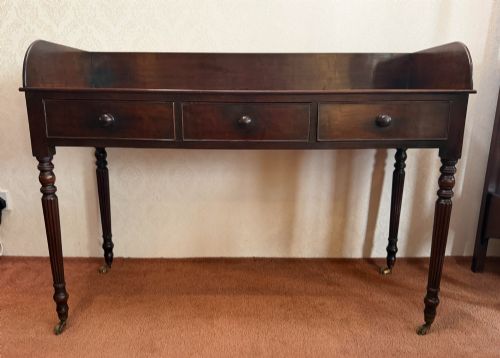
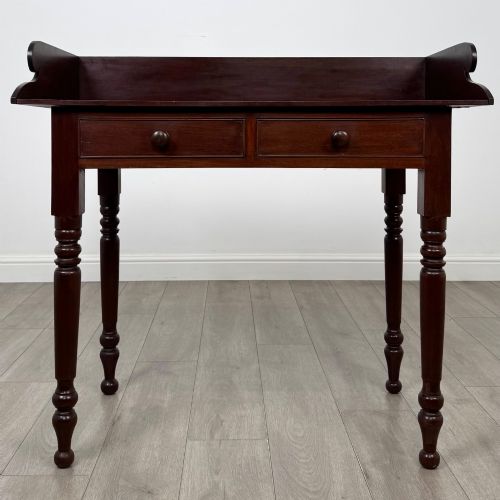
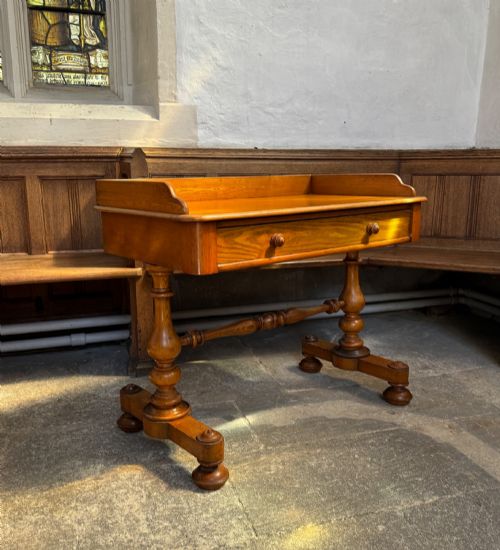
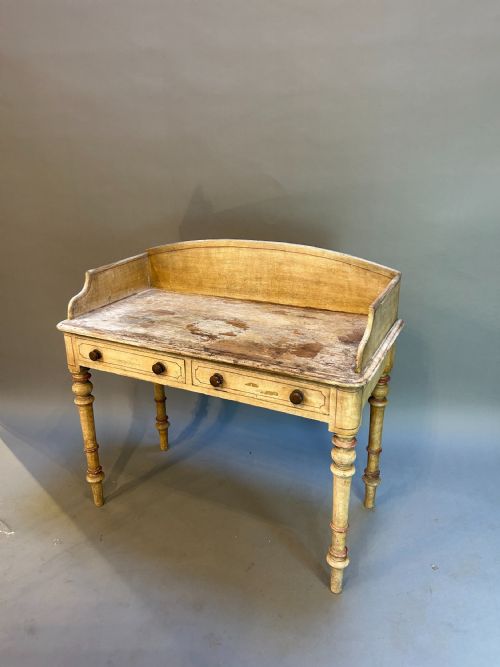
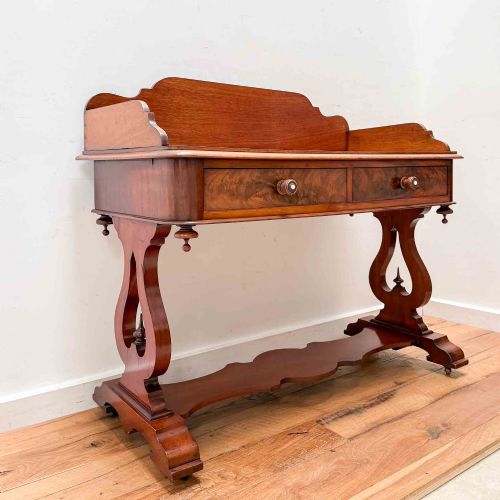
A gallery back writing desk offers a practical raised superstructure for stationery storage above a dependable writing surface.
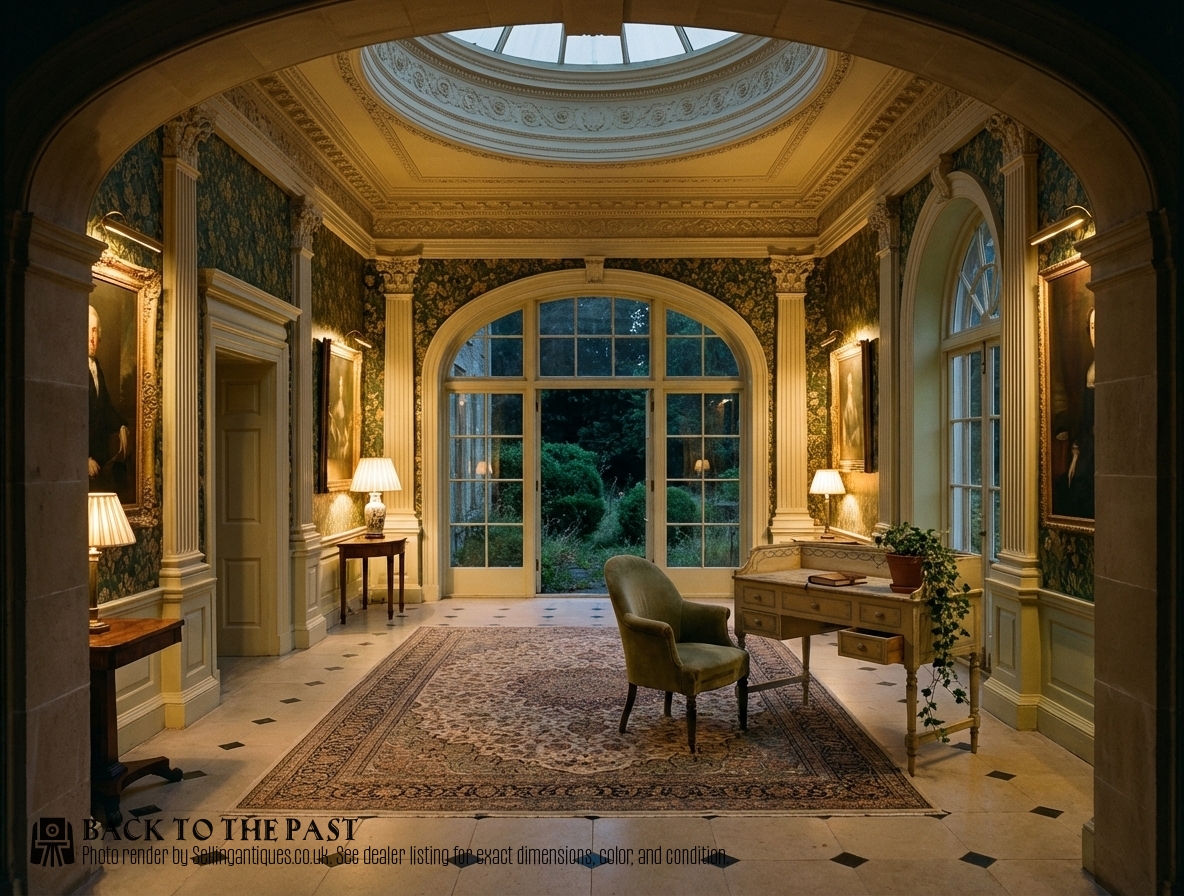
Gallery Back Writing Desk
A gallery back writing desk combines a flat workspace with a low raised shelf or compartment surround at the rear. These pieces appear across several periods including the Georgian, Victorian, and Edwardian eras.
The form often overlaps with side tables, dressing tables, and compact writing tables fitted with drawers. Mahogany and walnut dominate the structural woods found in these selections.
Makers adapted the layout from formal bureau designs into lighter writing tables suitable for parlour and bedroom use. The superstructure keeps papers and inkwells secure while freeing the main surface for correspondence.
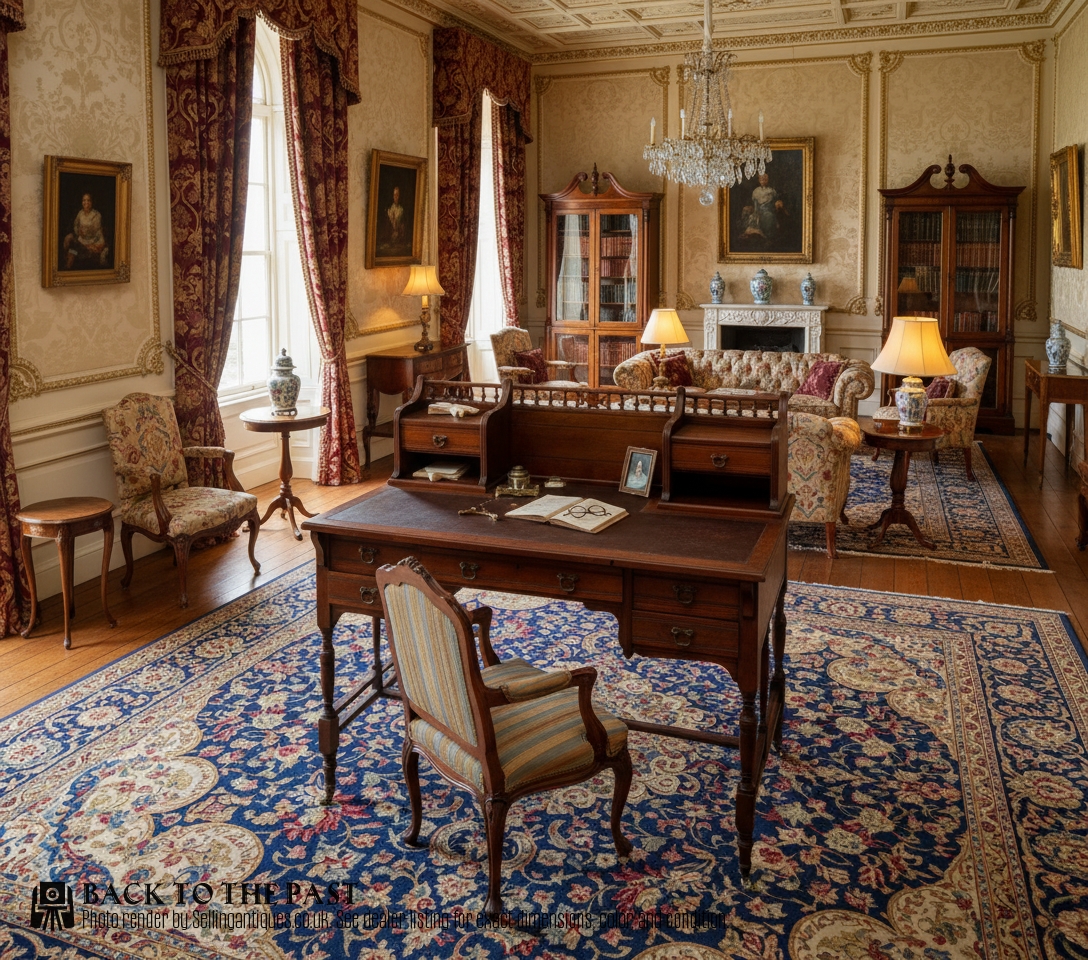
Materials and construction
Cabinet makers relied primarily on solid mahogany and walnut for the main frames and drawer carcases, occasionally using pine or beech for secondary timbers. Fine boxwood stringing and inlay frequently accent the drawer fronts and borders.
Leather inset tops provide a traditional writing surface bordered by wood surrounds. Raised galleries incorporate delicate spindle rails, small drawers, or stationary compartments secured directly to the rear edge of the table top.
Listings feature mahogany, walnut, and pine construction alongside leather writing surfaces and brass hardware.
Judging the work
The refinement of the gallery superstructure distinguishes standard furniture from superior examples. Finely turned spindles, precisely dovetailed drawer linings, and well-figured flame mahogany veneers indicate high workshop standards.
Proportion and timber selection dictate the overall merit of each piece. Superior examples display consistent grain matching across the primary surfaces and cleanly integrated gallery backs that complement the base table.
George Hepplewhite·Heal and Sons·Charles Bevan·Maples
The Gallery Back Writing Desk Glossary
- Gallery back
- A raised superstructure of small shelves, compartments, or spindles attached to the rear edge of a desk surface. It provides storage for letters and writing implements.
- Kneehole
- A recessed central space beneath a desk or dressing table designed to accommodate the user's legs. Flanking banks of drawers typically enclose this central opening.
- Flame mahogany
- A veneer cut from the fork of a mahogany tree where the branch joins the trunk. This produces a distinctive flickering flame pattern highly prized in cabinet work.
- Stringing
- A narrow inlay of contrasting wood, such as boxwood, set flush into the primary surface. It outlines drawer fronts and table borders for decorative effect.
- Dovetail
- A traditional wood joint formed by interlocking wedge-shaped fingers. It secures drawer corners with exceptional strength without relying on metal fasteners.
Gallery Back Writing Desk: Frequently Asked Questions
What is a gallery back?
A gallery back is a raised wooden barrier or small shelving tier fitted to the rear edge of a writing surface. It holds stationery and prevents papers from sliding off the back.
This feature distinguishes writing desks and dressing tables from plain side tables, adding both decorative structure and utility.
How do I date a mahogany desk?
Dating relies on examining construction methods, timber choices, and secondary woods like pine or oak inside the drawers. Georgian and Victorian pieces exhibit distinct joinery techniques and hardware styles.
Cabinet makers in different eras favoured specific veneer cuts and leg profiles, such as tapered legs or turned supports.
Were these desks used for writing?
These tables served primarily for correspondence, household accounts, and letter writing in the parlour or bedroom. The addition of drawers and compartments kept ink and paper close at hand.
Many examples double as dressing tables or side tables due to their versatile proportions and shallow depth.