
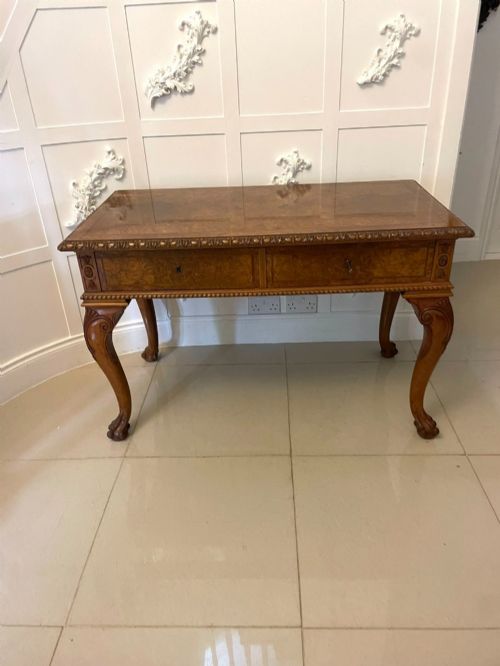
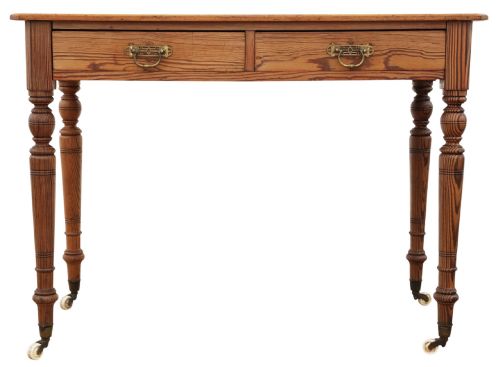
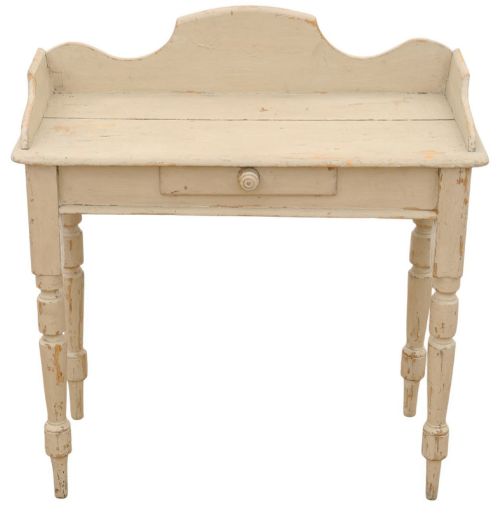
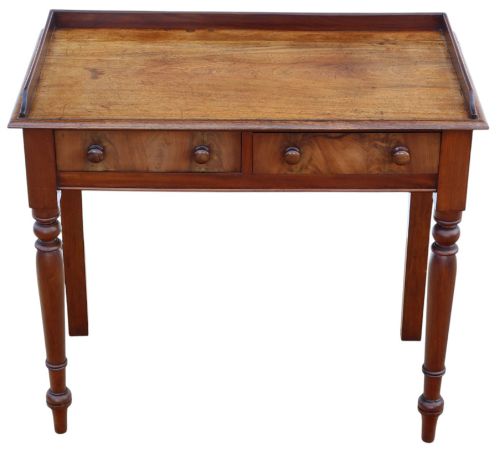
Antique Writing Table with Drawers
An antique writing table with drawers offers a functional workspace that grounds a room with centuries of timber craftsmanship.
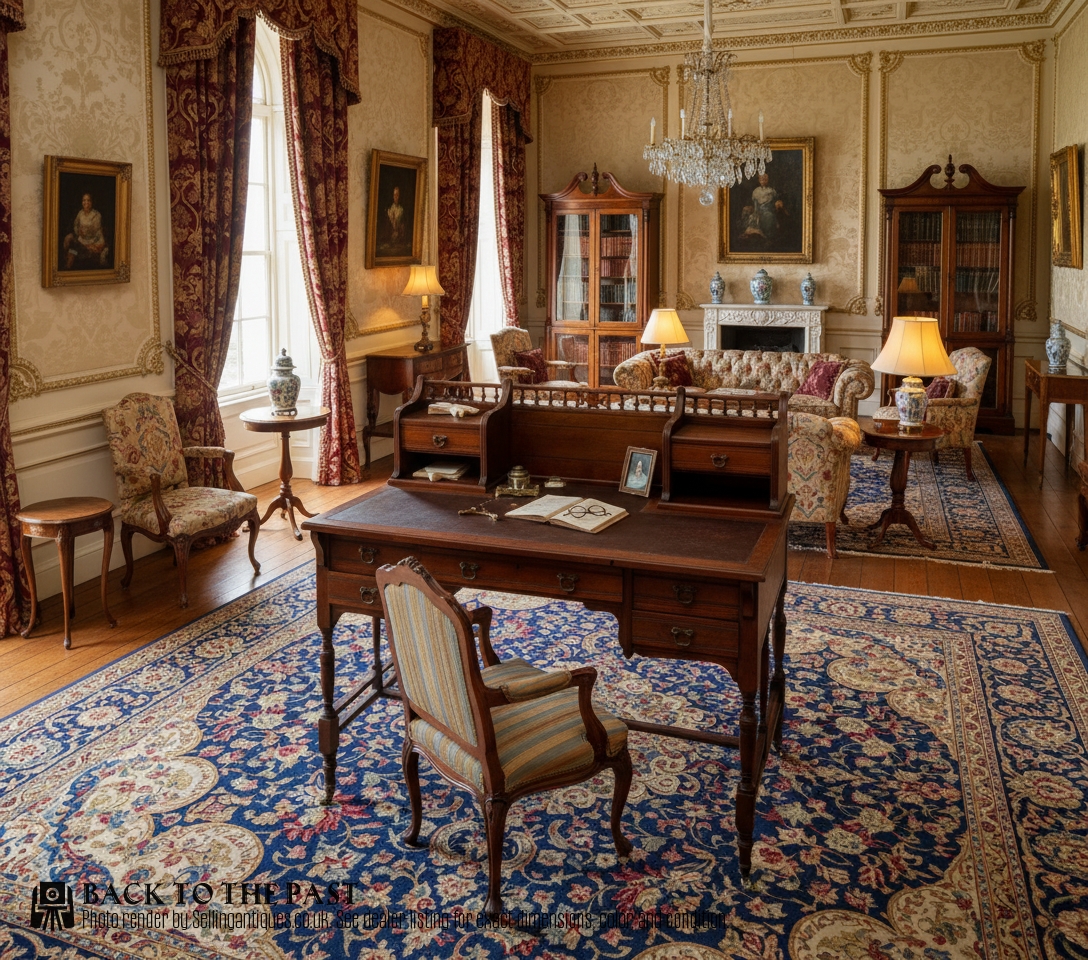
Antique Writing Table with Drawers
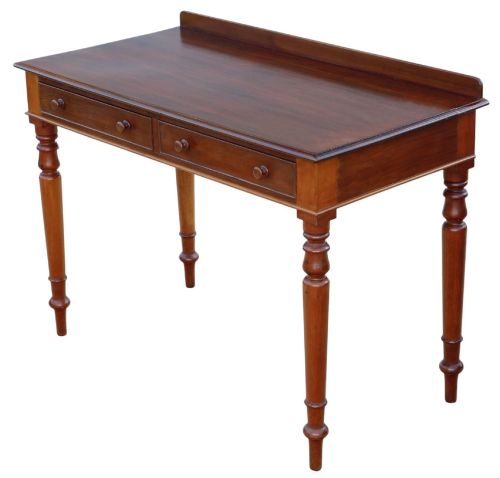
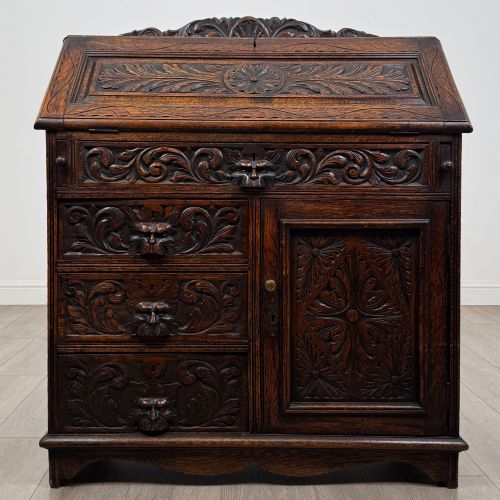
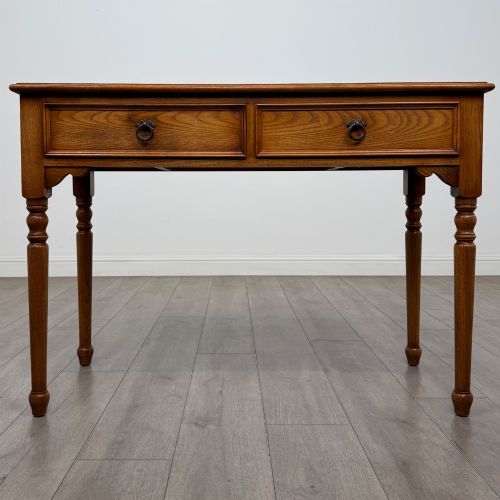
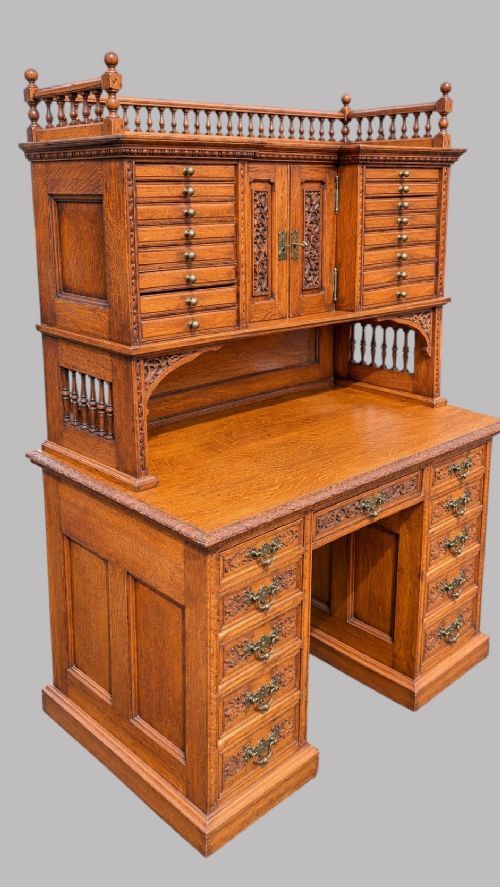
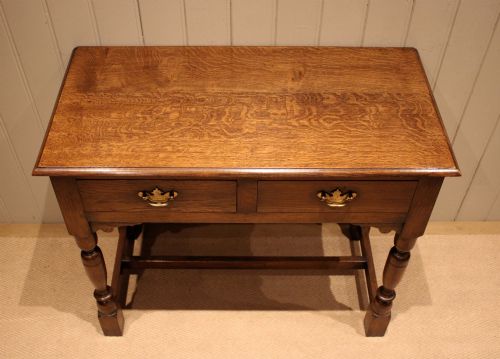
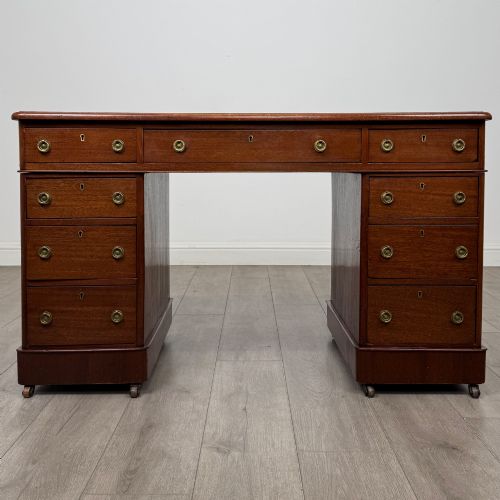
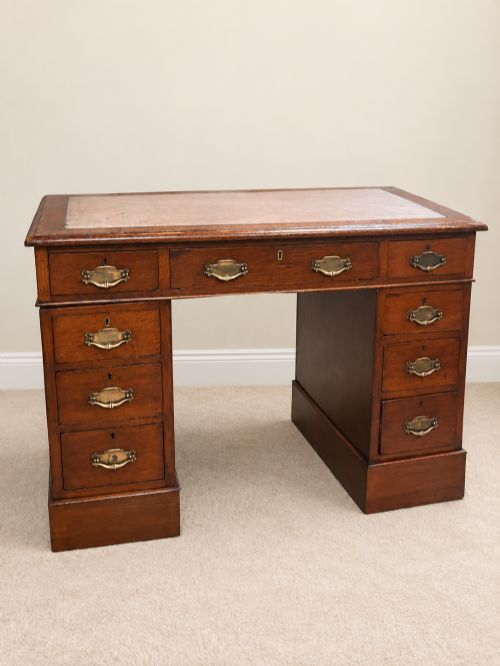
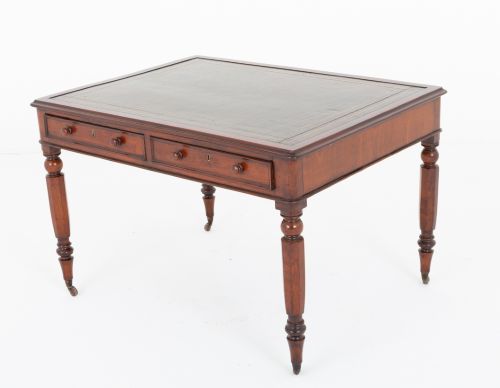
An antique writing table with drawers provides a dedicated surface for correspondence and study while incorporating fitted storage for papers and implements. Buyers searching this phrase encounter forms ranging from compact lowboys and side tables to large pedestal desks and library tables.
Victorian and Edwardian versions in mahogany, oak, and walnut appear frequently, alongside earlier Georgian pieces and later examples into the 1930s. These tables serve equally as functional desks in studies or as decorative console tables in hallways and living spaces.
How They Were Made
Cabinet makers utilised dense hardwoods such as mahogany, oak, and walnut, often applying burr walnut veneers or satinwood to create decorative surfaces. Leather inserts frequently form the writing surface, bordered by subtle blind tooling.
Drawers are constructed using traditional joinery, integrated into the front frieze or configured in twin pedestals flanking a central kneehole. Brass handles and pulls complete the construction, matching the period style from Georgian simplicity to Victorian Gothic revival.
Listings feature woods spanning mahogany, oak, walnut, rosewood, and pine across Victorian, Edwardian, and Georgian periods.
What Varies in Quality
The distinction between standard examples and the finest pieces rests upon timber selection and decorative restraint. Figured grains, matched veneers, and hand-painted details elevate the visual presence of a desk.
Structural integrity depends on the precision of drawer construction and the retention of original hardware. Well-executed carving and clean lines distinguish workshop production from ordinary utility pieces.
Edwards & Roberts·Hobbs & Co.
The Antique Writing Table with Drawers Glossary
- Lowboy
- A small occasional table with one or more rows of drawers, commonly dating from the eighteenth century. These low tables often served multiple domestic purposes.
- Kneehole desk
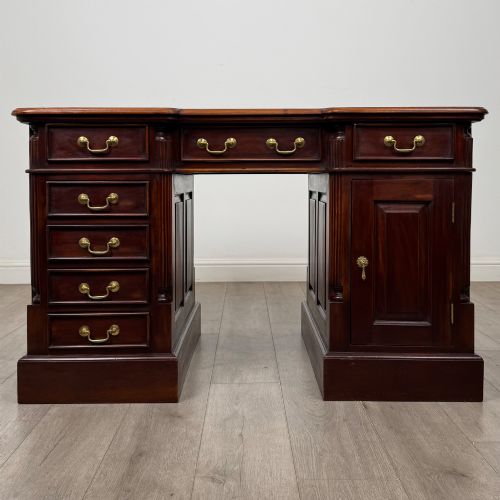
- A desk featuring a central recess for the sitter's legs, flanked by pedestals of smaller drawers. This configuration provides substantial storage without blocking the chair.
- Frieze
- The horizontal band running directly beneath the tabletop, frequently housing one or more integrated drawers. Drawers set into this space keep the writing surface uncluttered.
- Pedestal desk
- A heavy freestanding desk supported by two vertical banks of drawers reaching down to the floor. They offer large surface areas and generous capacity.
- Sofa table
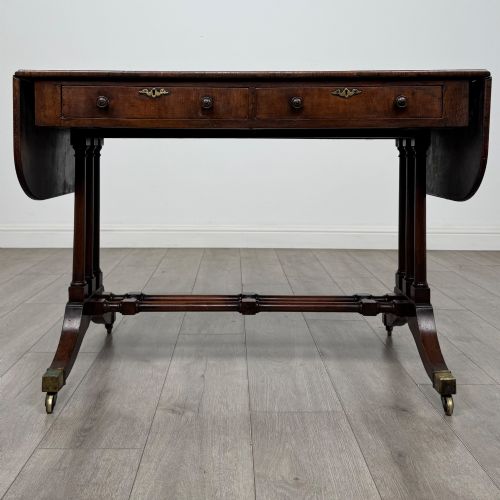
- A rectangular table designed to stand in front of a sofa, typically fitted with small drop leaves and drawers in the frieze. They emerged during the Regency and Victorian periods.
Antique Writing Table with Drawers: Frequently Asked Questions
What is a lowboy?
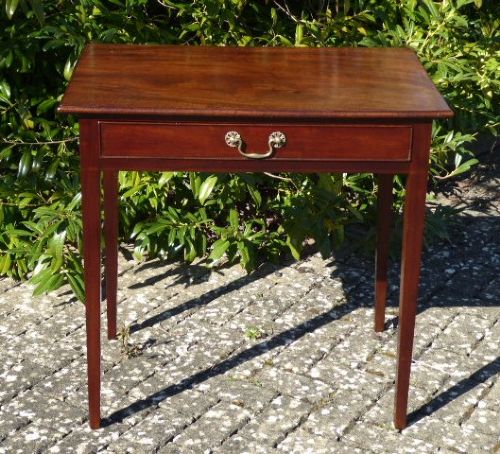
A lowboy is a compact table with drawers, typically originating from the eighteenth century in oak or walnut. They function well as small desks or side tables in modern interiors.
Their modest proportions allow them to fit easily into smaller rooms while providing concealed storage space.
How do I use one today?
These tables adapt readily to modern life as laptop desks, dressing tables, or hallway console surfaces. The integrated drawers keep everyday clutter out of sight.
Placing them against a wall or freestanding in a room highlights their timber grain and period details.
Are leather tops original?
Many writing tables feature leather inserts that provide a smooth surface for writing. Over decades of use, these leathers often show patination or have been replaced.
Original leather displays signs of age that match the surrounding woodwork.
How do I tell periods apart?
Georgian pieces often display clean lines in oak or mahogany, while Victorian versions lean towards heavier carvings, richer dark woods, and pedestal formats. Edwardian tables frequently introduce lighter satinwood or inlaid decoration.
Examining the construction methods and hardware styles helps determine the exact era of manufacture.