


Galleried Side Table
A galleried side table brings a raised rim to keep things secure, and you will find them in mahogany, walnut, and satinwood across several periods.
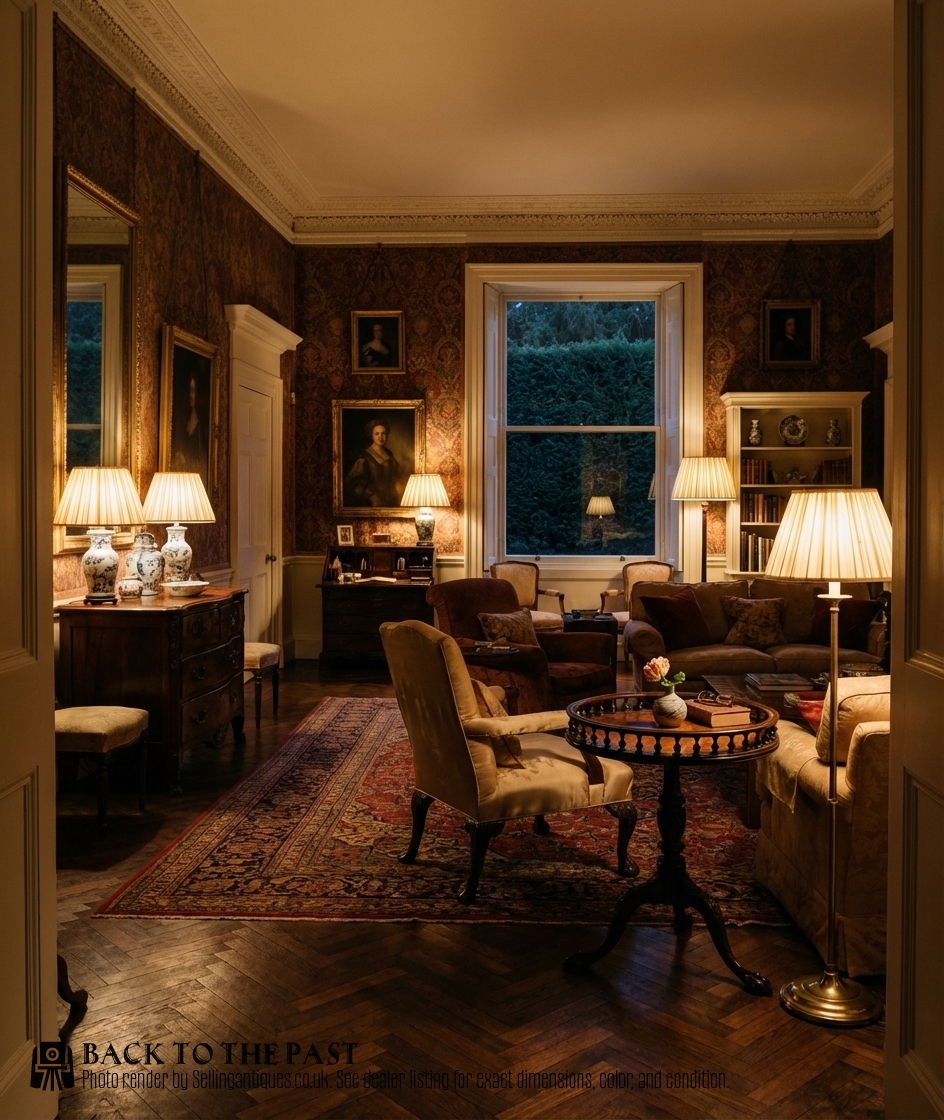
Galleried Side Table
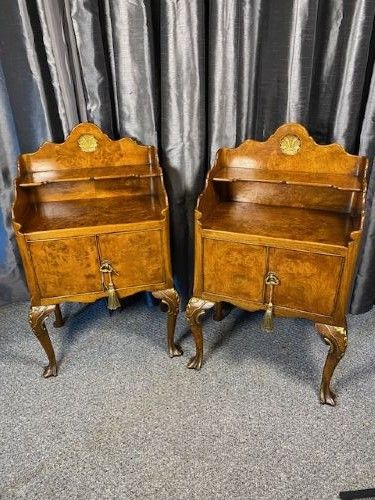
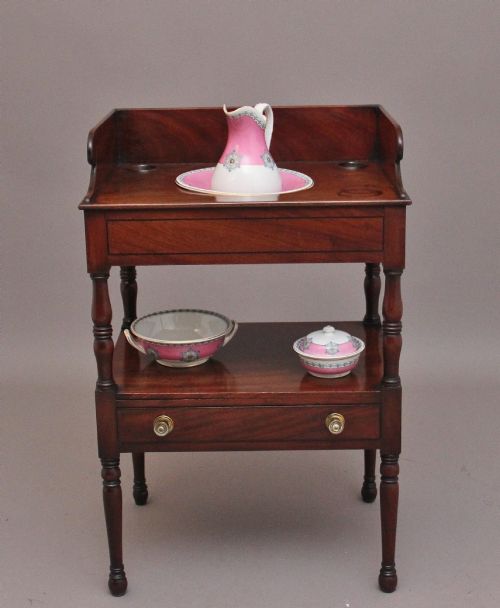
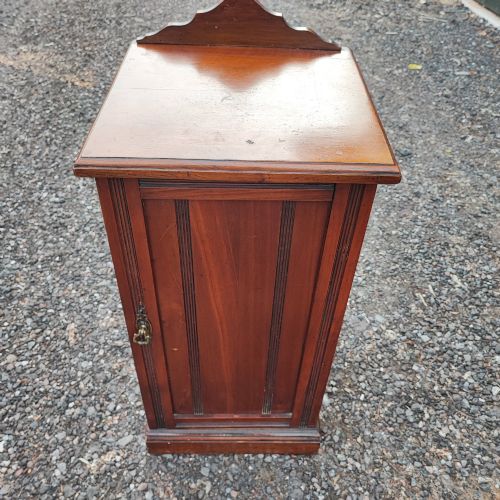
When you search for a galleried side table, you are looking at practical surface furniture defined by a raised border along the edge of the top. These pieces appear in forms such as occasional tables, bedside cabinets, and washstands spanning from the eighteenth century through to the early twentieth century.
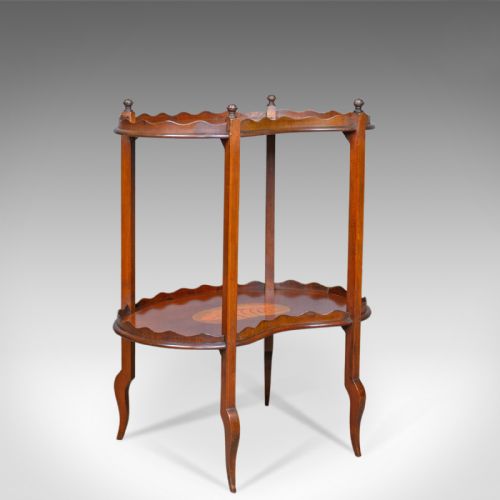
The versions you are most likely to meet on this page include mahogany and walnut examples from the Victorian and Edwardian periods, alongside French styles featuring brass inlay and tiers. They function well beside a chair or bed where the raised gallery prevents small items from rolling off.
How they were made
Cabinet makers utilised solid timbers and veneers like mahogany, walnut, satinwood, and burr walnut, often supported by boxwood stringing and brass details. The raised gallery itself is typically constructed from shaped wood or pierced brass fitted securely to the perimeter of the tabletop.
Many examples incorporate multiple tiers, turned legs, or leather inserts, reflecting the joinery standards of Georgian, Victorian, and Edwardian workshops.
Several tables come equipped with brass galleries so dainty they look like miniature balconies for your teacups.
What varies in quality
The distinction between standard and superior pieces rests on the choice of timber figure, such as flame mahogany or burr walnut veneer, and the crispness of inlaid details. Finer tables show careful attention to the joinery of the gallery and the proportion of the legs.
Condition of the surface polish and the integrity of any brass or wood gallery work also determine the standing of an individual piece.
Gillows
The Galleried Side Table Glossary
- Gallery
- A raised wooden or metal rim around the edge of a tabletop. It prevents objects from sliding off.
- Etagere
- A set of open shelves or tiers used for displaying small items. These pieces often feature delicate legs and multiple levels.
- Canterbury
- A low stand with partitions for books or sheet music. Some incorporate lower drawers and galleried tops.
- Satinwood
- A hard, durable timber with a natural golden sheen. It is frequently used for decorative veneers and inlay work.
- Washstand
- A piece of furniture originally designed for holding a basin and jug. Many survivors now serve as bedside or side tables.
Galleried Side Table: Frequently Asked Questions
What is a galleried side table used for?
These tables provide a compact surface for lamps, books, and decorative objects while the raised edge keeps items secure. They suit placement beside seating or beds.
Their varied forms, from single-board tops to multi-tier étagères, allow them to fit easily into different rooms.
How do I identify the period?
Dating relies on timber selection, leg forms, and construction methods. Georgian pieces often show straight mahogany frames, while Victorian examples lean towards burr walnut and heavier turnings.
Edwardian and later pieces frequently combine revival styles with lighter satinwood or inlaid decoration.
Are all galleries made of wood?
No, while many are carved from the same timber as the top, some feature pierced brass railings. These metal galleries are particularly common on French-influenced tables.
Both timber and brass versions serve the same practical purpose of retaining items on the surface.
Do these tables have storage?
Some variations include lower tiers, small drawers, or compartments. Bedside cabinets and certain occasional tables offer enclosed space behind doors.
Simpler designs rely solely on the tabletop and open lower shelves for utility.