


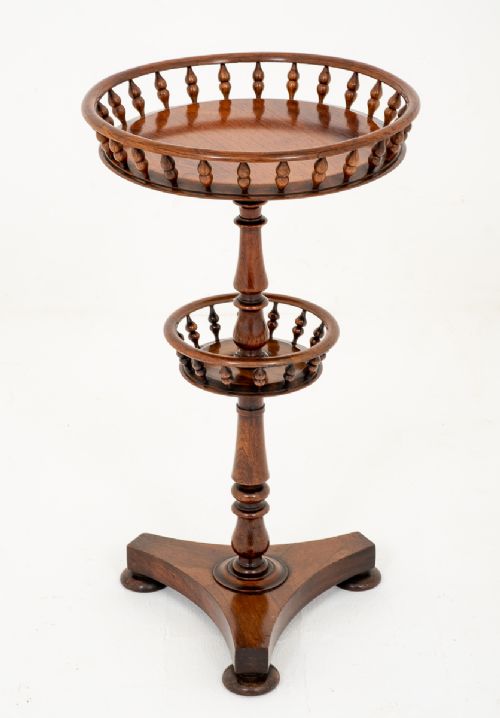
Spindle Gallery Wine Table
A spindle gallery wine table is a small, elevated surface designed to hold a bottle and glass, featuring a raised rim that keeps glassware secure.
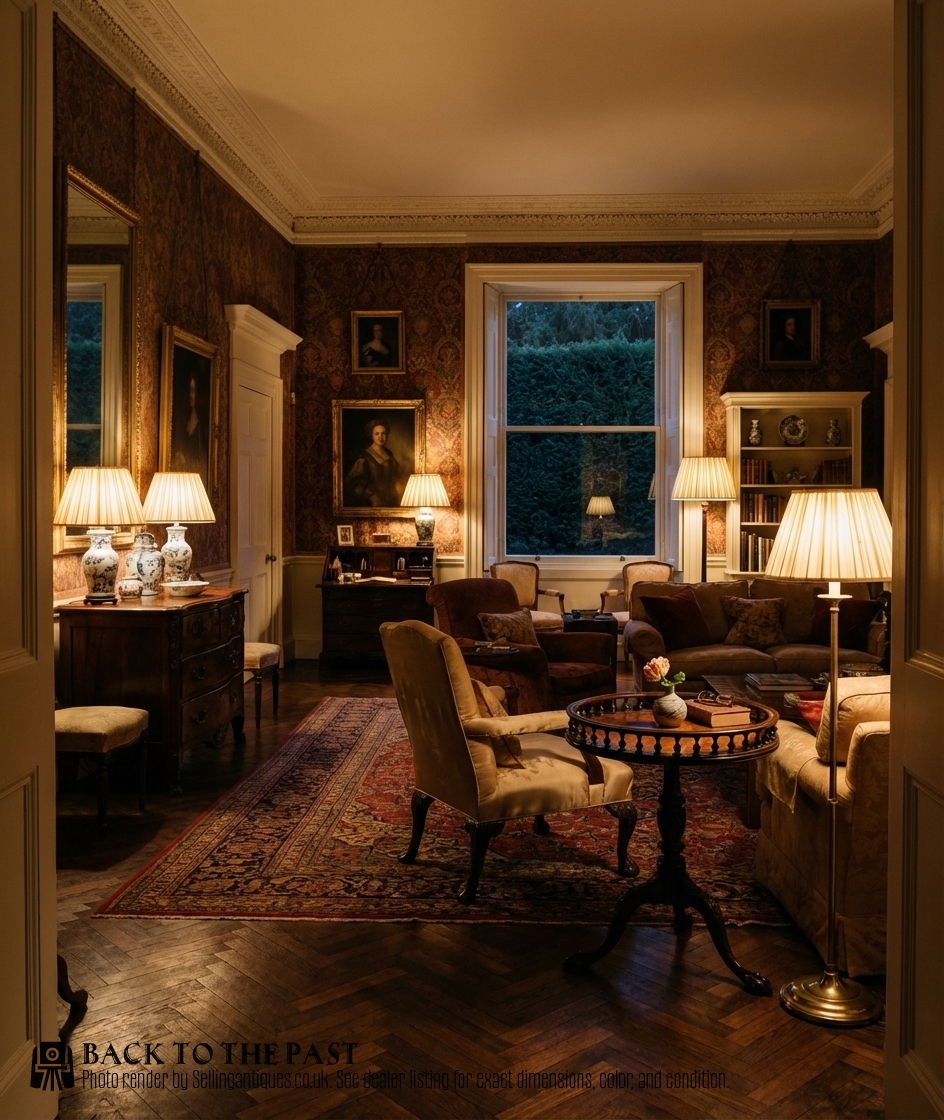
Spindle Gallery Wine Table
A spindle gallery wine table is an occasional table designed to hold beverages and small decorative items close to hand, featuring a distinctive raised border around the top. When you search for this phrase, you are looking at small circular, octagonal, or serpentine tables intended to sit beside seating or in reception rooms.
The pieces on this page span the 18th century, Victorian period, and early 20th century, representing Georgian styles as well as George II and George III revivals. Mahogany and rosewood form the primary timbers of these examples, reflecting the material choices of the periods.
Forms range from simple circular lamp tables to revolving wine tables and tripod occasional tables with distinct galleried edges. Most examples date from the Victorian era and the 18th century, offering compact surfaces with raised borders.
Construction and Materials
These tables utilise dense imported hardwoods such as mahogany and rosewood, chosen for their ability to take a fine finish and support slender turned supports. Timber selection governed both the structural integrity of the tripod base and the visual richness of the top.
Construction relies on traditional joinery methods, connecting circular or shaped tops to central columns supported by tripod feet. Raised gallery edges incorporate small vertical spindles or carved borders to prevent items from sliding off the surface.
Early makers added tiny spindles to table edges so wine glasses would not slide off when the conversation grew particularly animated.
Assessing Quality
Quality rests in the crispness of the timber turning and the precision with which the gallery spindles are fitted to the top. Superior examples demonstrate careful timber selection, particularly in the figuring of the mahogany or rosewood surfaces.
Proportion and stability separate standard production from finer pieces, ensuring the tripod base adequately supports the weight of the galleried top without listing. The execution of period details, such as George III or George II stylistic references, dictates the refinement of the piece.
The Spindle Gallery Wine Table Glossary
- Gallery
- A raised wooden or metal border running around the edge of a tabletop to prevent items from falling off. This feature often incorporates decorative pierced work or small upright spindles.
- Tripod base
- A table support comprising three legs radiating from a central pillar. This configuration ensures the table remains stable on uneven floorboards.
- Serpentine
- A gently undulating line forming a concave curve flanked by two convex curves, often seen on table tops. It requires careful carpentry to execute cleanly.
- Occasional table
- A small, movable table designed for a specific, transient use rather than a permanent dining or writing setup. These pieces are easily repositioned around a room.
Spindle Gallery Wine Table: Frequently Asked Questions
What is a spindle gallery wine table used for?
These small surfaces were historically positioned beside chairs to hold wine bottles and glasses during social gatherings. Today, they function well as lamp tables or decorative stands in living spaces.
The raised rim ensures that items placed on the surface remain secure, making them practical for holding small objects or drinks without risk of slipping off.
How do I identify a Georgian style table?
Georgian and George III style tables typically exhibit classic proportions, clean lines, and restrained ornament executed in mahogany. Makers of these pieces drew upon 18th-century design principles.
Later revivals from the 19th and 20th centuries often emulate these earlier forms, using similar timber choices but revealing different tool marks and construction nuances upon closer inspection.
Are these tables sturdy enough for daily use?
Tripod tables rely on three points of contact with the floor, which can feel less rigid than four-legged tables on modern carpets. However, well-constructed examples remain balanced and reliable for holding lamps or drinks.
Placing the table on a flat surface prevents wobbling, and avoiding excessive weight on the outer edges protects the central column and leg joints.
What is the difference between mahogany and rosewood?
Mahogany is a stable, reddish-brown hardwood that was widely used across the 18th and 19th centuries for cabinet making. It accepts carving and turning with great precision.
Rosewood offers a darker, heavily grained appearance with rich purplish or black hues, frequently utilised during the Victorian era for decorative occasional furniture.