

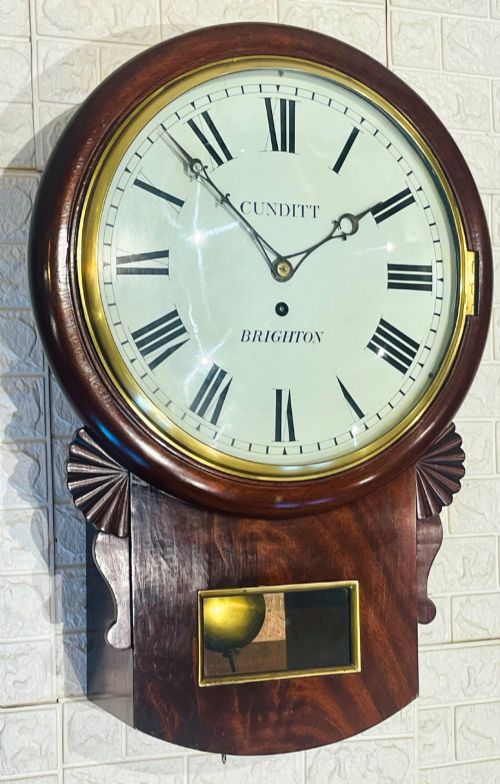
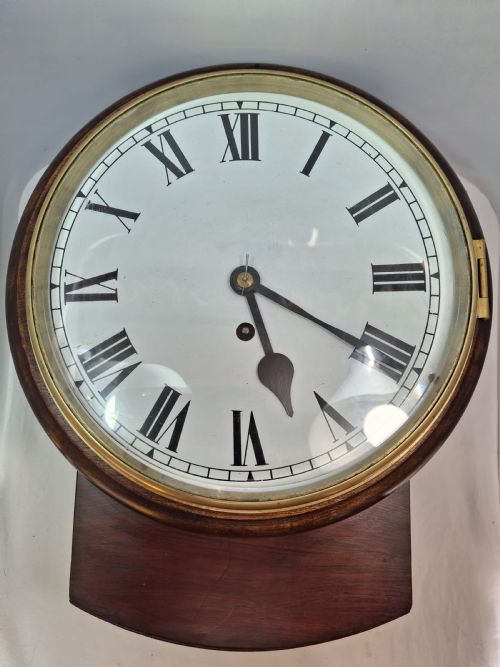
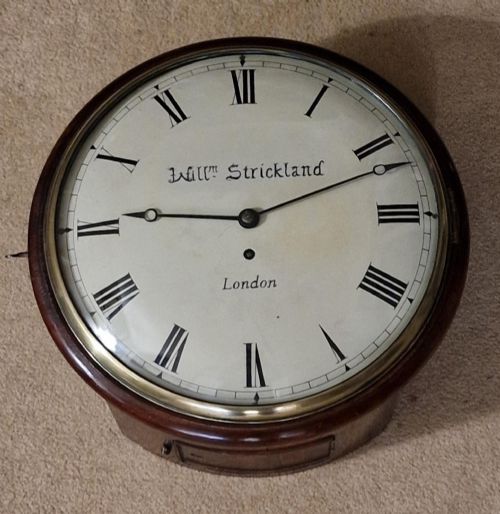
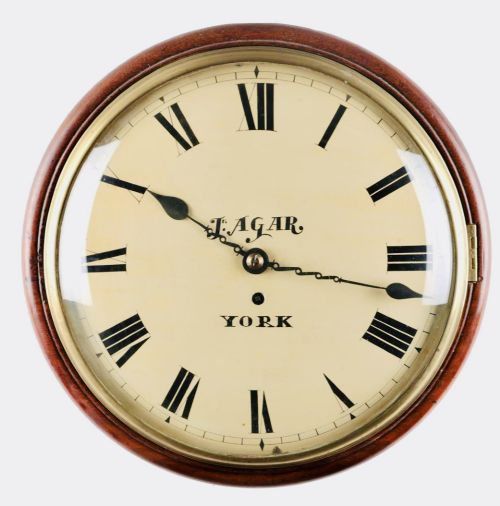
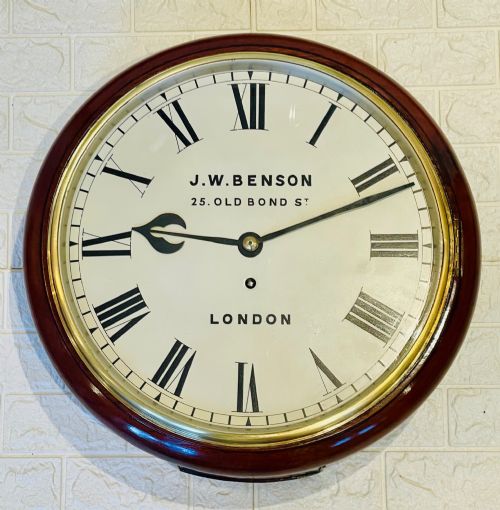
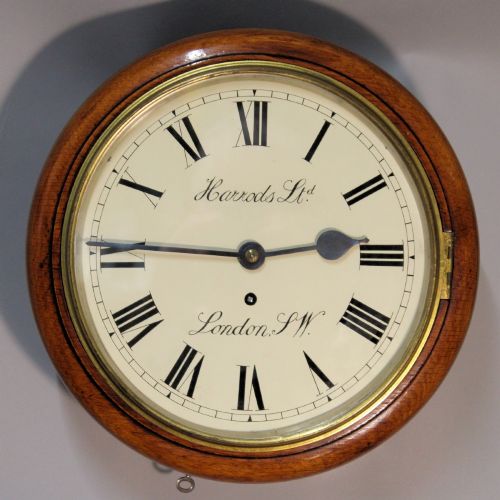
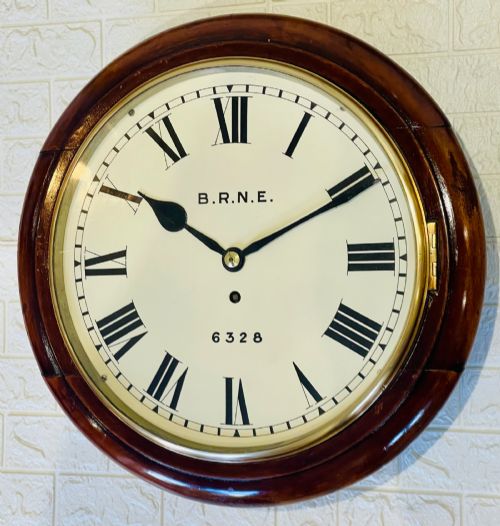
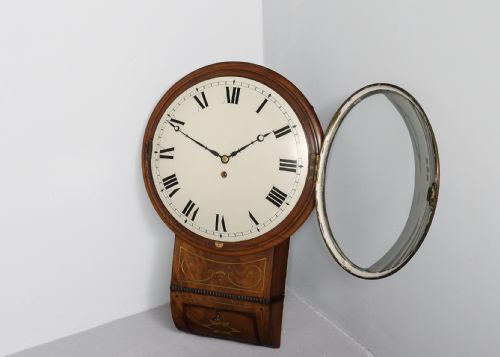
Fusee Wall Dial
When you search for a fusee wall dial, you are looking at precision timekeeping built to govern railway stations, offices and public halls.
Fusee Wall Dial
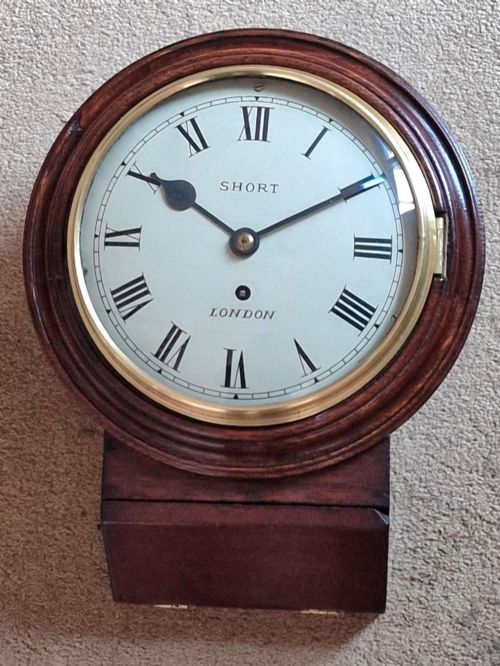
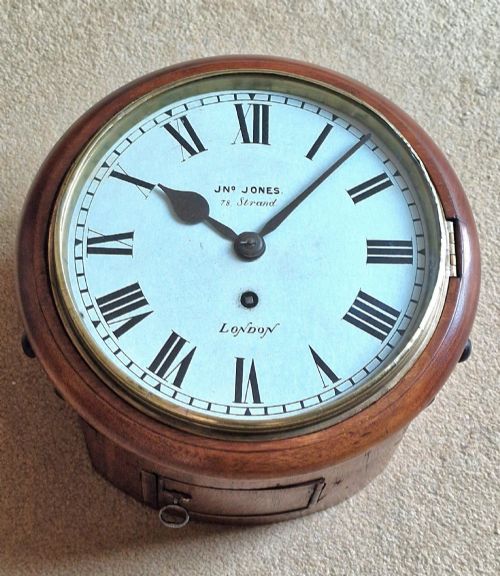
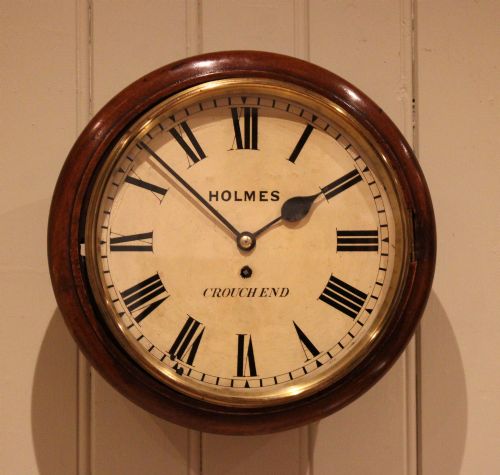
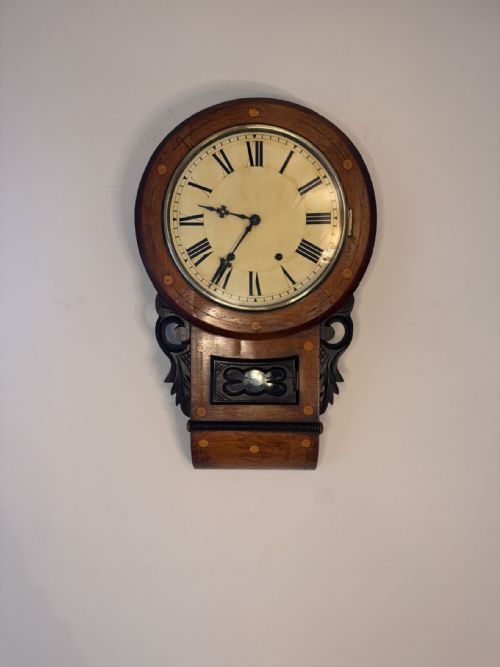
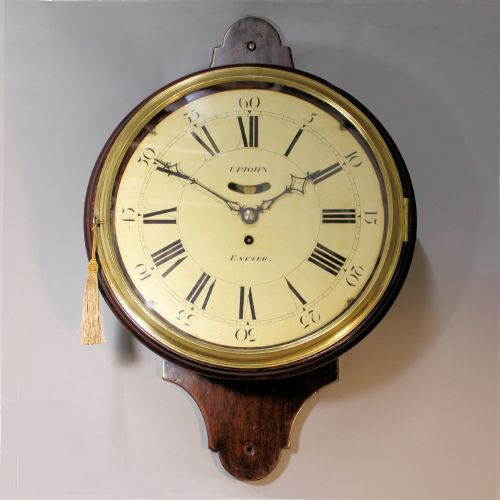
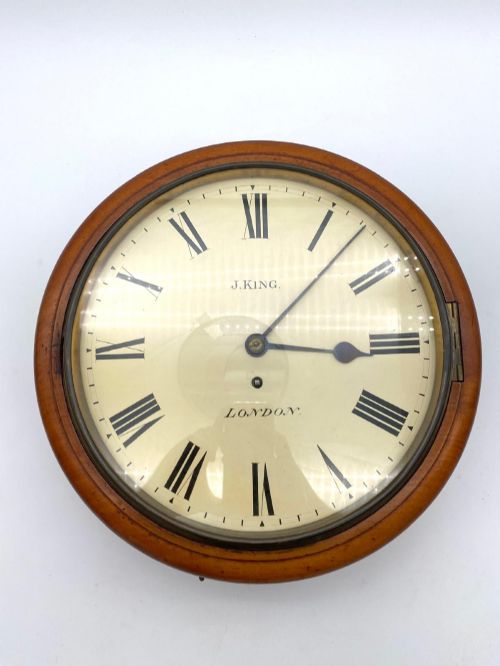
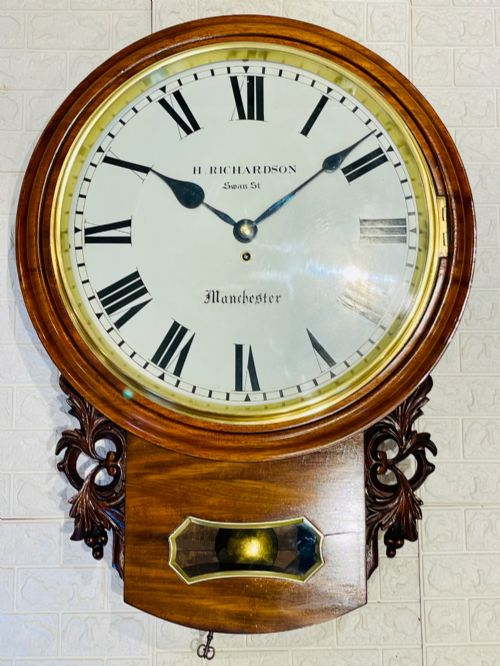
A fusee wall dial is a reliable timepiece designed for municipal and commercial use, often featuring a prominent round face enclosed in a robust wooden case. These clocks emerge primarily from the Georgian, Regency and Victorian periods, reflecting an era when exact timing became essential for transport and daily business.
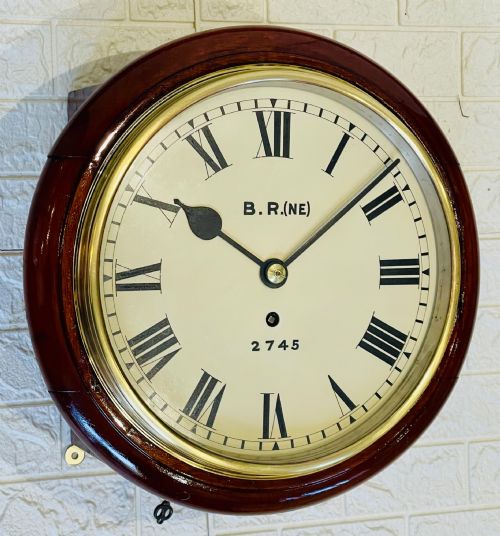
The most common examples on this page are railway and station clocks housed in oak or mahogany. These practical pieces range from compact dial diameters suitable for domestic spaces to large formats designed for distant viewing on platform walls.
How they were made
The cases utilise dense timbers such as mahogany, oak and rosewood to protect the delicate movement from atmospheric changes and daily knocks. Brass and painted metal form the dial faces and bezels, whilst glass covers protect the hands.
The mechanical heart relies on a fusee movement, which uses a cone-shaped pulley to equalise the pull of the mainspring as it runs down. This intricate mechanism ensures consistent power delivery to the escapement for accurate timekeeping.
Fusee Wall Dial Retail Price Guide 2026
Typical asking prices for fusee wall dial among the pieces listed under this phrase on Sellingantiques today, from the lower quarter to the upper quarter. They describe what is for sale here now, not the wider market.
Railway examples often bear station stamps on their dial faces, recording decades of platform service across Britain.
What varies in quality
Quality in a fusee wall dial lies in the crispness of the movement components and the precision of the dial lettering. Finer examples display meticulously cut brass wheels and hand-painted numerals signed by the maker rather than mass-produced transfers.
Case construction also separates the tiers, with superior pieces showing matched timber veneers, heavy brass bezels with clean hinges, and substantial side doors for easy access to the pendulum and movement.
Harrods·J W Benson·Upjohn of Exeter·Richard Jones of Hereford·Camerer Cuss & Co London·J Henry Cheltenham·George Clarke Tring·Henry Harris of Monythusloyn·D & J Wellby London·Joseph Bird of Stroud·Thomas Hedge of Colchester·Samuel Chave Taunton
The Fusee Wall Dial Glossary
- Fusee
- A conical pulley used in clock movements to maintain even tension on the chain as the mainspring unwinds. This ingenious device compensates for the dropping torque of the spring.
- Drop dial
- A clock case where the round dial sits above an extended box or trunk that houses the pendulum. This shape allows the pendulum to swing freely beneath the movement.
- Verge escapement
- An early type of clock mechanism that controls the release of the gear train using a rocking pallet. It predates the anchor escapement and offers a distinct ticking action.
- Bezel
- The metal or wooden ring that holds the glass door in front of the clock face. Hinged bezels allow quick access for setting the hands and winding the movement.
- Chain-driven
- A method of linking the fusee cone to the mainspring barrel using a fine metal chain instead of gut or cord. This provides greater durability and reliability in heavy-use clocks.
Fusee Wall Dial: Frequently Asked Questions
How do I wind a fusee wall dial?
You wind the movement using a fitting key inserted into the dial face, turning it gently until the chain reaches its stop. Care must be taken not to overwind the mechanism.
Most single-chain fusee clocks require winding once a week to maintain accurate time. Regular servicing by a horologist keeps the train running smoothly.
Why do railway clocks have fusee movements?
Railway companies demanded absolute punctuality across their networks, requiring clocks that maintained steady precision as their mainsprings lost tension. The fusee mechanism achieved this by evening out the power delivery.
This reliability made them the standard choice for station masters and signal rooms. Their robust construction also withstood the vibrations of passing trains.
How do I date an antique wall dial?
Dating relies on stylistic clues in the case timber, the shape of the bezel, and the method of fixing the dial. Georgian and Regency pieces often feature distinct mahogany grain and pegged joints.
Maker signatures painted on the dial or engraved on the backplate also provide a reliable guide. Comparing the movement type helps narrow down the decade of production.
Where should I hang a heavy dial clock?
These clocks require secure mounting directly into wall studs or solid masonry using appropriate fixings. The substantial weight of the timber case and brass movement demands a stable anchor.
Level placement ensures the pendulum swings evenly and the clock keeps correct time. Positioning away from direct heat sources protects the wood and movement oils.