
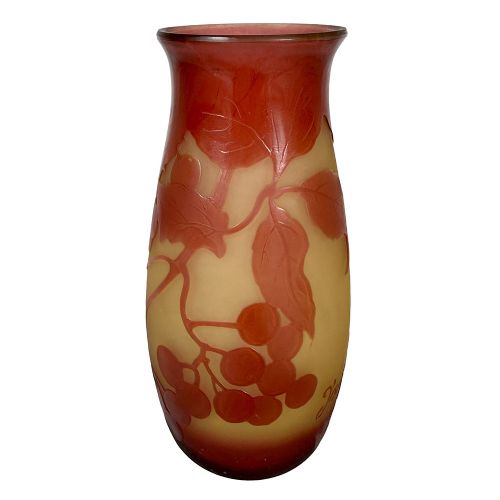
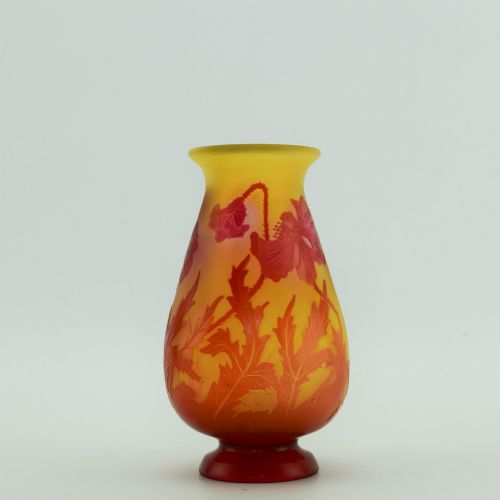
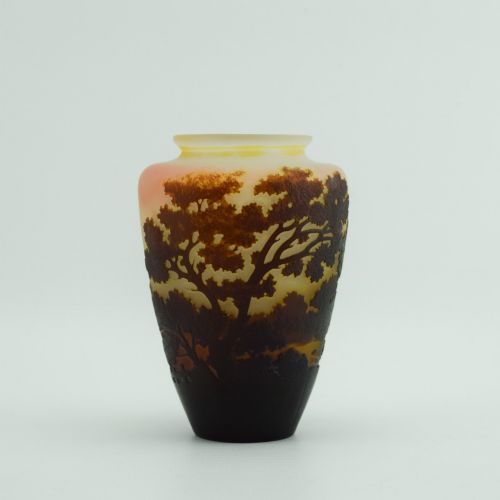

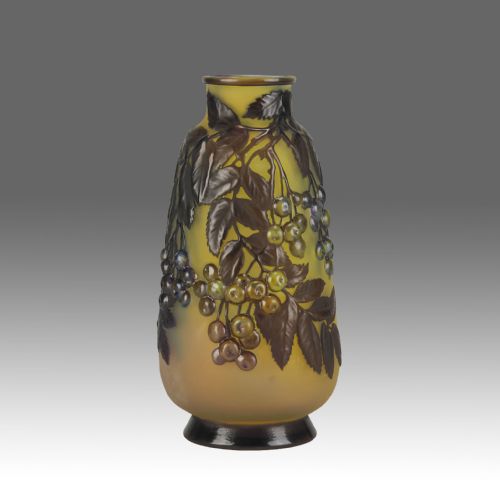


Frosted Yellow Art Glass
Frosted yellow art glass brings luminous colour and botanical texture to a room, spanning the vibrant styles of the turn of the twentieth century.

Frosted Yellow Art Glass
When you search for frosted yellow art glass, you encounter pieces that highlight the union of textured surfaces and botanical motifs. These items emerge primarily from the Victorian art glass, Art Nouveau, and Art Deco movements, capturing shifts in design from natural curves to geometric lines.
The selections available here focus heavily on cabinet vases, table lamps, and scent bottles. Vases dominate the offerings, often shaped to showcase natural subjects such as poppies, cornflowers, and ferns across various periods.
Makers from France and Bohemia shaped this field, employing cameo techniques and enamel work on glass. You meet works by notable French and Czech creators alongside attributed pieces that reflect the high standards of early twentieth-century glassmaking.
How frosted yellow art glass was made
The manufacture of these objects relies on layered glass and chemical or mechanical treatment to achieve a frosted finish. Acid-etching is common, eating away the surface to create matte textures that contrast with polished details.
Cameo glass pieces involve fusing multiple layers of coloured glass before carving or etching down to reveal the contrasting background. Enamel work and hand-painted details frequently embellish the surface, adding botanical depth to the yellow body.
Listings span the periods 1890, 1900, 1910, 1920, and 1930, focusing on glass, cameo glass, and wrought iron.
What varies in quality
Quality in these items rests upon the depth of the cameo carving and the precision of the acid-etching. Finer pieces display crisp botanical details, where flowers and stems stand out with sharp relief against the frosted yellow ground.
The integration of secondary materials such as wrought iron bases or chrome mounts also dictates the standard of the piece. Superior craftsmanship shows in the harmonious weight of the glass and the deliberate placement of signatures or maker marks.
Emile Galle·Daum Freres·Thos Webb and Sons·Karl Palda·Paul Nicolas
The Frosted Yellow Art Glass Glossary
- Cameo Glass
- A form of glass art produced by carving or etching through fused layers of different colours to create a raised design. This technique requires considerable skill to maintain uniform depth across the motif.
- Acid-Etched Glass
- Glass treated with hydrofluoric acid to eat away the surface and create a frosted texture. The method allows for controlled, matte designs that diffuse light.
- Art Nouveau
- An international style of art and architecture prominent from the late nineteenth century to the First World War. It is characterised by intricate asymmetrical lines inspired by natural forms like plants and flowers.
- Enamel
- A decorative glassy substance fused to the surface of glass through firing. It provides vibrant, durable colour additions to the underlying material.
Frosted Yellow Art Glass: Frequently Asked Questions
How do I clean frosted yellow art glass?
Wash the glass gently in lukewarm water using mild soap, avoiding abrasive cloths that can damage the frosted finish. Dry with a soft, lint-free towel to prevent water spots.
Keep pieces away from direct, harsh sunlight for extended periods to preserve the stability of any applied enamel or painted highlights.
Are these lamps safe to use today?
Period table lamps often retain their original wiring, which may not meet current electrical standards. Have a qualified electrician inspect the lamp before regular use.
Choose low-heat LED bulbs to protect vintage glass and wrought iron mounts from thermal stress over time.
How can I tell Art Nouveau from Art Deco pieces?
Art Nouveau pieces display flowing, organic curves inspired by flowers, stems, and natural landscapes. Look for motifs like ferns, sweet peas, and iris flowers.
Art Deco items favour strict symmetry, clean lines, and geometric precision, often pairing the glass with metalwork such as wrought iron or chrome.
What does cameo glass mean?
Cameo glass is made by layering two or more contrasting colours of glass while hot. The maker then carves or acid-etches away the outer layer to leave a raised design.
This creates a strong visual contrast between the frosted yellow background and the opaque subject matter.