



Frieze Gilded Mirror
A frieze gilded mirror brings immediate light and architectural weight to a room, combining classic reflective glass with detailed decorative friezes.
Frieze Gilded Mirror
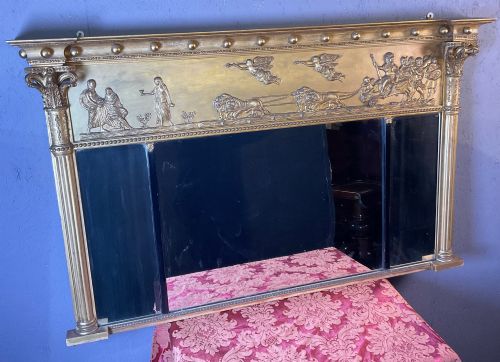
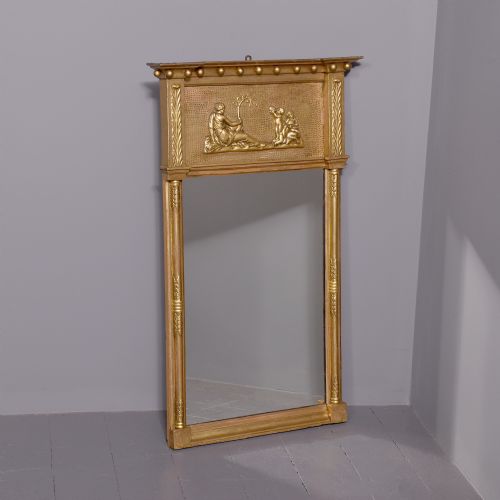
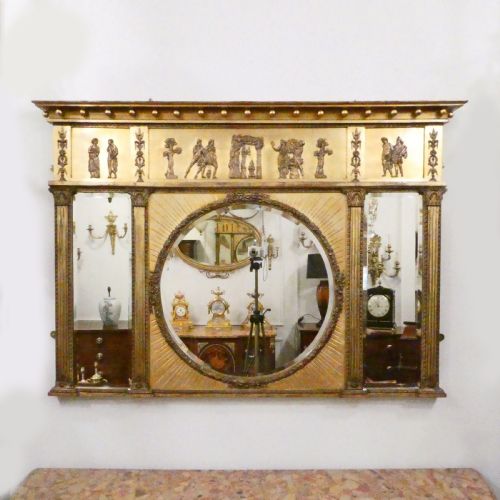
A frieze gilded mirror is a statement piece traditionally designed to hang above a mantelpiece or anchor a wall as a pier glass. The pieces seen here span the Regency and Victorian periods, with styles drawing heavily on Regency Neoclassical and Georgian traditions.
The most common formats on this page are overmantel mirrors and wall mirrors, often featuring multi-plate glass configurations such as triptychs and triple plates. These are objects defined by their horizontal breadth and the decorative panels situated above the main glass.
Materials and construction
Makers built the foundational frames of these mirrors using wood, applying layers of gesso to create smooth surfaces for subsequent gilding. Gold leaf and liquid gilding techniques provided the luminous finish characteristic of the style.
Decorative friezes incorporated moulded composition ornaments, carved wood elements, and occasionally low-relief gesso panels depicting classical motifs. Silvered mirror glass, sometimes divided into multiple plates, completed the construction.
Measures of quality
The distinction between ordinary and superior examples lies in the crispness of the carved or moulded frieze work and the depth of the gilding. High-quality pieces display sharp relief in details such as acanthus leaves, laurel wreaths, or figural scenes rather than softened, indistinct moulding.
The integrity of the frame construction and the preservation of the original mercury or antique mirror glass also determine the standing of a piece. Finer examples retain their structural harmony without excessive rebuilding or complete regilding that obscures the age of the wood beneath.
The Frieze Gilded Mirror Glossary
- Gesso
- A plaster-like mixture applied to wooden frames as a base for gilding. It allows craftsmen to carve or stamp intricate surface details before applying gold leaf.
- Pier glass
- A tall mirror designed specifically to hang on the wall space between windows. These tall glasses reflect additional daylight into period interiors.
- Triptych
- A mirror composed of three distinct glass plates set side by side within a single frame. This multi-plate format breaks up the reflection across architectural divisions.
- Water gilding
- A traditional technique applying gold leaf over wet gesso and bole. It produces a brilliant shine that can be burnished to a high gloss.
Frieze Gilded Mirror: Frequently Asked Questions
Where should I hang a frieze gilded mirror?
These mirrors traditionally anchor the wall above a fireplace mantelpiece, where their horizontal proportions balance the hearth below. They also function effectively as pier mirrors between large windows to amplify natural light.
Ensure the wall structure securely supports the weight of a heavy gilded wood and gesso frame before installation.
What is the difference between pier mirrors and overmantels?
Pier mirrors are typically taller and narrower, designed to fit the specific wall space between architectural openings. Overmantels are broader horizontal pieces created to span the width of a fireplace.
Both types frequently incorporate decorative friezes, but their intended architectural placement dictates their proportions.
How do I care for antique giltwood?
Dust the frame gently using a soft, dry brush to prevent accumulation in the intricate recesses of the gesso and carving. Avoid liquid cleaners, modern polishes, or damp cloths, as moisture damages fragile historic gilding.
Keep the mirror away from direct sunlight and areas of high humidity to protect the wood and metal leaf.
Are multi-plate mirrors original?
Many nineteenth-century overmantel mirrors utilised triple plates or triptych configurations to span wide chimney breasts. This division of the glass was a standard construction method of the Regency and Victorian periods.
Examining the backing boards and framing joints helps confirm whether the multiple plates belong to the original build.