
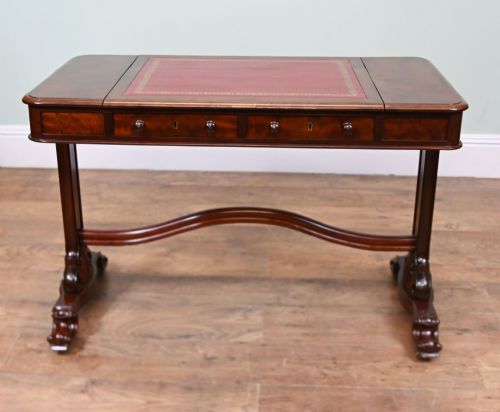
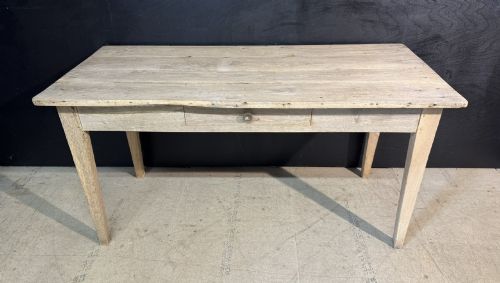
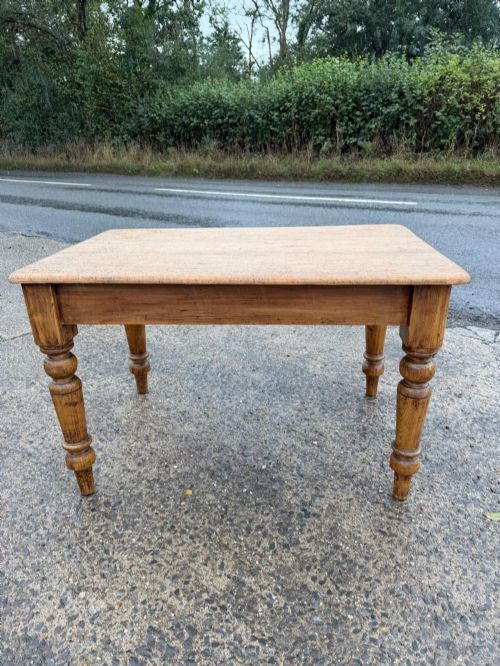
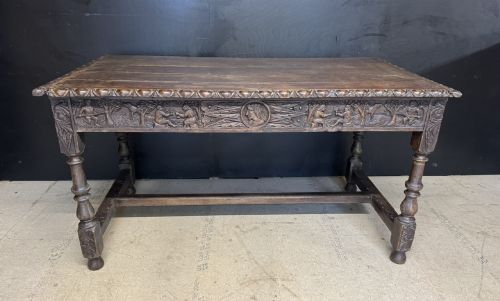
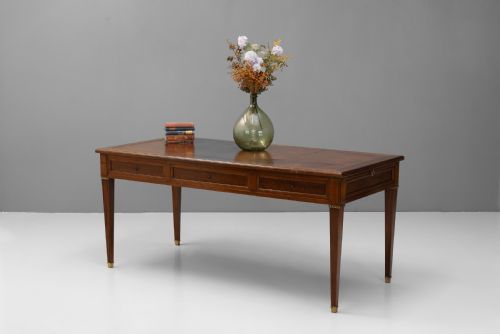


Frieze Drawer Writing Desk
A frieze drawer writing desk brings period timber and practical surface space together, offering a dedicated spot for correspondence.
Frieze Drawer Writing Desk
A frieze drawer writing desk provides a functional surface for daily tasks, incorporating one or more drawers directly beneath the tabletop within the structural framing. These pieces appear across multiple historical eras, including the Regency, George III, and Victorian periods.
The selections on this page range from modest pine examples and lowboys to grand mahogany library tables and rosewood centre tables. Buyers frequently encounter nineteenth-century mahogany versions alongside earlier Georgian pieces and later twentieth-century interpretations.
Many of these tables serve multiple functions within a room, operating as writing surfaces, side tables, or library tables. They appear in diverse timbers such as walnut, oak, satinwood, and padouk, reflecting varied regional and stylistic origins.
How they were made
Cabinetmakers constructed these desks primarily using solid timbers and decorative veneers such as mahogany, rosewood, walnut, and oak. Brass hardware, including handles and drawer pulls, frequently complements the woodwork.
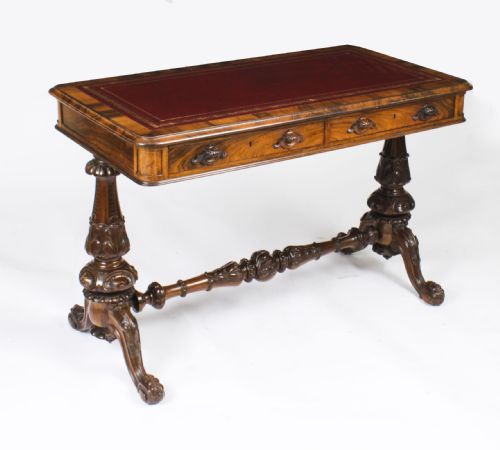
Many writing surfaces incorporate inset panels of leather to provide a suitable texture for writing. Structural joints and drawer construction rely on traditional joinery methods suited to the specific period of manufacture.
Several desks include hidden compartments tucked inside the frieze drawer, offering secret storage for private letters and small valuables.
What varies in quality
The caliber of a desk depends significantly on the selection of timber figure and the precision of the cabinetwork. Pieces produced by recognised workshops often display superior proportional harmony and refined detailing.
The integration of the frieze drawers within the overall framework dictates structural integrity. Superior examples maintain smooth operation and careful alignment of the drawer fronts against the surrounding rail.
Edwards & Roberts·Maurice Adams·Whytock & Reid·W. Priest·Gillows of Lancaster
The Frieze Drawer Writing Desk Glossary
- Frieze
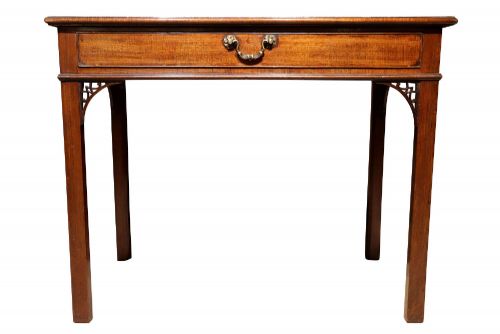
- The horizontal architectural section immediately beneath the top of a table where drawers are typically housed. In these desks, the drawer front forms part of this architectural band.
- Lowboy
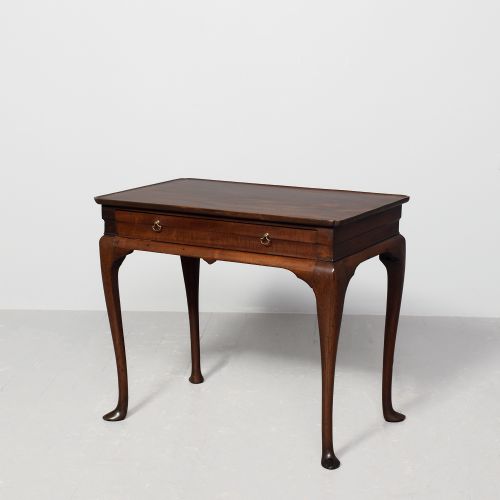
- A small seventeenth or eighteenth-century dressing table or side table featuring one or more drawers in the frieze. These early forms often stand on slender cabriole or straight legs.
- Drum table
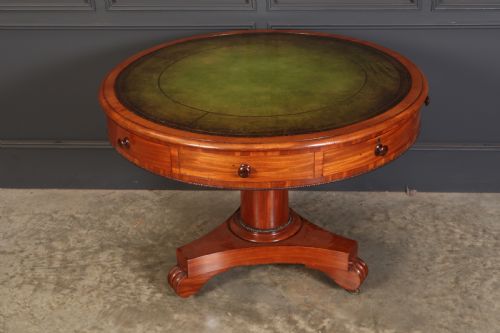
- A circular library table featuring a deep frieze fitted with alternating drawers and dummy drawers. They frequently rotate on a central pillar and platform base.
- Partners desk
- A large writing table designed for two people to use simultaneously, featuring drawers on both opposing sides. They often incorporate pedestals or large frieze configurations.
- Sofa table
- A rectangular table designed to stand in front of a sofa, typically featuring drop leaves at either end and frieze drawers. They gained popularity during the Regency period.
Frieze Drawer Writing Desk: Frequently Asked Questions
How do I identify a period writing desk?
Examine the timber selection, construction methods, and secondary woods used inside the drawers. Different historical eras employ distinct joinery techniques and proportions.
Matching the stylistic markers, such as brass hardware or leg turning, to known periods helps confirm the age of the piece.
Can I use an antique desk for modern work?
Many of these tables offer generous surface areas suitable for contemporary writing or laptop use. Leather writing inserts provide a durable surface for daily tasks.
Checking the height and kneehole clearance ensures comfortable seating alignment with standard modern chairs.
What is a library table?
A library table is a large freestanding piece designed for central placement in a room rather than against a wall. They usually feature finished backs and deep frieze storage.
These tables accommodate large volumes and writing materials across a spacious top.
How should I care for a rosewood desk?
Protect the timber from direct sunlight and fluctuating humidity to prevent fading or splitting. Regular dusting with a soft, dry cloth preserves the finish.
Applying specialised wax sparingly maintains the lustre of the rosewood grain over time.