






Fretwork Carved Chair
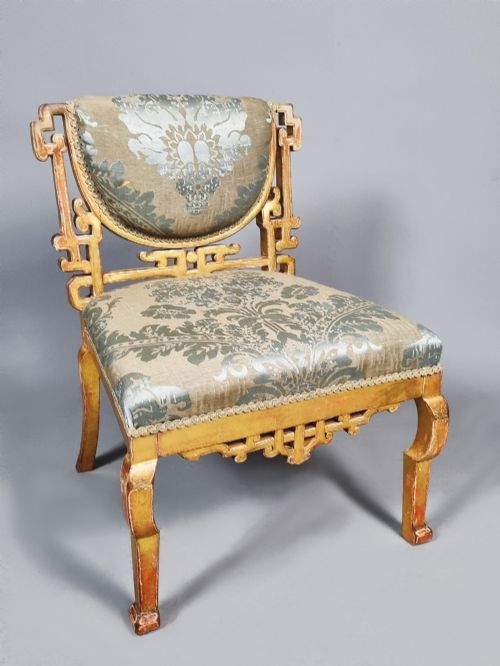
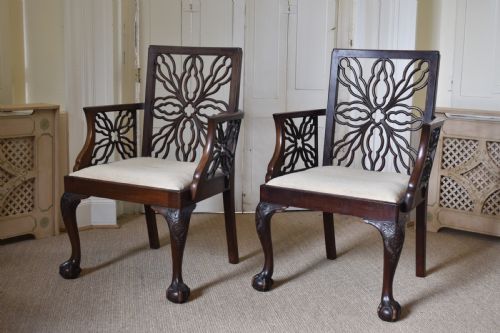
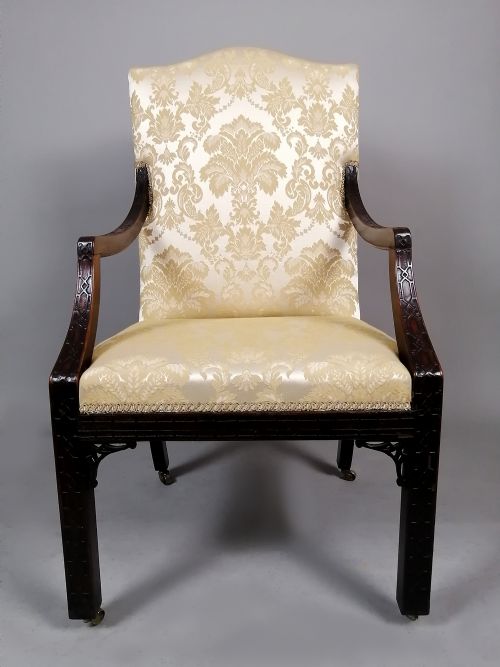
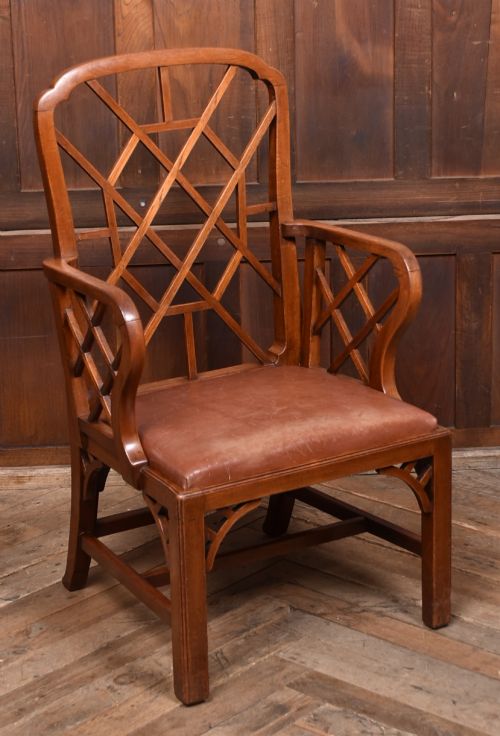
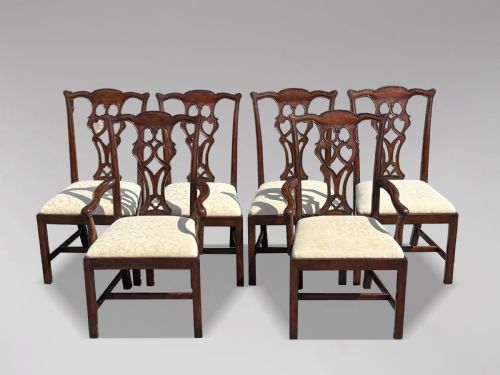
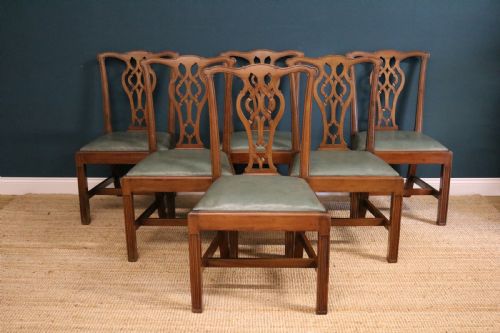
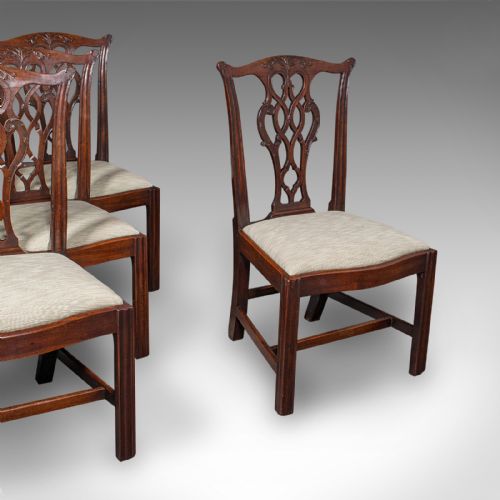
These fretwork carved chair examples combine intricate pierced splats with solid mahogany frames, offering both strong architectural presence and enduring structural integrity for daily seating.
Fretwork Carved Chair
A fretwork carved chair brings intricate wooden lattice patterns into domestic seating, drawing heavily on Georgian and Chinese Chippendale traditions. You will frequently encounter mahogany dining chairs, side chairs, and open armchairs spanning the eighteenth, nineteenth, and early twentieth centuries.
Makers often adapted pierced splats for specific forms, producing library chairs, elbow chairs, and low nursing chairs with upholstered seats in fabric, leather, or velvet. These pieces range from authentic mid-eighteenth-century seating to later revival models produced during the Edwardian period and the early twentieth century.
The aesthetic relies on the interplay between solid timber frames and delicate geometric or fret-cut openings along the backrest. Collectors find these chairs useful for adding formal character and historical depth to dining rooms and studies.
How they were made
Cabinetmakers constructed these frames primarily using solid mahogany and Chinese hardwood, selecting dense timber to support intricate piercing without snapping. Artisans cut geometric and lattice designs into splats by hand using fretsaws before smoothing the edges with chisels and files.
Upholstered variants incorporated drop-in or fixed seats padded with traditional stuffing and covered in velvet, damask, fabric, or leather. Joinery relied on mortise and tenon joints to ensure the open-work frames could withstand regular weight and movement.
Listings feature mahogany, hardwood, and walnut frames paired with leather, velvet, and cane upholstery across eighteenth to twentieth-century periods.
What varies in quality
Depth and crispness of the pierced carving separate exceptional seating from routine production, as skilled carvers left clean, sharp interior angles in the fretwork. Timber selection also dictates standard, with denser grain and rich natural patination marking superior examples against plain or heavily restored substitutes.
Original structural unity remains vital, since chairs retaining their initial joinery and unblemished splats demonstrate superior workshop execution. The precision of the joinery where the backrest meets the seat rails indicates the level of care invested by the original maker.
Waugh and Son·Thomas Chippendale·Robert Manwaring
The Fretwork Carved Chair Glossary
- Fretwork
- Openwork ornamentation carved or pierced from a flat board in geometric or interlaced patterns. This technique creates the signature patterned splats seen on Chippendale-style backs.
- Splat
- The vertical wooden strip down the centre of a chair back. In these pieces, the splat receives the intricate fret-cut decoration.
- Cockpen
- A lattice design of Chinese inspiration utilised in chair backs and gates during the eighteenth and nineteenth centuries. The pattern consists of intersecting straight wooden bars forming a square or rectangular grid.
- Klismos
- An ancient Greek chair form characterised by curved, flaring legs and a concave backrest. Nineteenth-century makers occasionally revived this silhouette with detailed carved elements.
- Bergere
- An enclosed upholstered armchair with wooden framing exposed around the sides and back. These seats often incorporate cane panels or loose squab cushions.
Fretwork Carved Chair: Frequently Asked Questions
What is a fretwork carved chair?
A fretwork carved chair is a traditional wooden seat featuring pierced lattice designs, most commonly found in eighteenth-century and revival mahogany dining and armchairs.
The style originates from cabinetmakers adapting Chinese and Gothic architectural motifs into domestic furniture, resulting in distinct geometric patterns along the backrest.
How do I identify a revival chair?
Revival pieces from the nineteenth and early twentieth centuries often display machine-finished precision in the fretwork compared to earlier hand-cut examples. The colour of the mahogany and the condition of the internal joinery also help distinguish later interpretations from eighteenth-century originals.
Examining the underside of the seat rail and the wear on the wooden feet provides further clues regarding the actual period of manufacture.
Where were these chairs used?
These chairs served primarily as formal dining seating, library armchairs, or decorative side chairs in period drawing rooms. Their sturdy hardwood construction allowed them to handle daily domestic use while displaying intricate craftsmanship to guests.
Specific forms like low nursing chairs and elbow chairs were tailored for bedroom or parlour tasks.
How do I care for antique wood?
Maintaining antique mahogany involves keeping chairs away from direct heat sources and sudden humidity changes that can crack the wood. Regular dusting with a soft, dry cloth preserves the natural polish without building up chemical residues.
Upholstered sections benefit from gentle vacuuming using a low-suction brush attachment suited to delicate fabrics.