






Fretwork Back Chair
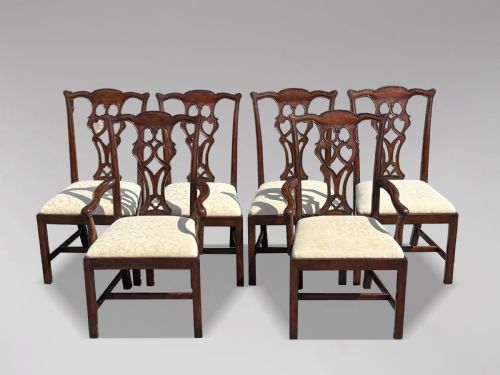
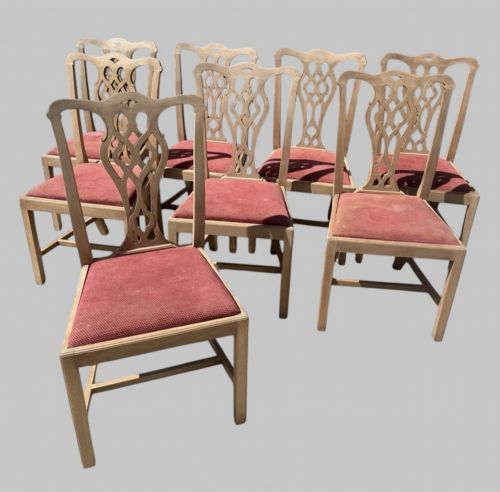
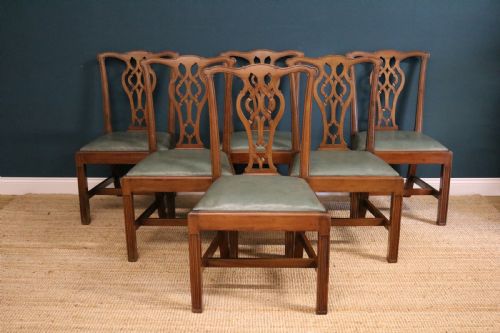
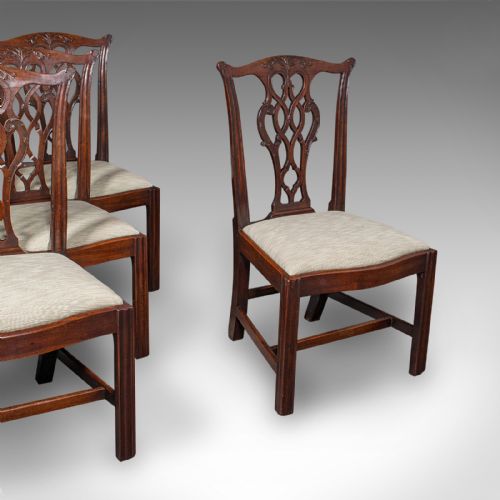
A fretwork back chair brings intricate open-cut woodwork to the dining room or parlour, offering collectors a striking silhouette rooted in eighteenth-century design.
Fretwork Back Chair
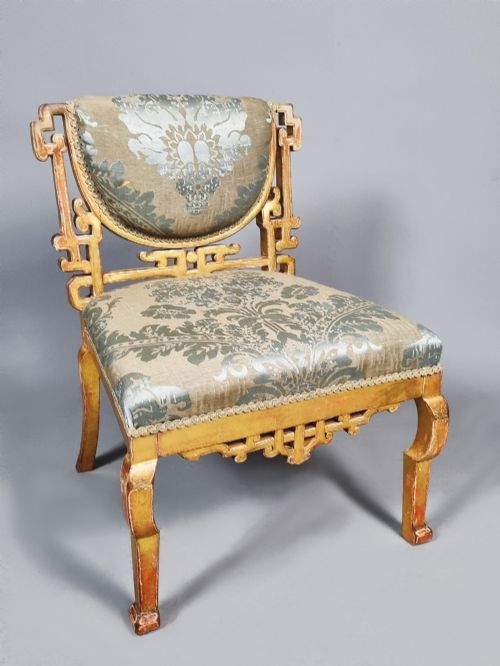
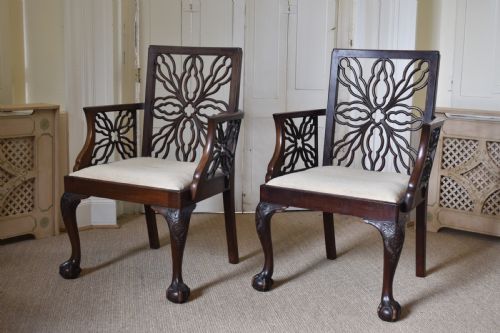
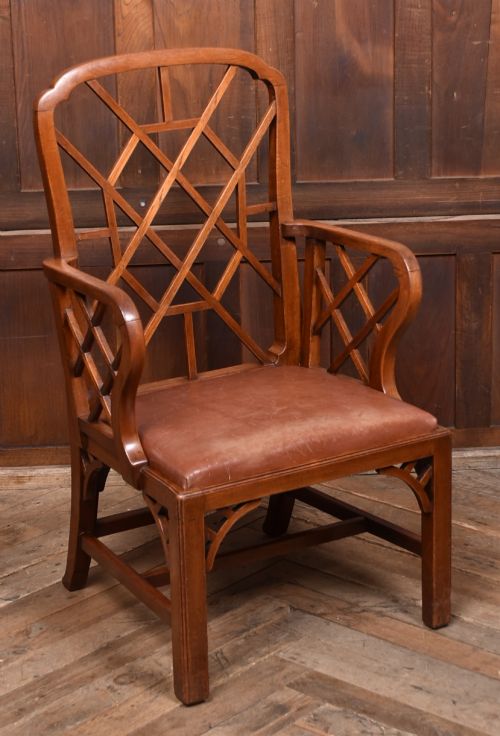
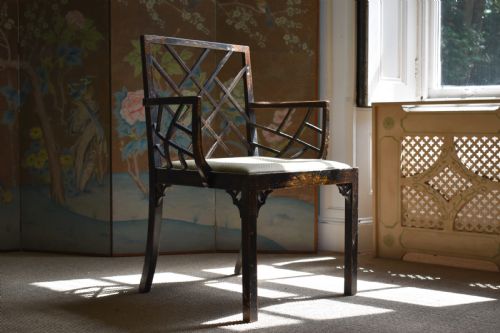
A fretwork back chair is a seating form defined by its pierced splat, which uses interlocking geometric, Chinese-inspired, or ribbon-like wooden patterns. When you search for a fretwork back chair, you encounter dining chairs, armchairs, and nursing chairs drawn from Georgian, Victorian, Edwardian, and later revival periods.
The selections on this page span single side chairs, sets of dining seats, and upholstered armchairs fashioned from mahogany, walnut, oak, and exotic hardwoods. Most examples channel Chippendale or Chinese Chippendale aesthetics, though variants incorporate Edwardian inlay or low-slung nursing formats.
Makers across the nineteenth and twentieth centuries reinterpreted these openwork designs, producing both formal dining suites and individual decorative pieces. Buyers find everything from strict eighteenth-century forms to Edwardian interpretations and later revival interpretations.
How they were made
Cabinetmakers constructed these frames primarily using solid mahogany, walnut, and oak, selecting dense timbers capable of sustaining delicate interior cuts without splitting. Artisans worked the wood by hand to shape cabriole or straight legs, often joining seat rails with traditional mortise and tenon joints.
The defining fretwork pattern was achieved by piercing flat timber using a fine fretsaw, followed by meticulous hand-carving to crisp the internal edges and motifs. Upholstered variants incorporated drop-in seats or fixed pads finished in fabric, leather, velvet, cane, or damask.
Listings feature woods including mahogany, walnut, oak, and hardwood, paired with upholstery such as velvet, leather, damask, fabric, and cane.
What varies in quality
Quality rests upon the crispness of the pierced woodwork and the depth of the hand-carving applied to the splat and frame. Superior examples display precise, symmetrical geometry in the fretwork without clumsy repairs or heavy sanding that softens the original decorative edges.
The choice of timber and the structural integrity of the joinery dictate the longevity of each piece. Heavier gauge hardwoods and intact original underframing separate standard production chairs from exceptional workshop creations.
Waugh and Son·Thomas Chippendale
The Fretwork Back Chair Glossary
- Fretwork
- Openwork ornamentation carved or pierced from a flat board in geometric, interlaced, or scroll patterns. This technique forms the decorative splat characteristic of the genre.
- Splatt
- The upright vertical strip of wood down the middle of a chair back, which in these pieces is pierced to create the fretwork design.
- Chippendale
- A British furniture style originating in the eighteenth century, known for intricate carved details, ribbon backs, and Chinese-inspired fretwork.
- Cockpen
- A lattice-work chair design influenced by Chinese fretwork patterns, frequently associated with eighteenth and nineteenth-century seating.
- Gainsborough armchair
- A wide, upholstered armchair with open padded arms, standing on short carved legs, often adapted with a fretwork back.
Fretwork Back Chair: Frequently Asked Questions
How do I date a fretwork back chair?
Dating relies on examining the timber species, secondary woods, joinery techniques, and stylistic clues within the carved splat. Eighteenth-century models show hand-cut joinery and dense patinated mahogany, whereas revival pieces from the Edwardian era or the twentieth century exhibit different tool marks and construction methods.
Comparing the specific fret pattern against known Georgian or revival portfolios helps clarify the period of production.
Were these chairs used for dining?
Many examples on this page formed part of larger dining suites intended for formal meals in country houses and town residences. Armchairs and side chairs were grouped around large dining tables to seat guests in comfort.
Other formats, such as nursing chairs or hall chairs, served specialised domestic functions in bedrooms and entranceways.
How do I care for antique fretwork?
Maintaining open woodwork requires dusting gently with a soft brush to prevent accumulation within the intricate pierced channels. Applying a microcrystalline wax periodically helps preserve the finish of the timber without building up heavy residues.
Keeping the furniture away from direct heat sources prevents the wood from drying out and splitting along the delicate fret cuts.