

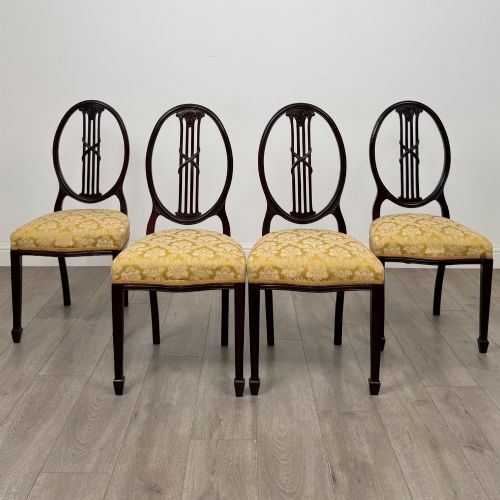
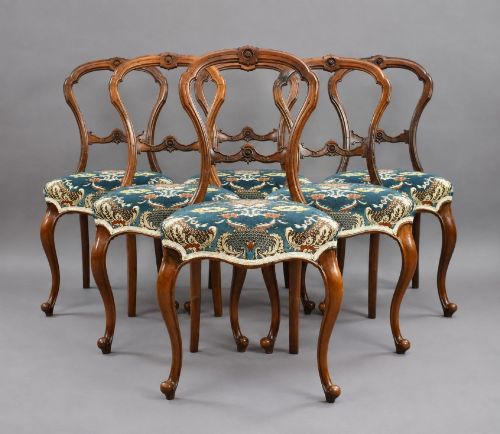
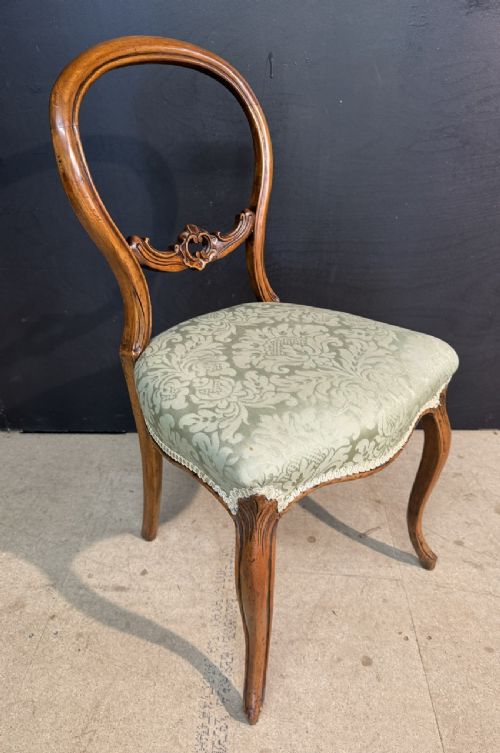
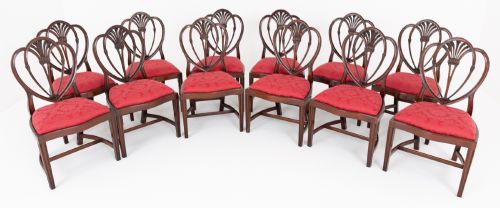
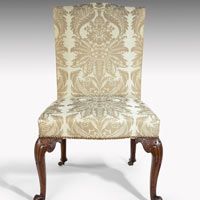
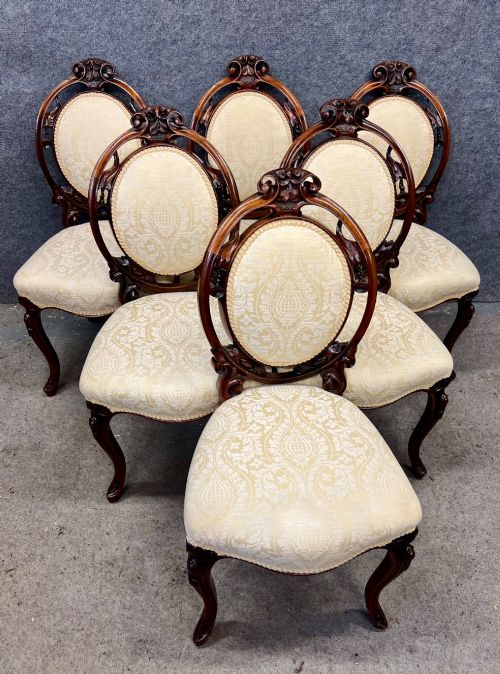
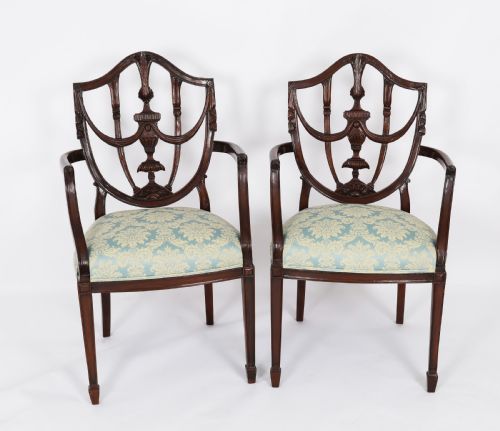

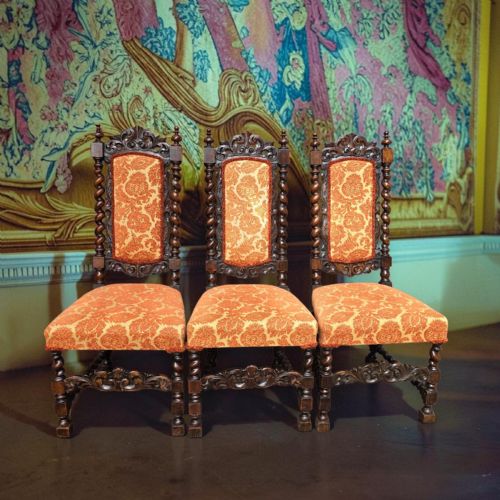
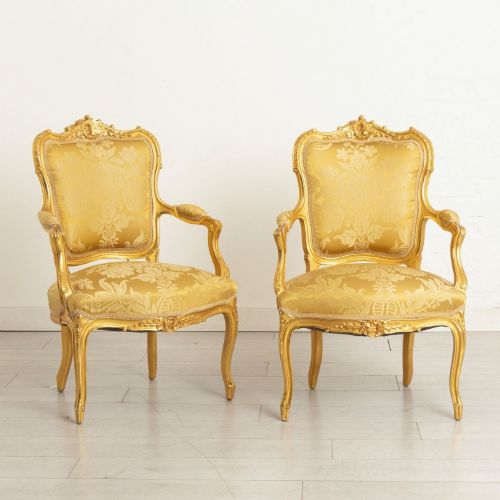


Damask Upholstered Side Chair
A damask upholstered side chair brings texture and historic form to a room, offering a compact seat rooted in centuries of cabinet making.
Damask Upholstered Side Chair
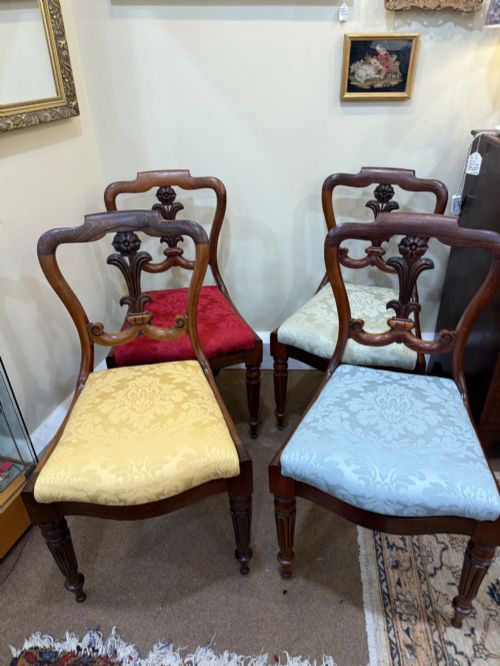
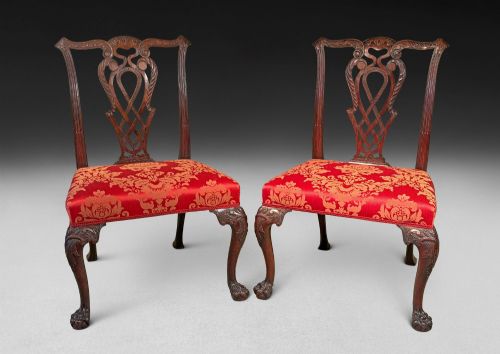
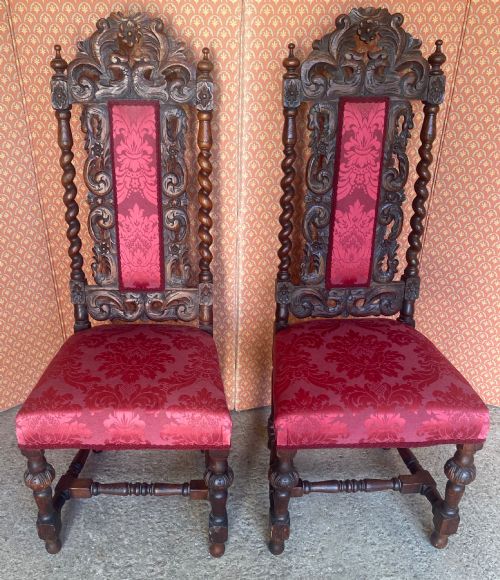
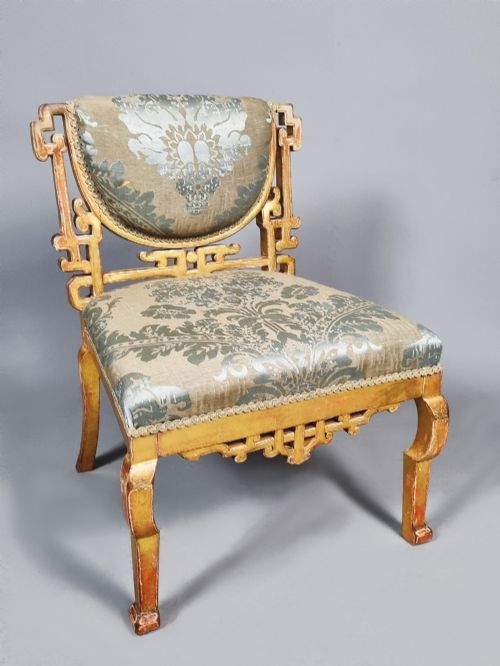
A damask upholstered side chair appears across multiple centuries, ranging from eighteenth-century Georgian examples to Victorian iterations and later revivals. Buyers seeking a damask upholstered side chair will encounter varied silhouettes including balloon backs, shield backs, and upright hall seating.
The materials span traditional hardwoods like mahogany, walnut, and rosewood paired with patterned woven fabrics. These items function equally as individual occasional seats or as components within larger dining sets.
Materials and construction
Frames are constructed from dense timbers such as mahogany, walnut, and rosewood, often shaped with carved details like barley twists or cabriole legs. Joinery relies on traditional methods to ensure stability across centuries of use.
Upholstery involves securing patterned damask fabric, silk, or general textiles over padding supported by the wooden frame. Brass elements occasionally appear as decorative accents or structural hardware.
Damask Upholstered Side Chair Retail Price Guide 2026
Typical asking prices for damask upholstered side chair among the pieces listed under this phrase on Sellingantiques today, from the lower quarter to the upper quarter. They describe what is for sale here now, not the wider market.
Forty-two matching giltwood dining chairs await a very large dining room indeed.
Markers of quality
The calibre of timber selection and the crispness of hand-carved details define the upper tier of these pieces. Original framing integrity and tight joinery separate examples that endure from those with weakened structures.
The preservation or quality of the textile upholstery influences the overall presentation, alongside the fidelity of revival styles to their historical precedents.
Waugh & Son
The Damask Upholstered Side Chair Glossary
- Damask
- A reversible figured fabric woven on a loom with patterns formed by contrasting warps and wefts. It provides the characteristic textured surface seen on these seats.
- Side chair
- A chair without arms designed primarily for dining or occasional use around a room. This form constitutes a major portion of the available items.
- Balloon back
- A rounded, oval-shaped chair back popular during the Victorian era. The curve mimics the outline of a balloon.
- Cabriole leg
- A furniture leg that curves outward in a convex arc and tapers inward in a concave arc, terminating in a pad or claw foot.
- Shield back
- A chair back shaped in the outline of a heraldic shield, commonly associated with eighteenth-century and revival dining seats.
Damask Upholstered Side Chair: Frequently Asked Questions
How do I identify the period of my chair?
Dating relies on observing timber choices, carved ornament styles, and structural profiles. Specific motifs like balloon backs or shield shapes align with distinct design eras.
Comparing construction techniques underneath the seat also helps distinguish eighteenth-century originals from later nineteenth-century revivals.
Can these chairs be used for daily dining?
Many solid wood examples remain robust enough for regular use around a dining table. Checking the rigidity of the frame ensures the piece handles daily sitting.
Fragile gilding or antique textiles require more careful consideration, sometimes making them better suited for display as occasional seating.
Are damask fabrics original to the older pieces?
Historic seating frequently undergoes reupholstery over the decades to maintain a clean appearance. Damask upholstery on nineteenth or eighteenth-century frames is commonly a later replacement.
Original textiles survive rarely, so modern fabric updates are standard practice for preservation.
Where should I place a side chair?
These compact seats fit easily into bedrooms as vanity or dressing chairs, hallways, or living rooms as accent pieces. Their armless design allows them to tuck neatly against walls or desks.
Pairs work well flanking a console table or fireplace.