
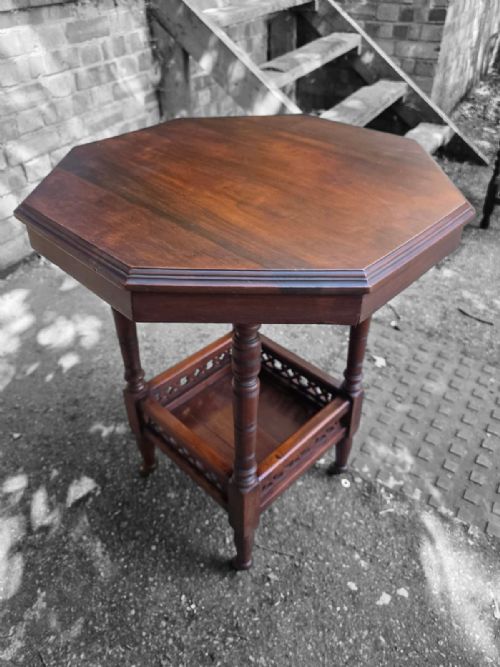
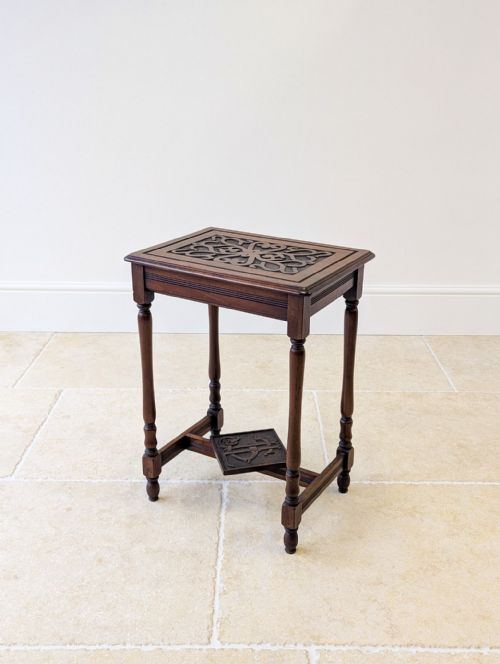
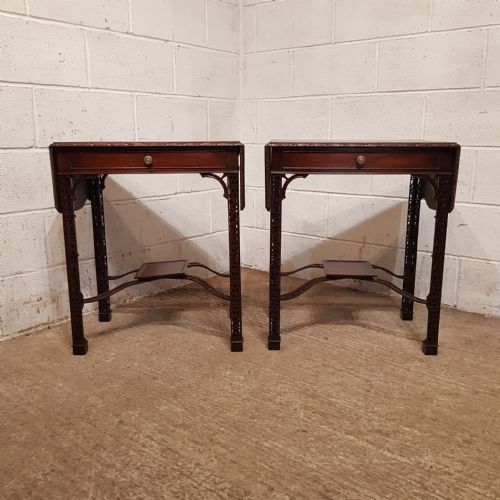
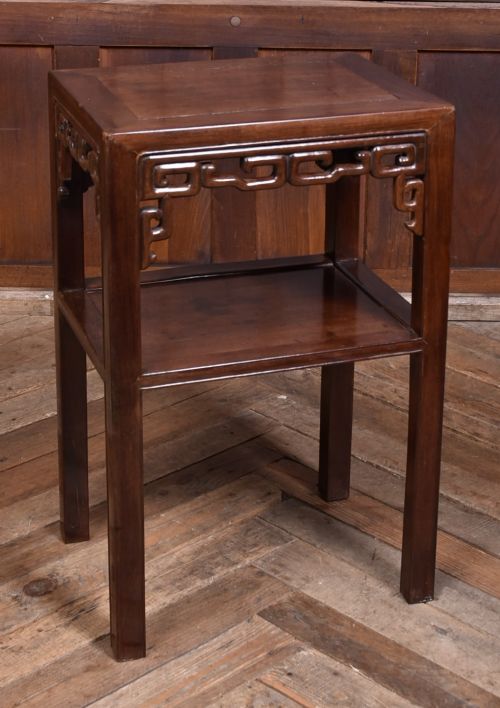
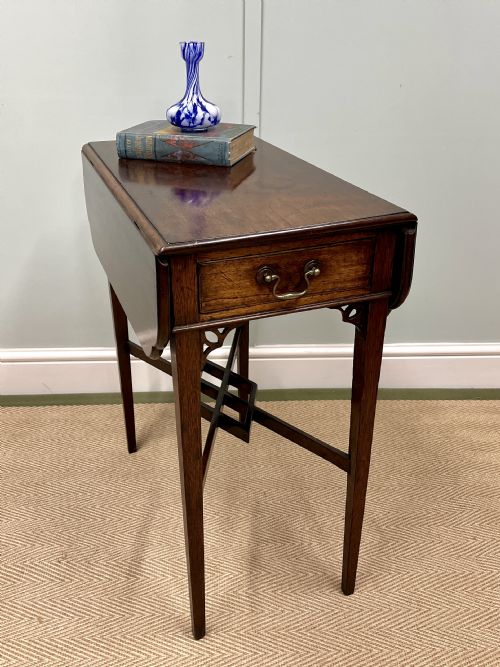


Fretwork Accent Table
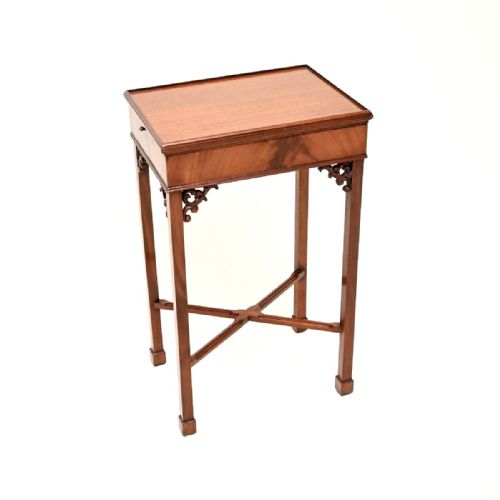
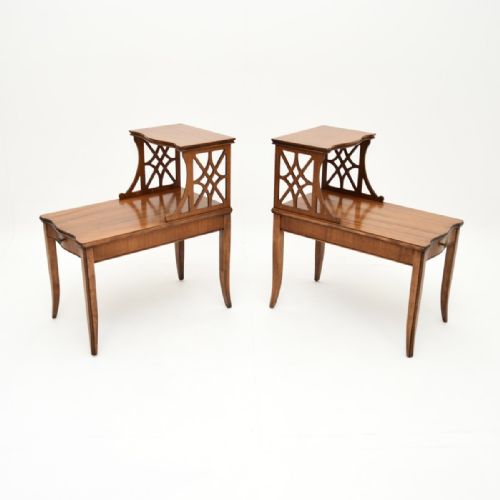
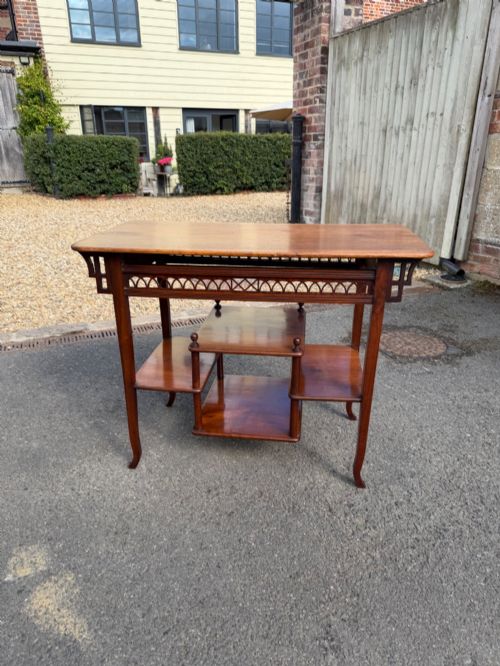
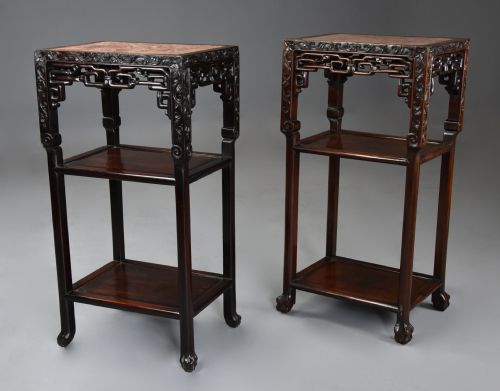
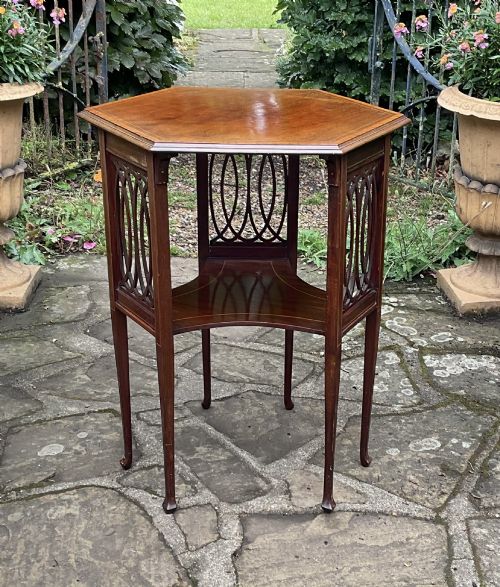
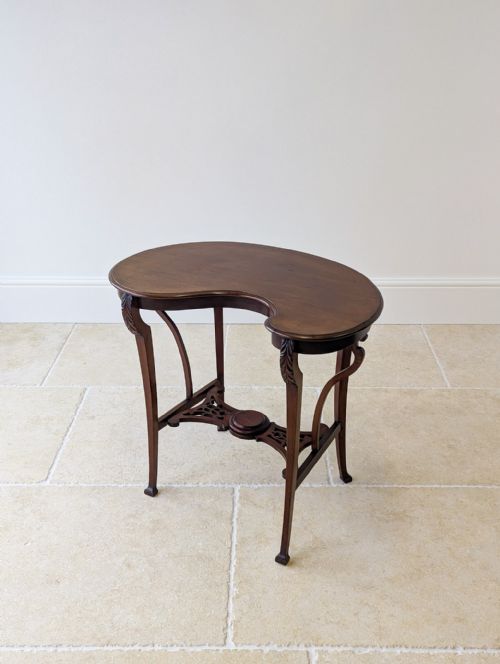
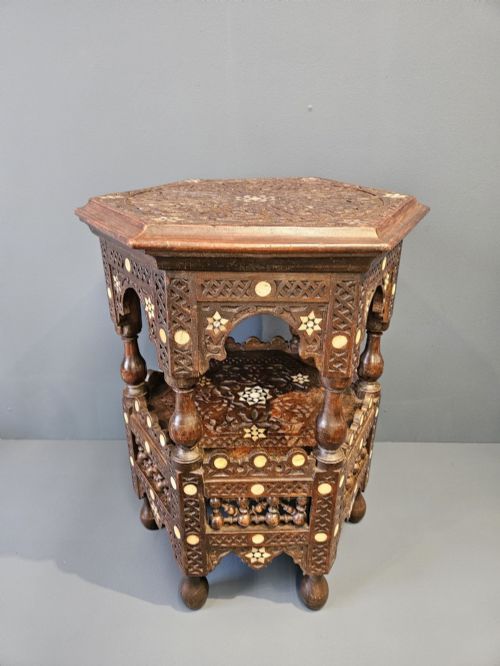
These fretwork accent table pieces bring open carved detail and compact utility to a room, offering surface space with visual lightness.
Fretwork Accent Table
A fretwork accent table is a compact surface designed for display or casual use, often taking the form of an occasional table, side table, or small whatnot. These pieces emerge across the Victorian, Edwardian, and Georgian periods, alongside specific revivals like the Chippendale style.
The version most commonly met on this page is the mahogany occasional or side table, frequently featuring carved pierced galleries, undertiers, or bracket supports. Walnut, burr walnut, hardwood, and oak also appear, spanning forms from wine tables to octagonal lamp tables.
Origin influences the character of the carving deeply, ranging from English Chippendale revival work to Anglo-Indian and Chinese hardwood pieces. Buyers choose them to fill awkward corners or provide a decorative perch for lamps and plants.
Distinctions in quality
Quality rests heavily on the crispness and depth of the carved fretwork, where sharp, clean piercings distinguish superior workshop output from softer, later machine cuts. The choice of timber also dictates standing, with figured burr walnut or dense mahogany showing finer grain selection.
Proportion and structural integrity separate standard utility items from finer examples, particularly in multi-tiered tables and whatnots where the uprights must remain rigid. Original surfaces and patination elevate a piece, showing depth in the polish rather than a flat, modern finish.
Period styles span Georgian, Victorian, Edwardian, Arts and Crafts, and Aesthetic Movement designs.
The Fretwork Accent Table Glossary
- Fretwork
- Openwork ornamentation carved or pierced from a flat board, creating geometric or scrolling patterns. It provides ornamental lightness to aprons and brackets.
- Pembroke table
- A small rectangular table with hinged drop leaves on either side, often fitted with a single drawer. It functions as a versatile occasional or breakfast piece.
- Whatnot
- A set of open shelves standing on slender supports, designed for displaying ornaments and small objects. Pieces frequently incorporate pierced galleries.
- Silver table
- A display table with a raised rim or gallery around the top edge, originally used for serving tea or displaying silver. They often feature intricate under-tier stretchers.
- Pietra dura
- Inlay technique utilising polished, cut coloured stones to form pictorial designs on a stone tabletop. It creates a smooth, decorative mosaic surface.
Fretwork Accent Table: Frequently Asked Questions
What is a fretwork accent table used for?
These small tables serve as lamp stands, plant pedestals, or side surfaces for books and decorative objects in a living space. Their compact footprints allow them to fit easily beside seating or into narrow hallways.
Historically, specific variations like silver tables or pembroke tables held tea services or writing materials. Today, they function primarily as decorative accents that add texture and period character to a room.
How do I identify the period of a table?
Dating relies on examining the timber, construction methods, and stylistic cues present in the design. Pieces from the Georgian era display different proportions and joinery compared to later Victorian or Edwardian Chippendale revivals.
Secondary woods, screw types, and wear patterns on the feet provide further clues to age. Comparing the specific carving style to documented cabinet maker designs helps narrow down the decade of manufacture.
Are these tables sturdy enough for daily use?
Most occasional tables and side tables are built to support standard items like lamps, cups, or small plants without difficulty. However, pieces featuring delicate pierced fretwork require careful handling to avoid snagging or snapping the thin wooden elements.
Multi-tiered whatnots and plant stands benefit from placement out of major traffic routes to prevent accidental knocks. Checking the stability of the joints ensures safe everyday placement.
What distinguishes Anglo-Indian tables from English pieces?
Anglo-Indian tables typically feature dense, deeply carved foliage, peacocks, or geometric patterns executed in exotic hardwoods. These pieces reflect regional carving traditions adapted for Western tastes during the nineteenth century.
In contrast, English revival pieces adhere more closely to traditional European forms such as Chippendale or Sheraton designs. The choice of timber and the specific motif in the fretwork usually clarify the geographical origin.