


French Wardrobe Doors
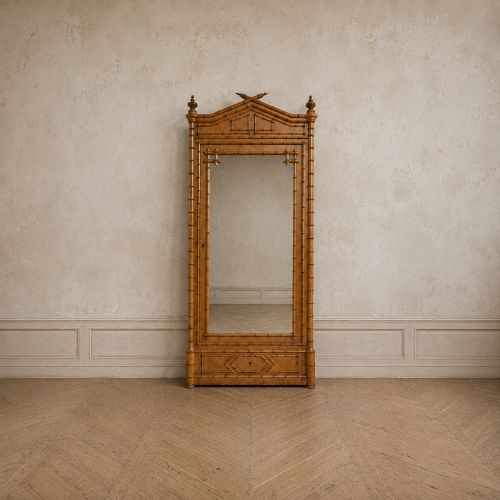
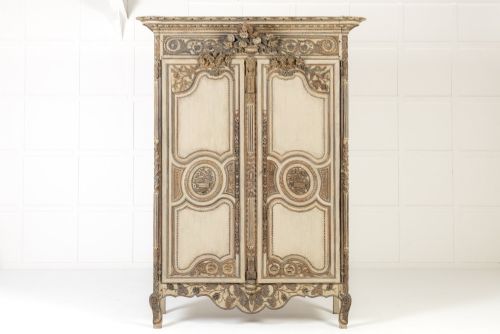
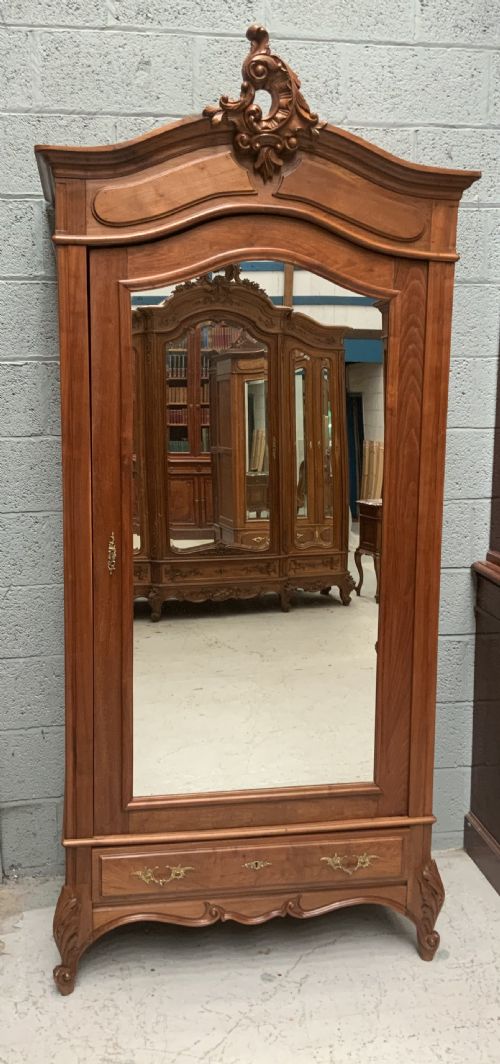
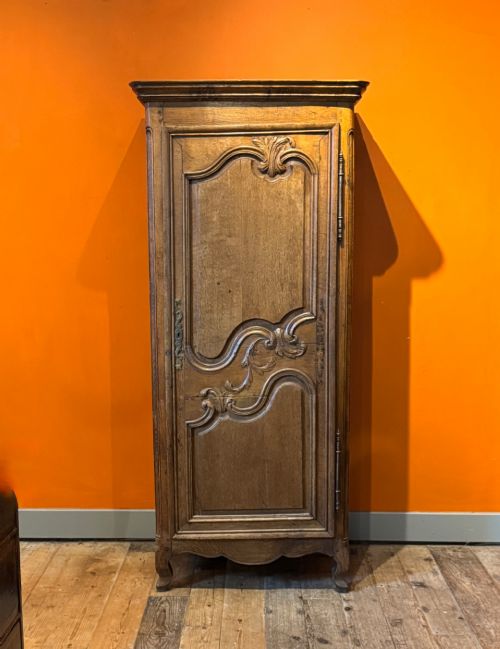
These french wardrobe doors and the armoires they once closed bring substantial architectural presence and practical storage to a room.
French Wardrobe Doors
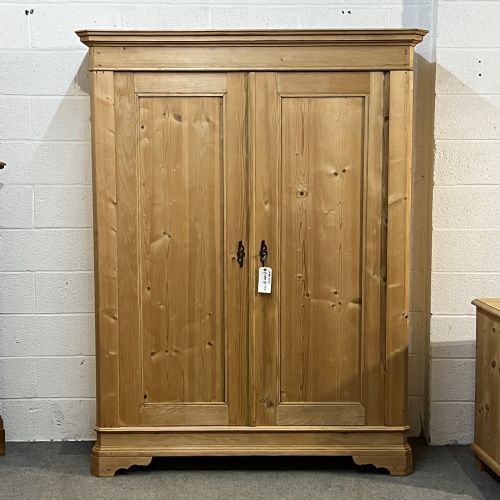
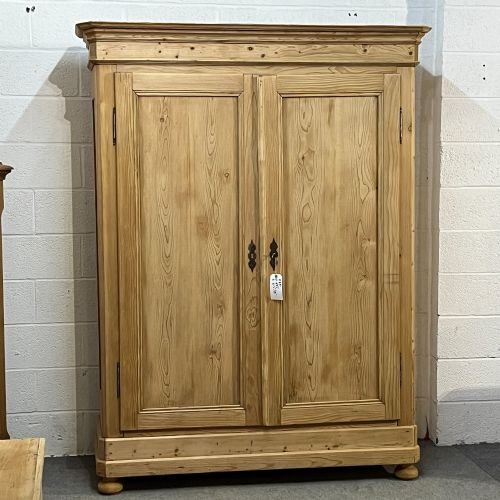
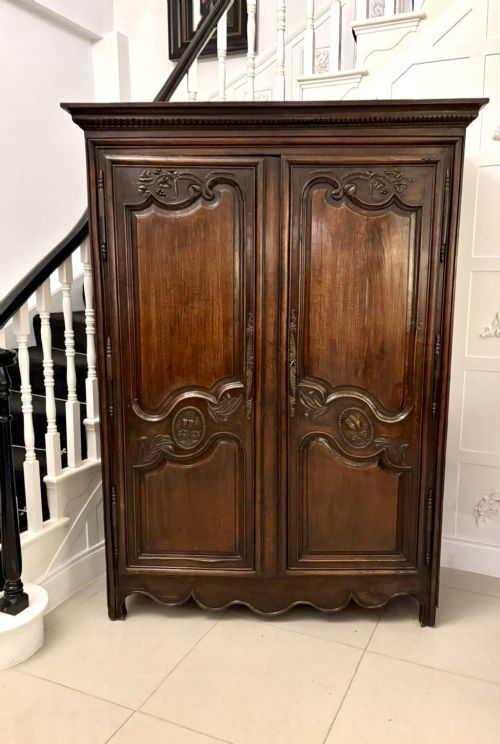
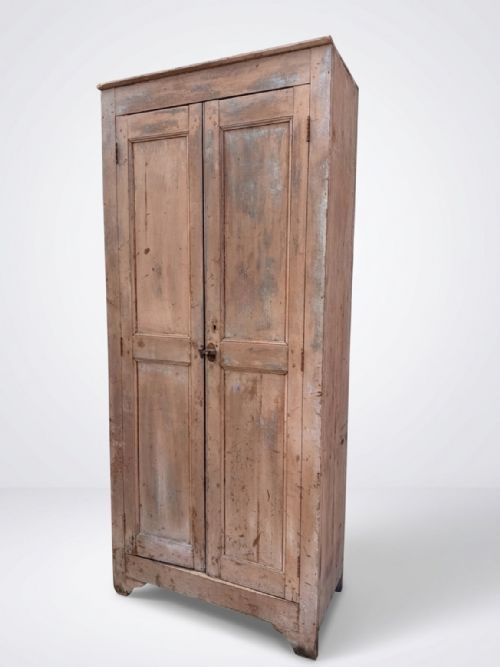
When searching for french wardrobe doors, buyers encounter large timber panels sourced from dismantled armoires, wardrobes and housekeepers cupboards originating in the eighteenth, nineteenth and early twentieth centuries.
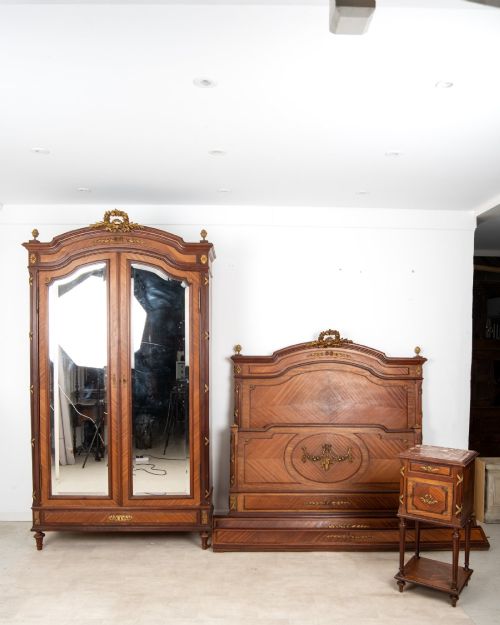
The selections span distinct regional styles including French Provincial, Louis XVI Revival, Louis Philippe and country house traditions, reflecting diverse provincial and urban workshops.
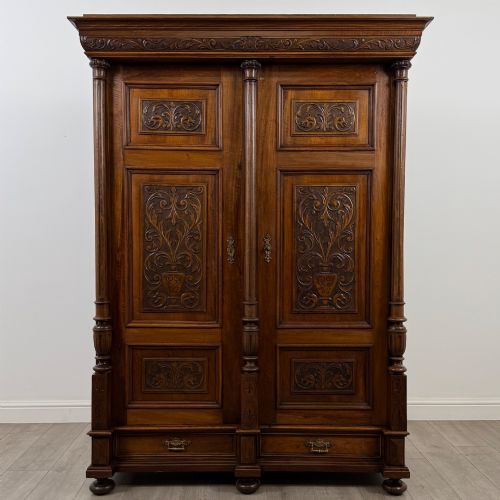
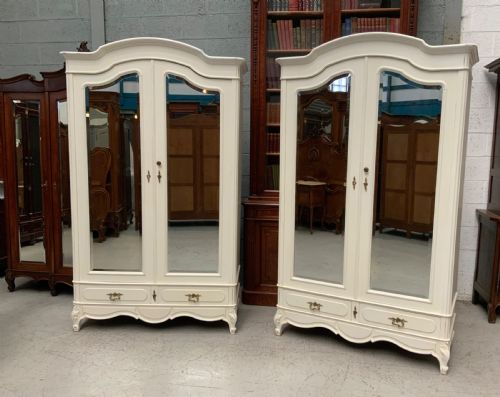
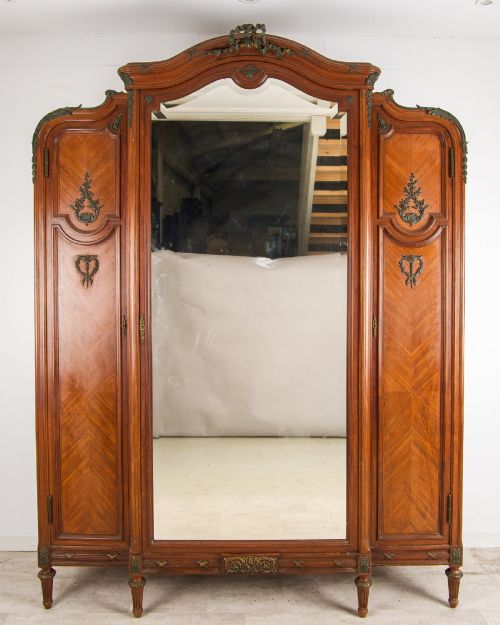
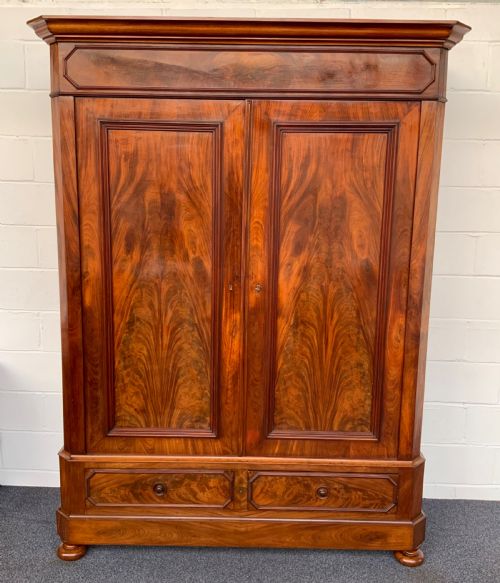
Most examples found on this page consist of solid timber panels, often featuring raised mouldings, carved details or glazed and mirrored inserts framed in oak, walnut, pine or mahogany.
Materials and construction methods
Cabinet makers utilised native hardwoods such as oak, walnut, cherry and mahogany alongside softer timbers like pine, joining stiles and rails with traditional mortise and tenon techniques.
Surface treatments range from original painted finishes and bleached oak to polished flame mahogany, bird's-eye maple and parquetry veneers.
Functional hardware relied on cast brass, iron, and gilt bronze ormolu mounts to secure the heavy timber frames.
Several panels retain faint chalk marks on the reverse from long-forgotten French carpenters sizing up their joints.
Distinctions in construction and design
Superior examples exhibit deeply hand-carved relief work, balanced proportions, and dense hardwoods like walnut or figured mahogany rather than simple pine boards.
The integration of original cast brass or ormolu mounts, mirrored glass panels and sophisticated parquetry separates standard utility pieces from high artistic commissions.
Weight, timber selection and the complexity of panel moulding dictate the enduring structural stability and visual depth of each component.
JEAN FAURE·Mercier
The French Wardrobe Doors Glossary
- Armoire
- A large wardrobe or cupboard, traditionally used for storing clothing. These pieces often feature double doors opening to reveal hanging space or shelving.
- Ormolu
- Gilt bronze mounts applied to furniture for decoration. This technique adds metallic contrast to dark woods like mahogany and walnut.
- Parquetry
- Geometric wood veneer patterns arranged on a surface. This method creates decorative visual textures using contrasting timber tones.
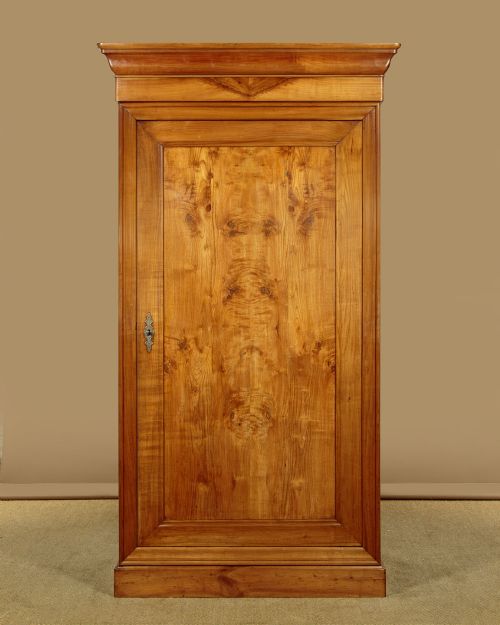
- Bonnetiere
- A single door cupboard or tall narrow wardrobe originating in France. They were originally designed to store bonnets and headwear.
- Louis XVI Revival
- A nineteenth-century design movement drawing on neoclassical symmetry and straight lines. Pieces in this style often display restrained carving and classical proportions.
French Wardrobe Doors: Frequently Asked Questions
What woods were commonly used in french armoires?
Cabinet makers worked with whatever timber was locally abundant or fashionable during the period of manufacture. Oak, walnut and cherry dominated earlier provincial workshops.
By the nineteenth century, exotic imports like mahogany and rosewood appeared alongside domestic pine and fruitwoods, often finished with paint or polish.
How do I identify a Louis XVI revival door?
Louis XVI style pieces favour straight vertical lines, symmetry and classical architectural motifs over the curved asymmetry of earlier rococo designs. Look for fluted panels and restrained geometric carving.
These elements reflect the late eighteenth-century return to classical antiquity, which experienced a major revival during the Victorian and Edwardian eras.
Can I paint an unpainted antique oak door?
While original painted surfaces hold distinct historical value, unfinished or stripped oak can be painted, limewashed or waxed to match contemporary colour schemes. Preparation involves ensuring the timber is clean and dry.
Applying breathable paints allows the ancient wood to adjust naturally to changing indoor humidity levels without trapping moisture beneath the surface.