


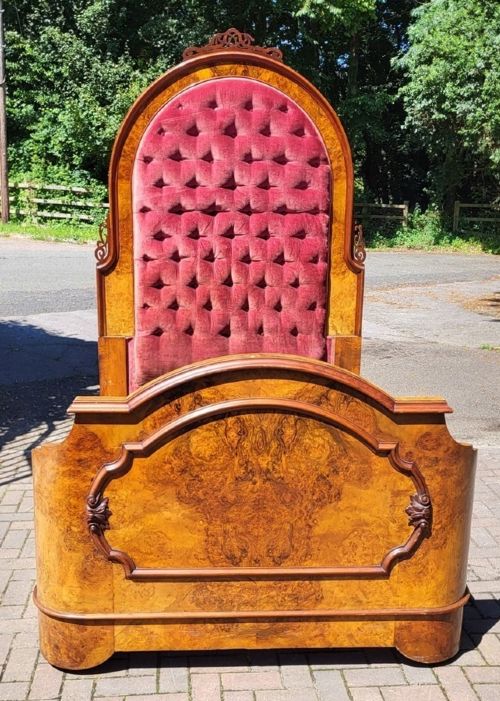
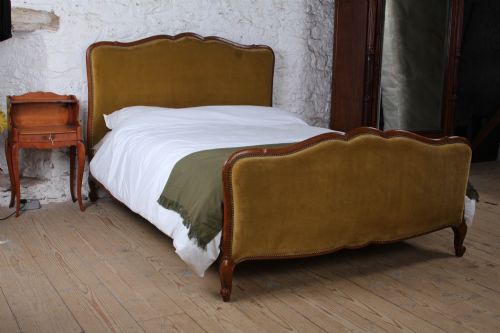


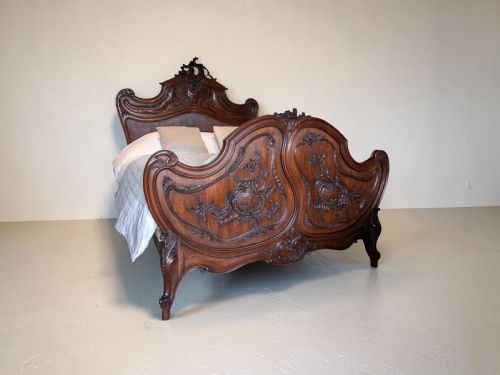


French Walnut Headboard
A french walnut headboard brings warmth and architectural presence to a bedroom, combining rich timber grain with classic continental carving.
French Walnut Headboard
A french walnut headboard provides the grounding visual anchor for a bedroom scheme, drawing upon centuries of continental cabinet-making traditions. Buyers seeking this piece will encounter items that range from simple provincial timber frames to ornate carved revival designs.
The selections available span periods from the nineteenth century through the Art Deco era, encompassing styles such as Louis XV, French Provincial, and Neoclassical. While many complete beds and bedsteads appear in the inventory, scaled-down headboards and converted panels also serve the same decorative purpose.
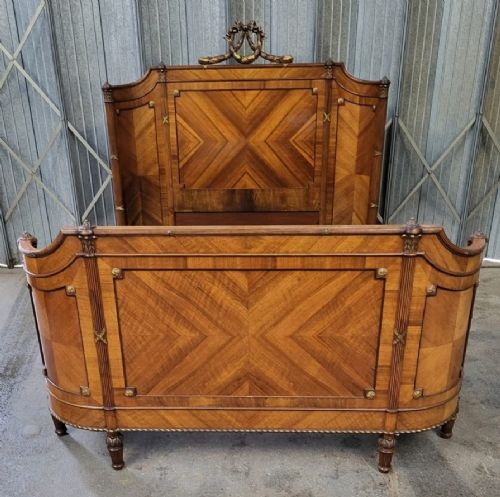
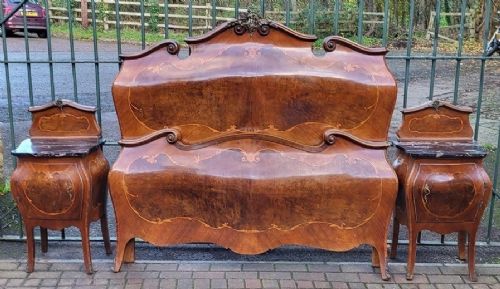
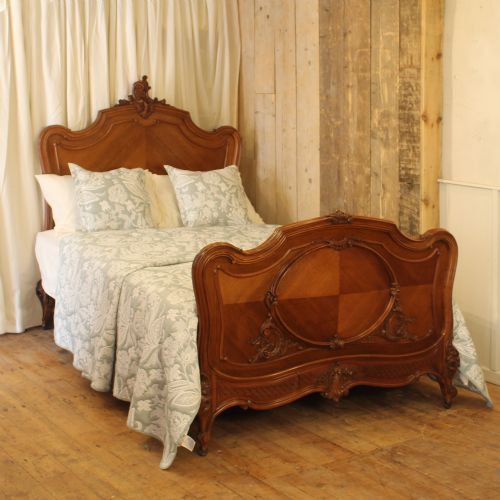
Walnut dominates these listings, frequently accompanied by burr walnut veneers, quarter-veneered panels, and occasional parcel gilt highlights. The forms utilise standard double, king size, and single proportions to suit contemporary room layouts.
Materials and Construction
Cabinet-makers relied heavily on solid walnut and burr walnut veneers, prized for their deep colour and lively grain patterns. Timber selection dictated the visual weight of the piece, with quarter-veneered surfaces creating symmetrical geometric patterns on larger headboards.
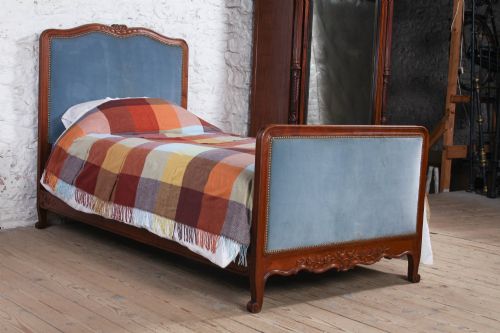
Carving was executed by hand directly into the dense wood, yielding crisp acanthus leaves, scrollwork, and moulded panel framing. Metal accents in brass or ormolu occasionally appeared on hardware or decorative mounts, while upholstered sections incorporated velvet, leather, or buttoned textiles.
French Walnut Headboard Retail Price Guide 2026
Typical asking prices for french walnut headboard among the pieces listed under this phrase on Sellingantiques today, from the lower quarter to the upper quarter. They describe what is for sale here now, not the wider market.
Listings span walnut, burr walnut, and mahogany timbers, alongside brass and velvet details across the nineteenth and early twentieth centuries.
Assessing Quality and Craftsmanship
The standard of carving marks the primary division between everyday pieces and superior workshop output. Deep, undercut relief work and clean symmetry demonstrate the hand of a skilled artisan, whereas shallow or mechanical moulding indicates mass production.
Veneer selection and matching also dictate excellence, particularly in burr walnut and quarter-veneered surfaces where grain alignment requires precision. The integrity of the underlying timber frame and the crispness of joinery determine the longevity of the structure.
The French Walnut Headboard Glossary
- Burr walnut
- A figured wood grain derived from the growths or burrs on walnut trees, prized for its swirling, mottled patterns.
- Louis XV style
- A revival design characterised by asymmetric curves, cabriole motifs, and organic floral carving reminiscent of the eighteenth century.
- Ormolu
- Gilt bronze mounts applied to furniture for decorative contrast and enrichment.
- Quarter-veneered
- A method of arranging four matching veneer slices cut from the same log to create a symmetrical diamond or quadrant pattern.
French Walnut Headboard: Frequently Asked Questions
How do I attach an antique headboard to a modern bed?
Most antique headboards were originally designed as part of complete bedsteads or attached directly to wooden rails. Adapting one to a modern divan base typically requires bespoke metal brackets or mounting the panel securely to the wall behind the bed.
This method preserves the visual integrity of the carved timber without drilling directly into structural antique framing.
What distinguishes Louis XV style from Art Deco pieces?
Louis XV style walnut pieces rely on flowing curves, naturalistic leaf carving, and ornamental symmetry drawn from eighteenth-century French design. Art Deco examples favour geometric discipline, stylised motifs, and sleek burr walnut veneers.
Reviewing the carved details and silhouette easily separates the ornate curves of the earlier revival from the streamlined shapes of the twentieth century.
Can I mix walnut headboards with other wood finishes?
Walnut possesses a rich, warm brown tone that pairs well with lighter oak or painted furniture, provided the undertones harmonise. Consistency in room styling matters more than matching every timber grain identically.
Allowing the figured grain of the headboard to act as a focal point prevents the interior from feeling visually cluttered.
How do I clean and maintain walnut timber?
Routine maintenance requires only a soft, dry cloth to remove dust from carved recesses and flat veneer surfaces. Avoid silicone-based polishes, opting instead for traditional beeswax applied sparingly to nourish the wood.
Keeping the piece away from direct sunlight and severe temperature fluctuations protects the polish and prevents the timber from splitting.