


French Walnut Bedside
These french walnut bedside pieces bring continental elegance to a bedroom, combining practical bedside storage with rich timber grain and period charm.
French Walnut Bedside
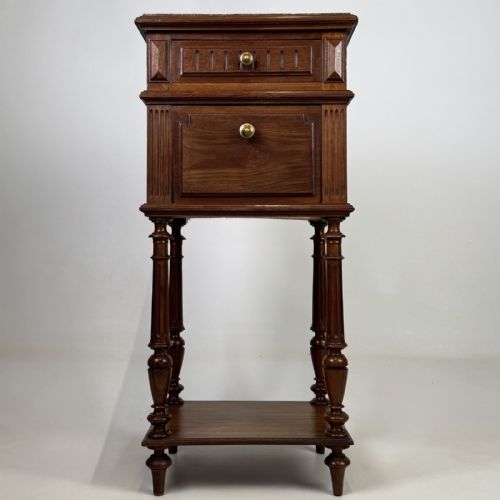
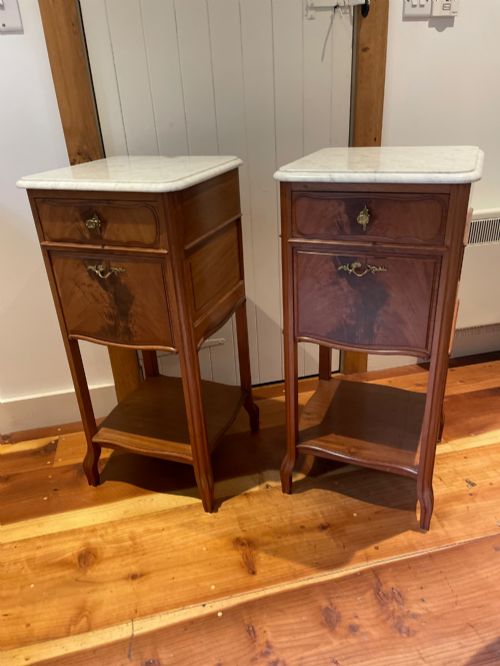
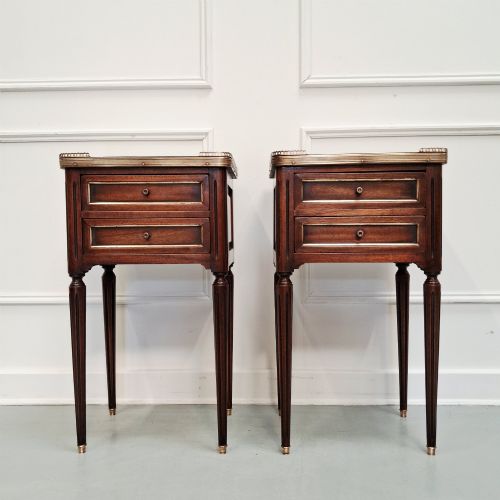
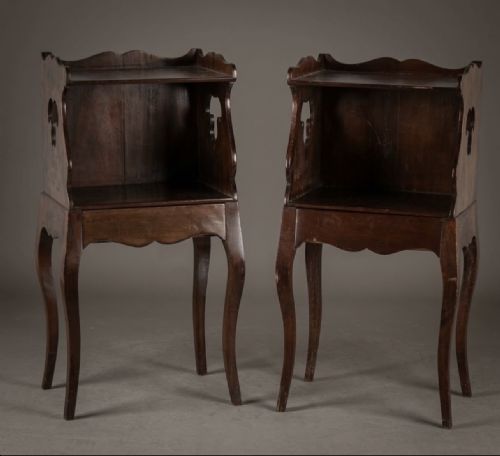
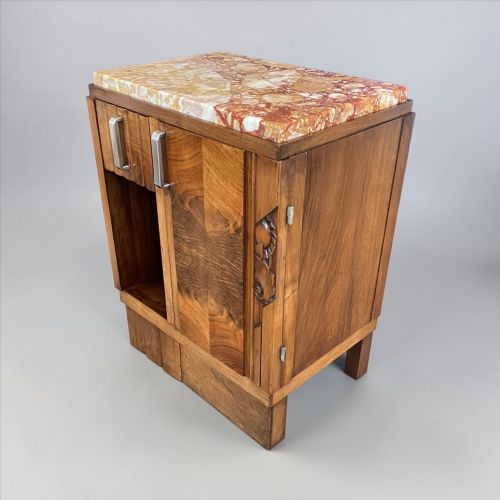
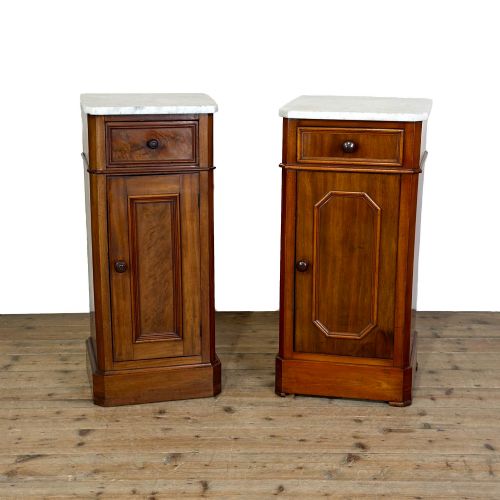
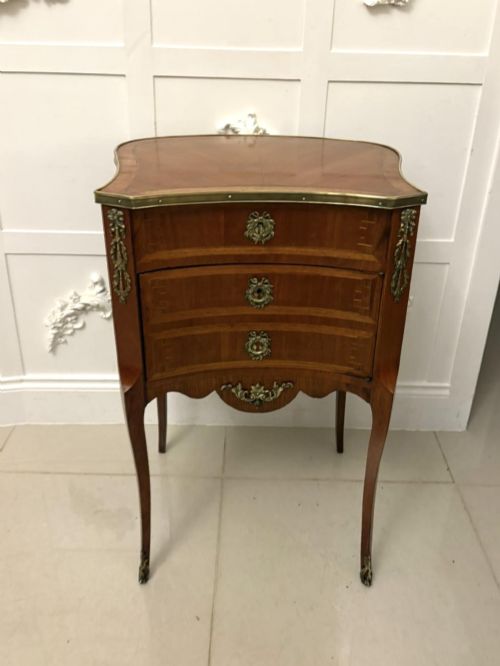
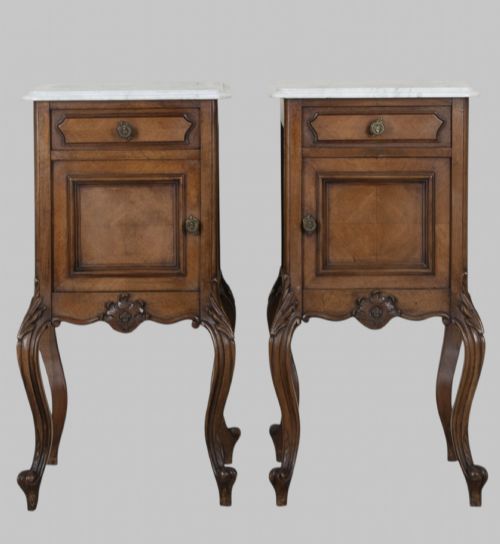
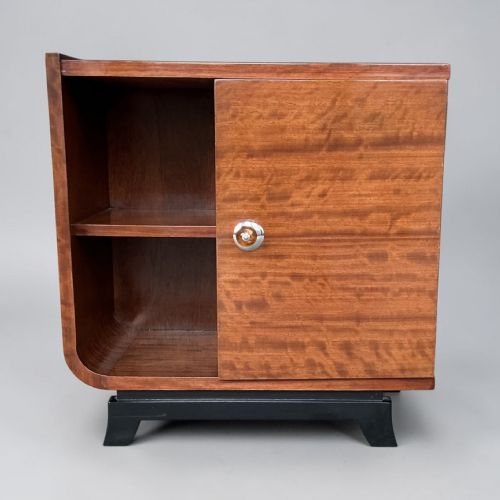
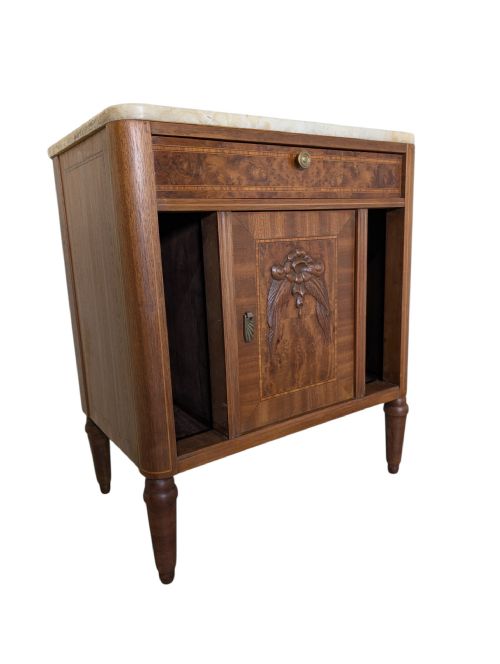
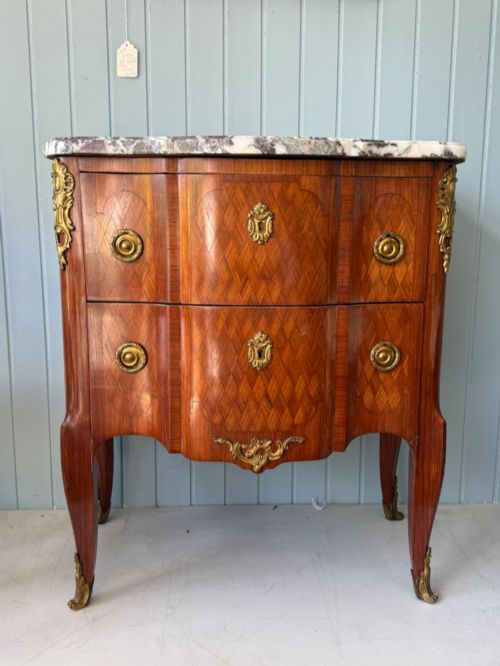
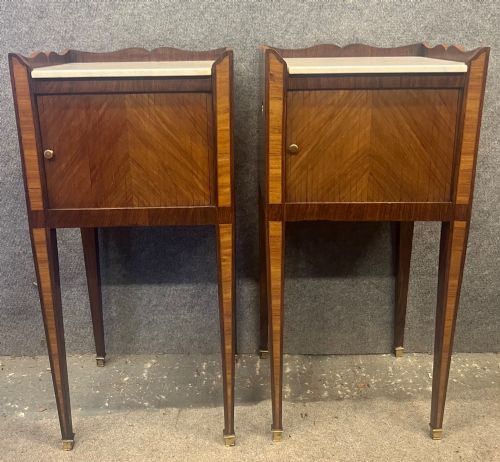
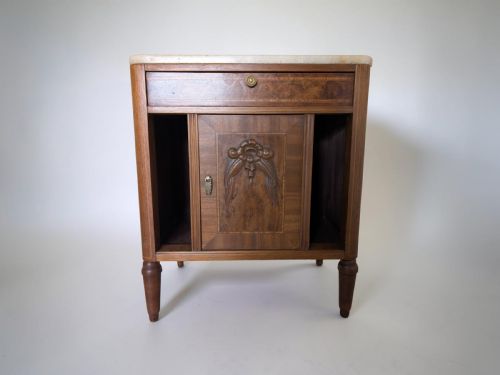
When you search for french walnut bedside, you discover a range of compact bedroom furniture originating from nineteenth-century commodes through to Art Deco cabinets. The selection includes individual tables and matched pairs featuring enclosed cupboards, open shelves, or multiple small drawers.
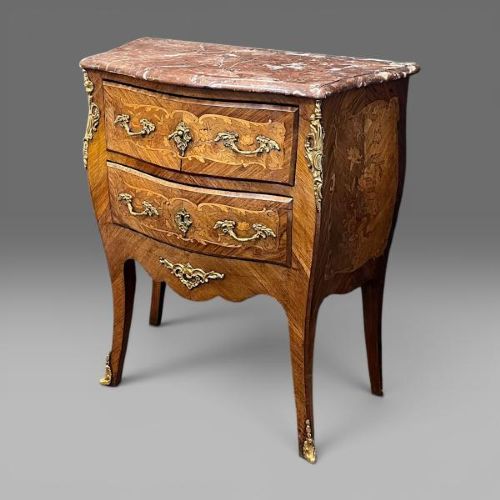
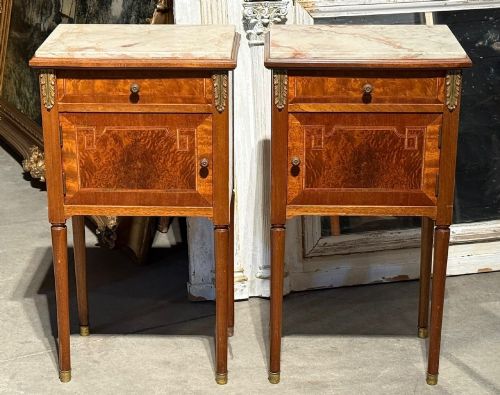
Cabinets topped with marble are frequently met on this page, often paired with matching wood veneer or marquetry inlay. These pieces serve primarily as functional nightstands while offering distinct decorative presence through stylistic revivals such as Louis XV and Louis XVI.
How they were made
Cabinet makers utilised solid walnut and decorative veneers like burr walnut or kingwood applied over secondary timbers. Surfaces often display intricate marquetry patterns, set alongside contrasting mounts of brass or ormolu.
Heavy slabs of marble, including Belgian Sainte-Anne varieties, were fitted precisely to the tops of many cabinets to provide a durable and water-resistant surface. Structural frames incorporated turned legs, serpentine curves, and fitted side lockers built for daily domestic use.
French Walnut Bedside Retail Price Guide 2026
Typical asking prices for french walnut bedside among the pieces listed under this phrase on Sellingantiques today, from the lower quarter to the upper quarter. They describe what is for sale here now, not the wider market.
Some nineteenth-century French bedside cabinets cleverly concealed chamber pots behind miniature panelled doors before modern plumbing arrived.
What varies in quality
The standard of these cabinets rests upon the choice of timber veneer and the precision of the marquetry inlay. Cabinets displaying carefully matched burr walnut grain patterns or complex floral inlays represent superior craftsmanship compared to plain timber surfaces.
Hardware execution and marble selection further distinguish individual pieces. Heavy cast ormolu mounts, finely fitted drawers, and thick marble tops with polished edges demonstrate a higher grade of manufacture than simpler, utilitarian versions.
The French Walnut Bedside Glossary
- Chevet
- A French term for a small bedside table or cabinet. These units typically incorporate a small drawer above a cupboard space.
- Marquetry
- Decorative patterns formed by inserting pieces of contrasting veneer into a wood foundation. This technique creates pictorial or geometric designs across cabinet doors and tabletops.
- Ormolu
- Gilt bronze mounts applied as decorative ornaments to furniture. It appears frequently on revival pieces from the nineteenth and early twentieth centuries.
- Commode
- A low chest of drawers or cabinet with doors. Many nineteenth-century French examples serve as substantial bedside or side storage.
- Sainte-Anne marble
- A specific dark grey or mottled limestone variety quarried in Belgium. It is commonly found as the fitted top on period bedside cabinets.
French Walnut Bedside: Frequently Asked Questions
What periods do these bedside cabinets come from?
The pieces span from the nineteenth century through the Art Deco period of the 1930s. Victorian examples and early twentieth-century revivals are particularly common.
Stylistic influences range from traditional French Provincial to Louis XV and Louis XVI revival designs, reflecting changing tastes across several decades.
How were marble topped cabinets used?
The stone surfaces provided a practical, spill-resistant area for bedside water jugs, lamps, and personal items. They protected the timber underneath from daily wear.
Cabinet interiors and drawers offered concealed storage for nighttime essentials, books, and chamber accessories.
How do I identify Louis XV style features?
Louis XV style pieces typically display gentle serpentine curves, cabriole legs, and asymmetrical floral or foliage marquetry. The overall aesthetic prioritises flowing organic lines over rigid geometry.
Ormolu mounts on the corners and apron frequently accentuate these curved wooden silhouettes.