

French Urn Table Lights
French urn table lights combine classical vessel forms with illumination, offering a decorative focal point derived from nineteenth and early twentieth century designs.
French Urn Table Lights
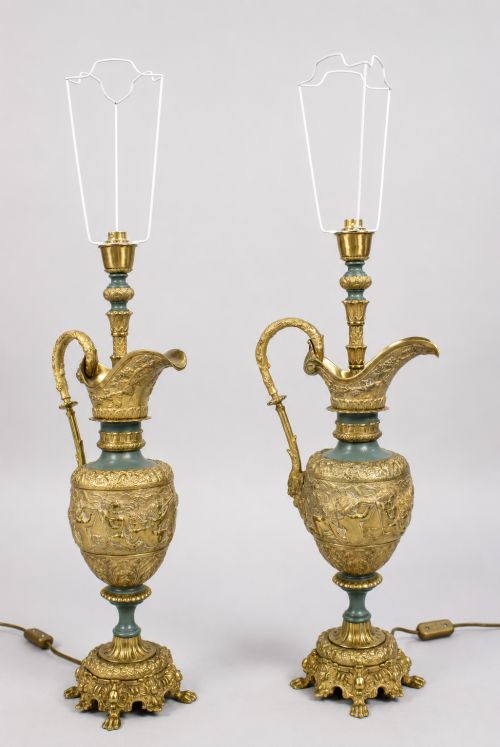
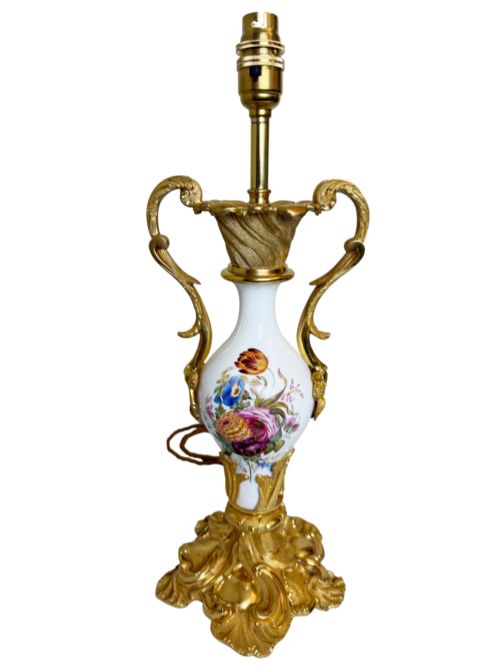
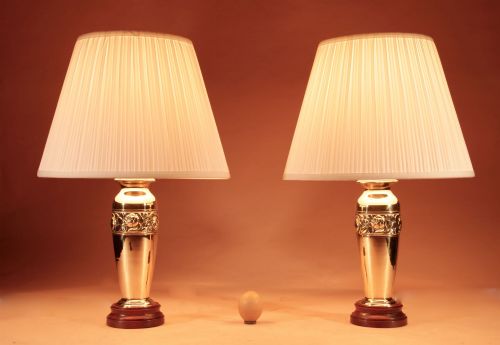
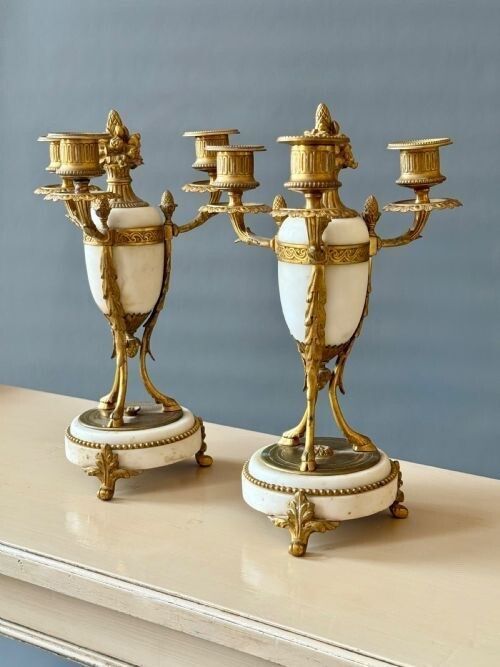
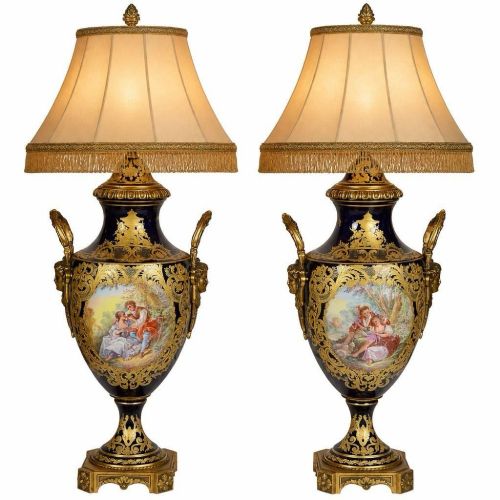
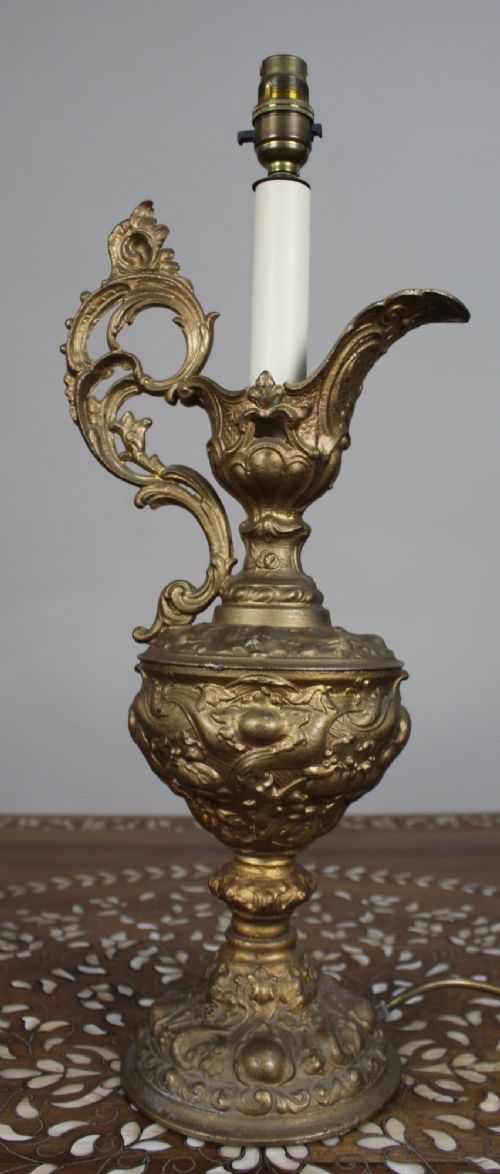
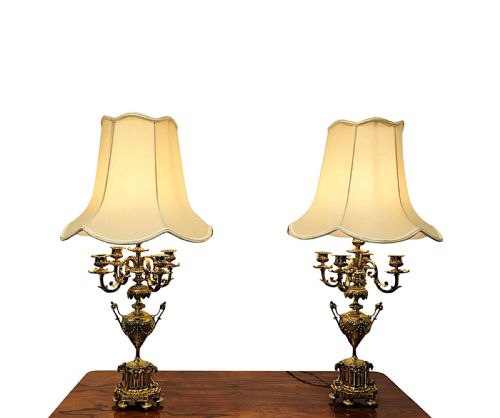
When you search for french urn table lights, you encounter decorative objects modelled on classical vessels, amphorae and ewers adapted to hold electrical fittings. These pieces predominantly date from the nineteenth century through the early twentieth century, spanning styles from Neoclassical and Louis XVI revivals to Art Deco. Pairs dominate the selection, often originating as converted candelabra, oil lamps or cassolettes rather than purpose-built electrical items.
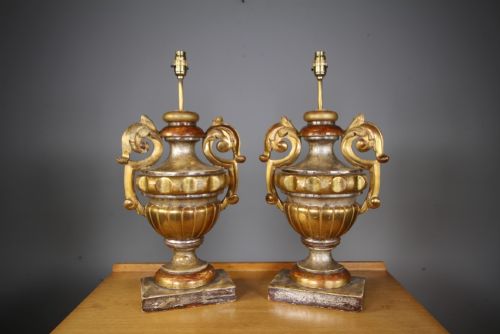
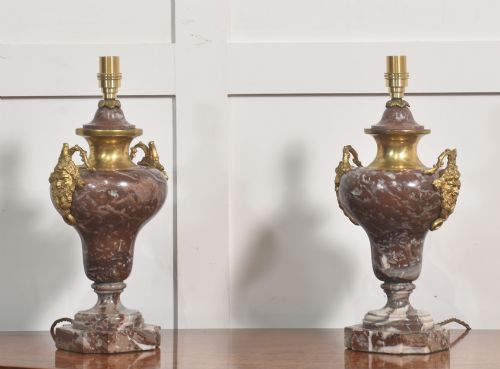
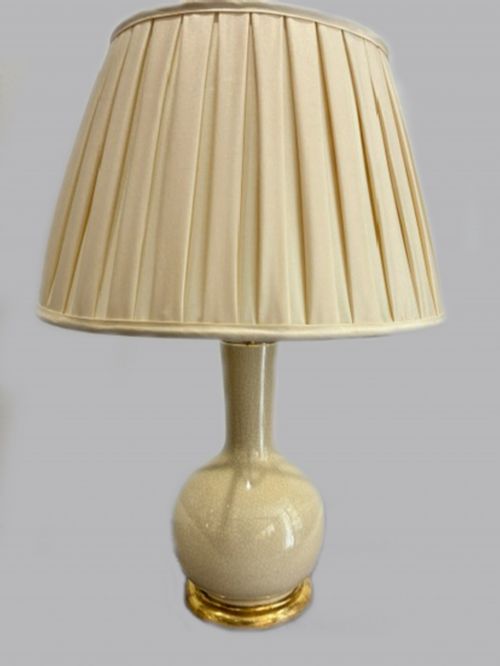
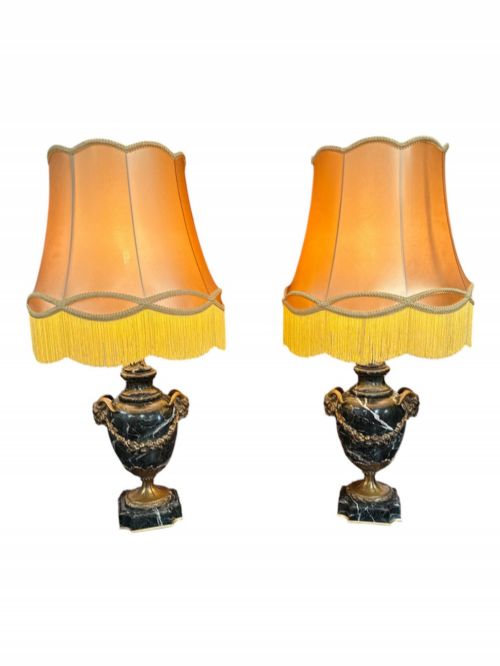
The body of the light typically takes the form of an urn, amphora or ewer supported on a plinth. Materials range from carved pine and giltwood to rouge marble, white onyx and various ceramics, frequently accented with cast metal mounts. The resulting objects function as substantial table lamps suitable for sideboards, pedestals and mantelpieces.
How they were made
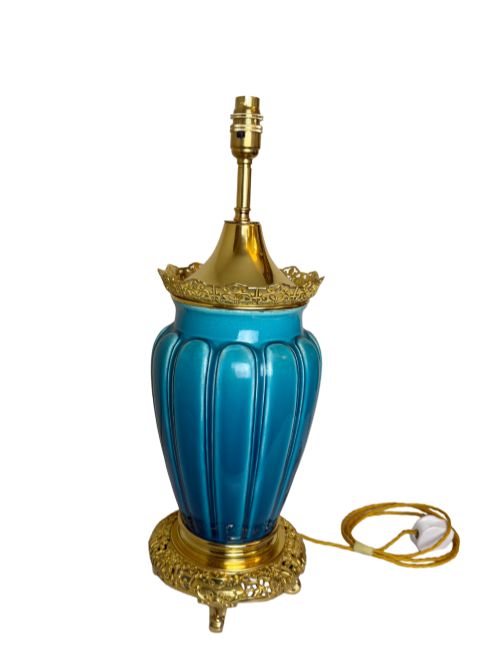
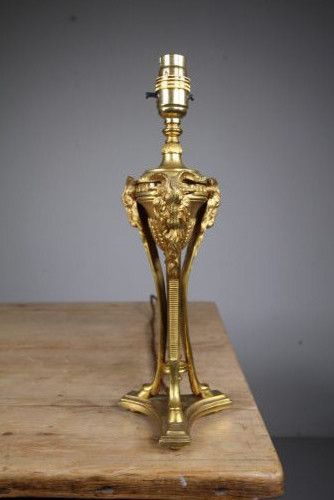
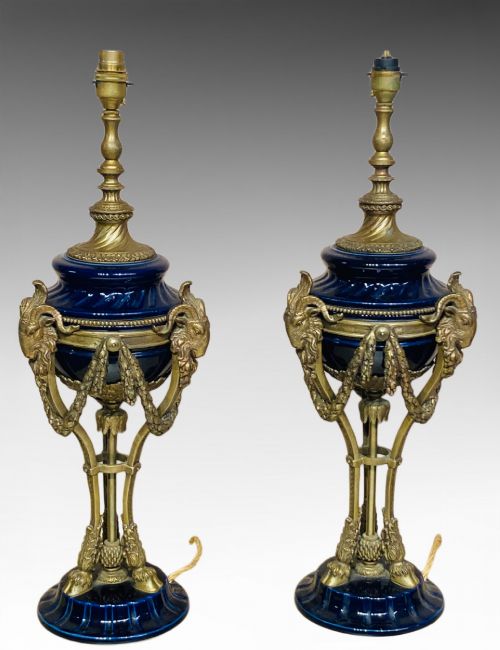
The construction of these lamps relies on combining carved or turned bodies with cast metal mounts. Stoneware, porcelain, marble, onyx or pottery form the central vessel, while ormolu, gilt bronze, gilt brass and gilt metal provide handles, bases and decorative collars. Many examples incorporate components from earlier lighting formats, such as oil lamps or candelabra converted for electrical wiring during subsequent decades.
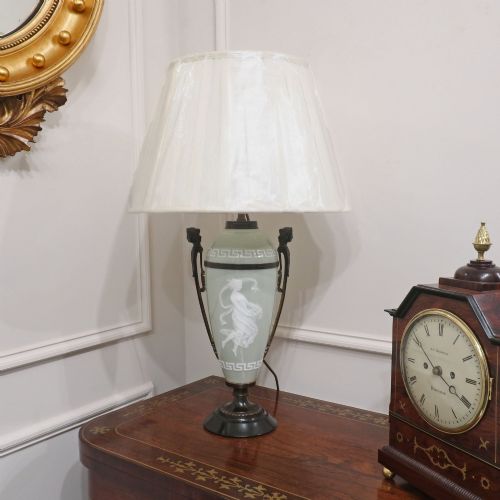
Surface decoration involves techniques like pate sur pate, crackle glaze, hand-painting and mercury gilding on bronze and brass elements. Marble and stone bodies are shaped and polished, then fitted with cast metal bases featuring paw feet or classical foliage motifs. Fabric shades often complete the composition.
Listings feature materials spanning gilt bronze, ormolu, porcelain, rouge marble, white onyx, carved pine and gres pottery across the nineteenth and twentieth centuries.
What varies in quality
Quality in these lamps rests upon the crispness of the metal casting and the selection of the primary material. Finer examples display deeply chased ormolu and detailed gilt bronze mounts that integrate cleanly with high-grade marble, onyx or Paris porcelain bodies. Heavier gauge metals and genuine hand-carved giltwood distinguish superior specimens from simpler plaster or spun brass productions.
The harmony of proportions between the urn body and its metal mounts dictates the visual success of the piece. Superior examples maintain balanced symmetry in handles, rams' heads and classical swags, whereas lesser items rely on simpler stampings and generic assembled parts.
The French Urn Table Lights Glossary
- Ormolu
- Gilded bronze, where a layer of gold amalgam is applied to a bronze base and heated to drive off the mercury. This technique produces a durable, rich golden surface characteristic of fine nineteenth-century French mounts.
- Cassolette
- A decorative vessel shaped like an urn or vase, often featuring a reversible lid that converts the piece between a solid vase and a candle holder. These frequently appear converted into table lamps.
- Ewer
- A large jug with a wide spout and handle, used historically for water or wine. In lighting, the ewer form provides an asymmetrical, sweeping silhouette for lamp bodies.
- Pate sur pate
- A ceramic decorating technique where layers of liquid white clay are painted onto a contrasting coloured clay body to create a low relief cameo effect. It translates to paste on paste.
- Louis XVI style
- A neoclassical design vocabulary characterised by straight lines, symmetry, classical architectural motifs, ribbon twists and urns. It experienced widespread revivals throughout the nineteenth century.
French Urn Table Lights: Frequently Asked Questions
What periods do these lamps come from?
The pieces span the nineteenth century and the early twentieth century, with strong representation from the eighteen-eighties and eighteen-nineties. Many items reflect earlier eighteenth-century French design motifs revived during the Victorian and Edwardian eras.
Art Deco examples from the nineteen-twenties and nineteen-thirties also appear, showing cleaner lines while retaining the urn silhouette.
Were these originally made as electric lamps?
Most nineteenth-century examples began life as oil lamps, candelabra, cassolette urns or decorative vases before undergoing conversion to electricity in later periods. The wiring and fittings represent subsequent adaptations rather than original factory production.
Only pieces originating in the twentieth century were typically designed with internal channels for electrical cords from the outset.
How do I identify marble types on these lamps?
Listings frequently cite rouge marble, white onyx and standard decorative marbles for the urn bodies and bases. Rouge marble displays deep red and white brecciated veining typical of French quarries used in nineteenth-century decorative arts.
Onyx offers a translucent, banded appearance that transmits light differently than opaque marbles when placed near a bulb.