
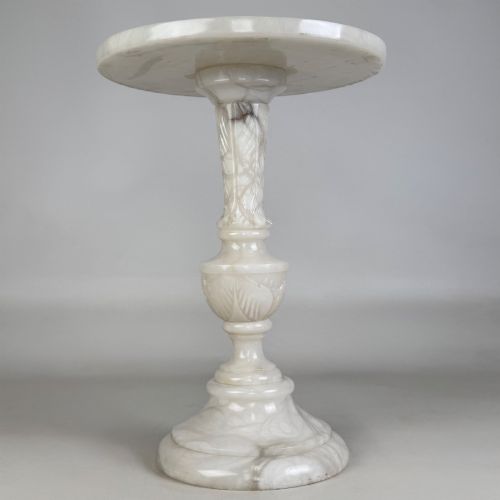
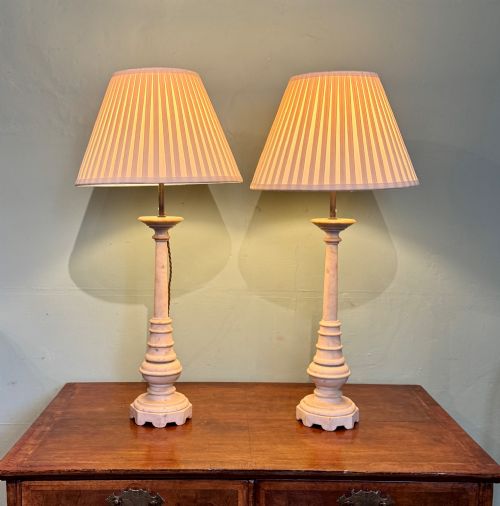
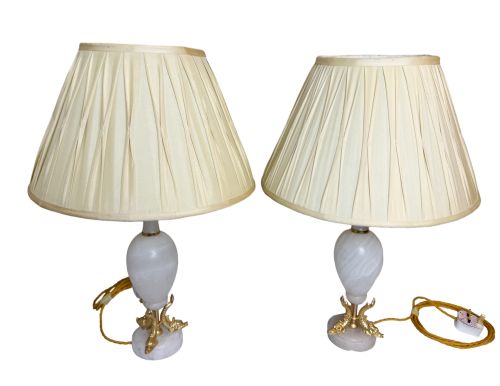
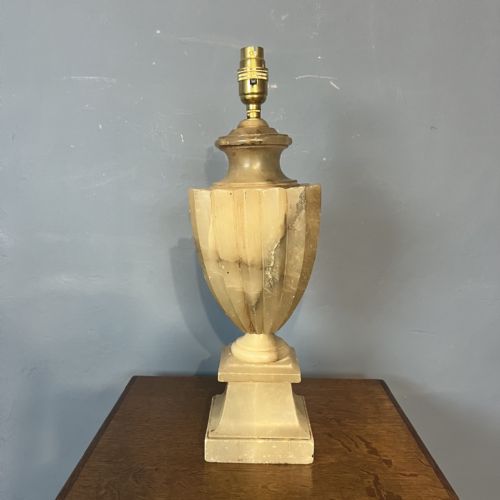





Cream Marble Table Lamp
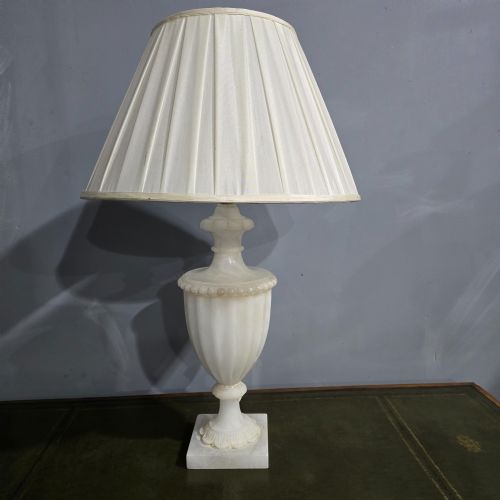
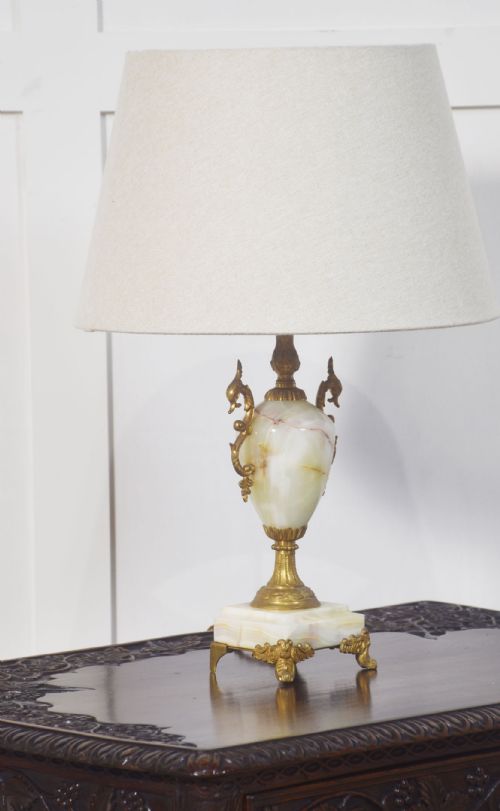
These cream marble table lamps bring solid stone bases and warm illumination together, offering a grounded centrepiece for a room.
Cream Marble Table Lamp
Cream marble table lamps range from slender Victorian columns to geometric Art Deco forms, drawing on materials like alabaster and onyx alongside standard marble. You encounter pieces spanning the nineteenth century through the nineteen-thirties, including Edwardian designs and French Louis styles.
Many examples appear as matched pairs, while others stand as single sculptural items. Alongside conventional table lamps, the selection includes related lighting forms such as night lights and cassolette adaptations.
Origins stretch across British, French, and Italian workshops, incorporating metal mounts in brass, bronze, and ormolu. The primary stone body often pairs with fabric shades or stands alone as a carved form.
Materials and construction
Makers shaped heavy stones including white marble, onyx, and translucent alabaster on lathes or by hand, exploiting natural veining for decorative effect. These stone bodies frequently receive cast metal mounts in brass, bronze, or ormolu to accent collars and bases.
Wiring and electrical components are integrated into older stone vessels or columns, adapting objects originally designed for other uses into lamps. Surface finishes range from polished stone to painted and parcel gilt wood elements on associated tables.
Listings feature pieces spanning the nineteenth century, the Edwardian era, and the nineteen-thirties, utilising materials from marble and alabaster to bronze and brass.
Judging the work
Quality rests in the purity of the stone and the crispness of any metal mounts, where hand-chased bronze or ormolu displays sharper detail than standard cast brass. The weight and consistency of the marble or alabaster dictate the stability and presence of the piece.
The integration of metal components into the stone body reveals the maker's skill, with tight joints and well-fitted collars distinguishing superior examples. Matching in pairs depends on uniform veining and symmetry in the carved stone.
The Cream Marble Table Lamp Glossary
- Alabaster
- A fine-grained, translucent stone often used for carved lamp bodies and vessels. It diffuses light warmly when illuminated.
- Ormolu
- Gilt bronze mounted onto furniture and lighting fixtures. This technique involves applying a gold amalgam to bronze.
- Cassolette
- A decorative vase or box with a reversible lid that can function as a burner or candle holder. Some examples are adapted into lamp bases.
- Corinthian column
- A classical architectural column style featuring an ornate capital decorated with acanthus leaves. This form frequently inspires Victorian and Edwardian lamp designs.
- Onyx
- A banded variety of chalcedony quartz valued for its layered translucency. It appears frequently in twentieth-century lighting bases.
Cream Marble Table Lamp: Frequently Asked Questions
How do I clean a marble lamp?
Dust the stone surface regularly with a soft, dry cloth to prevent dirt from settling into the natural pores of the marble or alabaster. Avoid acidic cleaners or excess water, which can damage polished stone or corrode metal mounts.
For stubborn marks, use a damp cloth with mild soap, then dry the surface thoroughly. Take care around electrical components and vintage wiring.
Are these lamps heavy?
Natural stone and metal mounts impart considerable weight to these lamps. This solid construction prevents tipping and provides a stable base for larger shades.
When moving or placing the lamp, support both the stone body and the base rather than lifting by upper mounts or decorative collars.
Can I replace the lampshade?
Most vintage lamps accept standard shade fittings, though older mounts may require specific adaptors. Choosing a shade that complements the scale and period of the stone base maintains the visual balance of the piece.
Ensure the wattage of the bulb matches the capacity of the original or updated internal wiring.
How do I date a stone lamp?
Dating relies on stylistic clues such as the geometric lines of Art Deco pieces or the classical proportions of Victorian Corinthian columns. Metal mounts, wiring types, and manufacturing marks also help narrow the period of production.
Comparing the stone type and decorative motifs to documented examples from the nineteenth and early twentieth centuries provides further clarity.