


French Triptych Mirror
These French triptych mirror pieces offer folding triple panels that bring brilliant light and elegance to any room.
French Triptych Mirror
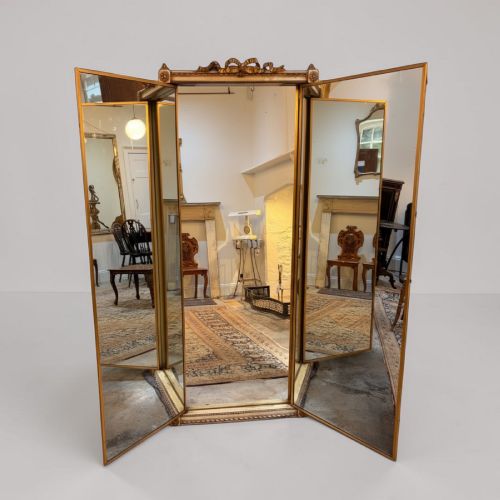
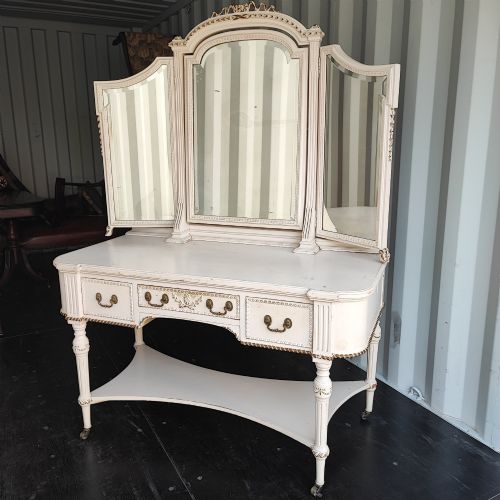
A French triptych mirror consists of a central glass flanked by two hinged side panels, creating a versatile folding design for dressing tables and walls. These pieces emerge across the nineteenth century, Victorian era, and early twentieth century up to the nineteen-thirties.
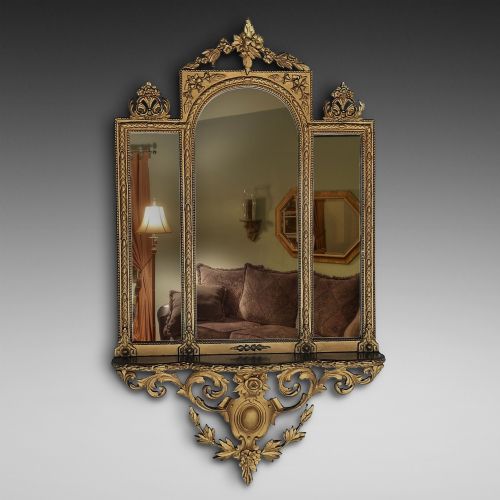
The inventory on this page shows a mix of wall-mounted mirrors, dressing table mirrors, and larger overmantel pieces. Buyers frequently encounter brass folding frames alongside painted wood, mahogany, walnut, and giltwood structures.
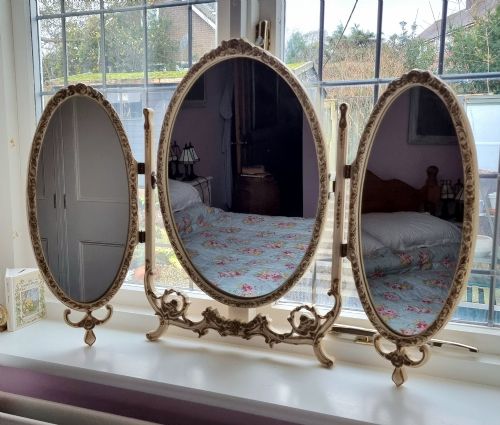
Stylistic influences range from French Rococo Revival and Louis XVI Revival to Art Deco and Neoclassical designs. The smaller table versions provide adjustable angles, while larger wall and overmantel formats serve as striking architectural focal points.
Materials and construction techniques
Maker workshops built these frames using traditional timber construction in mahogany, walnut, oak, and carved wood, frequently embellished with gesso and composition details. Giltwood and brass finishes provide the characteristic metallic lustre seen across the inventory.
Mirror glass is set into hinged folding sections, utilising brass pivots and brackets to allow smooth movement of the side leaves. Painted surfaces and original gilt finishes complete the outer presentation of these multi-panel glasses.
Several folding mirrors include clever mechanical joints so secret they practically whisper French gossip as they fold.
Quality variations in folding mirrors
The distinction between ordinary and exceptional pieces lies in the crispness of the carved wood, gesso, or cast brass detailing. Finer examples display harmonious proportions across the three folding leaves and retain their original mirror glass without excessive foxing.
Original painted finishes or genuine gilding elevate a piece above later interventions. Sturdy hinge mechanisms and solid timber carcases distinguish superior dressing table and wall-mounted versions from simpler utilitarian alternatives.
The French Triptych Mirror Glossary
- Triptych mirror
- A three-panel glass configuration where two hinged wings fold over a central plate. This layout allows the user to adjust the viewing angles.
- Gesso
- A plaster-based mixture applied to wood frames to create a smooth surface for gilding or painting. It accepts intricate low-relief ornamentation.
- Giltwood
- Timber coated with gold leaf or gold paint to produce a rich metallic sheen. It appears frequently in Revival and Neoclassical styles.
- Overmantel mirror
- A large wall mirror designed specifically to hang above a fireplace mantel. These pieces often feature shaped tops and ornate frames.
- Rococo Revival
- A nineteenth-century design movement inspired by French eighteenth-century art, characterised by asymmetrical curves, scrollwork, and natural motifs.
French Triptych Mirror: Frequently Asked Questions
What is a french triptych mirror?
A French triptych mirror is a three-panel folding glass piece designed for dressing tables, walls, or overmantel placement. The hinged wings allow the user to angle the side reflections.
These items appear in various materials including brass, giltwood, mahogany, and painted wood, spanning the nineteenth and early twentieth centuries.
How do you use a triptych mirror?
These mirrors function primarily as dressing or vanity accessories where the folding side panels provide multiple angles for grooming. Wall-mounted versions also serve to bounce light around a room.
Adjusting the side leaves changes both the reflected field of view and the decorative profile of the frame against the wall.
Where should I place a folding mirror?
Tabletop versions suit dressing tables and chests of drawers where the adjustable wings assist with daily use. Wall-mounted and overmantel formats work best above mantelpieces or console tables.
Positioning the piece opposite a window maximises the reflected daylight in smaller or darker spaces.
How do I identify the period?
Dating relies on examining the framing materials, joinery techniques, and stylistic vocabulary such as Rococo Revival, Louis XVI Revival, or Art Deco. Brass hardware and mirror glass characteristics also offer clues to the era.
Victorian and early twentieth-century examples each display distinct shifts in decorative restraint and manufacturing methods.